
Recursos
Exploren una amplia gama de recursos valiosos en GCED para profundizar su comprensión y promover su búsqueda, incidencia, enseñanza y aprendizaje.
2,161 resultados encontrados
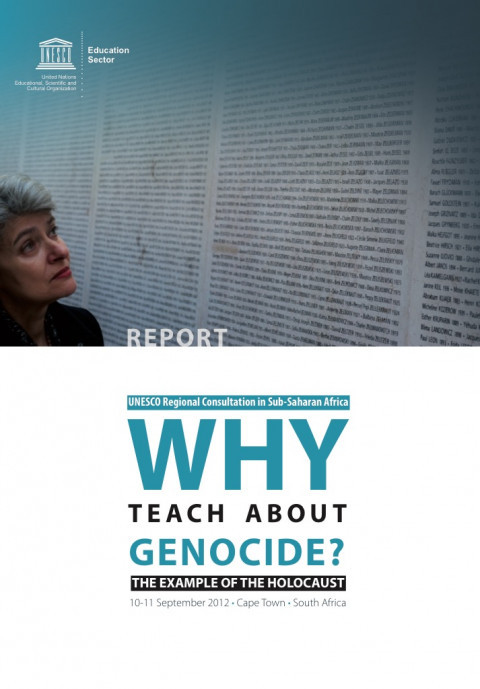 UNESCO Regional consultation in sub-saharan Africa: Why teach about genocide? The example of the Holocaust, 10-11 Septembre 2012, Cape Town, South Africa: report Año de publicación: 2013 Autor corporativo: UNESCO The rst UNESCO consultation on « Why Teach about Genocide? The Example of the Holocaust » was organized following the UNESCO General Conference resolution 34C/61 on Holocaust Remembrance. The consultation of Member States is part of a series of initiatives launched by UNESCO to promote education about the Holocaust and other genocides, in particular with a view to contributing to the prevention of genocide and mass atrocities and promoting education for peace.The consultation took place in Cape Town, South Africa, on 10-11 September 2012 in the presence of senior representatives from the Ministries of Education of 14 countries in Sub-Saharan Africa. The following countries were represented: BENIN, BURUNDI, DEMOCRATIC REPUBLIC OF THE CONGO, CÔTE D’IVOIRE, ETHIOPIA, REPUBLIC OF MAURITIUS, NAMIBIA, KENYA, RWANDA, SENEGAL, SOUTH AFRICA, TANZANIA, TOGO and ZAMBIA. Experts in Holocaust and genocide studies from various countries and institutions were invited to present key issues throughout the consultation and participate in the discussions. The consultation was supervised by the Education Sector of UNESCO/Division of Education for Peace and Sustainable Development/Section of Education for Peace and Human Rights and UNESCO Regional Bureau for Education in Africa (BREDA, Dakar, Senegal)The main purpose of the meeting was to discuss how the history of the Holocaust, and more generally the history of genocide, could be included in the curricula of participating countries. The meeting also clari ed various conceptual and pedagogical issues, and paved the way for further cooperation between UNESCO and participating Ministries of Education on how to launch new educational programmes in interested countries.
 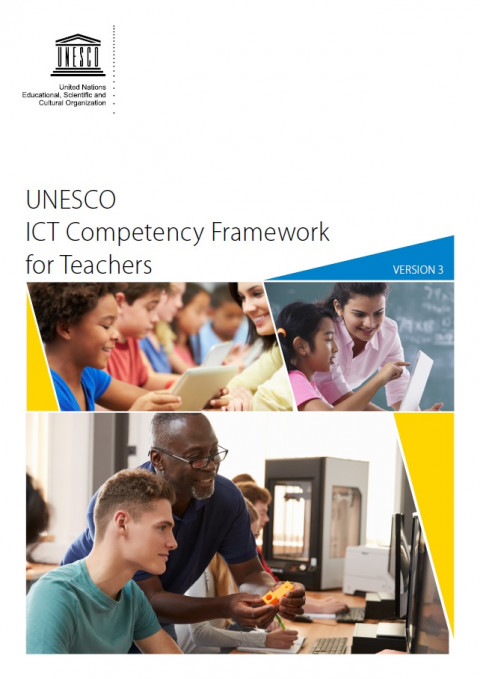 UNESCO ICT Competency Framework for Teachers (ver.3) Año de publicación: 2018 Autor corporativo: UNESCO UNESCO has developed the ICT Competency Framework for Teachers (ICT CFT) as a tool to guide pre- and in-service teacher training on the use of ICTs across the education system. The ICT CFT is intended to be adapted to support national and institutional goals by providing an up-to-date framework for policy development and capacity building in this dynamic area.The ICT Competency Framework for Teachers (ICT CFT) Version 3 is a response to recent technological and pedagogical developments in the field of ICT and Education, and incorporates in its structure inclusive principles of non-discrimination, open and equitable information accessibility and gender equality in the delivery of education supported by technology. It addresses the impacts of recent technological advances on education and learning, such as Artificial Intelligence (AI), Mobile Technologies, the Internet of Things and Open Educational Resources, to support the creation of inclusive Knowledge Societies. The ICT CFT provides a comprehensive set of competencies teachers need to integrate ICT into their professional practice in order to facilitate students’ achievement of curricular objectives. Strong political commitments and sustained investment in teacher education, and concerted actions between pre- and in-service teacher trainings form the foundation of the successful implementation of this Framework as it is contextualized to national and institutional goals. For this reason, this document underlines the importance of steadfast commitment to supporting teachers’ continuous professional development including through ICT, and includes examples to illustrate how ICT CFT could be used to facilitate teachers’ development in diverse contexts. We look forward to strengthening our collaboration with all stakeholders everywhere to leverage ICT to develop the skills required to thrive within the fast-changing inclusive Knowledge Societies.
 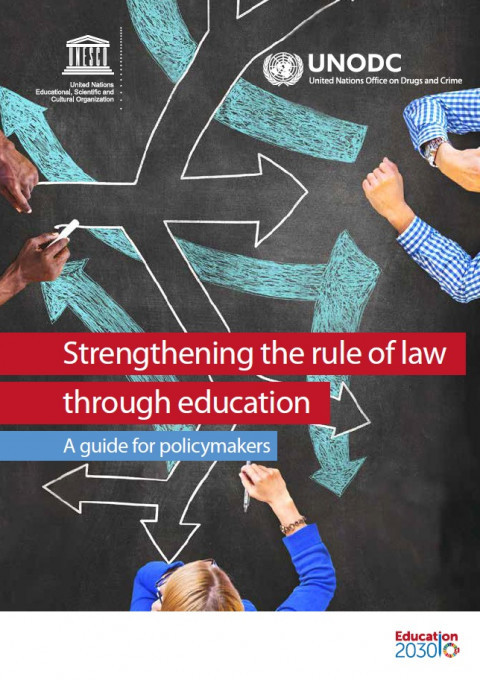 Strengthening the Rule of Law Through Education: A Guide for Policymakers Año de publicación: 2019 Autor corporativo: UN. Office on Drugs and Crime (UNODC) | UNESCO The new joint publication by UNESCO and UNODC Strengthening the Rule of Law through Education: A Guide for Policymakers explores the role that education institutions can play in promoting the rule of law and building new forms of engagement based on global citizenship, human rights and inclusion -- all of which are vital to take forward the Sustainable Development Goal 4 on education, at the heart of the 2030 Agenda for Sustainable Development. Strengthening the Rule of Law through Education: A Guide for Policymakers is intended for education policymakers and other professionals working in the formal education sector, within and outside Ministries of Education, and who are seeking to promote the rule of law and a culture of lawfulness.The guide may also be of interest to professionals working in non-formal education settings or other sectors – namely the justice, social and health sectors - in the area of crime and violence prevention, who are seeking to work more closely with the education sector. In particular, the guide offers:An explanation of key concepts, such as the rule of law and a culture of lawfulness, as well as outlining the role of education in upholding and promoting the rule of law; Guidance on how the education sector is able to strengthen and promote the rule of law, for instance, by speaking to the real learning needs of children and youth, and by ensuring that places of learning “practice what they preach”; A map of the necessary support systems needed to strengthen the rule of law at the school and classroom levels and outside formal education settings, including curricular support, classroom pedagogies, teacher training and development and school-family-community partnerships. Fortalecimiento del estado de derecho mediante la educación: guía para los encargados de la formulación de políticas Año de publicación: 2019 Autor corporativo: UN. Office on Drugs and Crime (UNODC) | UNESCO La nueva publicación conjunta de la UNESCO y la Oficina de las Naciones Unidas contra la Droga y el Delito (UNODC): Fortalecimiento del estado de derecho mediante la educación: guía para los encargados de la formulación de políticas, explora el rol que pueden jugar las instituciones educativas en la promoción del estado de derecho y en la creación de nuevas formas de participación basadas en ciudadanía global, derechos humanos e inclusión – cuestiones que son vitales para promocionar el 4to Objetivo sobre educación para el Desarrollo Sostenible, en el corazón de la Agenda 2030 para el Desarrollo Sostenible. Fortalecimiento del estado de derecho mediante la educación: guía para los encargados de la formulación de políticas, está dirigido a los creadores de políticas educativas y a otros profesionales que trabajan en el sector formal de educación, dentro o fuera de los Ministerios de Educación, y que estén procurando promocionar el estado de derecho y la cultura de la legalidad.La guía también puede ser de interés para profesionales trabajando en contextos educativos no formales y otros sectores – como ser en los sectores sociales, de justicia o de salud – en las áreas de prevención de violencia y crimen, que estén buscando trabajar más cerca al área educativa. En particular, la guía ofrece: Una explicación de conceptos claves, como ser la cultura de derecho o la cultura de la legalidad, a la vez que detalla el rol de la educación en sostener y promover el estado de derecho;Orientaciones sobre cómo el sector educativo es capaz de fortalecer y promocionar el estado de derecho, por ejemplo, abordando las necesidades reales de niños y jóvenes, y asegurándose que los lugares de enseñanza “practican lo que predicen”;Un mapa de los sistemas de soporte necesarios para fortalecer el estado de derecho en la escuela, a nivel del aula y fuera de los contextos de educación formal, incluyendo soporte curricular, pedagogía de aula, desarrollo y capacitación docente y asociaciones entre la escuela, la familia y la comunidad. تعزيز سيادة القانون عن طريق التعليم: دليل لواضعي السياسات Año de publicación: 2019 Autor corporativo: UN. Office on Drugs and Crime (UNODC) | UNESCO لمنشور المشترك الجديد لليونسكو ومكتب الأمم المتحدة المعني بالمخدرات والجريمة بعنوان "تعزيز سيادة القانون من خلال التعليم: دليل لواضعي السياسات" يستكشف الدور الذي يمكن أن تلعبه المؤسسات التعليمية في تعزيز سيادة القانون وبناء أشكال جديدة من المشاركة على أساس المواطنة العالمية وحقوق الإنسان والإدماج - - جميعها حيوية للمضي قدمًا في تحقيق الهدف 4 من أهداف التنمية المستدامة بشأن التعليم ، في صميم خطة التنمية المستدامة لعام 2030.تعزيز سيادة القانون من خلال التعليم: دليل صانعي السياسات موجه لواضعي السياسات التعليمية وغيرهم من المهنيين العاملين في قطاع التعليم الرسمي ، داخل وزارات التعليم وخارجها ، والذين يسعون إلى تعزيز سيادة القانون وثقافة احترام القانون.قد يكون الدليل مفيدًا أيضًا للمهنيين العاملين في أماكن التعليم غير النظامي أو القطاعات الأخرى - وبالتحديد قطاعات العدالة والاجتماعية والصحية - في مجال منع الجريمة والعنف ، الذين يسعون إلى العمل بشكل أوثق مع قطاع التعليم.
  Guidebook on Education for Sustainable Development for Educators: Effective Teaching and Learning in Teacher Education Institutions in Africa Año de publicación: 2018 Autor corporativo: UNESCO The guidebook on Education for Sustainable Development for Educators: Effective teaching and learning in teacher education institutions in Africa has been conceived as a tool to mainstream sustainability into all aspects of teacher education and training with useful information concerning teaching, learning and assessment approaches to help achieve the ESD goals and learning outcomes.
  International Day against Homophobia & Transphobia: Lesson Plan Año de publicación: 2014 Autor corporativo: UNESCO Each year, the world celebrates the International Day Against Homophobia and Transphobia (IDAHO) on May 17th. During the days surrounding IDAHO, private and public actors, ranging from the United Nations agencies, to city councils, police stations, human rights organiza-tions, individual citizens, schools and others, implement activities to mark the day. The theme of this year’s IDAHO is “Fighting homophobia and transphobia IN and THROUGH education”. This theme was selected in response to a growing awareness that homophobic and transphobic bullying in schools which are manifestations of homophobia and transphobia, are serious issues that students and educational staff face every day across the world.Over the years, teachers around the world have been developing activities in their classrooms, with the help of various organizations working on efforts to address and homophobia and transphobia in educational institutions. Building on the success of these experiences, UNESCO and the IDAHO Committee propose teachers take advantage of the International Day Against Homophobia and Transphobia to conduct an ‘IDAHO Lesson’. The four activities proposed below are aimed at both primary and secondary level classes. A list of resources from other organizations for teachers, for all subjects and all grades is included below to enable greater choice of possible activities. By conducting an “IDAHO Lesson”, you can create safer learning environments, address discrimination and encourage respect and tolerance between and amongst learners.(Title: International Day against Homophobia and Transphobia: Lesson Plan) Combattre l’homophobie et la transphobie : Propositions pédagogiques Año de publicación: 2014 Autor corporativo: UNESCO Le présent programme pédagogique a été élaboré à l’occasion de l’IDAHO 2012, autour du thème « Combattre l’homophobie et la transphobie DANS et PAR l’éducation », en réponse à la prise de conscience que le harcèlement homophobe ou transphobe dans les écoles sont des manifestations de l’homophobie et de la transphobie auxquelles étudiants et membres du corps enseignant du monde entier doivent faire face au quotidien. Un problème sérieux qui ne peut être ignoré.Diverses études démontrent que le harcèlement homophobe ou transphobe peut avoir de graves répercussions sur la santé physique et mentale des jeunes gens et jeunes filles qui le subissent à un moment crucial de leur vie. Le harcèlement homophobe peut entraîner une baisse des performances d’apprentissage, voire, parfois, le décrochage scolaire. Les jeunes personnes lesbiennes, gays, bisexuelles, transgenres ou intersexes (LGBTI) victimes de harcèlement homophobe sont plus enclines à l’automutilation, et on dénombre parmi cette population beaucoup plus de cas de suicide que chez les autres jeunes. Les recherches révèlent aussi que les jeunes LGBTI ont tendance à adopter des comportements à haut risque tels que les rapports sexuels non protégés et la consommation de stupéfiants.
  Curriculum Development and Review for Democratic Citizenship and Human Rights Education Año de publicación: 2016 Autor corporativo: UNESCO | Council of Europe | Organization of American States (OAS) | OSCE. Office for Democratic Institutions and Human Rights (ODIHR) Education for democratic citizenship and human rights education are vital for peaceful, sustainable and inclusive societies based on respect for the human rights of every person. Effective teaching and learning processes require well-trained teachers, positive learning environments and high-quality learning materials. This is underpinned by education policy, including curriculum development and review, which is the main focus of this book. The strengthening of education policies in the fields of education for democratic citizenship and human rights lies at the very heart of the efforts of the Council of Europe, the United Nations Educational, Scientific and Cultural Organization, the Office for Democratic Institutions and Human Rights of the Organization for Security and Co-operation in Europe, and the Organization of American States. These organisations have jointly produced this publication in order to support states’ commitment to fostering citizenship and human rights education and improving access to quality education for all. Élaboration et révision des programmes d'enseignement pour l'éducation à la citoyenneté démocratique et aux droits de l'homme Año de publicación: 2016 Autor corporativo: UNESCO | Conseil de l'Europe | Organization of American States (OAS) | OSCE. Office for Democratic Institutions and Human Rights (ODIHR) Education for democratic citizenship and human rights education are vital for peaceful, sustainable and inclusive societies based on respect for the human rights of every person. Effective teaching and learning processes require well-trained teachers, positive learning environments and high-quality learning materials. This is underpinned by education policy, including curriculum development and review, which is the main focus of this book. The strengthening of education policies in the fields of education for democratic citizenship and human rights lies at the very heart of the efforts of the Council of Europe, the United Nations Educational, Scientific and Cultural Organization, the Office for Democratic Institutions and Human Rights of the Organization for Security and Co-operation in Europe, and the Organization of American States. These organisations have jointly produced this publication in order to support states’ commitment to fostering citizenship and human rights education and improving access to quality education for all.