
Recursos
Exploren una amplia gama de recursos valiosos en GCED para profundizar su comprensión y promover su búsqueda, incidencia, enseñanza y aprendizaje.
3,441 resultados encontrados
 Education à la citoyenneté et aux droits de l'homme: manuel pour les jeunes en Mauritanie Año de publicación: 2015 Autor: Sidi Mohamed Ould Mohamed Abdellahi | Bamariam Koita | Mohamed El Moctar Ould Sidina | Abdel Wedoud Autor corporativo: Mauritania. Ministère de la culture et de l'artisanat | Mauritanian National Commission for Education, Science and Culture | UNESCO Rabat Prepared by UNESCO in cooperation with the Mauritanian Ministry of Culture and Crafts, and with the support of the Spanish Agency for International Development Cooperation (AECID), this manual aims to - with the active help of trainers and facilitators - sensitize young Mauritanians to the fundamental concepts of citizenship and human rights. This educational tool, which includes practical exercises adapted to a young audience, consists of 20 didactic cards that describe and explain Mauritania national legislation on human rights.Ce Manuel, composé de 20 fiches thématiques, offre de manière inédite des connaissances sur les conventions et standards internationaux en matière de démocratie et de droits de l’homme, ainsi qu’une contextualisation aux cadres normatifs nationaux de la Mauritanie. Des questions clés, des exercices interactifs, et des références pour aller plus loin sont autant d’outils pédagogiques pour familiariser les jeunes avec des notions fondamentales, dans le cadre de l’éducation aussi formelle que non formelle. Car Si l’éducation à la citoyenneté est rattachée à un territoire national dans la mesure où est citoyenne toute personne disposant de droits et de devoirs attachés à une nationalité, à un État, à une histoire sociale et culturelle, l’éducation aux droits de l’homme se réfère quant à elle à un cadre normatif universel et déterritorialisé : sa mission est de cultiver le sentiment d’appartenance de chacun(e) à l’humanité, caractérisée par une dignité propre. Dans une démarche éducative, ce Manuel conjugue les deux dimensions, les interpé- nètre et les met en perspective. L’objectif est de permettre aux jeunes, avec l’aide de formateurs et d’animateurs, d’approfondir et de mettre en perspective leurs connaissances relatives aux valeurs de citoyenneté et aux principes de droits de l’homme, à travers un va-et vient constant entre l’idéal universel et le contexte politique, social, culturel et environnemental dans lequel ils se trouvent.Fruit de la collaboration entre l’UNESCO et le Ministère de la Culture et de l’Artisanat de Mauritanie, et bénéficiant du soutien de l’Agence espagnole pour la coopération internationale pour le développement (AECID), ce Manuel propose des pistes pour explorer et interroger les conditions d’exercice de la citoyenneté, ainsi que des problématiques sociétales émergeantes. Mieux comprendre, pour mieux agir, c’est aussi cela être un agent de changement, de paix et de développement.
  An intercultural program from a Balkan perspective Año de publicación: 2003 Autor: Emilia Ilieva The author focuses on the particular case of the Bosporus International Network as an intercultural program. Bosporus International Network is a network of five independent and registered NGOs in Germany, Bulgaria, Romania, Greece and Turkey and four local groups in Albania, Macedonia/FYROM, Slovenia and Hungary that share the same name, goals and aims. The goal of the network can best be described as “building bridges" between cultures.
 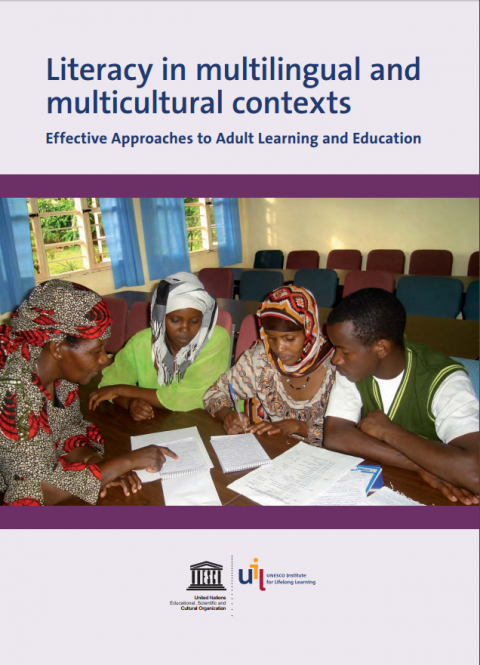 Literacy in multilingual and multicultural contexts: effective approaches to adult learning and education Año de publicación: 2016 Autor: Ulrike Hanemann, Cassandra Scarpino All of the literacy programmes featured in this publication offer valuable experiences and lessons on how the challenges posed by linguistic and cultural diversity can be productively addressed by harnessing the potential of language and culture as enriching resources in the process of literacy teaching and learning. A major lesson that has emerged over the years is that the use of local languages as the medium of instruction enhances the effectiveness and efficiency of the learning process in developing literacy, numeracy and (second or more) language skills. However, mother tongue-based literacy not only facilitates the learning process, but is also an important symbol of identity, unity and self-determination. It is closely intertwined with culture and local values, wisdom, worldviews and tradition. A number of the featured programmes demonstrate that language and culture in education are highly political. Respect for all languages and cultures, and their equal treatment, can play a critical role in fostering national cohesion. In some cases, this is contributing to rebuilding peace in post-conflict communities. Literacy programmes that contribute to the preservation of linguistic and cultural diversity should, also, be viewed as integral to sustainable development.
  Generation Z: Global Citizenship Survey Año de publicación: 2017 Autor corporativo: Varkey Foundation The Varkey Foundation commissioned Populus to carry out research on a global scale into the attitudes of 15- to 21-year-olds on a variety of ethical, personal, community and political issues. We chose twenty countries to poll: Argentina, Australia, Brazil, Canada, China, France, Germany, India, Indonesia, Israel, Italy, Japan, New Zealand, Nigeria, Russia, South Africa, South Korea, Turkey, the UK and the US. We chose a range of countries that would give a geographic spread, include some of most populous nations, and would also include those that have particular political significance – as rising powers and/or countries that are important in global geopolitics and cultural influence.The first part of the survey asked about young people’s wellbeing, hopes and ambitions – from their relationships and future careers, to their physical and mental health.. The second part focused on their personal, community and religious values – from their attitudes towards abortion, same sex marriage and transgender rights, to the importance of religion in their lives and whether they feel equipped to contribute to their own community. Finally, it covered issues of global citizenship – attitudes towards migrants, the factors that make young people hopeful and fearful for the future, and their views on whether the world is becoming a better or worse place. This is the first time that there has been an international comparative study of the attitudes of young people on these matters. Not only have we asked them how they feel, what their attitudes are, and who influenced them: we have also reflected on what differences and similarities there may be in terms of their wellbeing, fears, hopes and views across the world.With this survey, we do not aim to document the events that loomed large in young people’s lives or the social forces that have shaped their emotions and opinions. That is a huge subject for expert analysis. Rather, we wanted to hold up a mirror to Generation Z and simply record the reflection that they give us – providing some illumination to help us all understand them better.
  Curriculum in Transformation Mode: Rethinking Curriculum for the Transformation of Education and Education Systems Año de publicación: 2023 Autor: Renato Opertti Autor corporativo: UNESCO International Bureau of Education (IBE) Through these pages, Renato Opertti shares a series of reflections that invite us to revisit the curriculum as an opportunity and lever for societies to express their visions and aspirations. Curriculum can serve to position education as the pillar of a renewed social contract grounded on the welfare of all learners as persons and supporting societies and communities give effect to sustainable and better futures for the younger generations. To do so, we need to re-conceptualize curriculum at large: from a mere specification of frequently fragmented learning contents to its understanding as both a process and product of public policy developments in which diversity of stakeholders own and take responsibility for education as a global common good. Curriculum and pedagogy, by going hand-inhand, and supported by effective teaching, learning and assessment processes, can play a key role in fulfilling the right to education for every learner equally, according to their own individual needs. Key ideas in this book help us to rethink curriculum with future-oriented approaches, entailing a stronger involvement of younger generations in the decision-making process and a careful attention to vulnerability and disadvantaged groups. A curriculum that embraces individuality and diversity within collaborative and caring learning settings, nurtures freedom and autonomous thinking, connects meaningfully the global and the local, and assumes the hybridization of education. The book also delves into perspectives for educational transformation prioritizing the development of learners’ foundational and transformative competencies as the barometer of a progressive curriculum. Crucially, this entails rethinking the mindsets and practices of education systems in light of the interconnected challenges posed by the Fourth Industrial Revolution, post COVID-19, generative AI and the sustainability of the planet and the world.
  The Role of Kuwaiti Satellite Channels in Promotion of Citizenship among Kuwaiti Youth Año de publicación: 2012 Autor: Hassan Al Gharbi Autor corporativo: Middle East University The focus of the problem that the research dealt with was on the following question: Have public and private Kuwaiti satellite channels contributed to enhancing the concept of citizenship among young Kuwaitis? The researcher adopted a definition of the concept of citizenship among the multiple definitions of this concept, which was tainted by some uncertainty and disagreement. Citizenship in this study "is the awareness of belonging to a geographical area of a specific political and social goals and shared one common culture and political system." دور الفضائيات الكويتية الرسمية و الخاصة في تعزيز المواطنة لدى الشباب الكويتي Año de publicación: 2012 Autor: Hassan Al Gharbi Autor corporativo: Middle East University تركزت المشكلة التي تناولها البحث على التساؤل التالي: هل ساهمت القنوات الفضائية الكويتية العامة والخاصة في تعزيز مفهوم المواطنة بين الشباب الكويتي؟ واعتمدت الباحثة تعريفاً لمفهوم المواطنة من بين التعاريف المتعددة لهذا المفهوم ، والذي شابه بعض عدم اليقين والاختلاف. المواطنة في هذه الدراسة "هي الوعي بالانتماء إلى منطقة جغرافية لأهداف سياسية واجتماعية محددة ومشتركة في ثقافة ونظام سياسي واحد".
  How Digital is Transforming the Lives of Young People in Small Island Developing States Año de publicación: 2024 Autor corporativo: United Nations Development Programme (UNDP) Young people represent a sizeable and vital population in Small Island Developing States (SIDS). For them, digital technologies are more than just tools; they are gateways to new horizons. Digital is creating fresh opportunities, opening doors to unconventional careers, and redefining how knowledge is acquired and shared. Young people are using digital to start new businesses, explore new opportunities, learn new knowledge and skills, and to build global connections. However, young people are also cautious about digital – and they recognise risks and issues posed by digital channels, tools, and technologies. ‘How Digital is Transforming the Lives of Young People in SIDS’ explores these opportunities and challenges by hearing from young people – in their own words. Through a bespoke survey chatbot, running on messaging platforms most used by young people living in SIDS, more than 5,000 respondents from over 30 countries discuss how they’re using digital to transform their lives and livelihoods. And the barriers and challenges that they are facing on their digital journeys.
  Emerging Horizons: Youth Insights on Climate Change and Breakthrough Solutions; 2024 Leading Minds on Climate Action Año de publicación: 2024 Autor corporativo: UNICEF Innocenti | United Nations Development Programme (UNDP) This paper shares insights from a participatory foresight workshop designed and facilitated by UNICEF Innocenti in the framework of the Youth4Climate: Sparking Solutions event co-hosted by UNDP and the Government of Italy. This convened 100 youth-led solutions in the areas of climate education, energy, food and agriculture, and urban sustainability. By using the Three Horizons foresight approach, a dialogue was created that delineated the patterns of change young people envisaged, their shared visions for the future, and the high potential innovations they felt could be leveraged to bring that future about. The paper identifies research and policy questions to be further explored by young climate leaders, UNDP, UNICEF, and their partners.
 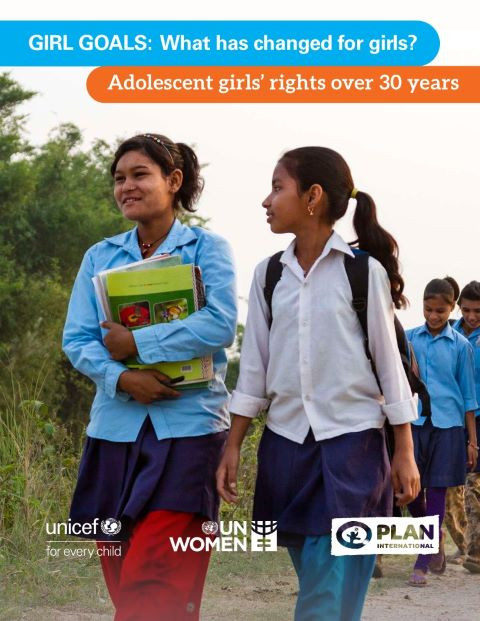 Girl Goals: What has Changed for Girls? Adolescent Girls’ Rights over 30 Years Año de publicación: 2025 Autor corporativo: United Nations Children's Fund (UNICEF) | United Nations Entity for Gender Equality and the Empowerment of Women (UN Women) | Plan International This report makes three key recommendations on action we can take now to advance adolescent girls’ rights at scale, in ways that account for fiscally constrained contexts and multiple competing priorities: 1. Ensure tangible and actionable support for adolescent girls’ voices, advocacy and action. The current generation of girls are raising their voices to be heard and are already at the forefront of making change around the world. With the right support, resources and seats at the table, adolescent girls can help transform the world for the better, shaping better policy outcomes for themselves and everyone. This is not about girls’ voices above all others, or endless consultation, but about specific, meaningful actions that ensure girls get the support they need and are heard on policy issues that matter to them. 2. Establish and track explicit targets for change for adolescent girls, who are too often invisible and sidelined Setting explicit targets to monitor outcomes for adolescent girls is key to making progress. Context-specific prioritization will be necessary, but there are some issues that stand out globally. Gaps in progress (such as child marriage gains accruing disproportionately to wealthier households) demonstrate the need forprogrammes that address poverty and economic realities alongside harmful social norms. The disproportionate number of adolescent girls not in education, employment or training, not entering the labour market as young women, and left behind when it comes to digital skills, is a threat to the gains made for girls and to economic growth that will benefit everyone. Stagnation on issues like underweight also stand out. Country- specific priorities supported by data- driven accountability mechanisms and investments are needed to translate policy commitments into change on the ground. 3. Resource and deliver smartly to unlock the social and economic dividend Governments and partners should invest in solutions proven to change outcomes across multiple SDGs at scale – for example, investing in education and skills, cash transfers and economic empowerment programmes designed to support girls. Existing systems, from maternal health care to school curricula, should be adapted to meet girls’ needs rather than creating small- scale, separate projects. Streamlined, evidence-based ‘add-ons’ – such as adding parenting support to existing maternal health-care programmes – can be cost effective and accelerate outcomes if well designed. Change is possible, and this report shows that great gains have been made. Smart investments now can transform the world for girls, families, communities and national economies. It is time to act.