
Recursos
Exploren una amplia gama de recursos valiosos en GCED para profundizar su comprensión y promover su búsqueda, incidencia, enseñanza y aprendizaje.
661 resultados encontrados
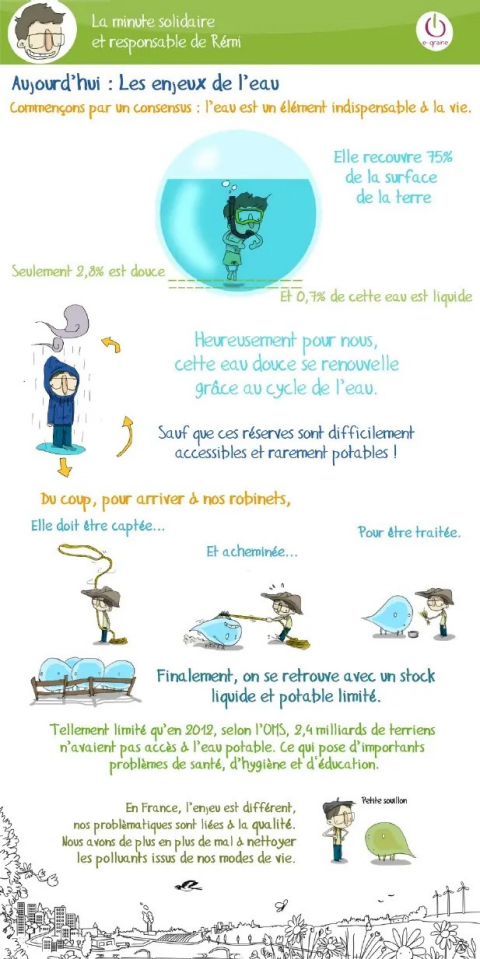 La minute solidaire et responsable de Remi Año de publicación: 2019 Autor corporativo: E-graine 3 bandes dessinées en ligne pour sensibiliser sur les questions environnementales : une sur l'eau, une sur l'empreinte écologique et une sur les déchets. 3 online comic strips to raise awareness of environmental issues: one on water, one on the ecological footprint and one on waste.
  SDG Good Practices: A Compilation of Success Stories and Lessons Learned in SDG Implementation (2nd Edition) Año de publicación: 2022 Autor corporativo: UN. Department of Economic and Social Affairs (UN. DESA) In 2021, building on the success of the first open call in 2018-2019, the United Nations Department of Economic and Social Affairs (UNDESA) launched a second open call for SDG Good Practices, Success Stories and Lessons Learned by governments, the UN system entities and other stakeholders. More than 700 submissions were received and reviewed by an inter-agency team of UN experts and over 460 have been made publicly available in a dedicated online platform.This publication has been curated to highlight a sample of selected initiatives during the second open call. The 21 SDG Good Practices contained in the publication shared their lessons learned and identify how the practices can be scaled and replicated worldwide. Bringing this global expertise to scale will be critical to support recovery efforts from the COVID-19 pandemic and to accelerate progress towards the Decade of Action to deliver the SDGs. Through this publications, global readers from all sectors could find out how different stakeholders are building partnerships to find innovative solutions to achieve a better and more sustainable future for all. 지속가능발전목표(SDG) 우수 사례: SDG 구현의 성공 사례 및 교훈 모음(개정판) Año de publicación: 2022 Autor corporativo: UN. Department of Economic and Social Affairs (UN. DESA) 2021년 2018-19년 1차 공개 요청의 성공에 힘입어 유엔 경제사회부(United Nations Department of Economic and Social Affairs, UNDESA)는 지속가능발전목표(Sustainable Development Goal, SDG) 우수 사례 및 성공 사례, 정부, UN 기관 및 기타 이해 관계자가 배운 교훈에 대한 2차 공개 요청에 착수했다. 출판물에 포함된 이 문서는 이들이 배운 교훈을 공유하고 이 관행을 전 세계로 확장하고 모방할 수 있는 방법을 제공한다. 이러한 세계 전문 지식을 널리 보급하는 일은 코로나바이러스감염증-19(COVID-19) 대유행으로부터의 회복 노력을 지원하고 SDG를 실현하기 위한 10년간의 행동 진전을 가속화하는 데 무엇보다 중요하다. 이를 통해 세계 독자들은 모두를 위한 지속 가능한 미래를 구축하기 위해 혁신적인 해결책을 찾는 데 다양한 이해 관계자가 어떻게 협력하는지를 확인할 수 있다.
 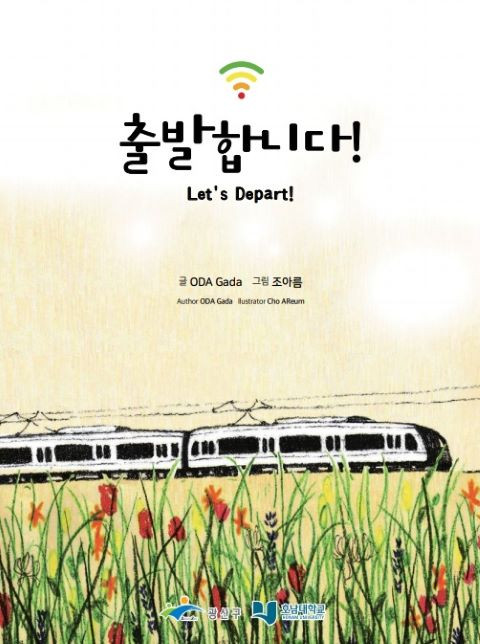 即将启程! Año de publicación: 2021 Autor corporativo: ODA Gada | 광진구 | 호남대학교 《Let's Go!》是光州光山区厅与湖南大学共同出版的“青少年全球公民教育事业”的第四本插图书。以心理健康为主题,主人公“尤里”在“情感列车”中分享了各种情感,这是一个面对自己坦诚的感情的过程,同时看到那些得到她的同情和安慰的人。通过使用“Wi-Fi”和“鲜花”作为表达情感的工具,任何人都可以轻松地沉浸在故事中。
 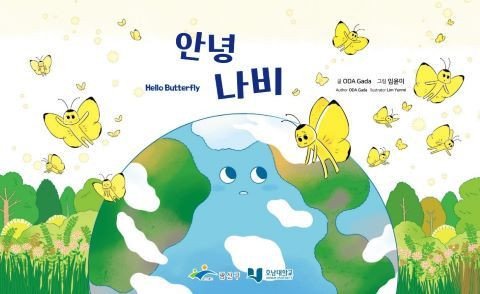 Hello Butterfly Año de publicación: 2022 Autor: ODA Gada Autor corporativo: ODA Gada | 광진구 | 호남대학교 <Hello Butterfly> is the fifth illustrated book in the ‘Youth Global Citizenship Education Project’ jointly published by Gwangsan-gu Office of Gwangju and Honam University. The theme is to respond to climate change. The book helps with climate change and environmental policies such as the harmful effects of 'fast fashion' (clothes manufactured and distributed by reflecting the latest trends), desirable clothing consumption methods, zero waste (removal of garbage), and green washing (disguised environmentalism). It contains specific information. The book takes the form of an accordion book that depicts the story through the butterfly's eyes, with the southern yellow butterfly, one of the climate change biomarker species, as the main character. 안녕 나비 Año de publicación: 2022 Autor: ODA Gada Autor corporativo: ODA Gada | 광진구 | 호남대학교 <안녕 나비>는 광주광역시 광산구와 호남대가 공동 진행하는 ‘청소년 세계 시민 교육 프로젝트’ 의 다섯번째 그림책이다. 기후변화 대응을 주제로 하고 있다. 책에는 ‘패스트 패션(최신 유행을 바로 반영해 제작‧유통하는 의류)’의 폐해와 바람직한 의류 소비법, 제로웨이스트(쓰레기 없애기), 그린워싱(위장환경주의) 등 기후변화와 환경정책에 도움이 되는 구체적인 정보들이 담겨있다. 책은 기후변화 생물지표종 중 하나인 남방노랑나비를 주인공으로 하여, 나비의 시선을 통해 이야기를 묘사하는 아코디언북 형태를 띠고 있다. 본 저작물은 광주 광산구와 호남대학교에서 2022년 작성된 공공누리 제1유형으로 광산구청 누리집(www.gwangsan.go.kr/)에서 다운로드 하실 수 있습니다. Здравствуй Бабочка Año de publicación: 2022 Autor: ODA Gada Autor corporativo: ODA Gada | 광진구 | 호남대학교 «Hello Butterfly» — пятая иллюстрированная книга в рамках «Молодежного образовательного проекта глобальной гражданственности», совместно изданного офисом Квансан-гу Кванджу и Университетом Хонам. Тема — реакция на изменение климата. Книга помогает с изменением климата и экологической политикой, такими как вредные последствия «быстрой моды» (одежда, производимая и распространяемая с учетом последних тенденций), желаемые методы потребления одежды, ноль отходов (удаление мусора) и стирка зелени (замаскированный энвайронментализм). ). Он содержит конкретную информацию. Книга имеет форму аккордеонной книги, которая изображает историю глазами бабочки, с южной желтой бабочкой, одним из видов биомаркеров изменения климата, в качестве главного героя.
 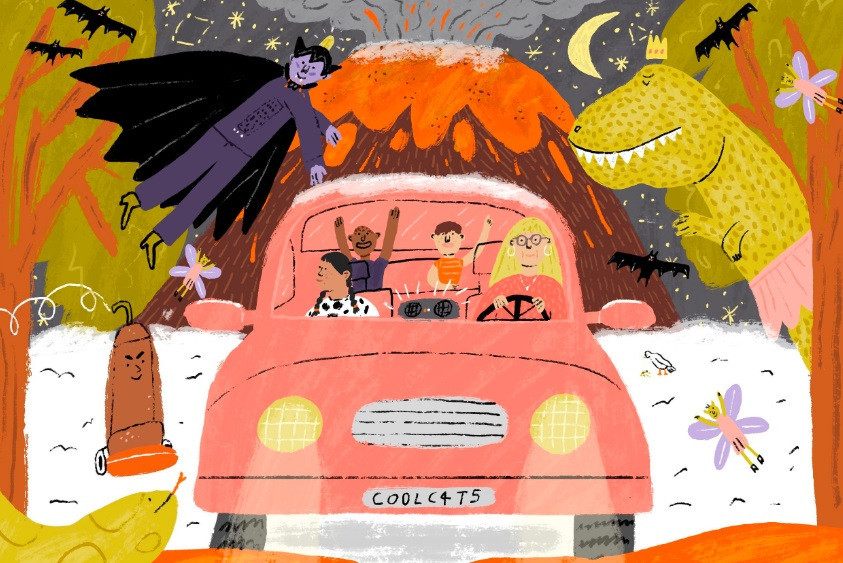 How an SEL Podcast Saved My Carpool Año de publicación: 2023 Autor: Laura Wheatman Hill Autor corporativo: Medicinal Media | Committee for Children The Imagine Neighborhood Podcasthttps://www.imagineneighborhood.org/ The Imagine Neighborhood™ podcast helps children and grown-ups grow their social-emotional skills, and talk about the things that matter with the people that matter most.Has your child ever been so angry that they wanted to smoosh something? Have they ever been scared of the babysitter? Have they ever had a hard time calming down? The Imagine Neighborhood is the show for your family. Each episode tells a story that’s amazing, fantastical, and maybe a little bananas, while it tackles the big feelings that come with growing up. And The Imagine Neighborhood gives you and your kids fun activities to do at home, in the car, or anywhere you talk to each other. How an SEL podcast saved my carpool 25 May 2023 (by Laura Wheatman Hill) My kids’ school is 15-20 minutes from our house and there is no bus.I drive my two kids, ages six and nine, and a neighbor, eight, to and from school three days a week and I let them rotate who picks what we listen to every ride. After I had to veto their picks several days in a row because they were testing the limits of what’s appropriate for all parties, even with a “radio edit” version (I’m sorry, but no Eminem for the kindergartner), I found a kid’s podcast that teaches social emotional learning (SEL) called The Imagine Neighborhood.After the first listen, which featured characters like a vampire robot vacuum and a princess dinosaur, and a world containing dangers such as lava, pixies, and an evil hamster, my kindergartner declared, “This is the greatest podcast of all time!” We proceeded to listen to every single episode available over the next few weeks and now play a new episode the minute it drops. Why teach social emotional learning in a podcast?According to Committee for Children, which helps create programs to assist children in developing life skills, including The Imagine Neighborhood, SEL is “the process of developing the self-awareness, self-control, and interpersonal skills that are vital for school, work, and life success.” Research over time shows that kids who have access to SEL interventions have positive developments both academically and socially in the short and long term. However, teaching these skills in a classroom or at home in an academic, abstract way isn’t shown to work to help your child integrate them into their lives. “You need to use stories for social emotional learning because it’s how a child can see another person’s point of view,” says Dr. Cindy Hovington, a neurologist who created Curious Neuron, a community for parents who want to learn more SEL tools, and co- founder of Wondergrade, an app that supports SEL in young children. She says empathy is much easier to convey in a story rather than a lesson because of the back and forth aspect of dialogue and character. “Someone else in the story has a consequence. Through a narrative, the child will understand both sides, how a certain event or action made a character feel and how it made the other person in the story feel,” she says. When it happens to someone else, a child can see it play out without the heightened emotion of being involved, and the empathy piece is easier to identify. The narratives are the magic of The Imagine Neighborhood. They have tapped into the problems of little kids in such a way that addresses many common issues kids face without being too overt, which would cause many nine-year-olds to roll their eyes and beg for Daft Punk. Mia Doces is the vice president of the Committee for Children. Doces says they have designed this balance of story and lesson very carefully. She explains, “Every episode has wild situations, very unique characters, and humor that ranges from slapstick to cultural references to your basic fart joke — all of which keep listeners hooked to the story. But our writers make sure that no matter how crazy things appear on the surface, the story is rooted in universal human experiences and the everyday social-emotional skills we use to navigate our emotions and cope with challenges.” Some episodes that resonated with my carpool, myself included, have been about big worries, boredom, disappointment, and loss. The parents are in on itThe host of the podcast frequently speaks directly to the parents and asks them to tell the child listeners about a time something happened to them like what is happening in the story. My carpool of sassy, smart kids usually avoids listening to what I have to say, but they actually lean in when Scotty asks me to contribute. Parental participation is also an intentional part of the design. Even if schools are teaching SEL skills, Doces says, “school-based SEL works best when kids are also learning these life skills at home with their families.” According to Hovington, “There is a misconception that SEL learning happens on the playground. SEL skill-building happens with the parent. Practice happens on the playground.” She says the best opportunities to learn new SEL skills are not in times of crisis or when problem solving, but on calm car rides home from school or before bed — the exact times we listen to The Imagine Neighborhood. In the future, Hovington says, “When a child comes back from school with a problem, that’s an opportunity for a parent to recreate or recall the story.” This resonates with audiences of The Imagine Neighborhood. Doces says, “We get letters from parents who tell us they refer to certain characters or use certain SEL-based catchphrases from the show as shorthand to help their kids draw parallels between something that’s happening to them in real time and a tool that a character learned on the show.”I haven’t sent a letter (yet), but I quote the show frequently. SEL is good for all of usTurns out, The Imagine Neighborhood, and the skills it teaches isn’t only for kids. SEL wasn’t taught in schools when most of us were kids and Doces says, “when adults listen along with the children, they’re also picking up the SEL techniques we’re sharing, and learning positive phrasing and other tools to empower them to have these family discussions in impactful ways.” Since the kids do have SEL in school, these stories provide a good segue for the students to become the teacher, and to tell us how they talk about their feelings. Parents can use the shared SEL language from curriculums and narratives like The Imagine Neighborhood as a vehicle to foster better communication in the family. Doces says parents don’t have to be masters of SEL, but “when they help children name and process their feelings, and acknowledge and support children’s positive behaviors, they’re teaching their family SEL and building a stronger, kinder future for their families.” We know positive reinforcement is successful and the message of The Imagine Neighborhood is one we can all agree on: be kind to those around you.We were driving a third-grader home from a playdate one day and The Imagine Neighborhood was playing. I heard the friend from the backseat ask, “What is this? Because I like it!” Got another one!
  مدخل االرتباط الحضري البيئي لتحقيق اإلدارة المستدامة للعمران المصري Año de publicación: 2022 Autor: Marwa Sebawy Hamed, Mohamed Fareed Mohamed Abd-Elaziz التوجه الأحادي للتعامل مع تلك القضايا وعدم وجود خطط متكاملة تعمل الحفاظ على الموارد بشكل عام وتحقيق أهداف التنمية المستدامة. لذا يهدف البحث إلى صياغة إطار منهجي لتحقيق الإدارة المستدامة للعمران المصري عن طريق تطبيق مدخل الإرتباط الحضري البيئي بالتجمعات العمرانية المصرية، لتحقيق أهداف التنمية المستدامة وتوفير متطلبات النمو السكاني. حيث يتناول البحث دراسة مفاهيم الإدارة المستدامة للعمران في ضوء تطبيق مدخل الإرتباط الحضري البيئي Urban- Environmental Nexus Approach، ودوره في تحقيق أبعاد الإدارة المستدامة والتركيز على المبادئ الأساسية لاستدامة المياه والطاقة والغذاء في التجمعات العمرانية. الأمر الذي يتطلب تحديد الأسس والمعايير الخاصة بتحقيق الإدارة المستدامة القائمة على الترابط والتشابك الخطط القطاعية والمتكاملة وذلك لمواجهة التحديات والضغوطات الحالية والمحتملة. كما يتناول البحث العديد من التجارب العالمية المختلفة لفهم العلاقات التشابكية المتكاملة بين قطاعات المياه والطاقة والغذاء مع الوضع في الاعتبار خصوصية الحالة المصرية. وذلك للوصول إلى إطار منهجي مبدئي لتحقيق الإدارة المستدامة للعمران المصري، حيث يتم تدقيق هذا الإطار بالعرض على الخبراء والمتخصصين في المجال للوصول إلى الإطار المنهجي النهائي لتحقيق الإدارة المستدامة للعمران المصري. Urban-Environmental Nexus Approach To achieve sustainable management of Egyptian urbanization Año de publicación: 2022 Autor: Marwa Sebawy Hamed, Mohamed Fareed Mohamed Abd-Elaziz In view of the high rates of population growth witnessed by urban communities, and the resulting continuous increase in pressures on water, energy and food resources, which generates some issues facing societies such as economic turmoil, issues related to climate change and other urgent issues that need intervention. This is to try to achieve the principles and goals of sustainable development for these communities, as one of the most important reasons for these issues is the unilateral sectoral decisions and plans to deal with these issues and the lack of integrated plans that preserve resources in general and achieve the goals of sustainable development. Therefore, the research aims to formulate a methodological framework to achieve sustainable management of the Egyptian urbanization by applying the approach of the urban environmental link with the Egyptian urban agglomerations, to achieve the goals of sustainable development and provide the requirements of population growth. Where the research studies the concepts of sustainable urban management in the light of applying the urban-environmental nexus approach, and its role in achieving the dimensions of sustainable management and focusing on the basic principles of water, energy and food sustainability in urban agglomerations. This requires defining the foundations and criteria for achieving sustainable management based on the interdependence and interdependence of sectoral and integrated plans in order to meet current and potential challenges and pressures. The research also deals with many different international experiences to understand the integrated interrelationships between the water, energy and food sectors, taking into account the specificity of the Egyptian case. In order to reach an initial methodological framework for achieving sustainable management of the Egyptian urbanization, this framework is reviewed by presenting it to experts and specialists in the field in order to reach the final methodological framework for achieving sustainable management of the Egyptian urbanization.