
Recursos
Exploren una amplia gama de recursos valiosos en GCED para profundizar su comprensión y promover su búsqueda, incidencia, enseñanza y aprendizaje.
1,187 resultados encontrados
 The Transforming Education Summit: A Toolkit for Education Unions Año de publicación: 2022 Autor corporativo: Education International (EI) For the first time ever, the Heads of State of the world are meeting to discuss progress in education. Convened by the UN Secretary General, the Transforming Education Summit (TES) is taking place on 19 September 2022 in New York. It is a very important opportunity for us as education unions to make our voices heard.The Summit is a crisis response: it aims to reverse the downward trends that we currently see in education, with deepened and exacerbated inequity, and cuts to education budgets. Not only is the world off track to achieve Sustainable Development Goal 4 (SDG 4), the COVID-19 pandemic has wiped out 20 years of education gains. This is why the UN Secretary-General is calling for urgent action.The Summit is the biggest international education event since the adoption of SDG4 and a significant political opportunity for all EI member organisations. There are multiple ways that education unions can engage in the lead up to the Summit.This toolkit includes EI’s key policy messages for the Summit and aims to support EI member organisations in their advocacy efforts to ensure the Summit has concrete, tangible outcomes that advance teachers’ status and rights and the fulfilment of the right to education for all.
 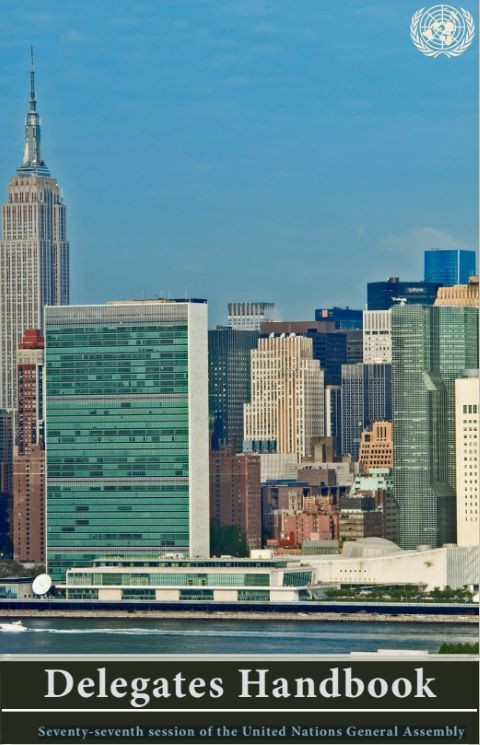 Delegates Handbook 2022: Seventy-seventh Session of the United Nations General Assembly Año de publicación: 2022 Autor corporativo: UN. Department for General Assembly and Conference Management (UN. DGACM) The Protocol and Liaison Service contributes to the Delegates’ Handbook, a booklet that contains information of a general nature about United Nations Headquarters and is applicable throughout the current session. Suggestions for changes to the booklet should be addressed to the General Assembly Affairs Branch (room S-30FW; email: gaab<at>un.org). This booklet is also available on the internet at the United Nations Delegates website as well as the General Assembly website, under Resources.
 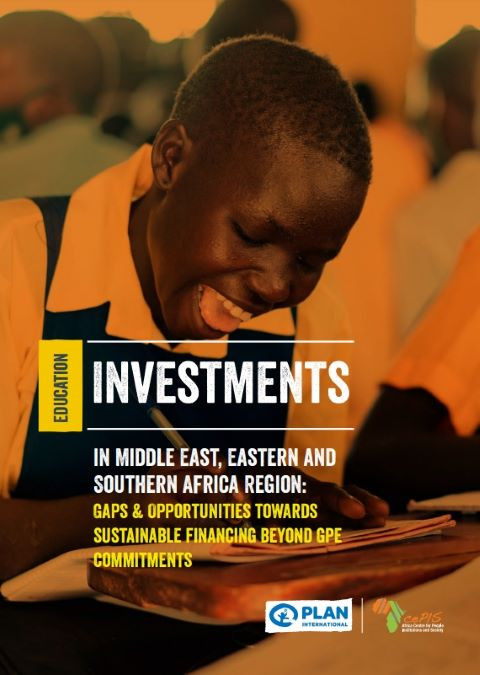 Education Investments in Middle East, Eastern and Southern Africa: Gaps & Opportunities Towards Sustainable Financing Beyond GPE Commitments Año de publicación: 2022 Autor corporativo: Plan International To achieve the goals of the global and continental agendas of repositioning access, equity, quality education and skills development as key drivers of inclusive growth and sustainable development, African governments must provide a level of predictable and sustainable investment in education. With these strategic investments, African countries can change the status quo, accelerate the pace of catching up with the developed countries and be able to compete in an increasingly technology and knowledge-based world where skills have become the “global currency of the 21st century”. Plan International in Middle East, Eastern and Southern Africa commissioned a study to assess the extent to which the Education Sector budget is adequate, gender-responsive and inclusive and to analyse education budget trends between 2019 and 2021. The focus was to generate concrete evidence regarding trends in education sector budget allocations and expenditure. Furthermore, due to the recent pandemic, the study aimed to compare current and previous allocations to detect trends/patterns in allocations and any reallocations due to COVID-19. Specifically, the study sought to: Analyse allocations (and expenditure) to the education sector with a particular focus on initiatives aimed at supporting the provision of gender-responsive and disability-inclusive education in line with the country policies; Assess the efficiency of resource allocation and use against planned expenditure; and Recommend effective strategies for CSOs and citizens to advocate for education budget increase to or above 20% of the national budget and 6% of GDP. The study focused on 10 countries in the region – Kenya, Uganda, Zambia, Malawi, Zimbabwe, South Sudan, Tanzania, Egypt, Somalia and Rwanda. With a multi-pronged research process of budget tracking and analysis, policy analysis, political economy analysis and varied data collection methods – the research findings and recommendations are ready for wider dissemination and use.
 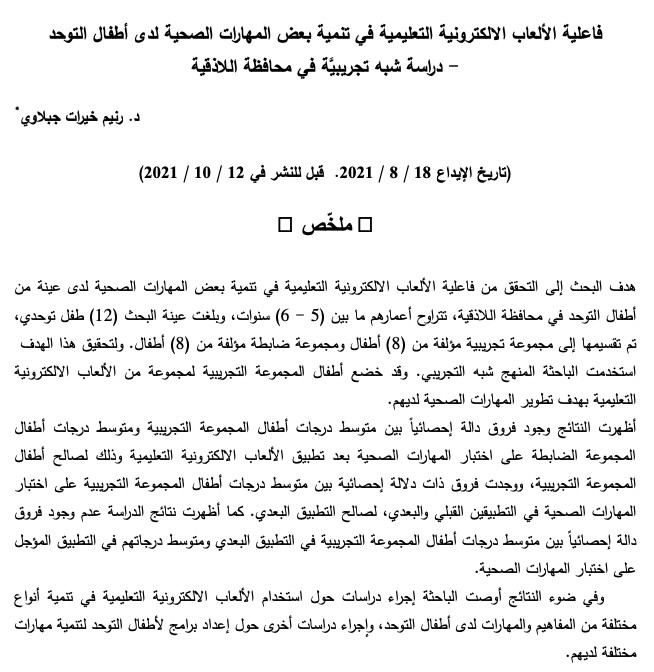 The Effectiveness of Educational Electronic Games in Developing Some Health Skills of Autistic Children Semi-Experimental Study in Lattakia Governorate (Tishreen University Journal for Research and Scientific Studies, Arts and Humanities; vol. 43, no. 5) Año de publicación: 2021 Autor: Raneem Jablawi Autor corporativo: Tishreen University "The aim of the research is to verify the effectiveness of educational electronic games in developing some health skills among a sample of autistic children in Lattakia Governorate, their ages ranged between (5-6) years, and the research sample amounted to (12) autistic children, which were divided into an experimental group consisting of (8) children and a control group consisting of (8) children. To achieve this goal, the researcher used the quasi-experimental method. The children of the experimental group were subjected to a set of educational electronic games in order to develop their health skills.The results showed that there were statistically significant differences between the average scores of the children of the experimental group and the average scores of the children of the control group on the health skills test after the application of educational electronic games, in favor of the children of the experimental group, and there were statistically significant differences between the average scores of the children of the experimental group on the health skills test in the two tribal applications. and dimensional, in favor of dimensional application. The results of the study also showed that there were no statistically significant differences between the average scores of the experimental group children in the post application and their average scores in the delayed application on the health skills test.In light of the results, the researcher recommended conducting studies on the use of educational electronic games in developing different types of concepts and skills for autistic children, and conducting other studies on preparing programs for autistic children to develop different skills for them."
 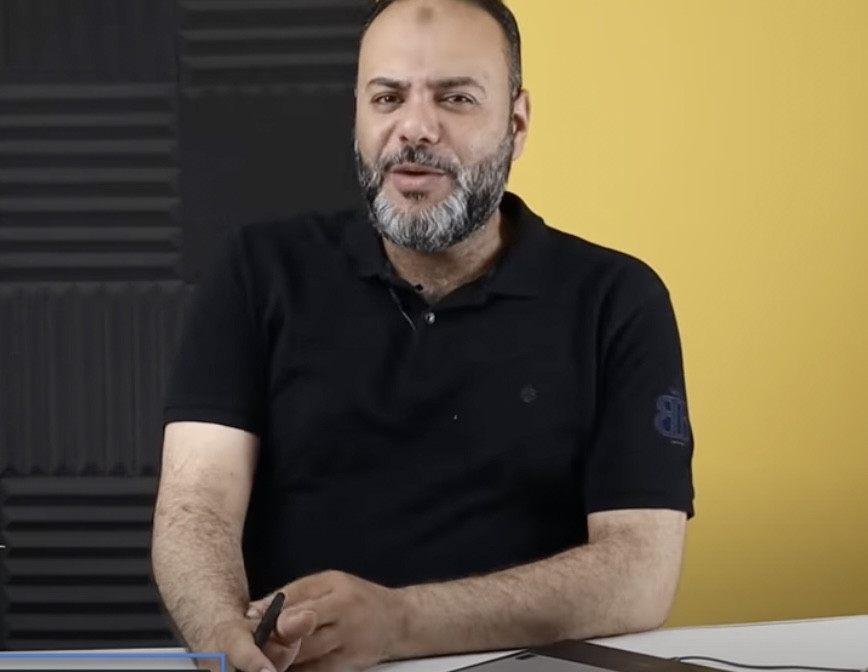 منهج تربية وطنية للصف الثالث الثانوي Año de publicación: 2022 Autor: Moahmmed Ali Autor corporativo: ELkheta Seniors يستعرض الفيديو حلقة كاملة عن منهج التربية الوطنية للصف الثالث الثانوي بمصر. يحاول المعلم أن يتحدث عن جميع المواضيع التي يحتويها المنهج، ويعمل مراجعة متكاملة للمنهج. يعتبر الفيديو مهم للطلبة الذين يدرسون باستقلالية لفهم مادة التربية الوطنية. National Education Curriculum for the Third Grade of Secondary Año de publicación: 2022 Autor: Moahmmed Ali Autor corporativo: ELkheta Seniors The video reviews a full episode of the national education curriculum for the third secondary grade in Egypt. The teacher tries to talk about all the topics included in the curriculum, and makes an integrated review of the curriculum. The video is important for students who study independently to understand civics.
 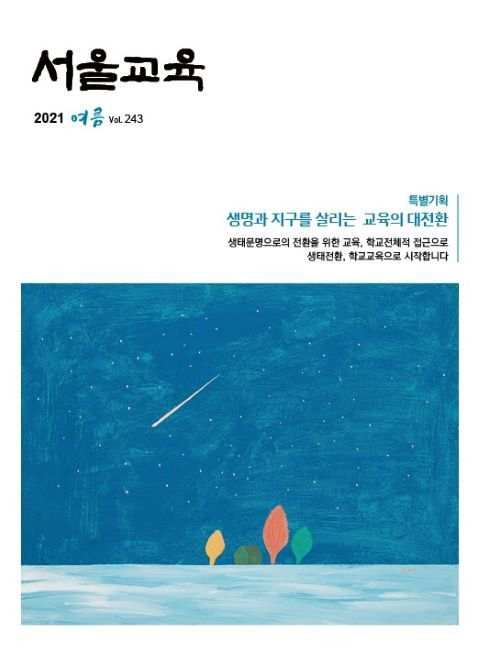 서울교육 2021년 여름호 (제63권 통권 243호) Año de publicación: 2021 Autor corporativo: 서울특별시교육청 교육연구정보원 권두칼럼:포스트 코로나, 휴먼터치(Human touch)의 시대를 기대하다 특별기획: 생명과 지구를 살리는 교육의 대전환 생태문명으로의 전환을 위한 교육, 학교전체적 접근으로생태전환, 학교교육으로 시작합니다해외교육:독일의 지속가능발전교육(ESD)과 기후위기 대응 교육 정책연구:공감 능력 신장을 위한 학교 교육, 어떻게 할 수 있을까? 본 저작물은 서울특별시교육청교육연구정보원에서 2021년 작성하여 공공누리 제 4유형으로 개방한 ‘서울교육 2021년 여름호 (제63권 통권 243호)’ 을 이용하였으며 해당 저작물은 서울특별시교육청교육연구정보원 (www.serii.re.kr)에서 무료로 다운받으실 수 있습니다.
 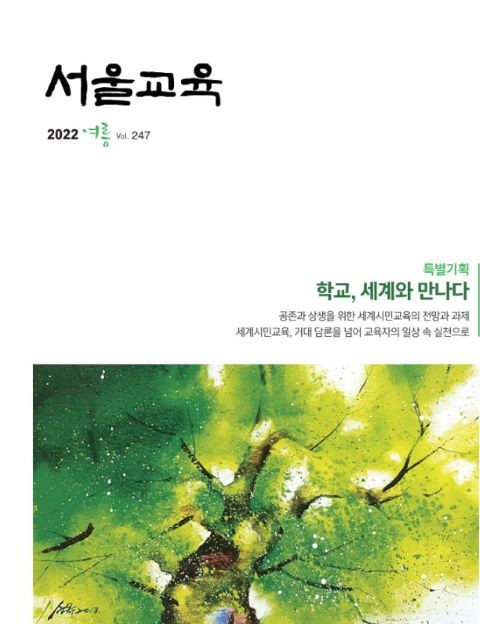 서울교육 2022년 여름호 (제64권 통권 247호) Año de publicación: 2022 Autor corporativo: 서울특별시교육청 교육연구정보원 권두칼럼:세계시민으로 사는 길 특별기획: 학교, 세계와 만나다 공존과 상생을 위한 세계시민교육의 전망과 과제세계시민교육, 거대 담론을 넘어 교육자의 일상 속 실천으로 해외교육:프랑스, 왜 다시 시민교육 강화에 나서는가? 정책연구:메타버스의 교육적 활용 방안 - 확장된 학습 공간으로서의 가능성과 한계 본 저작물은 서울특별시교육청교육연구정보원에서 2022년 작성하여 공공누리 제 4유형으로 개방한 ‘서울교육 2022년 여름호 (제64권 통권 247호)’ 을 이용하였으며 해당 저작물은 서울특별시교육청교육연구정보원 (www.serii.re.kr)에서 무료로 다운받으실 수 있습니다.
 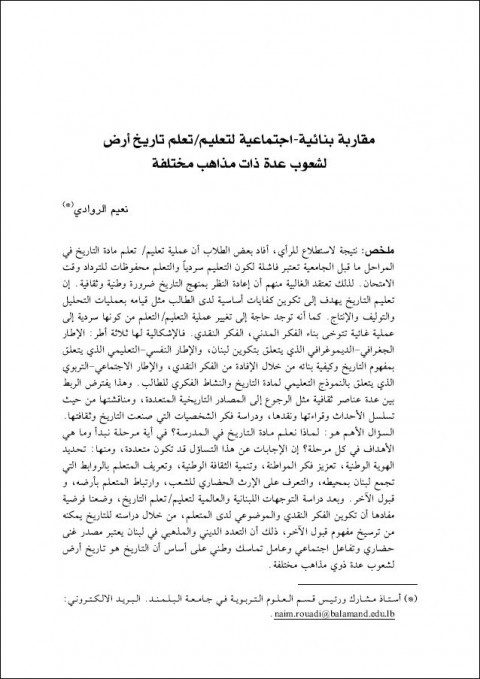 مقاربة بنائية-اجتماعية لتعليم/تعلم أرض لشعوب عدة ذات مذاهب مختلفة Año de publicación: 2012 Autor corporativo: University of Balamand نتيجة لاستطلاع للرأي، أفاد بعض الطلاب أن عملية تعليم/ تعلم مادة التاريخ في المراحل ما قبل الجامعية تعتبر فاشلة لكون التعليم سردياً والتعلم محفوظات للترداد وقت الامتحان. لذلك تعتقد الغالبية منهم أن إعادة النظر بمنهج التاريخ ضرورة وطنية وثقافية. إن تعليم التاريخ يهدف إلى تكوين كفايات أساسية لدى الطالب مثل قيامه بعمليات التحليل والتوليف والإنتاج. كما أنه توجد حاجة إلى تغيير عملية التعليم/التعلم من كونها سردية إلى عملية غائية تتوخى بناء الفكر المدني، الفكر النقدي. فالإشكالية لها ثلاثة أطر: الإطار الجغرافي-الديموغرافي الذي يتعلق بتكوين لبنان، والإطار النفسي-التعليمي الذي يتعلق بمفهوم التاريخ وكيفية بنائه من خلال الإفادة من الفكر النقدي، والإطار الاجتماعي-التربوي الذي يتعلق بالنموذج التعليمي لمادة التاريخ والنشاط الفكري للطالب. وهذا يفترض الربط بين عدة عناصر ثقافية مثل الرجوع إلى المصادر التاريخية المتعددة، ومناقشتها من حيث تسلسل الأحداث وقراءتها ونقدها، ودراسة فكر الشخصيات التي صنعت التاريخ وثقافتها. السؤال الأهم هو: لماذا نعلم مادة التاريخ في المدرسة؟ في أية مرحلة نبدأ وما هي الأهداف في كل مرحلة؟ إن الإجابات على هذا التساؤل قد تكون متعددة، ومنها: تحديد الهوية الوطنية، تعزيز فكر المواطنة، وتنمية الثقافة الوطنية، وتعريف المتعلم بالروابط التي تجمع لبنان بمحيطه، والتعرف على الإرث الحضاري للشعب، وارتباط المتعلم بأرضه، و قبول الآخر. وبعد دراسة التوجهات اللبنانية والعالمية لتعليم/تعلم التاريخ، وضعنا فرضية مفادها أن تكوين الفكر النقدي والموضوعي لدى المتعلم، من خلال دراسته للتاريخ يمكنه من ترسيخ مفهوم قبول الآخر، ذلك أن التعدد الديني والمذهبي في لبنان يعتبر مصدر غنى حضارياً وتفاعلاً اجتماعيا وعامل تماسك وطني على أساس أن التاريخ هو تاريخ أرض لشعوب عدة ذوي مذاهب مختلفة. Teaching/Learning the History of a Land with Diverse Socio-religious Groups: A Socio-constructivist Approach Año de publicación: 2012 Autor corporativo: University of Balamand A survey of the opinions of some students indicated that they viewed the teaching/learning of history they had undergone in pre-university levels of education as a wasted effort. The teaching consisted of narration, while the learning took the form of memorization of contents to be recited at the time of the examination. The majority considered a revision of the method of teaching history to be a national and cultural necessity. Given that the teaching of history has in view the acquisition by the student of basic skills, such as analysis, synthesis and composition, there is a need to change the teaching/learning process from narration to a targeted development of civic consciousness and critical thinking. The problem is posed within three frameworks: The geographic-demographic framework relating to the composition of the Lebanon; the psychological-educative framework relating to the understanding of history and how it is constructed. through the utilization of critical thinking; the social-educational framework relating to the educational paradigm to be used in the teaching of history and the intellectual activity of the student. This requires the intertwining of several educational elements such as the utilization of the various historical sources, discussing the sequence of events therein and reading them critically, while at the same time studying the thinking of the personalities who influenced the historical developments, and their cultural backgrounds. The main questions here is: Why do we teach history in schools? At which level do we start? What are the targets in each level? The answers to these questions can be many: Defining the national identity; strengthening civic thinking; developing a national culture; making the student aware of what ties the Lebanon to the surrounding region; acquainting ourselves with the cultural heritage of the people; strengthening the attachment with the land; teaching to learn to accept the other. Following an investigation of the Lebanese directives for the teaching of history, as well as the international ones, a hypothesis was proposed: the development of objective critical thinking through the study of history would consolidate the concept of the acceptance of the other. Indeed, the religious and sectarian pluralism of the Lebanon constitutes a source of cultural wealth. It is a factor of national cohesion. The history is a history of a land of many peoples with differing religious persuasions.