
Recursos
Exploren una amplia gama de recursos valiosos en GCED para profundizar su comprensión y promover su búsqueda, incidencia, enseñanza y aprendizaje.
684 resultados encontrados
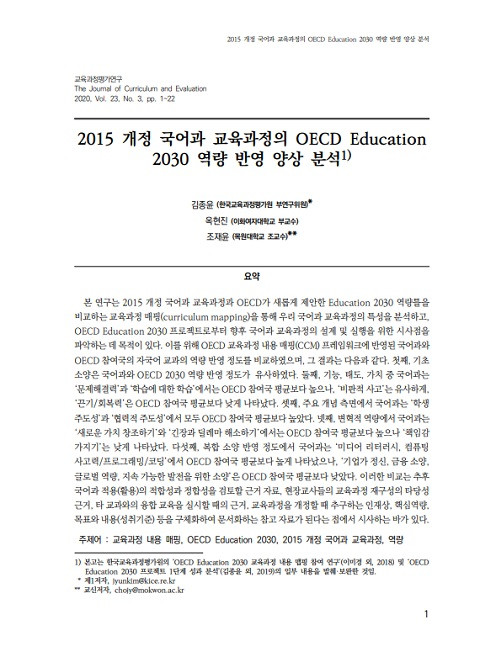 2015 개정 국어과 교육과정의 OECD Education 2030 역량 반영 양상 분석 (교육과정평가연구; Vol. 23, No. 3) Año de publicación: 2020 Autor: 김종윤 | 옥현진 | 조재윤 Autor corporativo: 한국교육과정평가원 본 연구는 2015 개정 국어과 교육과정과 OECD가 새롭게 제안한 Education 2030 역량틀을 비교하는 교육과정 매핑(curriculum mapping)을 통해 우리 국어과 교육과정의 특성을 분석하고, OECD Education 2030 프로젝트로부터 향후 국어과 교육과정의 설계 및 실행을 위한 시사점을 파악하는 데 목적이 있다. 이를 위해 OECD 교육과정 내용 매핑(CCM) 프레임워크에 반영된 국어과와 OECD 참여국의 자국어 교과의 역량 반영 정도를 비교하였으며, 그 결과는 다음과 같다. 첫째, 기초 소양은 국어과와 OECD 2030 역량 반영 정도가 유사하였다. 둘째, 기능, 태도, 가치 중 국어과는 ‘문제해결력’과 ‘학습에 대한 학습’에서는 OECD 참여국 평균보다 높으나, ‘비판적 사고’는 유사하게, ‘끈기/회복력’은 OECD 참여국 평균보다 낮게 나타났다. 셋째, 주요 개념 측면에서 국어과는 ‘학생 주도성’과 ‘협력적 주도성’에서 모두 OECD 참여국 평균보다 높았다. 넷째, 변혁적 역량에서 국어과는 ‘새로운 가치 창조하기’와 ‘긴장과 딜레마 해소하기’에서는 OECD 참여국 평균보다 높으나 ‘책임감 가지기’는 낮게 나타났다. 다섯째, 복합 소양 반영 정도에서 국어과는 ‘미디어 리터러시, 컴퓨팅 사고력/프로그래밍/코딩’에서 OECD 참여국 평균보다 높게 나타났으나, ‘기업가 정신, 금융 소양, 글로벌 역량, 지속 가능한 발전을 위한 소양’은 OECD 참여국 평균보다 낮았다. 이러한 비교는 추후 국어과 적용(활용)의 적합성과 정합성을 검토할 근거 자료, 현장교사들의 교육과정 재구성의 타당성 근거, 타 교과와의 융합 교육을 실시할 때의 근거, 교육과정을 개정할 때 추구하는 인재상, 핵심역량, 목표와 내용(성취기준) 등을 구체화하여 문서화하는 참고 자료가 된다는 점에서 시사하는 바가 있다.
  학교 미디어교육을 위한 교과 교육과정 개선 방안 연구 Año de publicación: 2021 Autor: 장의선 Autor corporativo: 한국교육과정평가원 | 대한민국 교육부 본 연구의 목적은 디지털 환경으로 변화하는 미디어 리터러시 개념을 탐색하고 국내외 동향 및 선행연구를 분석하여 각 교과에서 담당할 수 있는 미디어 교육에서의 역할을 모색함으로써 향후 학교급별・교과별 체계적인 미디어 리터러시 교육을 위한 실제적 개선 방안 마련에 있다. 본 연구에서는 먼저 미디어 리터러시와 관련하여 국내외 연구 동향 및 선행연구를 분석하고 교과별 반영 실태를 조사하였다. 다음으로 선행연구에 터해 도출된 디지털 미디어 리터러시 역량에 대한 타당화를 수행하였으며, 이러한 결과를 바탕으로 디지털 미디어 리터러시의 구성 역량을 교과 교육과정에 반영할 수 있는 방안을 제시하였다. 본 저작물은 교육부에서 2021년 작성하여 공공누리 제 4유형으로 개방한 ‘학교 미디어교육을 위한 교과 교육과정 개선 방안 연구 (장의선)’을 이용하였으며 해당 저작물은 온나라 정책연구(www.prism.go.kr)에서 무료로 다운받으실 수 있습니다.
  학교 수준 민주시민교육을 위한 교육과정 개선 방안 Año de publicación: 2020 Autor: 장의선 | 김기철 | 박진용 | 박태준 | 이인태 | 강대현 | 정윤미 Autor corporativo: 한국교육과정평가원 본 연구의 목적은 먼저 세계화가 이미 일상화 된 21세기의 학생들에게 요구되는 민주시민성을 폭넓게 성찰하고, 이를 측정할 수 있는 민주시민성 지표를 구안한 후, 구안한 지표를 준거로 민주시민성 인식 및 교육과정 현황 등 민주시민교육 관련 주요 실태와 요구를 분석하여, 민주시민교육 강화를 위한 교육과정 개선안을 도출하는 데 있다.
  미디어 속 학교폭력 양상 분석을 통한 학교폭력 예방 및 대응 방안 도출 Año de publicación: 2023 Autor: 배상률 Autor corporativo: 한국청소년정책연구원 정부 부처와 연구기관에서 발행한 학교폭력의 현황 및 추세를 살폈다. 관련 분야의 대표적인 조사로 교육부의 학교폭력 실태조사를 들 수 있다. 초등학교 4학년생부터 고등학교 3학년생을 대상으로 매년 2회에 걸쳐 이뤄지는 조사로 온오프라인에서 발생하는 학교폭력의 실태를 조사하고 있다. 방송통신위원회와 한국지능정보사회진흥원은 사이버폭력 실태조사를 통해 학교폭력 중 온라인상에서 이뤄지는 각종 폭력들의 추이를 파악하고 있다. 푸른나무재단(청소년폭력예방재단)이 매년 실시하는 ‘전국학교폭력실태조사’는 설문과 인터뷰를 통해 학교폭력의 실태뿐만 아니라 예방 및 대응 방안을 위한 청소년과 현장전문가의 의견을 수렴하는 시도를 하고 있다. 우리 사회와 언론은 청소년이 반사회적 행동을 할 때 종종 그 원인을 미디어에 돌리는 경향이 있다. 물론, 미디어가 이러한 문제에 일정 부분 영향을 미친다는 것은 부인할 수 없다. 하지만 관련 이론과 연구 결과들은 미디어의 영향이 일관되고 강력하며 즉시 나타나지 않는다는 것을 보여준다. 미디어 사용 패턴, 인구 사회학적 배경, 부모와 자녀 간의 관계 등 다양한 요인에 따라 미디어의 영향력은 다르게 나타난다. 본 보고서는 학교폭력 현황 및 추세 분석에 이어서, 수용자의 인지, 태도, 행동에 영향을 미치는 미디어 효과를 설명한 주요 이론을 고찰하고 미디어 폭력이 청소년에게 미치는 영향력을 측정한 선행연구를 살폈다. 중고등학생 연령대 청소년을 대상으로 온라인 설문조사를 하였다. 미디어가 전달하는 폭력적 콘텐츠의 소비 실태를 파악하고, 폭력적 콘텐츠 소비가 청소년의 폭력성 및 폭력 허용도에 미치는 영향력을 분석하였다. 본 연구가 학교폭력 감소와 청소년의 건강한 미디어 이용을 위한 정책 마련을 위한 기초자료와 시사점을 제공할 것으로 기대된다. * 한국청소년정책연구원이 2023년 작성한 '미디어 속 학교폭력 양상 분석을 통한 학교폭력 예방 및 대응 방안 도출(작성자: 배상률)'은 "공공누리의 제 4유형" 출처표시-상업적 이용금지-변경금지 조건에 따라 이용할 수 있으며, 해당 저작물은 '한국청소년정책연구원, https://www.nypi.re.kr/'에서 무료로 다운받으실 수 있습니다.
  지역기반 세계지역학습을 위한 AI기반 챗봇의 개발과 활용: 문화 다양성 이해를 중심으로 (국제이해교육연구; Vol. 17, No. 1) Año de publicación: 2022 Autor: 오동주 | 황홍섭 Autor corporativo: 한국국제이해교육학회 본 연구는 지역기반 세계지역학습을 위한 마이크로러닝용 AI 챗봇을 개발하고 수업에 적용하였다. 이를 위해 빅데이터 분석기법을 활용하여 해운대기반 세계지역학습을 위한 지역과 주제를 도출한 결과, 대상지역은 주로 동남아시아, 주제는 음식, 문화, 예술, 공연, 관광 등으로 나타났다. 빅데이터 분석결과를 기반으로하여 해운대기반 세계지역학습을 하기 위해 동남아시아 10개국에 관한 텍스트(사진, 지도, 동영상 등 포함) 형태의 총 1,070개 문답형태의 마이크로콘텐츠(microcontents)를 개발하였다. 개발한 마이크로콘텐츠를 포함하여 마이크로러닝(microlearnig)을 위한 챗봇 시스템을 설계하고, 구현할 수 있는 챗봇을 개발하여, 수업에 적용한 결과, 챗봇을 활용한 학습자들은 자기주도적인 맞춤형 개별화 학습을 할 수 있었다. 특히 지역기반 세계지역학습을 위해 전통적인 교실수업에서 느끼지 못했던 미래교실공간에서 자신들이 살고 있는 해운대 지역이 어떻게 동남아시아의 여러 나라의 의, 식, 주를 비롯하여 어떻게 연관되는지를 쉽게 이해하게 되어 학습자의 이해도와 만족도가 높았다. 아울러 해운대기반 세계지역학습은 탄력적 공간확대 원리를 현장에 적용할 수 있어서 창의적 수업을 통해, 교과서의 한계를 잘 극복할 수 있게 해 주었다. 학습자들은 수업을 통하여 다문화적 관점에서 다름이라는 문화의 다양성과 글로벌 관점에서 유사함이라는 상호의존성을 통하여 함께 살아가는 세계시민성의 자질을 함양할 수 있었다.
  An Analysis of the Factors Affecting East-Asian Adults’ Global Citizenship: Social capital, Threat Recognition, Information Media Utilization (Journal of Education for International Understanding; vol.16, no.3) Año de publicación: 2021 Autor: Seongkyeong Jeong | Yura Lee | Hwanbo Park Autor corporativo: Korean Society of Education for International Understanding (KOSEIU) This paper puts an in-depth study on identifying the characteristics of factors related to global citizenship in adults from South Korea, China, and Japan and analyzing the elements affecting them. For this purpose, data from the 7th World Value Survey which was undertaken in South Korea, China, and Japan were used, and they were examined with three different perspectives of social capital, threat recognition, and information media utilization to get to know the influence of variables from various aspects. Multiple regression was applied for this and the results are as follows. Firstly, the global citizenship of adults was high in the order of China, Japan, and South Korea, and the factors influencing global citizenship depend on the country. This implies that contextual factors are acting differently in the formation of the global citizenship of adults even they are from the same East Asian region. Secondly, simple contact with immigrants and foreigners in China and Japan has negative effects while having a positive effect on trust in foreigners. This suggests that an educational mechanism is required to raise trust and empathy beyond understanding immigrants simply to foster global citizenship among Chinese and Japanese adults. Thirdly, depending on the hierarchy of the sense of belonging, the impact on global citizenship was different in South Korea. Educational activities and programs should be implemented to establish the sense of global citizenship of adults in South Korea. Fourthly, the treat perception of social safety and employment insecurity in South Korea and China did not have statistical significance to global citizenship. While the higher the social safety perception the heavier the employment insecurity, adults in Japan had higher global citizenship awareness. This implies that Japanese adults perceive the problems of immigration as a matter of national or social situation and structure. Finally, the utilization of information media in all countries revealed statistical significance, which means that attitude for immigrants would vary depending on which information medica is used from those three countries. 동아시아 성인의 세계시민의식 관련 요인 분석: 사회자본, 위협인식, 정보매체활용을 중심으로 (국제이해교육연구; vol.16, no.3) Año de publicación: 2021 Autor: 정성경 | 이유라 | 박환보 Autor corporativo: 한국국제이해교육학회 본 연구는 한국, 중국, 일본 성인의 세계시민의식 관련 요인 특성을 밝히고 이에 영향을 미치는 요인을 비교 분석하기 위해 수행되었다. 본 연구는 분석을 위해 세계가치관조사 7차 조사의 한국, 중국, 일본 데이터를 활용하여 사회자본, 위협인식, 정보매체활용이라는 세 가지 차원에서 살펴보았다. 분석방법은 중다회귀분석을 적용하였다. 주요분석 결과는 다음과 같다. 첫째, 성인의 세계시민의식은 중국, 일본, 한국의 순서대로 높게 나타났으며, 성인의 세계시민의식에 미치는 영향요인은 국가별로 다르게 나타났다. 이는 같은 동아시아 지역이더라도 성인의 세계시민의식 형성에 있어서 맥락 요인이 각기 다르게 작용하고 있음을 의미한다. 둘째, 중국과 일본에서는 이민자, 외국인에 대한 단순한 접촉은 부정적 영향을, 외국인에 대한 신뢰는 긍정적 영향을 미치는 것으로 나타났으며, 이는 중국과 일본 성인의 세계시민의식을 높이기 위해서 이민자를 단순히 이해하는 것을 넘어서 신뢰와 공감을 끌어내는 교육적 기제가 필요하다는 것을 시사한다. 셋째, 한국에서는 소속감의 위계에 따라 세계시민의식에 미치는 영향이 상이하였으며, 한국 성인의 세계시민의식을 향상하기 위해서는 세계 소속감을 교육 활동과 프로그램에 적극 활용할 필요가 있다. 넷째, 한국과 중국에서는 사회안전인식과 고용불안이라는 위협인식이 세계시민의식에 아무런 통계적 유의성을 보이지 않았으며, 일본에서는 사회안전인식이 높을수록 고용불안이 앉을수록 세계시민의식이 높았다. 이는 일본 성인은 이민자 수용의 문제를 국가나 사회적 상황과 구조의 문제로 인식하고 있음을 시사한다. 마지막으로 모든 국가에서 정보매체활용이 통계적 유의성을 보였으며, 이는 세 나라 모두 어떤 정보매체를 활용하느냐에 따라 이민자 태도가 달라질 수 있음을 의미한다.
  디지털 대전환과 미래 인재상 (교육정책포럼; 2023년 12월, Vol. 366) Año de publicación: 2023 Autor corporativo: 한국교육개발원 교육시론ㅁ 디지털 대전환과 미래 인재상 현안문제진단ㅁ 디지털 시대, 교육과정에서 다루어야 할 핵심 역량ㅁ 인공지능 시대, 신직업과 미래 직업역량ㅁ 교사의 디지털 교육 역량 강화 방안ㅁ AI 디지털교과서와 교사의 역량 외국교육동향ㅁ 외국의 디지털 리터러시 교육 현황 및 시사점 교육통계ㅁ 2022 초중학생 디지털 역량 현황
  공존과 의존의 갈림길-디지털 윤리와 교육(교육정책포럼; 2024년 11월, Vol. 377) Año de publicación: 2024 Autor corporativo: 한국교육개발원 교육시론■ 공존과 의존의 갈림길-디지털 윤리와 교육 현안문제진단■ 인공지능 윤리교육과 학습데이터■ 디지털 권리 증진을 위한 필요 역량■ 디지털 윤리, 어떻게 가르칠 것인가 외국교육동향■ 미국 교육계의 딥페이크 문제 대응 및 디지털 윤리교육 교육통계■ 초중학생의 디지털 리터러시 수준
 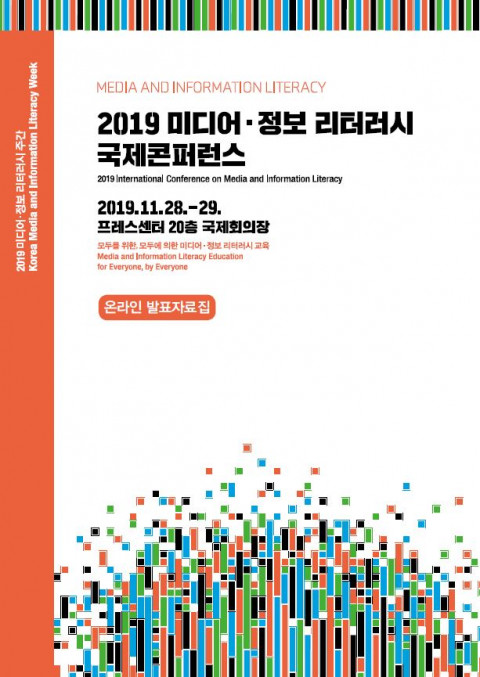 2019 미디어·정보 리터러시 국제콘퍼런스: 온라인 발표자료집 Año de publicación: 2020 Autor: Julian Sefton-Green | Matthew Johnson | Jagtar Singh | Jaehee Cho | Benjamin Thull | Jungim Ahn | Seojoong Kim | Dokyung Lee | Jaeyoung Chung | Cheungmoon Cho | Hyungtae Kim | Ohyeon Kweon | Eunryung Chong | Dayyoung Oh | Junehee Jung | Jerry Jacques | Hyeonseon Jeong | Jérémy Grosman | Anne-Sophie Collard | Maxime Verbesselt | Valentine François | Kyeong Hur | Amie Kim | Yeonju Oh | Gwanghee Kim | Minyoung Choi | Seungku Jung | Jisu Kim | Eunmi Hwang | Seongcheol Lee | Yeonju Choi Autor corporativo: 시청자미디어재단 | 전국미디어센터협의회 | 한국방송공사 | 한국정보화진흥원 | 유네스코한국위원회 | 한국교육학술정보원 2019년 미디어·정보 리터러시 주간 행사로 11월 28~29일 개최되었던 미디어·정보 리터러시 국제콘퍼런스의 온라인 발표자료집으로 미디어리터러시, 디지털리터러시, 미디어 교육의 현황과 과제 및 디지털 사회에 맞는 새로운 디지털 리터러시 모델의 필요성에 대해서 논의 하였다.