
Recursos
Exploren una amplia gama de recursos valiosos en GCED para profundizar su comprensión y promover su búsqueda, incidencia, enseñanza y aprendizaje.
1,187 resultados encontrados
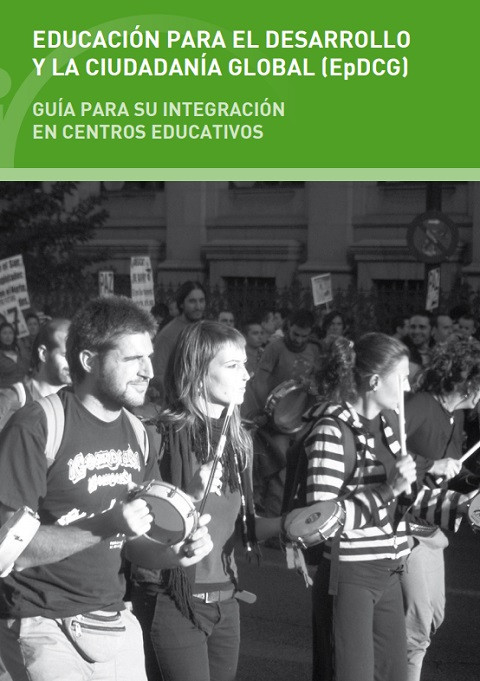 Educación para el Desarrollo y la Ciudadanía Global (EpDCG): Guía para su integración en centros educativos Año de publicación: 2016 Autor corporativo: InteRed | Agencia Española de Cooperación Internacional para el Desarrollo (AECID) InteRed presenta en este documento un marco teórico de referencia para acompañar los procesos y acciones de integración de la Educación para el Desarrollo y la Ciudadanía Global como un enfoque integral en los proyectos educativos de los Centros.
  2019 꿈다락 토요문화학교: 드림 아트랩 4.0; Bunker 465-16 결과자료집 Año de publicación: 2020 Autor corporativo: 한국문화예술교육진흥원 이 문서는 2019 꿈다락 토요문화학교 드림 아트랩 4.0 프로그램 관련, 토탈미술관에서 진행한 Bunker465-16 프로그램 결과자료집이다.융복합 프로그램에 있어서 기술을 소비하는 관점이 아닌, 왜 그러한 기술을 사용해야 하는지에 대한 이해를 바탕으로 교육 과정을 설계하였다. 전체적인 프로그램에 예술적인 맥락을 끌여들여 미래친구, 식물친구, 소리친구를 설정, 각각의 주제와 매체(AR마커, AI, 식물키트제작, 악기제작 등)를 연결시켰고, 각 과정별 다양한 아티스트와의 협업을 만들어냈다.본 자료집에는 프로그램 개발과정에서부터 실제 운영 내용(커리큘럼 등) 이후 보완 필요사항 등에 대한 관찰일지가 자세히 기록되어 있다.
 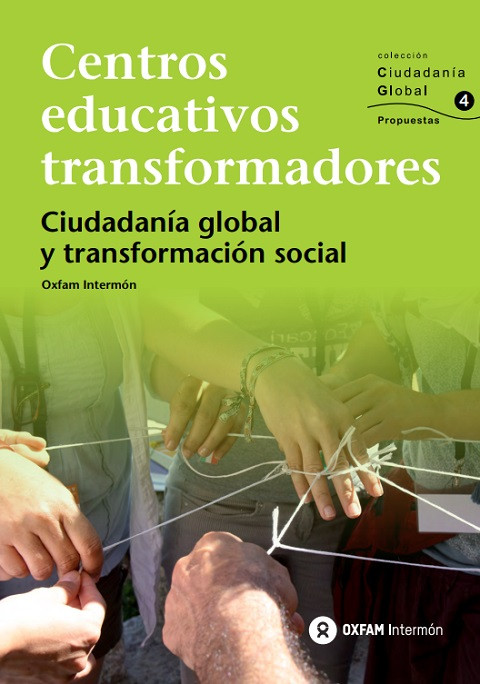 Centros educativos transformadores: Ciudadanía global y transformación social Año de publicación: 2013 Autor: Rodrigo Barahona | Joan Gratacós | Gotzón Quintana Autor corporativo: Oxfam Intermón | Agencia Española de Cooperación Internacional para el Desarrollo (AECID) Esta publicación de Oxfam Intermón parte de un proceso de investigación-acción participativa desarrollado en el seno de la comisión estratégica y de la Red de educadores y educadoras para una ciudadanía global. La pregunta que guía este proceso es: ¿qué prácticas debe tener un centro educativo para ser generador de transformación social en clave de ciudadanía global?
 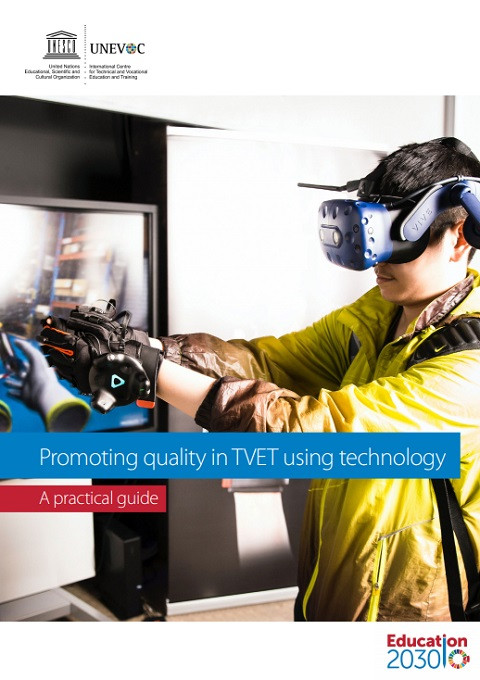 Promoting Quality in TVET Using Technology: A Practical Guide Año de publicación: 2020 Autor corporativo: UNESCO International Centre for Technical and Vocational Education and Training (UNEVOC) Technology has altered many aspects of life, including education and training. As a result of technological developments, technical and vocational education and training (TVET) has become more accessible to students, and the quality of education and training has improved too. Teachers and trainers can use digital tools to manage their tasks effectively and engage learners in digital rich environments. Learners can also use technology to learn new skills and to collaborate and interact with teachers and trainers. The COVID-19 pandemic has however underlined the current difficulties in effectively integrating technologies in the delivery of education and training. Institutions need to make constant assessments of their capacity and readiness to provide technology-rich environment for learning. At the same time, teachers’ and trainers’ readiness is also of particular importance to adopt appropriate pedagogic approaches with technology. This practical guide addresses institutions and teachers and trainers. It helps TVET institutions to understand the organizational plans to build up their capacity to stimulate digital learning. It also guides teachers that want to develop their competencies, improve their pedagogical strategies with use of technology, and learn from existing practice. By showing how technology is used in an integrated instruction model and providing helpful resources, this guide helps teachers and trainers to effectively plan their own tasks and delivery of instruction with the right technology tools.
  Schooling Disrupted, Schooling Rethought: How the Covid-19 Pandemic is Changing Education Año de publicación: 2020 Autor: Fernando Reimers | Andreas Schleicher Autor corporativo: Organisation for Economic Co-operation and Development (OECD) This report looks at how the Covid-19 pandemic is changing education and is based on a survey conducted between 25 April and 7 May 2020 that received responses from government officials, education administrators, teachers, and school administrators in 59 countries.
  The Role of Teachers in Education and Democracy: The Impact of a Research Project on Preservice Teacher Perceptions Año de publicación: 2015 Autor: Gina Thésée | Paul R. Carr | Franck Potwora Autor corporativo: McGill University. Faculty of Education This article presents reflections on a survey questionnaire related to the connection between education and democracy. A sample of 157 teacher-education students in Montreal completed a follow-up questionnaire after having participated in a research questionnaire (first study) concerning their perception and experience of the linkage between education and democracy. The first study underscored a weak democratic experience as well as an educational journey without a strong linkage to democracy, which concurs with our previous findings. However, the results of the follow-up survey indicate that participation in this inquiry generated socio-educational, epistemological, pedagogical, and methodological reflections, which could have significant implications for the perception of the role of educators. Le rôle des enseignants dans l’éducation et la démocratie: Impacts d’un projet de recherche sur la perception de futurs enseignants Año de publicación: 2015 Autor: Gina Thésée | Paul R. Carr | Franck Potwora Autor corporativo: McGill University. Faculty of Education Cet article étudie les réflexions suscitées par un questionnaire d’enquête portant sur les liens entre l’éducation et la démocratie. Un échantillon de 157 étudiants d’un programme de formation initiale des enseignants à Montréal a répondu à un questionnaire de suivi (seconde étude) après avoir rempli un questionnaire d’enquête (première étude) portant sur leurs perceptions et leurs expériences des liens entre l’éducation et la démocratie. La première étude révèle une expérience démocratique faible et un parcours éducatif pratiquement sans lien avec la démocratie, ce qui concorde avec les résultats d’études antérieures. Cependant, les résultats du questionnaire de suivi indiquent que la participation à l’enquête a suscité des réflexions d’ordre socioéducatif, épistémologique, pédagogique et méthodologique, qui pourraient avoir des retombées significatives sur leur perception du rôle de l’enseignant.
  Social and Emotional Learning and Soft Skills: USAID Education Policy Brief Año de publicación: 2019 Autor: Kalene Resler | Anjuli Shivshanker | Samantha Alvis | Chris Capacci-Carneal | Melissa Chiappetta | Lauren Greubel | Julie Hanson Swanson | Ashley Henderson | Josh Josa | Laura Lartigue | Rebeca Martinez | Leah Maxson | Olga Merchan | Yolande Miller-Grandvaux | Sandy Oleksy-Ojikutu | Rebecca Pagel | Nancy Taggart | Nina Weisenhorn | Wendy Wheaton Autor corporativo: United States Agency for International Development (USAID) Both the 2018 USG Strategy on International Basic Education and the 2018 USAID Education Policy emphasize the importance of social and emotional skills or soft skills in assuring the long-term success of children and youth. Through the Strategy and Policy, USAID is providing new opportunities to systematically design, measure, implement, and understand the impact of programs that build social and emotional skills or soft skills for children and youth.To support USAID staff and implementing partners in this work, this brief: Provides an introductory understanding of what USAID means by the terms “social and emotional skills” and “soft skills” and how to communicate about them. Specifies the desired outcomes and quality standards for programming that teach social and emotional skills or soft skills. Identifies areas in which evidence and best practices still have gaps, and areas in which we should consider investing in further learning.
  Accelerating Education for the SDGs in Universities: A Guide for Universities, Colleges, and Tertiary and Higher Education Institutions Año de publicación: 2020 Autor corporativo: Sustainable Development Solutions Network (SDSN) The aim of this guide is to help accelerate the institutional process of mainstreaming ESDGs in universities, by helping stakeholders within and outside universities understand why they should pursue this goal, and how. It aims to expand, update and refine the information provided in the previous guide based on new resources, tools, thinking, and learnings from universities working to implement ESDGs, to consider what ESDGs mean for universities. The guide touches on the pedagogical aspects of ESDGs, in terms of how they affect institutional approaches to ESDGs, but does not attempt to provide a comprehensive review of them. The Guide outlines the case for mainstreaming education for the SDGs at universities, what this does and could look like in practice, and the processes and activities universities can take to support implementation. It also provides practical guidance, resources, and case studies to inspire universities to take action and deepen their practice.
  Education and Training in a Changing Word: What Skills Do We Need? Año de publicación: 2015 Autor corporativo: UNESCO Bangkok What skills do learners need in today’s world? While academic skills have often been the focus of education systems, other skills that help us to better learn to live together and prepare us for the world of work must not be underestimated. This video highlights key messages on the importance of these skills, such as critical thinking, creativity, teamwork and empathy among many others as we enter a new era for Education 2030: towards inclusive and quality education and lifelong learning for all.