
Recursos
Exploren una amplia gama de recursos valiosos en GCED para profundizar su comprensión y promover su búsqueda, incidencia, enseñanza y aprendizaje.
3,385 resultados encontrados
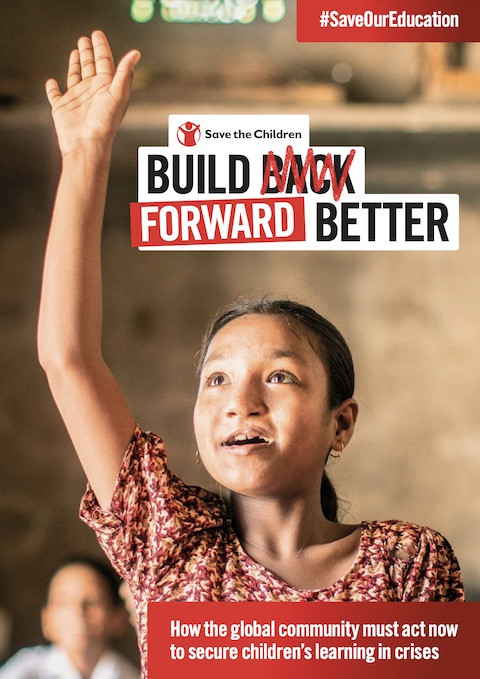 Build Forward Better: How the Global Community Must Act Now to Secure Children’s Learning in Crises Año de publicación: 2021 Autor: Emma Wagner Autor corporativo: Save the Children ‘Build back better’ has long been a rallying cry of crisis responses – and is being used frequently today. However, given the scale of the global learning crisis even before the Covid-19 pandemic – with one child in six denied their right to education – it’s vital we don’t limit our ambition to building ‘back’ to how things were. Now it’s imperative we build forward better – and differently.There’s no denying the scale of the challenge. But there’s also cause for hope. The global reach of the Covid-19 crisis has generated a shared understanding of the impact of crisis on children’s right to education. This understanding can be used to build forward better – and radically transform children’s chances.Build Forward Better presents new analysis on which countries’ school systems are most vulnerable to existing risks and future crises. And it sets out what the global community needs to do to support ministries of education in those countries to prepare now. So that, even during emergencies, education systems can provide all children with good-quality, safe and inclusive opportunities to learn.
 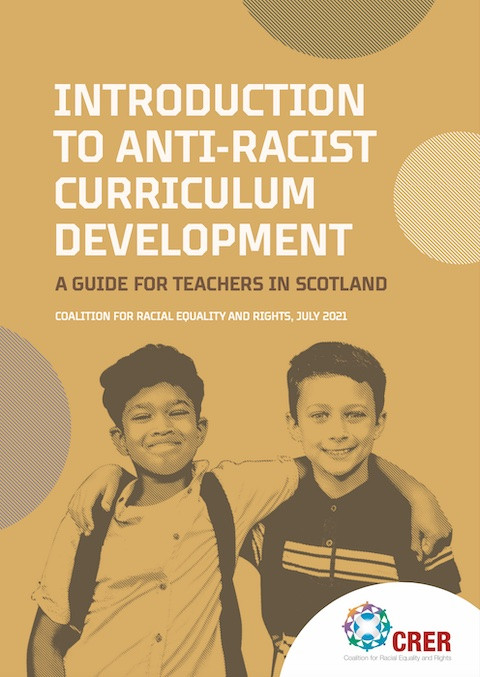 Introduction to Anti-Racist Curriculum Development: A Guide for Teachers in Scotland Año de publicación: 2021 Autor corporativo: Coalition for Racial Equality and Rights (CRER) This guide outlines why anti-racist approaches are important in curriculum development, and explores the barriers that have hampered race equality in education. It then goes on to explore three key components for developing anti-racist approaches to curriculum development: Decolonising the curriculum Building intercultural competence Reducing racism, prejudice and discrimination
 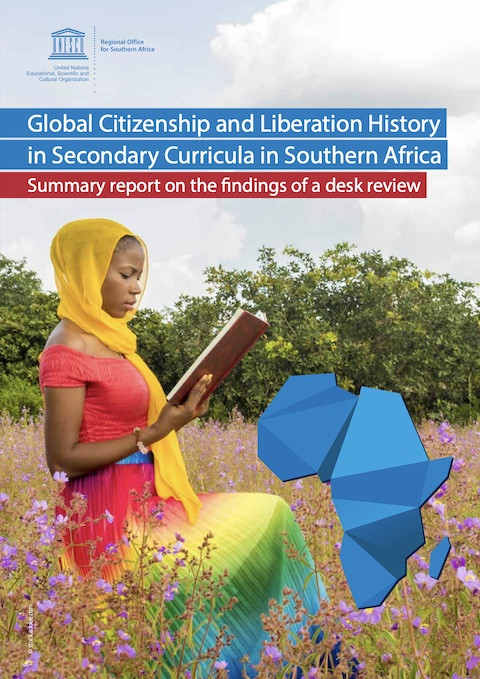 Global Citizenship and Liberation History in Secondary Curricula in Southern Africa: Summary Report on the Findings of a Desk Review Año de publicación: 2021 Autor corporativo: UNESCO Harare This report presents key findings of a desk study on the extent of integration of Global Citizenship Education (GCED) and Southern Africa Liberation History (SALH) educationin the secondary schools curricula in Angola, Democratic Republic of Congo, Eswatini, Lesotho, Malawi, Mauritius, Mozambique, Namibia, South Africa, Seychelles, United Republic of Tanzania, Zambia and Zimbabwe. Citoyenneté mondiale et histoire de la libération dans les programmes des établissements secondaires en Afrique australe: Rapport de synthèse sur les résultats d'une étude documentaire Año de publicación: 2021 Autor corporativo: UNESCO Harare This report presents key findings of a desk study on the extent of integration of Global Citizenship Education (GCED) and Southern Africa Liberation History (SALH) educationin the secondary schools curricula in Angola, Democratic Republic of Congo, Eswatini, Lesotho, Malawi, Mauritius, Mozambique, Namibia, South Africa, Seychelles, United Republic of Tanzania, Zambia and Zimbabwe.
 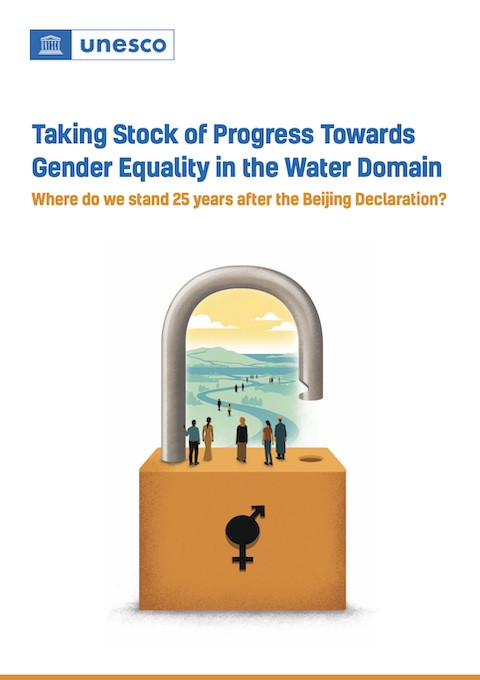 Taking Stock of Progress Towards Gender Equality in the Water Domain: Where Do We Stand 25 Years After the Beijing Declaration? Año de publicación: 2021 Autor corporativo: UNESCO World Water Assessment Programme (WWAP) Women are not only the main persons responsible for water collection in many parts of the world, but they also possess invaluable knowledge with regard to water resources and play a key role in water and sanitation management at the local and community levels. Accordingly, women must be able to enjoy equal access to water and also have an equal say in the management and governance of water resources. Twenty-five years after the Beijing Declaration and Platform for Action, progress towards gender equality through the fulfilment of the basic right to water and sanitation is clearly off track.Despite advances at the policy level in acknowledging the need to progress towards gender equality in the water sector – and the resulting benefits – large gender inequalities persist in practice. Women are generally under-represented in terms of participation at all levels: from institutional bodies that manage national or transboundary waters, to water-related institutions such as governmental water agencies and water utilities, to local water management institutions.This report provides a detailed overview of the existing and emerging challenges to gender equality in the water domain with a particular focus on: access to water, sanitation and hygiene (WASH), health, employment,climate change management, water governance, education and training, and data collection and funding. Systematic and sustained efforts to eliminate these inequalities are essential to achieve meaningful and lasting gender equality in the water sector, and to promote sustainable development in general.Governments, international organizations, professionals and policy-makers in the water sector, academia and NGOs are invited to join forces to accelerate the achievement of gender equality in water for a more just, sustainable and peaceful future.
  The Impact of COVID-19 on Inclusive Education at the European Level: Literature Review Año de publicación: 2021 Autor corporativo: European Agency for Special Needs and Inclusive Education | European Commission The coronavirus (COVID-19) pandemic has affected learners around the world. School closures forced emergency responses from education systems, resulting in various forms of remote schooling. The crisis highlighted pre-existing inequalities in education and provided a reason for systemic change in education worldwide.This literature review aims to map evidence and identify acknowledged ways in which COVID‑19 has impacted on education in general and inclusive education in particular at European and national levels. The intention is to provide a comprehensive overview of key messages for Agency member countries. It will also inform possible future Agency work on this topic.
  10 Myths About... Inequality Worldwide: Sorting Facts From Fiction Año de publicación: 2021 Autor: Colm Regan Autor corporativo: Irish Aid | DevelopmentEducation.ie This material explores 10 common myths about market economics, women’s empowerment and the technology divide. This pocket-size booklet includes: Why does thinking about inequality matters 10 short myths about the economics, gender equality and the role of technological solutions to inequalities Links to the Sustainable Development Goals References per each myth following a fact/fiction and explainer approach
 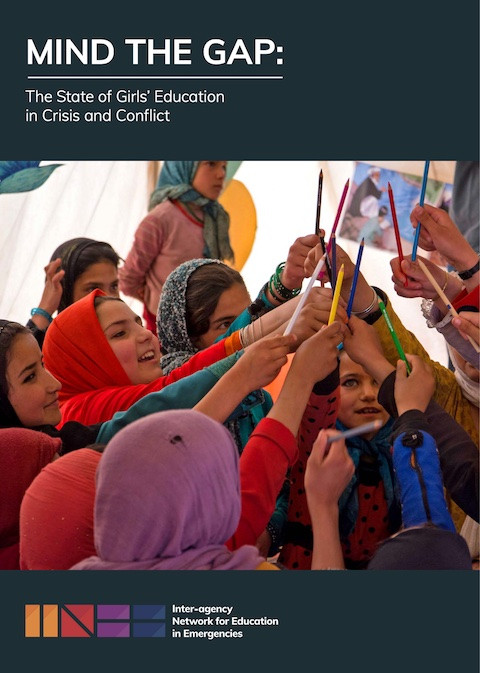 Mind the Gap: The State of Girls’ Education in Crisis and Conflict Año de publicación: 2021 Autor corporativo: Inter-agency Network for Education in Emergencies (INEE) This report summarizes progress, gaps, challenges and opportunities in improving education and training for girls and women affected by conflict and crisis. The report aims to support the Charlevoix Declaration on Quality Education’s commitment to enhance the evidence base and monitor progress toward gender-equitable education in crises. The report draws from data on 44 crisis-affected countries, from recent research, and from a set of case studies of interventions in a range of crisis-affected contexts.
 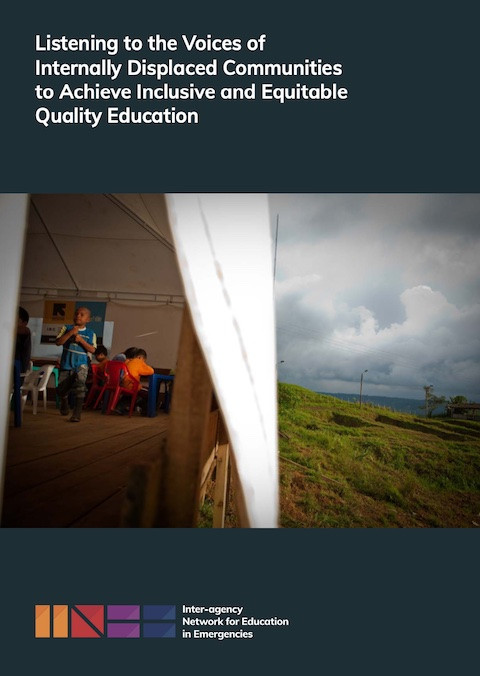 Listening to the Voices of Internally Displaced Communities to Achieve Inclusive and Equitable Quality Education Año de publicación: 2021 Autor: Caroline Keenan Autor corporativo: Inter-agency Network for Education in Emergencies (INEE) This paper outlines the real-life day-to-day challenges young IDPs experience when seeking access to quality education, which is fundamental to their healthy development and future life chances. It reflects the perspectives of teachers who have been displaced, and the challenges they have faced both personally and professionally in attempting to support the learning of children and young people in their communities. Young IDPs and internally displaced teachers shared these experiences in a series of five roundtable events hosted by the Inter-agency Network for Education in Emergencies (INEE) in March and April 2021. The paper also provides insights from other roundtable participants, including education in emergencies (EiE) practitioners, government representatives, United Nations (UN) staff, members of international non-governmental organizations (INGOs) and local civil so- ciety, and other stakeholders who are working to support access to education in displaced communities. They all are calling for taking urgent and concrete action to ensure access to quality education for internally displaced children and young people. The United Nations Secretary-General’s High-Level Panel has a unique opportunity to influence the changes needed to achieve this. The recommendations made in the panel’s final report to the Secretary-General and United Nations Member States will be critical to the future outcomes of millions of children and young people around the world.
 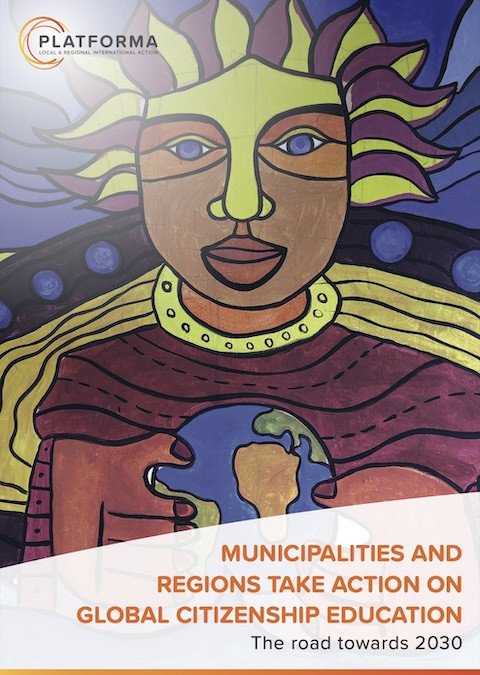 Municipalities and Regions Take Action on Global Citizenship Education: The Road Towards 2030 Año de publicación: 2021 Autor: Aurèle Destrée | Tereza Čajková Autor corporativo: PLATFORMA | European Union (EU) Development Education and Awareness Raising (DEAR)/Global Citizenship Education (GCE) can cultivate the spirit of the 2030 Agenda because it helps acquiring missing knowledge on global interconnections and creates spaces for enquiries.Whilst old constraints still remain and new challenges are appearing, local and regional governments continue to innovate, experiment and work hand in hand with key partners, including with their peers across the globe, to find new solutions and achieve their ambitions.Discover in this publication how local and regional governments are active in supporting learning and fostering changes in a context of socio-economic recovery plans.