
Recursos
Exploren una amplia gama de recursos valiosos en GCED para profundizar su comprensión y promover su búsqueda, incidencia, enseñanza y aprendizaje.
1,187 resultados encontrados
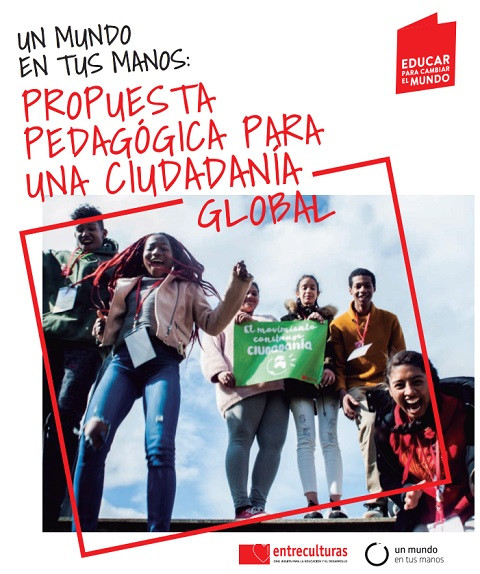 Un Mundo en tus Manos: Propuesta Pedagógica para una Ciudadanía Global Año de publicación: 2019 Autor: Jessica García Fernández | Irene Ortega Guerrero | Davinia de Ramón Felguera | Encarna Duran Costell | Alberto Medina Bravo | Clara Maeztu Gomar | Yénifer López Ramos Autor corporativo: Fundación Entreculturas Este documento es una propuesta pedagógica de Entreculturas para educar en Ciudadanía Global. Cubre la metodología, recursos y ejemplos de cómo Entreculturas viene trabajado con adolescentes, jóvenes y educadores y educadoras durante los últimos años.
  Minding Our Minds during COVID-19: Helping School Going Children Manage Their Mental Health Año de publicación: 2020 Autor: Huma Masood | Cynthia Saxena Autor corporativo: UNESCO New Delhi This guide provides an outline of how teachers and parents can address the issue of mental health amongst students. The sections in this guide cover basic information about coronavirus, explanation of anxiety in school going children, as well as ways by which students can take care of their mental health during this crisis. The sub-sections of the guide comprise guidelines outlining the duties and responsibilities that teachers and parents/ caregivers must follow to ensure students’ mental health is not negatively impacted by the COVID-19 pandemic. Additionally, sub-sections of the guide provide activities and exercises that teachers and parents can utilize to engage children with to ensure their wellbeing during these difficult times.
  [Summary] Rethinking Learning: A Review of Social and Emotional Learning for Education Systems; Summary for Decision Makers Año de publicación: 2020 Autor corporativo: Mahatma Gandhi Institute of Education for Peace and Sustainable Development (MGIEP) The publication, titled “Rethinking Learning: A Review of Social and Emotional Learning (SEL) for Education Systems” was worked upon from 2018 to 2020. The purpose of this publication was to review the latest research on SEL and to present scientific evidence for why SEL is key to education, and by that corollary, to achieving the United Nations (UN) Sustainable Development Goals (SDGs), specifically SDG 4, Target 7 that focuses on building peaceful and sustainable societies through education.This summary, aimed at decision makers, synthesises and integrates the main findings, challenges and recommendations from the eight chapters of the full Review. The key questions that guided the Review were: (i) What constitutes an SEL intervention; (ii) Why and when SEL interventions are necessary; (iii) The science and evidence supporting SEL interventions; (iv) How can SEL be implemented; and (iv) The cost and benefits of SEL interventions.
  Aboriginal Worldviews and Perspectives in the Classroom: Moving Forward Año de publicación: 2015 Autor corporativo: Province of British Columbia This resource presents how the BC Ministry of Education is embedding Aboriginal perspectives into all parts of the curriculum in a meaningful and authentic manner. It will also help educators to move ahead with transformative practice in relation to Aboriginal education. Visions du monde et perspectives autochtones dans la salle de classe : Aller de l’avant Año de publicación: 2015 Autor corporativo: Province of British Columbia Cette ressource présente comment le Ministère de l’Éducation de la Colombie-Britannique se propose d’intégrer, de manière significative et authentique, des perspectives autochtones à toutes les parties du programme d’études. Cela aidera également les éducateurs à essayer des pratiques transformatrices en matière d’éducation autochtone.
  School Polylingual Education in Kazakhstan (Turkic-Russian, Turkic-English, Turkis-Russian-English) Año de publicación: 2015 Autor: Dzhusupov M. This article deals with a problem of bilingual and polylingual education at school, lyceum and college of Turkic Republic of CIS on the illustration of Kazakhstan; it is drawn an analogy (parallel) between modern polylingual education of — Soviet period; active ingress of English language in a system of school polylingual education has been analyzed; the domination of Russian language in polylingual educational process has been proved, it is determined an educational status of Russian language not as adoptive, but as obligatory general subject at school and in the institute of higher education and educational status of English language as foreign, i.e. as an alternative (optional) subject. Школьное полиязычное образование в Казахстане (тюркско-русское, тюркско-английское, тюркско-русско-английское) Año de publicación: 2015 Autor: Dzhusupov M. В статье исследуется проблема би- и полилингвального образования в школе, лицее и колледже тюркоязычных республик СНГ на примере Казахстана; проводится параллель между современным полиязычным образованием в системе среднего и среднего специального образования с языковым образованием советского периода; анализируется активное вхождение английского языка в систему школьного образования; доказывается доминирование русского языка в полилингвальном образовательном процессе; определяется образовательный статус русского языка как неродного, но как обязательной общеобразовательной дисциплины в школе и в вузе, а также образовательный статус английского языка как иностранного.
  L'utilisation des médias sociaux dans l'éducation de l'Holocauste Autor corporativo: International Holocaust Remembrance Alliance (IHRA) Les médias sociaux est une forme en pleine expansion de la communication et de la communauté dans notre monde et dans l'éducation plus spécifiquement. éducateurs Holocauste sont chargés de déterminer la meilleure façon d'utiliser cet outil dans leur programmation sans programme ou l'intégrité objet compromettant. Ces lignes directrices décrivent les considérations et les pratiques dans le déploiement de médias sociaux dans l'environnement éducatif de l'Holocauste. Using social media in Holocaust Education Autor corporativo: International Holocaust Remembrance Alliance (IHRA) Social media is a rapidly expanding form of communication and community in our world and in education more specifically. Holocaust educators are tasked with determining how best to use this tool in their programming without compromising programme or subject integrity. These guidelines outline considerations and practices in deploying social media in the Holocaust educational environment.
  OECD 학습 나침반 2030: 변혁적 역량과 민주시민교육의 접점 Año de publicación: 2019 Autor: 김아미 Autor corporativo: 경기도교육연구원 본 연구는 OECD 학습 나침반 2030(Learning Compass 2030)에서 논하는 변혁적 역량(transformative competencies)이 무엇을 의미하는지 살펴보고, 이에 대한 교육적 해석과 실천을 위해 민주시민교육과의 접점을 찾아 ‘변혁적 역량’을 지원할 수 있는 교육 방향 및 방안을 도출하고자 하였다. 또한 이를 통해 본 연구는 어린이·청소년인 학습자의 사회 변혁적 행동 능력 및 권리가 강조되는 국내외 맥락에서 교육적 대응을 위해 고려해야할 이슈들을 제안하는 것을 목적으로 한다.