
Recursos
Exploren una amplia gama de recursos valiosos en GCED para profundizar su comprensión y promover su búsqueda, incidencia, enseñanza y aprendizaje.
1,322 resultados encontrados
 Global Citizenship Education in the Primary Geography Curriculum of the Republic of Korea: Content Analysis Focusing on the Semantic Structure of 2009 Revised School Curriculum (Journal of the Korean Geographical Society; Vol. 49, No. 6) Año de publicación: 2014 Autor: Dongmin Lee Autor corporativo: Korean Geographical Society The purpose of this study is to analyze the share of global citizenship education in the 2009 Revised Social Studies (geography area) School Curriculum of the Republic of Korea. I selected the achievement standards of the geography domain in the fifth and sixth grades as the subjects of analysis. The chosen subjects were examined using content analysis: I used KrKwic, a Korean language content analysis tool, to analyze the content and drew a semantic network of the analysis results using UciNet/NetDraw. I found that the geography domain of the 2009 Revised Primary School Curriculum included the concepts of and factors of global citizenship education. However, global citizenship education did not account for a major portion of the curriculum, and the curriculum achievement standards were noticeably nation-state centered. Global citizenship education factors were not closely associated with to other related factors in fact, they even revealed a isolated pattern. These findings suggest that the inclusion of global citizenship education in primary geography education is limited, because the connections between global citizenship education and related contents, such as the environment, sustainable development, conflict, and cooperation, are probably impeded. Globalization accompanies the transformation of territories, identities, and the relations between nation-states and the world, although nation-states continue to play a significant role in the globalized worlds. Therefore global citizenship education, a educational trend focusing on the global community, is particularly important and is required in the geography curriculum of the global era. I expect that the examination undertaken in this study to contribute to future curriculum revisions regarding globalizatin and global citizenship. 초등지리 교육과정에 반영된 세계시민교육 관련 요소의 구조적 특성에 관한 연구: 2009 개정 교육과정 성취기준에 대한 내용분석을 중심으로 (대한지리학회지; Vol. 49, No. 6) Año de publicación: 2014 Autor: 이동민 Autor corporativo: 대한지리학회 본 연구의 목적은 현행 2009 개정 초등사회과 지리영역 교육과정에 반영된 세계시민교육 관련 요소의 구조적 특성을 분석하는데 있다. 분석대상으로는 세계에 관한 부분을 다룬 5~6학년군 지리영역 교육과정의 성취기준을 선정하였으며, 한글 텍스트의 내용분석을 위한 소프트웨어인 KrKwic 및 의미연결망 분석도구인 UciNet/NetDraw를 활용하여 관련 개념의 출현빈도 및 의미연결망, 연결중심성을 분석하였다. 분석 결과 2009 개정 초등사회과 지리영역 교육과정은 세계시민성 함양 등 세계시민교육의 이상과 요소를 반영하고는 있지만, 교육과정상의 세계에 대한 단원들은 세계나 세계공동체 등 세계시민교육 관련 요소보다는 주로 국가를 중심으로 구성되는 특성을 보이고 있었다. 세계시민교육 관련 요소는 교육과정 성취기준상에서의 출현빈도가 낮았을 뿐만 아니라, 세계와 관련된 주요 개념들과 밀접한 관계를 맺지 못한채 사실상 고립되다시피한 특성을 나타내었다. 이로 인해 환경 및 지속가능개발, 갈등, 협력 등 세계시민교육적으로 접근할 필요성이 높은 개념들 역시 세계시민교육적인 관점과 연결될 수 있는 가능성이 제한될 수 있다는 문제점도 지적된다. 세계화 시대에는 국가도 중요한 역할을 하지만, 기존의 국가 경계가 투과적인 형태로 변화하고 국경을 넘어선 세계공동체적 관점이 중요시되는만큼 지리교육 역시 이러한 현실을 감안하여 세계시민교육적 요소를 보다 적극적으로 반영할 필요성이 제기된다. 이러한 논의를 향후 교육과정 개정에 반영함으로써, 국가뿐만 아니라 세계공동체 또한 중요시되는 세계화 시대에 보다 높은 적합성을 갖는 교육과정을 구성할 수 있으리라고 기대된다.
  Digital Technologies to Advance Global Citizenship Education in Schools Año de publicación: 2020 Autor: Maria Barry | Gabriela Martinez Sainz Autor corporativo: Dublin City University. Institute of Education. Centre for Human Rights and Citizenship Education | Trócaire How can technology be used in classrooms to advance Global Citizenship Education? That is the general question that guides the present report as a result of a research project conducted at the Centre for Human Rights and Citizenship Education in partnership with Trócaire. The overall aim of the project was to develop a knowledge base on the contribution of digital technologies (DT) to school-based GCE programmes and teaching. It consisted of a systematic review of the most recent literature and published evidence, a discussion with experts in the field of digital technologies and education, and an exploration of teacher practices in Ireland and beyond.
  The Intersection and Division between Ideological and Political Education and Civic Education: Starting from the question of the Jewish Question (Journal of North Minzu University; No. 2) Año de publicación: 2020 Autor: Liu Yan Autor corporativo: North Minzu University Based on the analysis of Marx’s critique of western citizenship contained in On the Jewish Question, ideological and political education and citizenship education have overlaps and divergences in three aspects, core content, basic attributes and value orientation:the difference between actual and expected of citizenship, the difference between the unity and fragmentation of political personality and social personality, the difference between the authenticity and contradiction of patriotism education and the cultivation of international vision. Compared with civic education, ideological and political education does not have any regrets, but has characteristics and advantages that civic education does not have.
 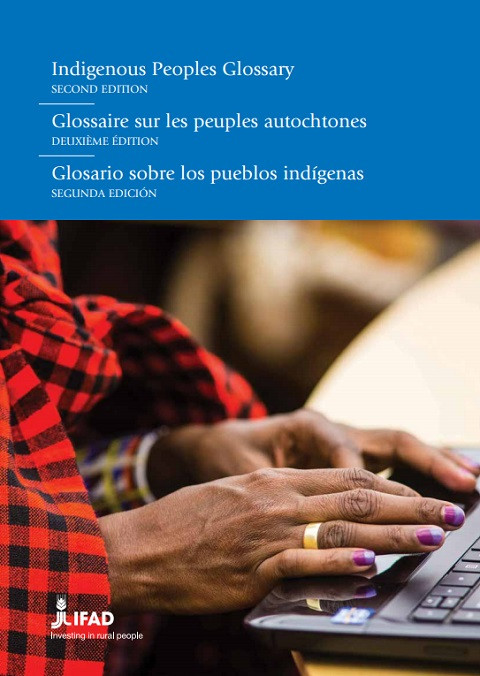 Indigenous Peoples Glossary Año de publicación: 2018 Autor corporativo: International Fund for Agricultural Development (IFAD) The purpose of this glossary is to ensure consistency and accuracy of terminology in English, French and Spanish, and standardize the terminology used in relation to indigenous peoples in official documentation and publications, and in all aspects of meeting preparations. It is intended for use by IFAD staff, indigenous peoples' organizations and other interested parties. Terms and definitions are accompanied by details of the source document and its date of publication.
  第 2178(2014)号决议 2014 年 9月 24 日安全理事会第 7272 次 Año de publicación: 2014 Autor corporativo: United Nations Security Council This resolution expanded the counter-terrorism framework by imposing obligations on member states to respond to the threat of foreign terrorist fighters. Through the resolution, the Council condemned violent extremism and decided that Member States shall, consistent with international law, prevent the "recruiting, organizing, transporting or equipping of individuals who travel to a State other than their States of residence or nationality for the purpose of the preperation, planning of, of participation in terrorist acts." Expressing concern over the establishment of international terrorist networks, the Council underscored the "particular and urgent need" to prevent the travel and support for foreign terrorist fighters associated with the Islamic State and the Levant (ISIL), Al-Nusra Front (ANL) and other affiliates or splinter groups of Al-Qaida. In that context, the Council, through the resolution, decided that all States shall ensure that their legal systems provide for the prosecution, as serious criminal offences, of travel for terrorism or related training, as well as the financing or facilitation of such activities. Member States, it also decided, shall prevent entry or transit through their territories of any individual about whom that state had credible information of their terrorist-related intentions, without prejudice to transit necessary for the furtherance of judicial processes. It called on States to require airlines to provide passenger lists for that purpose. Outlining further measures for international cooperation to counter international terrorism and prevent the growth of violent extremism, it expressed readiness to designate additional individuals for sanctions listings, and directed the United Nations counter-terrorism subsidiary bodies to devote special focus to foreign terrorist fighters, assessing the threat they posed and reporting on principal gaps in Member States' abilities to suppress their travel.
  Human Rights Stories: Tales of Human Rights Defenders for Primary Schools Año de publicación: 2012 Autor: Claire Glavey | Fiona O’Shea | Valeria Navarro Autor corporativo: Amnesty International Ireland | Irish Aid This resource pack has been developed by Amnesty International Ireland in consultation with an advisory and piloting group of primary school teachers. The concept for the resource pack originated with primary school teachers who identified storytelling as a powerful medium through which a range of concepts and topics can be introduced in the classroom. Human rights issues can appear daunting, distant and theoretical. Through the familiar medium of storytelling, human rights situations can be explored on a level at which children can encounter the real life impact of human rights in practice. Engaging with stories through discussion, creative thinking and character exploration develops the skill of empathy. This brings about the realisation that human rights belong to everyone and that we all have a role to play in ensuring that human rights are protected locally and globally.
  Mapping Digital Literacy Policy and Practice in the Canadian Education Landscape Año de publicación: 2015 Autor: Michael Hoechsmann | Helen DeWaard Autor corporativo: MediaSmarts This paper Mapping Digital Literacy Policy and Practice in the Canadian Landscape draws on policy and curriculum documents from across Canada to synthesize key concepts and best practices in current digital literacy education. Glosario sobre los pueblos indígenas Año de publicación: 2018 Autor corporativo: International Fund for Agricultural Development (IFAD) La finalidad de este glosario es asegurar la coherencia y la exactitud de la terminología en español, francés e inglés, así como normalizar la terminología en materia de pueblos indígenas que se emplea en la documentación y las publicaciones oficiales, y en todos los aspectos relativos a la preparación de reuniones. Sus destinatarios son el personal del FIDA, las organizaciones de pueblos indígenas y otras partes interesadas. Los términos y las definiciones van acompañados de información sobre el documento de origen y su fecha de publicación. Glossaire sur les peuples autochtones Año de publicación: 2018 Autor corporativo: International Fund for Agricultural Development (IFAD) Le but de ce glossaire est de garantir la cohérence et la précision de la terminologie relative aux peuples autochtones, et ce en anglais, en espagnol et en français, et d’uniformiser cette terminologie dans les documents officiels ainsi que dans tout ce qui a trait à l’organisation de réunions. Il a été établi à l’intention du personnel du FIDA, des organisations des peuples autochtones et d’autres parties concernées. À côté de chaque terme, on trouvera le document source et sa date de publication.