
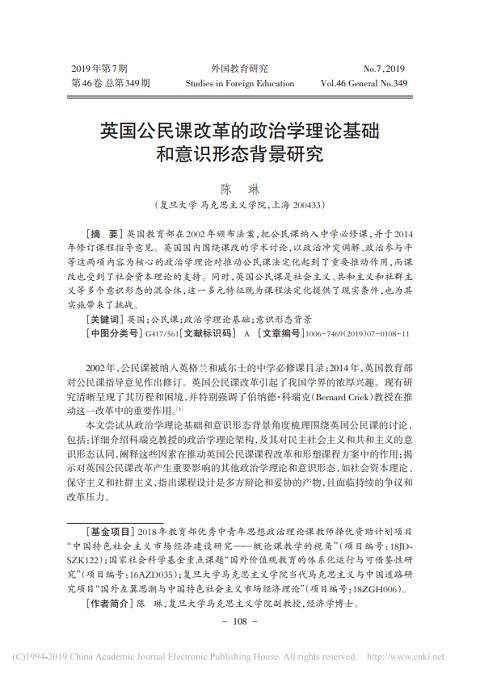
The Theoretical Foundation and Ideological Background of the Citizenship Curriculum Reform in England (Studies in Foreign Education; Vol. 46, No. 7)
- Auteur
- Chen Lin
- Auteur institutionnel
- Northeast Normal University
- ISBN
- ISSN 1006-7469
- Collation
- p. 108-118
- Langue de la ressource
- Chinois
- Année de publication
- 2019
- Type de ressource
- Research papers / journal articles
- Niveau d’éducation
- Enseignement secondaire
- Région
- Asie et Pacifique
- Lieu de publication
- Changchun
Citizenship became part of the compulsory courses of secondary schools in England in 2002. The guideline was revised in 2014. Fierce academic debates shaped the curriculum reform. Political theory of political conflict mediation and political participative equality played an important role in promoting the legalization of Citizenship education. The wide acceptance of social capital theory also helps to win the necessary support. The current curriculum is a mixture of various ideologies such as socialism, republicanism and communitarianism. This multi-feature provides both pragmatic conditions for the curriculum’s legalization and challenges for its implementation.
Ressources associées
-
 IIEP-UNESCO 12th Medium-Term Strategy: 2026–2029
 -
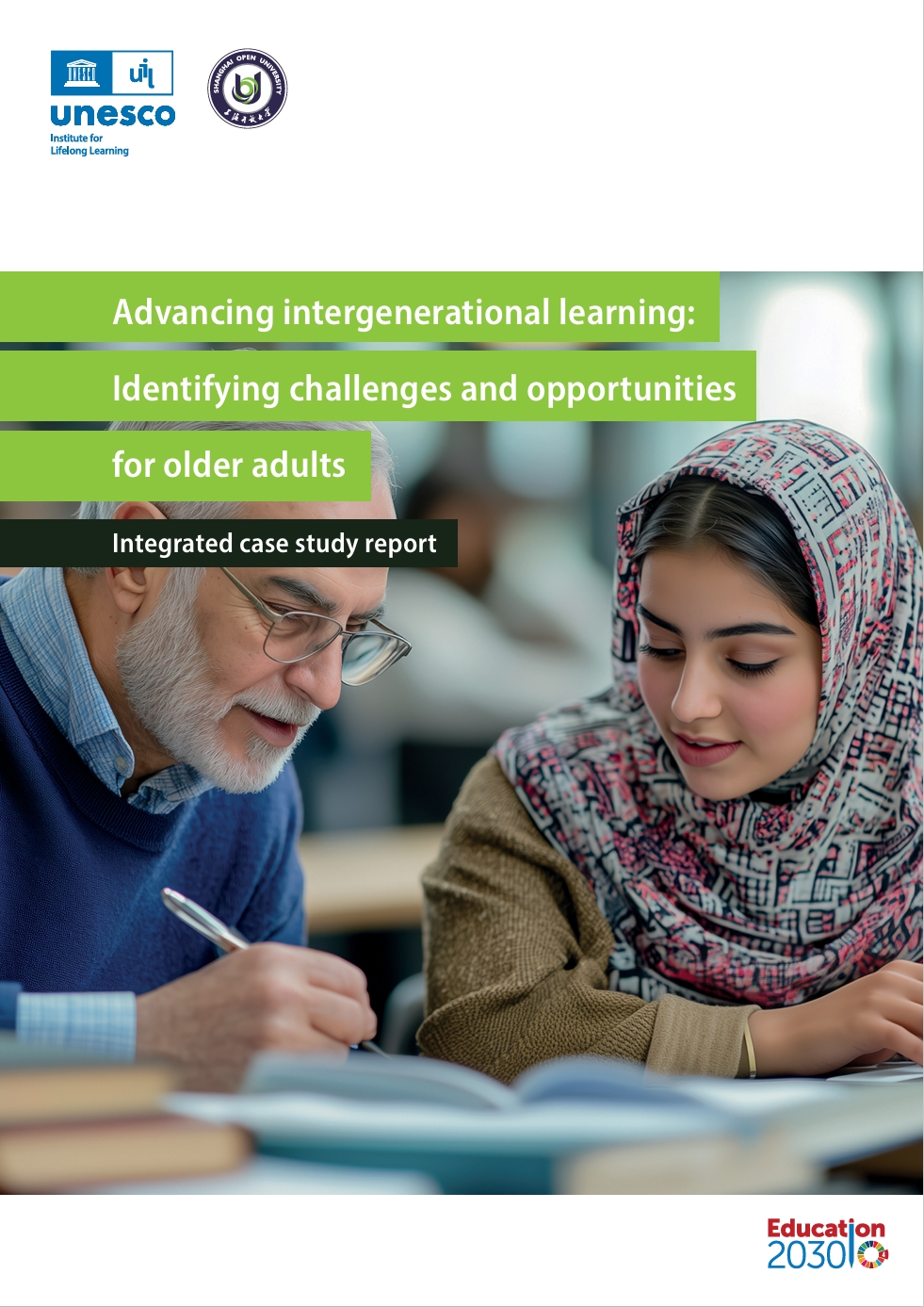 Advancing Intergenerational Learning: Identifying Challenges and Opportunities for Older Adults; Integrated Case Study Report
 -
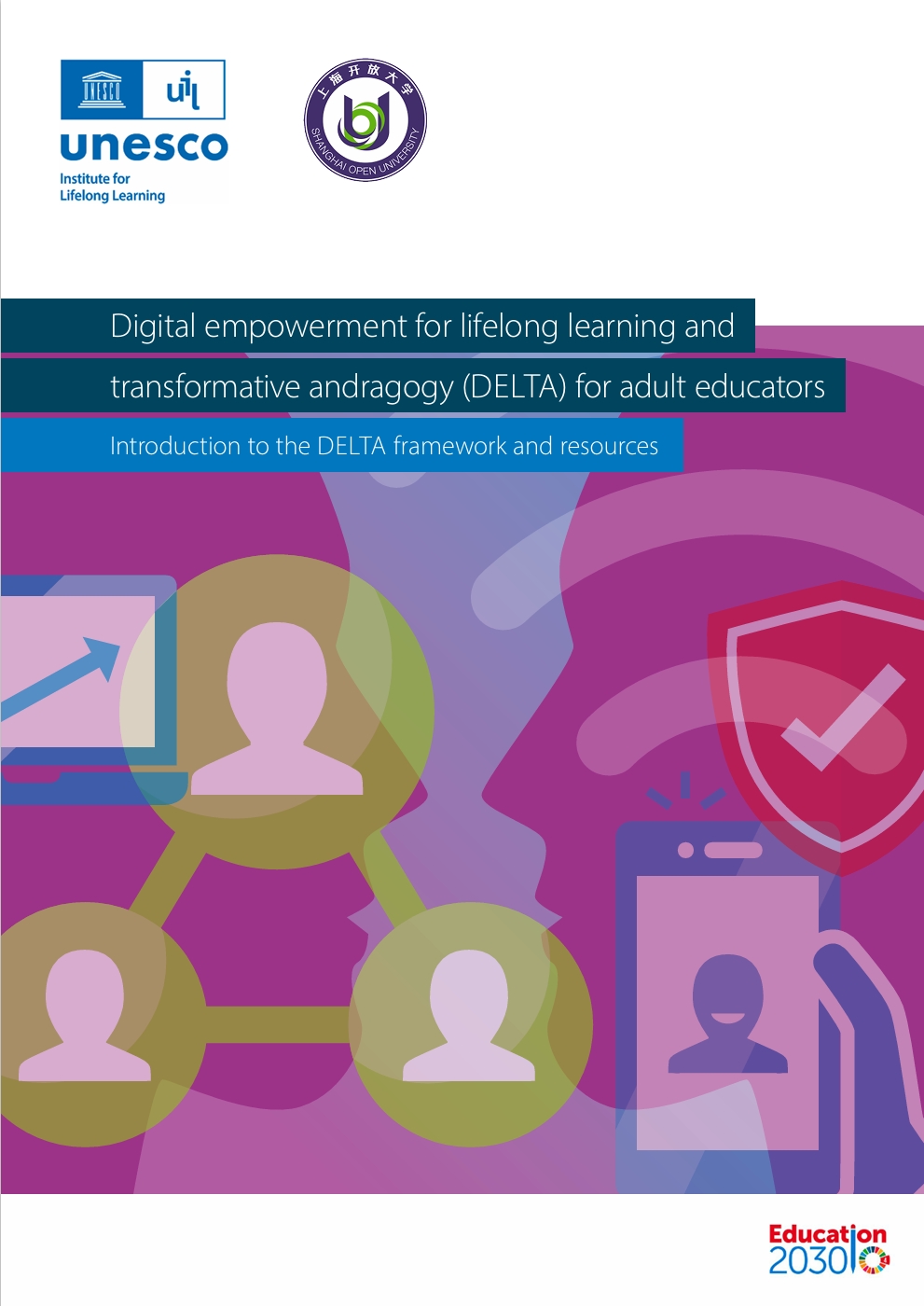 Digital Empowerment for Lifelong Learning and Transformative Andragogy (DELTA) for Adult Educators: Introduction to the DELTA Framework and Resources
 -
 Bridging the Grey Digital Divide: Enhancing ICT Learning for Older Adults; Research Report