
Ressources
Explorez une large gamme de ressources sur le GCED afin d’approfondir votre compréhension et de renforcer vos activités de recherche, de plaidoyer, d’enseignement et d’apprentissage.
7 résultats trouvés
 Message de Mme Irina Bokova, Directrice générale de l’UNESCO, à l’occasion du 50e anniversaire de la Journée internationale de l'alphabétisation Année de publication: 2016 Auteur: Anna Robinson-Pant Auteur institutionnel: UNESCO. Director-General, 2009-2017 (Bokova, I.G.) Literacy is essential to success across the board. A foundation for human rights and dignity, literacy is vital for poverty eradication, for gender equality, for more inclusive and sustainable societies. This is why we launch today the Global Alliance for Literacy, to mobilize investment and promote innovative initiatives, with a focus on gender and new information and communication technologies. We must seize every opportunity-- we must work across all sectoral boundaries. Message from Ms Irina Bokova, Director-General of UNESCO, on the occasion of the International Literacy Day, 50th Anniversary, 8 September 2016 Année de publication: 2016 Auteur: Anna Robinson-Pant Auteur institutionnel: UNESCO. Director-General, 2009-2017 (Bokova, I.G.) Literacy is essential to success across the board. A foundation for human rights and dignity, literacy is vital for poverty eradication, for gender equality, for more inclusive and sustainable societies. This is why we launch today the Global Alliance for Literacy, to mobilize investment and promote innovative initiatives, with a focus on gender and new information and communication technologies. We must seize every opportunity-- we must work across all sectoral boundaries.
 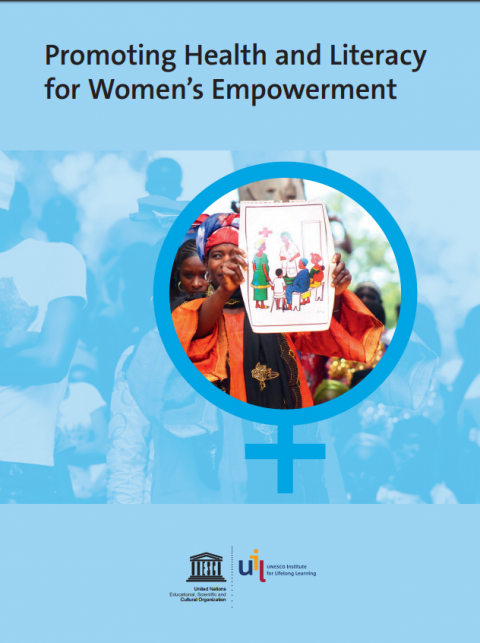 Promoting health and literacy for women's empowerment Année de publication: 2016 Auteur: Anna Robinson-Pant This publication is the third in a series of research studies focused on literacy and women’s empowerment. Its aim is to contribute to the development of crosssectoral approaches to the provision of adult literacy, education and training, traversing policy on education, family, integration, citizenship, health, social welfare and public finance. This paper uses a number of specific examples to show how literacy programmes for young people and adults, with a particular focus on young and adult women, can contribute to the achievement of the Sustainable Development Goals. Autonomiser les femmes par la promotion de la santé et de l'alphabétisme Année de publication: 2016 Auteur: Anna Robinson-Pant This publication is the third in a series of research studies focused on literacy and women’s empowerment. Its aim is to contribute to the development of crosssectoral approaches to the provision of adult literacy, education and training, traversing policy on education, family, integration, citizenship, health, social welfare and public finance. This paper uses a number of specific examples to show how literacy programmes for young people and adults, with a particular focus on young and adult women, can contribute to the achievement of the Sustainable Development Goals.
 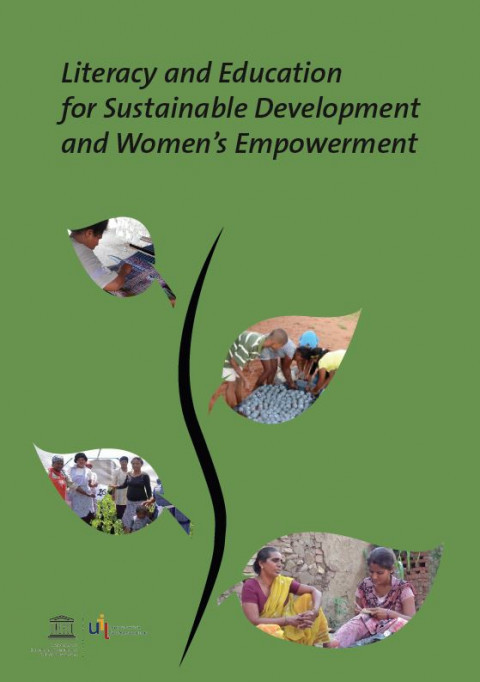 Literacy and education for sustainable development and women's empowerment Année de publication: 2014 Auteur: Anna Robinson-Pant Auteur institutionnel: UNESCO Institute for Lifelong Learning (UIL) The fact that women constitute two-thirds of the world’s non-literate population has been a cause for concern for several decades now. Despite a number of high-profile literacy interventions specifically targeting women – including UNESCO’s LIFE initiative – the disparity between male and female literacy rates persists in many countries of the world (UIL, 2013). This starting point for thinking about women’s literacy has however often led to a narrow focus on literacy access and outcomes. Whilst educational policy makers and planners have attempted to identify and overcome barriers to women’s participation, researchers have directed their attention to measuring the social and economic benefits of women’s literacy (see Robinson-Pant, 2004). Statistical correlations have been presented as evidence of the impact of women’s literacy: for instance, in Pakistan, women with a high level of literacy earned 95% more than women with no literacy skills yet there was only a 33% differential amongst men (UNESCO 2012: 196).Barriers to participation have been analysed in terms of structural (timing, location, women-only versus mixed gender) and social (marriage, poverty, language hierarchies) factors (see Ballara 1991). Within such analysis however, little attention has been given to the social processes associated with literacy learning and development. By contrast, this paper sets out to take a wider lens on literacy in order to explore not only ‘what works’ in practical terms of encouraging women to participate programmes, but also to look at how and why literacy programmes can contribute to sustainable development and processes of empowerment. Taking this perspective on women’s literacy involves asking alternative questions from the more usual ‘how can we make more women literate?’ Approaching literacy through the lens of sustainable development and women’s empowerment means that we develop a more nuanced understanding of how different kinds of literacy emerge from or support different development approaches and how women engage with such processes of change.How is literacy related to sustainable development programmes? What does empowerment mean to different women in different situations? What kind of research evidence and knowledge are literacy programmes and policy building on? How can adult learning facilitate economic, social and environmental change? These larger questions will guide the conceptual exploration of sustainable development, women’s empowerment and literacy, as well as the review of literacy programmes presented in this paper. The starting assumption is that only by looking in depth at the processes of literacy learning and development practice can we begin to address the challenge of narrowing the gender gap in literacy attainment. Alfabetización para el desarrollo sostenible y el empoderamiento de las mujeres Année de publication: 2014 Auteur: Anna Robinson-Pant Auteur institutionnel: UNESCO Institute for Lifelong Learning (UIL) The fact that women constitute two-thirds of the world’s non-literate population has been a cause for concern for several decades now. Despite a number of high-profile literacy interventions specifically targeting women – including UNESCO’s LIFE initiative – the disparity between male and female literacy rates persists in many countries of the world (UIL, 2013). This starting point for thinking about women’s literacy has however often led to a narrow focus on literacy access and outcomes. Whilst educational policy makers and planners have attempted to identify and overcome barriers to women’s participation, researchers have directed their attention to measuring the social and economic benefits of women’s literacy (see Robinson-Pant, 2004). Statistical correlations have been presented as evidence of the impact of women’s literacy: for instance, in Pakistan, women with a high level of literacy earned 95% more than women with no literacy skills yet there was only a 33% differential amongst men (UNESCO 2012: 196). Barriers to participation have been analysed in terms of structural (timing, location, women-only versus mixed gender) and social (marriage, poverty, language hierarchies) factors (see Ballara 1991). Within such analysis however, little attention has been given to the social processes associated with literacy learning and development. By contrast, this paper sets out to take a wider lens on literacy in order to explore not only ‘what works’ in practical terms of encouraging women to participate programmes, but also to look at how and why literacy programmes can contribute to sustainable development and processes of empowerment. Taking this perspective on women’s literacy involves asking alternative questions from the more usual ‘how can we make more women literate?’ Approaching literacy through the lens of sustainable development and women’s empowerment means that we develop a more nuanced understanding of how different kinds of literacy emerge from or support different development approaches and how women engage with such processes of change. How is literacy related to sustainable development programmes? What does empowerment mean to different women in different situations? What kind of research evidence and knowledge are literacy programmes and policy building on? How can adult learning facilitate economic, social and environmental change? These larger questions will guide the conceptual exploration of sustainable development, women’s empowerment and literacy, as well as the review of literacy programmes presented in this paper. The starting assumption is that only by looking in depth at the processes of literacy learning and development practice can we begin to address the challenge of narrowing the gender gap in literacy attainment. Alphabétisation et éducation pour le développement durable et l'autonomisation des femmes Année de publication: 2014 Auteur: Anna Robinson-Pant Auteur institutionnel: Institut de l’UNESCO pour l’apprentissage tout au long de la vie (UIL) The fact that women constitute two-thirds of the world’s non-literate population has been a cause for concern for several decades now. Despite a number of high-profile literacy interventions specifically targeting women – including UNESCO’s LIFE initiative – the disparity between male and female literacy rates persists in many countries of the world (UIL, 2013). This starting point for thinking about women’s literacy has however often led to a narrow focus on literacy access and outcomes. Whilst educational policy makers and planners have attempted to identify and overcome barriers to women’s participation, researchers have directed their attention to measuring the social and economic benefits of women’s literacy (see Robinson-Pant, 2004). Statistical correlations have been presented as evidence of the impact of women’s literacy: for instance, in Pakistan, women with a high level of literacy earned 95% more than women with no literacy skills yet there was only a 33% differential amongst men (UNESCO 2012: 196). Barriers to participation have been analysed in terms of structural (timing, location, women-only versus mixed gender) and social (marriage, poverty, language hierarchies) factors (see Ballara 1991). Within such analysis however, little attention has been given to the social processes associated with literacy learning and development. By contrast, this paper sets out to take a wider lens on literacy in order to explore not only ‘what works’ in practical terms of encouraging women to participate programmes, but also to look at how and why literacy programmes can contribute to sustainable development and processes of empowerment. Taking this perspective on women’s literacy involves asking alternative questions from the more usual ‘how can we make more women literate?’ Approaching literacy through the lens of sustainable development and women’s empowerment means that we develop a more nuanced understanding of how different kinds of literacy emerge from or support different development approaches and how women engage with such processes of change. How is literacy related to sustainable development programmes? What does empowerment mean to different women in different situations? What kind of research evidence and knowledge are literacy programmes and policy building on? How can adult learning facilitate economic, social and environmental change? These larger questions will guide the conceptual exploration of sustainable development, women’s empowerment and literacy, as well as the review of literacy programmes presented in this paper. The starting assumption is that only by looking in depth at the processes of literacy learning and development practice can we begin to address the challenge of narrowing the gender gap in literacy attainment.