
Ressources
Explorez une large gamme de ressources sur le GCED afin d’approfondir votre compréhension et de renforcer vos activités de recherche, de plaidoyer, d’enseignement et d’apprentissage.
8 résultats trouvés
 The Responsibility of the School in Developing Awareness of Human Rights in the Light of Islamic Education Année de publication: 2017 Auteur: Asaad Al Hussein Auteur institutionnel: Cairo University Based on the importance of developing awareness of human rights and what it aims to achieve in developing the values of freedom, equality, cooperation and promoting rights and duties, this paper examines the responsibility of the school in developing awareness of human rights in the light of Islamic education. The school is considered the most important educational institution entrusted with promoting awareness of human rights. مسؤولية المدرسة في تنمية الوعي بحقوق الانسان في ضوء التربية الإسلامية Année de publication: 2017 Auteur: Asaad Al Hussein Auteur institutionnel: Cairo University انطلاقا من أهمية تنمية الوعي بحقوق الانسان وما تهدف اليه من تنمية قيم الحرية والمساواة والتعاون وتعزيز الحقوق والواجبات، فإن هذه الورقة تبحث في مسؤولية المدرسة في تنمية الوعي بحقوق الانسان في ضوء التربية الإسلامية. وتعتبر المدرسة أهم المؤسسات التربوية المنوط بها تعزيز الوعي بحقوق الانسان.
  التعليم وتأسيس المواطنة لدى الإنسان العربي Année de publication: 2014 Auteur: مدكور، علي أحمد Auteur institutionnel: Cairo University تناولت هذه المقالة قضية المواطنة وإشكاليتها وتنوعاتها مركّزة على علاقتها بالديمقراطية باعتبارها آلية لتحقيق العدل الاجتماعي، فالديمقراطية الحقيقية لها ثلاثة مقومات: أن يشارك الناس في صناعة القرار، وفي تنفيذ القرار، وفي الثمار الناتجة عن القرار. كما حاولت الورقة التركيز على أسس المواطنة من جهة مثل المشاركة الفعلية في كل مجالات الحياة الاجتماعية، السياسية، الاقتصادية والتعليمية والثقافية؛ ومقومات المواطنة من جهة أخرى مثل حقوق الإنسان كالحق في الحياة والحرية والمساواة والعدل والعمل والتعليم والتفكير والتعبير والاعتقاد... كل هذه الحقوق تمثل المقومات الرئيسة لقوة الوطن والمواطنة. كما تمّ الاعتماد في هذه الورقة على المواثيق العالمية لحقوق الإنسان في عرض العلاقة بين المواطنة وبين هذه المقومات. من هذه المواثيق: الإعلان العالمي لحقوق الإنسان في الإسلام، والإعلان العالمي لحقوق الإنسان الذي أعلن عام 1948، والاتفاقية الأوروبية لحقوق الإنسان. Education and the Laying the Foundations of Citizenship for Arab Humans Année de publication: 2014 Auteur: مدكور، علي أحمد Auteur institutionnel: Cairo University This article deals with the issue of citizenship and its variations focusing on its relation to democracy being a mechanism to achieve social justice. Real democracy has three determinants: people’s participation in taking the decisions, in implementing them and in benefiting from their effects. The paper also tried to focus on the fundamentals of citizenship from the perspective of effective participation in all aspects of social, economic and cultural life, on one side, and on the determinants of citizenship such as human rights -the right to life, freedom, equality, justice, work, thinking, expression and belief… from the other - all those rights represent the main determinants of the strength of the homeland and citizenship. Among the human rights conventions: The Universal Islamic Declaration of Human Rights, The Universal Declaration of Human Rights of 1948, The European Convention on Human Rights.
 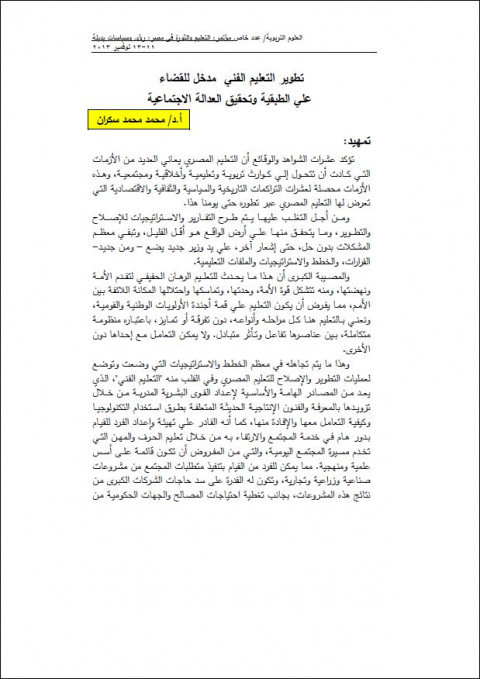 تطوير التعليم الفني : مدخل للقضاء على الطبقية وتحقيق العدالة الاجتماعية Année de publication: 2013 Auteur: سكران، محمد محمد Auteur institutionnel: Cairo University عرضت هذه الورقة لواقع التعليم الفني في مصر باعتباره يعاني وضعا مأساويا بسبب ظروف نشأته وموقعه بين نظم تعليمية لم تفسح للتعليم الفني مكانا فيها. من المشكلات التي تواجهه: 1) البطالة التي يعاني منها 80 % من خريجي هذه المدارس. 2) القصور الواضح في الإمكانيات المادية والبشرية، والنقص الواضح في المعدات والاعتماد في تدريب المجالات التطبيقية على الحفظ والاستظهار، وعدم الربط بين النظرية والتطبيق. 3) عدم وجود المشاركة والتنسيق بين التعليم الفني والمؤسسات الإنتاجية والخدمية، والعجز الشديد في العديد من التخصصات التي يحتاجها سوق العمل. 4) الغياب الواضح للقطاع الخاص في هذا النوع من التعليم. كما عرضت الورقة لبعض المقترحات التي يمكن أن تغير في الحد من الطبقية وتحقيق العدالة الاجتماعية للتعليم الفني في مصر، ومن هذه المقترحات: 1) ضرورة العمل على إعادة صياغة الأهداف الأساسية للتعليم الثانوي الفني في ضوء العوامل الاقتصادية والاجتماعية والسياسية المؤثرة في توجهات التنمية. 2) إعادة النظر في سياسة مؤسسات التعليم الثانوي الفني بحيث تتحول من مؤسسات تعليمية تقليدية إلى مؤسسات تعليمية إنتاجية وذلك من خلال تزويدها بالوسائل التعليمية الحديثة والاهتمام بالتأهيل والتدريب. 3) ضرورة الربط بين التخطيط للتعليم الفني والتخطيط للتنمية الاقتصادية والاجتماعية. 4) مواكبة سياسات وبرامج التعليم الفني للتقدم التكنولوجي المعاصر. Developing Vocational Education: An Introduction to Abolish Classism and Realize Social Justice Année de publication: 2013 Auteur: سكران، محمد محمد Auteur institutionnel: Cairo University The paper deals with technical education in Egypt that is going through a tragic situation due to its founding circumstances and its position among the education systems that do not allow technical education a space. The problems facing technical education include: 1) 80% unemployment among its graduates; 2) the obvious shortcomings in financial and human capacities, the obvious shortage in equipment, the relying on rote learning and the failure to connect theory to practice. 3) the lack of participation and coordination between technical education and institutions of production and services and the severe deficit in in the specializations that the labor market needs. 4) the clear absence of the role of the private sector in this type of education. The paper also presents some suggestions that could put a limit to class aspect in and create social justice for the technical education. The suggestions include: 1) the necessity to redefine the basic objectives of technical secondary education in light of the economic, social and political factors that influence the directions of development; 2) Reconsider the policies of the institutions of technical secondary education in order to transform them from traditional education institutions to productive technical ones by providing them with modern teaching means and attending to training and qualification; 3) the nescessity to connect technical education planning to the economic and social planning; 4) coping with the policies and programs of the of contemporary technological advancement.
  اشكاليات المواطنة في التعليم بعد ثورة 25 يناير Année de publication: 2013 Auteur: فرج، إلهام عبد الحميد Auteur institutionnel: Cairo University تناولت هذه الورقة قضية المواطنة وإشكاليتها في التعليم بعد ثورة 25 يناير في مصر من خلال النقاط التالية: 1) مفهوم المواطنة، خصائصها وأبعادها؛ 2) السياسة التربوية تجاه التربية على المواطنة قبل وبعد ثورة 25 يناير في مصر؛ 3) إنعكاس السياسة التربوية على قضية المواطنة في المناهج التعليمية. وقد خلصت الورقة إلى أن الحفاظ على الوحدة الوطنية في مصر أصبح هدفا ساميا وهو يتطلب أن يصبح التعليم المصري وسيلة لتحقيق المواطنة من خلال استنارة العقول والاعتماد عل المنهجية العلمية والنقدية. وقد عرضت الورقة لعدّة نقاط يجب مراعاتها حتى يصبح التعليم وطنيا ويبتعد عن الأدلجة والتسييس منها مراعاة العلمية والموضوعية في المناهج التعليمية، والتأكيد على فكرة التعددية الثقافية والدينية التي كانت من سمات الثقافة المصرية على مدى التاريخ، التأكيد على مبدأ المواطنة في التعلم بدعم التماسك والترابط الوطني. كما تمّ التركيز على المسؤولية الملقاة على عاتق المعلمين، مما يؤكد على ضرورة أن يتم تدريبهم على استراتيجات تدريسية تستند على الحوار وتبتعد عن ثقافة التلقين. The Probelmatic of Citizenship in Education Following the January 25th Revolution Année de publication: 2013 Auteur: فرج، إلهام عبد الحميد Auteur institutionnel: Cairo University This paper dealt with the issue of citizenship and its problematics in education in the wake of the 25th January Revolution (in Egypt) through the following points: 1) The characteristics and dimensions of the concept of citizenship; 2) The educational policy regarding the education on citizenship before and after the 25th January Revolution; 3) The reflection of the education policy on the issue of citizenship in the educational curricula.The paper concluded that preserving national unity in Egypt has become a supreme aim that requires that Egyptian education becomes a means for achieving citizenship through the enlightening of minds and relying on a scientific critical approach.The paper tables several points that need to be considered in order for education to become patriotic and void of indoctrination and politicization. The points include: respecting scientific and objective thinking in the curricula, emphasizing the concept of cultural and religious pluralism that has all along been a feature of Egyptian culture and emphasizing the principle of citizenship in education through national cohesion and correlation. The paper also stresses the responsibility of teachers which requires training them on teaching strategies the are based on dialogue away from rote culture.