
Ressources
Explorez une large gamme de ressources sur le GCED afin d’approfondir votre compréhension et de renforcer vos activités de recherche, de plaidoyer, d’enseignement et d’apprentissage.
6 résultats trouvés
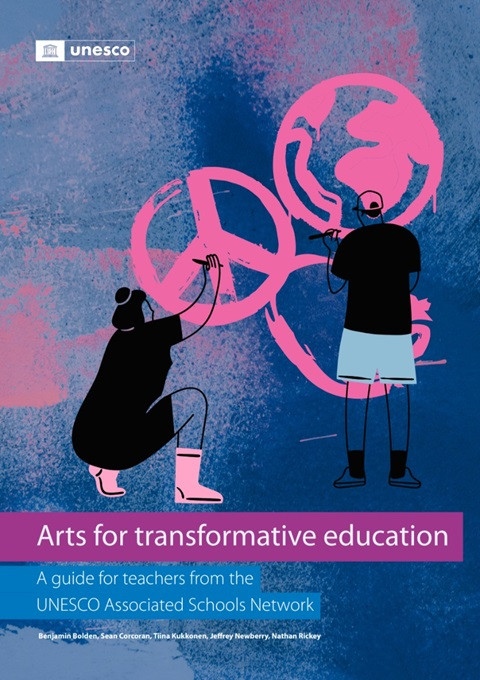 Arts for Transformative Education: A Guide for Teachers from the UNESCO Associated Schools Network Année de publication: 2024 Auteur: Benjamin Bolden | Sean Corcoran | Tiina Kukkonen | Jeffrey Newberry | Nathan Rickey Auteur institutionnel: UNESCO | Canadian Commission for UNESCO UNESCO’s vision of transformative education involves building learners’ capacities and empowering them to take action for a more peaceful and sustainable world. The arts offer tremendous potential for supporting learning that transforms individuals and communities. To fully realize that potential, teachers need to structure and support educational experiences that optimize what students will take away from them. This guide presents the research-informed Arts for Transformative Education model, a pioneering approach and thinking tool for teachers. The model was developed from data provided by over 600 teachers of the UNESCO Associated Schools network from 39 countries. The publication presents Learning Experience Descriptions and Snapshots illustrating how the model functions in real-world projects from around the globe, as well as Guidelines for Teachers outlining a step-by-step process for activating arts learning to empower transformative education.
 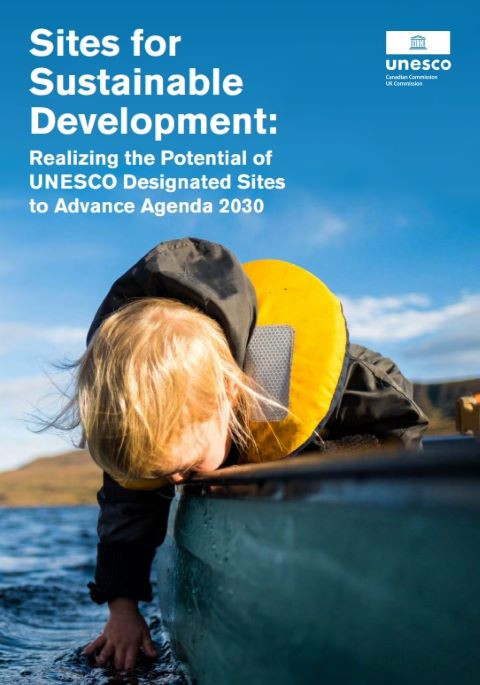 Sites for Sustainable Development: Realizing the Potential of UNESCO Designated Sites to Advance Agenda 2030 Année de publication: 2022 Auteur: Tim Carter | Eleanor R. Haine | Alexander J. Kent | Matthew Rabagliati Auteur institutionnel: Canadian Commission for UNESCO | United Kingdom National Commission for UNESCO This report outlines the role that UNESCO’s global network of designated sites — World Heritage Sites, global geoparks and biosphere reserves — can play in helping stakeholders (including businesses, communities, government agencies and their local organizations, Indigenous Peoples, traditional authorities, councils of elected representatives, and heritage and nature groups) carry out sustainable development approaches to tackle, mitigate and adapt to challenges like these.The ideas contained in this report emerge from a study designed to explore the merits of UNESCO’s increasing tendency to refer to biosphere reserves, global geoparks and World Heritage Sites as “sites for sustainable development.”
  Teachers’ Toolkit: UNESCO Schools Network in Canada Année de publication: 2020 Auteur institutionnel: Canadian Commission for UNESCO This toolkit draws on a variety of resources to give educators a range of activities and best practices for students of all ages. Students will learn about human rights and global citizenship, sustainable development, climate action and reconciliation with Indigenous peoples.
 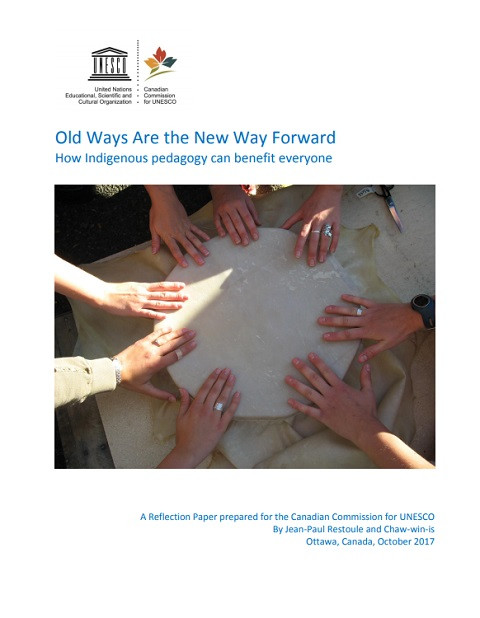 Old Ways Are the New Way Forward: How Indigenous Pedagogy Can Benefit Everyone Année de publication: 2017 Auteur: Jean-Paul Restoule | Chaw-win-is Auteur institutionnel: Canadian Commission for UNESCO This report explores traditional Indigenous ways of teaching and how they are the way forward for "new" innovations in education.
 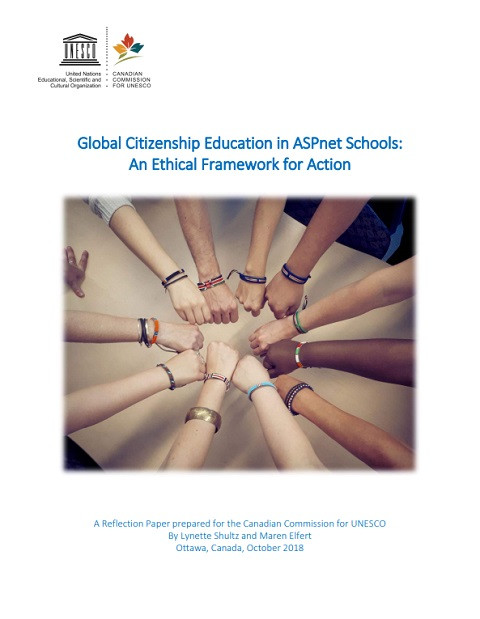 Global Citizenship Education in ASPnet Schools: An Ethical Framework for Action Année de publication: 2018 Auteur: Lynette Shultz | Maren Elfert Auteur institutionnel: Canadian Commission for UNESCO This report proposes global citizenship not so much as a curriculum subject or a pedagogical approach, but as an ethical position, a worldview that emphasizes human rights and earth rights, the interconnectedness of all human beings with each other, the animals and the planet, and an awareness of our global responsibilities in the face of the key challenges that we are facing today on our planet.This document is structured into three sections: It starts by introducing the UNESCO Associated Schools Network and the UNESCO perspective on global citizenship. In the second section, it shows the framework to implement GCED in schools, which will serve as the foundation for a whole school approach to the integration of a GCED perspective in curricula, lesson plans and broader school and community activities. It also gives some selected resources and examples in section three.
 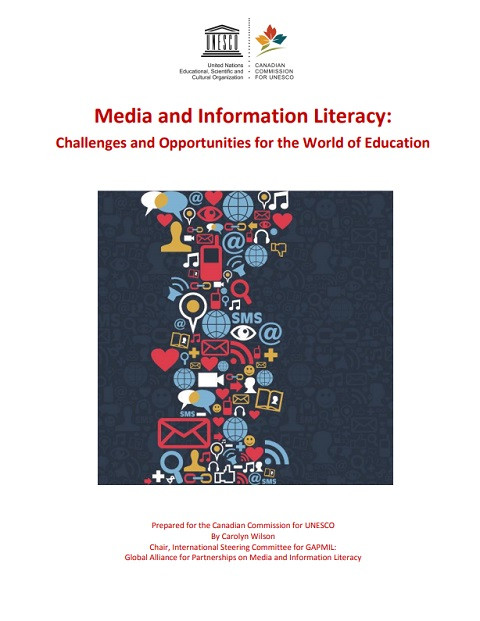 Media and Information Literacy: Challenges and Opportunities for the World of Education Année de publication: 2019 Auteur: Carolyn Wilson Auteur institutionnel: Canadian Commission for UNESCO This paper explores media and information literacy and its importance to understanding democratic rights, active citizenship, and technological literacy. Filled with key concepts, sample questions, and additional resources, it is essential reading for both educators and the wider public.