
Ressources
Explorez une large gamme de ressources sur le GCED afin d’approfondir votre compréhension et de renforcer vos activités de recherche, de plaidoyer, d’enseignement et d’apprentissage.
74 résultats trouvés
 L'éducation aux droits de l'homme dans les systèmes scolaires d'Europe, d'Asie centrale et en Amérique du Nord: un recueil de bonnes pratiques Année de publication: 2009 Auteur institutionnel: Council of Europe | UNESCO | UN. Office of the United Nations High Commissioner for Human Rights (UN. OHCHR) | OSCE. Office for Democratic Institutions and Human Rights (ODIHR) “L'Éducation aux Droits de l'Homme dans les systèmes scolaires de l'Europe, l'Asie centrale et en Amérique du Nord: Un Recueil de Bonnes Pratiques" est une compilation de 101 exemples de bonnes pratiques dans l'éducation aux droits de l'homme dans les écoles primaires, les écoles secondaires et les établissements de formation des enseignants de l'Organisation pour Sécurité et la Coopération dans la zone Europe (OSCE), qui est également couvert par l'Organisation des Nations Unies pour l'éducation, la science et la culture (UNESCO), le Bureau du Haut Commissariat des Nations Unies aux Droits de l'Homme (HCDH) et, en partie, la situation géographique mandat du Conseil de l'Europe (CoE). Le terme «éducation aux droits de l'homme» est souvent utilisé dans cette ressource dans un sens plus large, pour inclure également l'éducation à la citoyenneté démocratique et l'éducation pour le respect et la compréhension mutuelle, qui sont toutes basées sur les normes des droits humains internationalement convenus. Ces trois domaines sont considérés comme interconnectés et essentiel dans les systèmes éducatifs afin de préparer les jeunes à être des participants actifs, responsables et dans leur communautés, ainsi qu'aux niveaux national et mondial. L'éducation aux droits de l'homme a été défini comme l'éducation, la formation et de l'information visant à la construction d'une culture universelle des droits de l'homme. Une formation approfondie dans les droits de l'homme fournit non seulement des connaissances sur les droits humains et les mécanismes qui les protègent, mais confère également les compétences nécessaires pour promouvoir, défendre et appliquer les droits de l'homme dans la vie quotidienne. L'éducation à la citoyenneté démocratique met l'aCECnt sur les pratiques et les activités visant à aider les jeunes et les adultes à jouer un rôle actif dans la vie démocratique et à exercer leurs droits et responsabilités dans la société de l'éducation. L'éducation pour le respect et la compréhension mutuelle met en évidence le respect de soi, respect des autres, et l'amélioration des relations entre les gens de différentes traditions culturelles. Ce livre vise à soutenir l'enseignement de qualité dans ces domaines et d'inspirer les décideurs éducatifs (ceux qui travaillent dans les ministères de l'éducation et les conseils scolaires locaux) et les administrateurs, les enseignants, les formateurs d'enseignants, les éducateurs non formels et tous les autres acteurs intéressés, ainsi que pour faciliter la mise en réseau et l'échange d'expériences entre les professionnels de l'éducation. Образование в области прав человека в школьной системе Европы, Центральной Азии и Северной Америки: сборник примеров успешных практик Année de publication: 2009 Auteur institutionnel: Council of Europe | UNESCO | UN. Office of the United Nations High Commissioner for Human Rights (UN. OHCHR) | OSCE. Office for Democratic Institutions and Human Rights (ODIHR) Сборник примеров успешных практик «Образование в области прав человека в школьной системе Европы, Центральной Азии и Северной Америки» включает 101 пример успешных практик в сфере образования в области прав человека в начальной, средней школе и в педагогических учебных заведениях в регионе ОБСЕ, на который также распространяются полномочия ЮНЕСКО, УВКПЧ ООН и, частично, географический мандат СЕ.Настоящее издание состоит из пяти основных разделов:Раздел I. Законодательные акты, руководящие принципы и стандарты; Раздел II. Подходы и практики улучшения учебной атмосферы; Раздел III. Учебные пособия для преподавателей и учащихся; Раздел IV. Повышение квалификации преподавателей; Раздел V. Методы оценки.Образование в области прав человека определяют как образование, обучение и информирование, направленное на формирование всеобщей культуры прав человека. Комплексное образование в области прав человека дает не только знания о правах человека и действующих механизмах их защиты, но и навыки, необходимые для продвижения, защиты и реализации прав человека в повседневной жизни. Воспитание демократической гражданственности нацелено на осуществление образовательных практик и мероприятий, призванных помочь молодым людям и взрослым принимать активное участие в жизни общества, основанного на принципах демократии, а также осуществлять свои права и обязанности в обществе. Воспитание в духе взаимного уважения и понимания подчеркивает важность самоуважения, уважения других людей и улучшения отношений между людьми, представляющими различные культурные традиции.Настоящая книга задумана как средство поддержки качества обучения в этих областях, как стимул для лиц, ответственных за формирование политики в области образования (сотрудников министерств образования и местных школьных советов), директоров, учителей, преподавателей педагогических учебных заведений, преподавателей, специалистов неформальной сферы образования и всех других заинтересованных лиц, а также как инструмент, содействующий формированию сетей и обмену опытом между специалистами в сфере образования.
  Introducing quality assurance of education for democratic citizenship in schools - comparative study of 10 countries Année de publication: 2009 Auteur institutionnel: Council of Europe For over a decade the Council of Europe has been working on policies in the field of education for democratic citizenship (EDC). One result has been that the Committee of Ministers of the Council of Europe agreed on a recommendation stating that EDC is central to educational politics, and that it is a “factor for innovation in terms of organising and managing overall education systems, as well as curricula and teaching methods” (Recommendation Rec(2002)12). According to this recommendation, European governments acknowledged their responsibility for ensuring the cultural basis of democracy through education. However, politics is not so simple that supranational recommendations are immediately translated into policy in national states. This gap between agreed and realised policies has been termed a “compliance gap”. One of the most logical reasons for noncompliance comes from a lack of awareness or competences. Therefore the Council of Europe concentrated on producing materials that could help raise awareness and develop competences. Key products resulting from this effort have been collected as an “EDC/HRE Pack” since 2005.This collection covers the areas of policy making, democratic governance of educational institutions, teacher training and quality assurance. The “Tool for Quality Assurance of Education for Democratic Citizenship in Schools” (Bîrzea et al., 2005), which is one of these materials, forms the reference document for this study.This study analyses relevant conditions and possible activities with regard to implementing the tool in 10 national educational systems. As relevant conditions, the study considers the existing attempts to deliver educational quality within countries, together with the teacher training programmes that accompany these attempts. As possible activities, national adaptations of the tool, and various ways of working with different target groups, are also taken into account.The following sections provide background information concerning the project. This will help the reader understand why the tool needs to be adapted in different circumstances. Section 2 presents points of reference that open theoretical perspectives on the work presented. Section 3 provides a rationale for the selection of participating countries and gives and describes the methodology used when conducting this study. Finally, Section 4 provides an overview of the remaining contents of this book. Présentation de l'assurance de la qualité de l'éducation à la citoyenneté démocratique dans les écoles - étude comparative de 10 pays Année de publication: 2009 Auteur institutionnel: Council of Europe (Recommandation Rec (2002) 12). Selon cette recommandation, les gouvernements européens ont reconnu leur responsabilité de veiller à la base culturelle de la démocratie par l'éducation. Cependant, la politique est pas si simple que les recommandations supranationales sont immédiatement traduites en politique dans les Etats nationaux. Cet écart entre les politiques convenues et réalisés a été appelé un «écart de conformité». Une des raisons les plus logiques pour la non-conformité provient d'un manque de sensibilisation ou de compétences. Par conséquent, le Conseil de l'Europe concentrée sur la production de matériaux qui pourraient aider à sensibiliser et développer les compétences. Les principaux produits résultant de cet effort ont été collectées comme un «ECD / EDH Pack » depuis 2005. Cette collection couvre les domaines de l'élaboration des politiques, la gouvernance démocratique des établissements d'enseignement, la formation des enseignants et l'assurance qualité. Le «Outil pour l'assurance qualité de l'éducation à la citoyenneté démocratique dans les écoles» (Bîrzea et al., 2005), qui est l'un de ces matériaux, constitue le document de référence pour cette étude. Cette étude analyse les conditions pertinentes et les activités possibles en ce qui concerne la mise en œuvre de l'outil dans 10 systèmes éducatifs nationaux. Comme les conditions pertinentes, l'étude considère les tentatives existantes pour offrir une qualité d'enseignement au sein des pays, ainsi que les programmes de formation des enseignants qui accompagnent ces tentatives. Comme les activités possibles, les adaptations nationales de l'outil, et diverses façons de travailler avec différents groupes cibles, sont également pris en compte. Les sections suivantes fournissent des informations de base concernant le projet. Cela aidera le lecteur à comprendre pourquoi l'outil doit être adapté dans des circonstances différentes. La section 2 présente des points de référence qui ouvrent des perspectives théoriques sur le travail présenté. Section 3 fournit une justification pour la sélection des pays participants et donne et décrit la méthodologie utilisée lors de la réalisation de cette étude. Enfin, la section 4 donne un aperçu du reste du contenu de ce livre.
  : Противодействие нетерпимости и дискриминации в отношении мусульман: руководящие принципы. Борьба с исламофобией через образование для преподавателей Année de publication: 2013 Auteur institutionnel: UNESCO | Council of Europe | OSCE. Office for Democratic Institutions and Human Rights (ODIHR) Intolerance and discrimination against Muslims are not new phenomena. However, they have evolved and gained momentum in recent years, particularly under conditions of the “war on terror”, the global economic crisis, anxieties about national identity and difficulties in coping with the increased diversity in many societies. Such developments have contributed to a growth in resentment and fear of Muslims and Islam that often been fuelled by sections of the media and by some political discourse. Muslims are often portrayed as extremists who threaten the security and well-being of others.These stereotypes have impact not only on young people but also on their parents, as well as on teachers and other education professionals. This presents a new challenge for educators. While teachers cannot be expected to resolve the political and social tensions among communities, they can play a central role in shaping the attitudes and behaviours of young people. The actions and approaches adopted by teachers and school administrators can be crucial in promoting respect for diversity and mutual understanding, both in schools and in society.Developed by OSCE/ODIHR, the Council of Europe and UNESCO, these Guidelines aim to support educators in countering intolerance and discrimination against Muslims. They are intended for a wide audience, including teachers, principals and head teachers, education policymakers and officials, teacher trainers, teacher unions and professional associations, and NGOs. The Guidelines are relevant for both primary and secondary education and can also be used in non-formal education settings.
 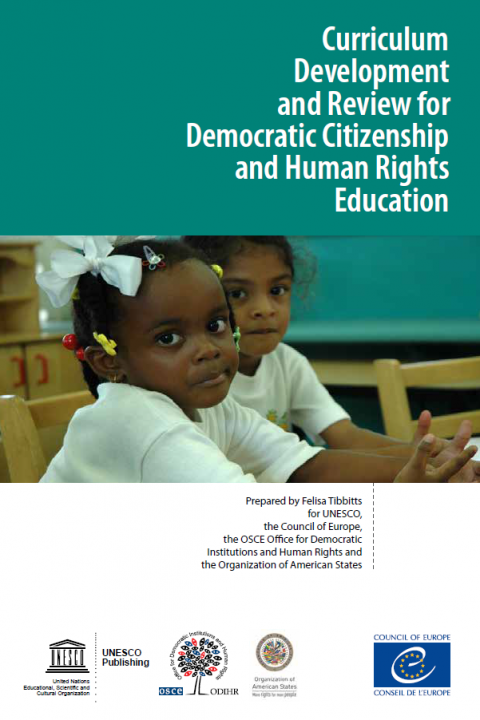 Curriculum development and review for democratic citizenship and human rights education Année de publication: 2015 Auteur: Felisa Tibbitts Auteur institutionnel: Council of Europe Education for democratic citizenship and human rights education (EDC/HRE) are educational areas that contribute fundamentally to our ability to live together in communities, in countries and as neighbours across national borders. They also help to enable a flourishing global community. The wider aim of EDC/HRE is the establishment of sustainable and participative forms of democracy based on respect for human rights and good governance. As such, EDC/HRE is a public good and an ongoing investment for producing societies characterised by human rights principles such as non-discrimination, inclusion and participation, and the rule of law. The central purpose of this resource is to support the development of education policies and curricula in schools that support and promote young people’s participation in democratic life. As such, EDC/HRE is inevitably in an ongoing state of development and review. This resource aims to support the work of education leaders and curriculum developers in integrating EDC/HRE within curriculum systems and to encourage the engagement of stakeholders in supporting such efforts. Principes directeurs à l'attention des éducateurs pour combattre l'intolérance et la discrimination à l'encontre des musulmans: aborder l'islamophobie à travers l'éducation Année de publication: 2013 Auteur institutionnel: UNESCO | Council of Europe | OSCE. Office for Democratic Institutions and Human Rights (ODIHR) Intolerance and discrimination against Muslims are not new phenomena. However, they have evolved and gained momentum in recent years, particularly under conditions of the “war on terror”, the global economic crisis, anxieties about national identity and difficulties in coping with the increased diversity in many societies. Such developments have contributed to a growth in resentment and fear of Muslims and Islam that often been fuelled by sections of the media and by some political discourse. Muslims are often portrayed as extremists who threaten the security and well-being of others.These stereotypes have impact not only on young people but also on their parents, as well as on teachers and other education professionals. This presents a new challenge for educators. While teachers cannot be expected to resolve the political and social tensions among communities, they can play a central role in shaping the attitudes and behaviours of young people. The actions and approaches adopted by teachers and school administrators can be crucial in promoting respect for diversity and mutual understanding, both in schools and in society.Developed by OSCE/ODIHR, the Council of Europe and UNESCO, these Guidelines aim to support educators in countering intolerance and discrimination against Muslims. They are intended for a wide audience, including teachers, principals and head teachers, education policymakers and officials, teacher trainers, teacher unions and professional associations, and NGOs. The Guidelines are relevant for both primary and secondary education and can also be used in non-formal education settings.
  Digital Citizenship Education Project (DCE): 10 Domains Année de publication: 2018 Auteur institutionnel: Council of Europe The aim of the DCE project launched by the Council of Europe’s Education Policy Division is to empower children to participate actively in digital society. This involves providing them with an education that develops a sense of critical analysis and the effective use of digital technologies while fostering a notion of citizenship based on respect for human rights and democratic culture. Éducation à la citoyenneté numérique (ECN): Les 10 thématiques Année de publication: 2018 Auteur institutionnel: Council of Europe Le projet ECN de la Division des Politiques Educatives du Conseil de l’Europe a pour objectif de permettre aux enfants de participer activement et de manière autonome à la société numérique. Ceci passe par une éducation qui développe un sens d’analyse critique et l’utilisation efficace des technologies numériques intégrant une notion de citoyenneté fondée sur le respect des droits de l’homme et la culture démocratique.
 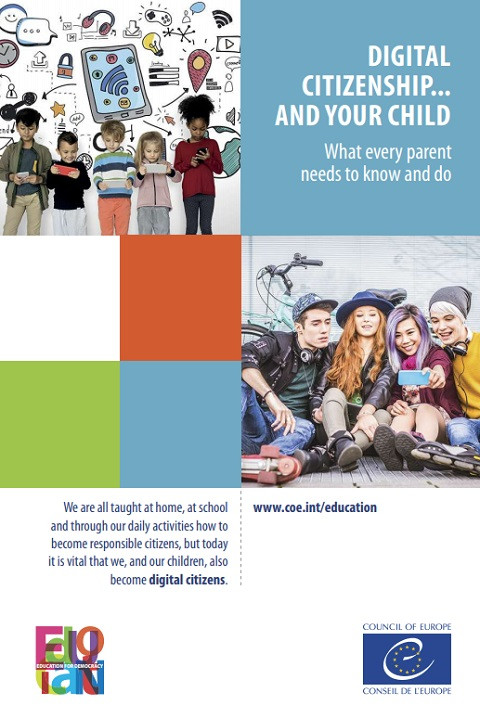 Digital Citizenship... and Your Child What Every Parent Needs to Know and Do Année de publication: 2019 Auteur institutionnel: Council of Europe The Council of Europe has created this guide to help you: better understand digital citizenship, and how it shapes online behaviour discuss digital citizenship with your children take steps to help your children master the competences digital citizenship is built on encourage your children’s school to play its role in educating competent young digital citizens.