
Ressources
Explorez une large gamme de ressources sur le GCED afin d’approfondir votre compréhension et de renforcer vos activités de recherche, de plaidoyer, d’enseignement et d’apprentissage.
58 résultats trouvés
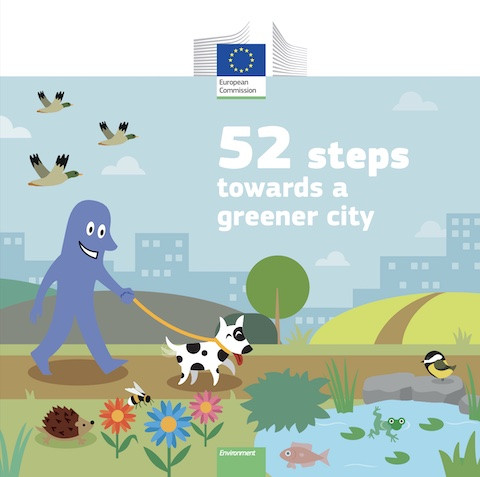 52 medidas: Para una ciudad más ecológica Année de publication: 2018 Auteur institutionnel: European Commission | European Union (EU) Este folleto contiene cincuenta y dos sugerencias sobre cómo contribuir a la biodiversidad urbana a lo largo del año. Incluye: acciones prácticas para todos los días; actividades que puedes iniciar o en las que participar en tucomunidad; cómo puedes ayudar a la investigación observando y grabando la vida silvestre; y uso de técnicas sostenibles en tu jardín o huerta. 52 étapes: Pour une ville plus verte Année de publication: 2018 Auteur institutionnel: European Commission | European Union (EU) Cette brochure contient cinquante-deux suggestions sur la façon dont vous pouvez protéger la biodiversité urbaine toute l’année. Elle inclut:des actions concrètes pour la vie quotidienne;des activités à lancer ou à rejoindre dans votre communauté;des conseils pour ceux qui veulent aider la recherche en observant et en enregistrant la vie sauvage; etdes conseils sur l’utilisation de techniques durables dans votre jardin.
 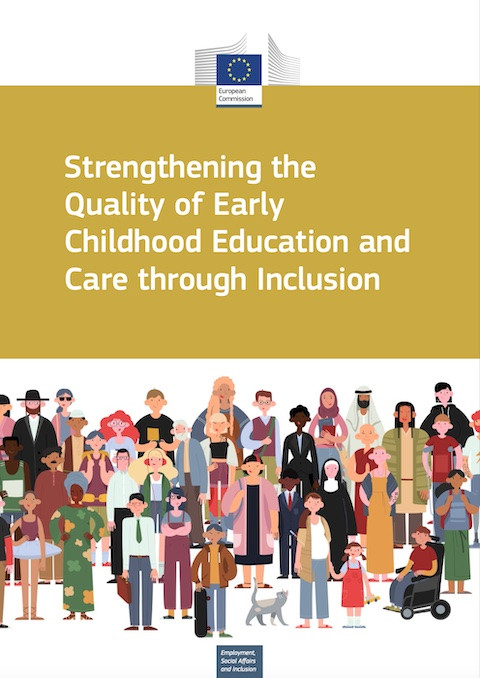 Strengthening the Quality of Early Childhood Education and Care Through Inclusion Année de publication: 2020 Auteur: Susie Lee | Barbara Janta Auteur institutionnel: European Union (EU) The quality in Early Childhood Education and Care (ECEC) has risen up the policy agenda globally, leading to a general consensus that quality ECEC can lead to positive and equitable outcomes for all children. Given these contexts, the European Commission considers inclusion as an integral part of quality ECEC. However, ensuring effective access to quality ECEC for all children remains a challenge, especially for those from disadvantaged backgrounds. This is in part because both inclusion and quality ECEC are multi-faceted concepts. This present policy memo helps policymakers better understand this challenge and suggests some possible solutions. To do so, this memo introduces what inclusion means in education generally and in ECEC particularly, and then discusses how inclusion in ECEC is understood in the current EU policy context. Lastly, the memo summarises findings from recent EU-level projects on how inclusion is integrated into different aspects of quality in ECEC.
  The Future of Language Education in Europe: Case Studies of Innovative Practices; Analytical Report Année de publication: 2020 Auteur: Emmanuelle Le Pichon-Vorstman | Hanna Siarova | Eszter Szőnyi Auteur institutionnel: NESET II | European Union (EU) The main purpose of this report is to inspire educators and policy makers to innovate and implement forward-looking policies and practices in language education, by exploring novel approaches and strategies for language teaching across in Europe that support learners’ plurilingualism.
  Teaching Media Literacy in Europe: Evidence of Effective School Practices in Primary and Secondary Education; Analytical Report Année de publication: 2018 Auteur: Julian McDougall | Marketa Zezulkova | Barry van Driel | Dalibor Sternadel Auteur institutionnel: NESET II | European Union (EU) This report is aimed at policymakers, practitioners and researchers in the fields of school education, media and digital policies. It reviews relevant European and international research to better understand how teaching and learning practices can support students’ media literacy in primary and secondary education. It also aims to understand how media literacy education in schools can help address the challenges related to the spread of disinformation and ‘fake news’.
 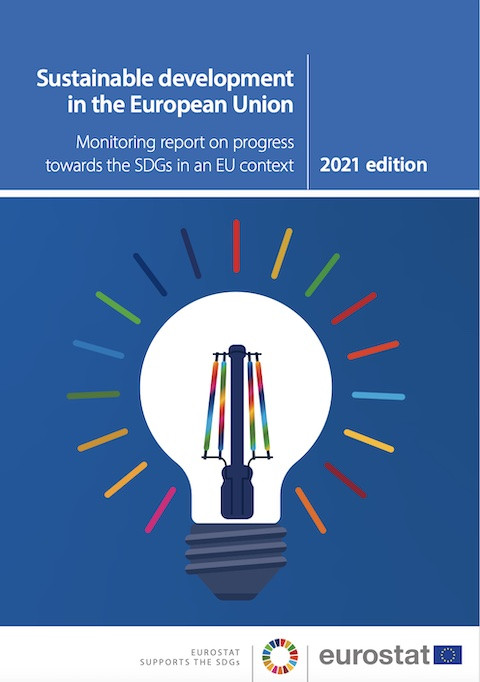 Sustainable Development in the European Union: Monitoring Report on Progress Towards the SDGs in an EU Context (2021) Année de publication: 2021 Auteur institutionnel: European Union (EU) Sustainable development is firmly anchored in the European Treaties and has been at the heart of European policy for a long time. The 2030 Agenda for Sustainable Development and its 17 Sustainable Development Goals (SDGs), adopted by the UN General Assembly in September 2015, have given a new impetus to global efforts for achieving sustainable development. The EU is fully committed to playing an active role in helping to maximise progress towards the Sustainable Development Goals. This publication is the fifth of Eurostat’s regular reports monitoring progress towards the SDGs in an EU context. The analysis in this publication builds on the EU SDG indicator set, developed in cooperation with a large number of stakeholders. The indicator set comprises 102 indicators and is structured along the 17 SDGs. For each SDG, it focuses on aspects that are relevant from an EU perspective. The monitoring report provides a statistical presentation of trends relating to the SDGs in the EU over the past five years (‘short-term’) and, when sufficient data are available, over the past 15 years (‘long-term’). The indicator trends are described on the basis of a set of specific quantitative rules. This 2021 edition also shows some of the early impacts of the COVID-19 pandemic that are visible in Eurostat’s official statistics.
  Youth Activist Toolkit: A Digital Guide Année de publication: 2021 Auteur institutionnel: Scotdec | European Union (EU) This toolkit is designed to empower young people to campaign for positive change around local and global issues and to use the learning to form social media actions for change.
 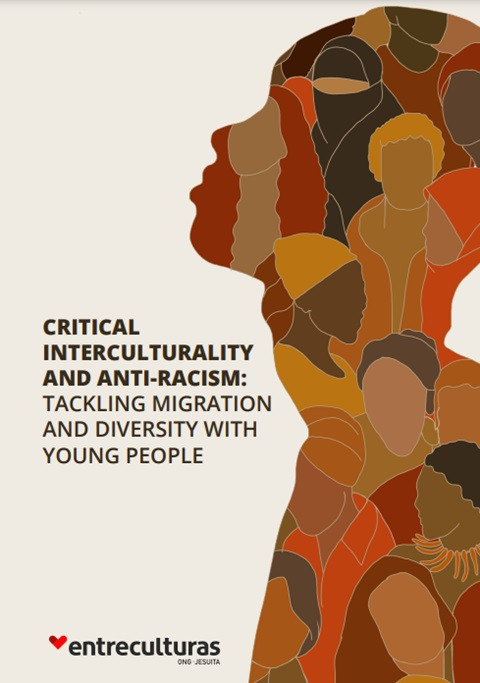 Critical Interculturality and Anti-racism: Tackling Migration and Diversity With Young People Année de publication: 2023 Auteur institutionnel: Entreculturas | European Union (EU) Through this guide, educators, teachers, professionals who support youth groups, as well as anyone who works or wants to work with young people on this topic will be able to find useful tools to generate educational spaces from which to build more tolerant societies. It is available in Spanish and English, and in it readers will be able to find key concepts that will help them become familiar with the language and approaches used in matters of migration and diversity, practical tools for working with young groups, as well as self-assessment exercises and reflection questionnaires through which to review their own perspectives on cultural diversity and migration narratives. Interculturalidad crítica y antirracismo: Abordando las migraciones y la diversidad con jóvenes Année de publication: 2023 Auteur institutionnel: Entreculturas | European Union (EU) A través de esta guía, educadores, educadoras, docentes, profesionales que acompañan a grupos jóvenes, así como toda persona que trabaje o desee trabajar con jóvenes acerca de esta temática podrán encontrar herramientas de utilidad para generar espacios educativos desde los que construir sociedades más tolerantes. Está disponible en castellano e inglés, y en ella las personas lectoras podrán encontrar conceptos clave que ayudarán a familiarizarse con el lenguaje y enfoques utilizados en materia de migraciones y diversidad, herramientas prácticas para trabajar con grupos jóvenes. Así como ejercicios de autoevaluación y cuestionarios de reflexión mediante los cuales revisar las propias perspectivas en torno a la diversidad cultural y las narrativas migratorias.
  A Diverse World Année de publication: 2023 Auteur institutionnel: Entreculturas | European Union (EU) This publication is Entreculturas' pedagogical proposal to educate everyone in global citizenship. With it we intend to contribute to the training of people capable of exercising active and committed citizenship, of transforming their environment and of assuming as their own the global challenges of our time as well as the fulfillment of the 2030 Agenda and the Sustainable Development Goals. This publication collects activities from previous publications, with the difference that it has been adapted to an easy-to-read model to make it much simpler and more accessible for people with functional diversity. The activities address three major themes: 1.) Defense of the environment, 2.) Gender equality, and 3.) Interculturality. By addressing these topics we seek to promote reflection on the different global challenges that affect us and learn about the different ways to contribute to these causes.