
Ressources
Explorez une large gamme de ressources sur le GCED afin d’approfondir votre compréhension et de renforcer vos activités de recherche, de plaidoyer, d’enseignement et d’apprentissage.
38 résultats trouvés
 Minimum Standards for Education: Preparedness, Response, Recovery Année de publication: 2024 Auteur institutionnel: Inter-agency Network for Education in Emergencies (INEE) Since 2004, the INEE Minimum Standards for Education: Preparedness, Response, Recovery (INEE MS) have provided a framework for inclusive and equitable quality education. The purpose of the handbook is:-To improve the quality of education preparedness, response, and recovery;-To increase access to safe and relevant learning opportunities;-To ensure that the actors who provide these services are held accountable The INEE MS are designed to be applicable to crisis response in many different situations, including emergencies caused by conflict, by natural hazards such as those induced by climate change, and slow- and rapid-onset crises in both rural and urban environments.
 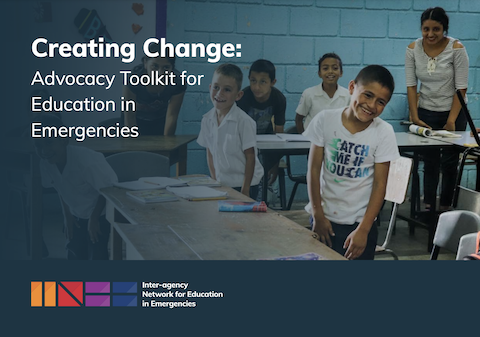 Creating Change: Advocacy Toolkit for Education in Emergencies Année de publication: 2021 Auteur: Eleanor Gall Auteur institutionnel: Inter-agency Network for Education in Emergencies (INEE) The INEE Advocacy Toolkit aims to make it easier and faster for INEE members to find the tools they need to strengthen their vital work. It pulls together resources from across the education, humanitarian, and development sectors and presents them as clear, concise lists. The resources listed have been selected in response to a survey of INEE members’ needs, and in acknowledgement of the diverse emergency contexts in which INEE members work. While this resource is aimed primarily at INEE members working at a national level, we hope it will be helpful to any organization or individual who advocates for—or wants to advocate for —EiE at a local, regional, or global level. It is by no means an exhaustive list, but it does provide extensive options, ideas, and inspiration for impactful, sustainable, advocacy that can help to ensure a quality, safe, andrelevant education for all who live in emergency and crisis contexts. Creando un Cambio: Caja de Herramientas de Incidencia Política para la Educación en Situaciones de Emergencia Année de publication: 2021 Auteur: Eleanor Gall Auteur institutionnel: Inter-agency Network for Education in Emergencies (INEE) El objetivo de la Caja de Herramientas de Incidencia Política de la INEE es que la búsqueda de las herramientas necesarias para fortalecer el trabajo vital de sus miembros sea más fácil y rápido. La Caja de Herramientas reúne recursos para la educación para ser usados en contextos humanitarios y de desarrollo, y los presenta como listas claras y concisas. Los recursos listados se han seleccionado en respuesta a una encuesta de las necesidades de los miembros de la INEE, y en reconocimiento de los diversos contextos de emergencia en los cuales trabajan los miembros de la INEE. Si bien este recurso se encuentra dirigido en primer lugar a los miembros de la INEE que trabajan a nivel nacional, esperamos que sea de ayuda para cualquier organización o individuo que aboga por, o que quiera abogar por la EeE a nivel local, regional o global. De ninguna manera la caja de herramientas es una lista exhaustiva, pero sí proporciona extensas opciones, ideas e inspiraciones para una incidencia política de impacto y sostenible que pueda ayudar a asegurar la educación de calidad, segura y relevante para todos los que viven en contextos de emergencia y crisis. Créer le changement: Boîte à outils pour le plaidoyer pour l’éducation en situations d’urgence Année de publication: 2021 Auteur: Eleanor Gall Auteur institutionnel: Inter-agency Network for Education in Emergencies (INEE) La boîte à outils pour le plaidoyer de l’INEE a pour but que les membres de l’INEE trouvent facilement et rapidement les outils dont ils et elles ont besoin pour renforcer leur travail vital. Elle rassemble des ressources issues des secteurs de l’éducation, humanitaire et du développement et les présente de façon claire sous forme de listes concises. Les ressources figurant dans les listes ont été sélectionnées suite à une enquête sur les besoins des membres de l’INEE et après avoir pris conscience des différents contextes d’urgence dans lesquels les membres de l’INEE travaillent.
  ورقة معلومات أساسية التناسق بين العمل الإنساني والتنموي في قطاع التعليم: العمل معا في سياق الأزمات Année de publication: 2021 Auteur institutionnel: Inter-agency Network for Education in Emergencies (INEE) كما علمتنا جائحة كوفيد ١٩ (كورونا) المستمرة، انه لا يوجد بلد أو نظام تعليمي في مأمن من الأزمة الحالية؛ لذلك، فإن من الأهمية بناء انظمة مرونة والتي بدورها ستشكل مفتاح ليس فقط لتجنب الخسائر ولكن أيضًا للاستمرار والتقدم نحو أهدافنا المشتركة في قطاع التعليم. هناك حاجة ماسة إلى العمل الجماعي عبر قطاعي التنمية والإنسانية لبناء أنظمة تعليمية شاملة، وقابلة للتكيف، معدة للاستجابة للأزمات ولديها القدرة على الاستجابة لها، بحيث تتاح لكل طفل وشاب فرصة الذهاب والبقاء في الفصول الدراسية، وإكمال دورة كاملة من التعليم الابتدائي والثانوي.يعد تناسق بين العمل الإنمائي والإنساني مهمًا لضمان وصول جميع الأطفال إلى تعليم نوعي وجيد ومتواصل، مما يعزز زيادة قدرتهم على التأقلم وتطورهم الكلي. في حين أن التعليم يوفر فوائد كبيرة للأفراد والمجتمعات والدول، فإن إنشاء نظم التعليم المرنة تتطلب التخطيط على مدى سنوات وتنسيق الجهود والاستثمار في قطاع التعليم.الهدف من هذه الورقة هو إزالة الغموض عن مفهوم تناسق الإنمائي الإنساني. نجحت هذه الورقة باستخدام تعريف طرق العمل الجديدة - وهو العمل على مدى سنوات طويلة للوصول لنتائج جماعية بناءً على التمايز النسبي لمختلف الجهات الفاعلة، في تلخيص المفهوم الحاسم لتناسق الإنمائية الإنسانية، وعرض العوائق التي تحول دون الترابط في قطاع التعليم، وتقديم أمثلة توضيحية للعمل يتسم بالتناسق.تقترح الورقة مجموعة من الإجراءات والتوصيات لدعم التناسق بين العمل الإنمائي والإنساني في قطاع التعليم، إلى جانب مبادئ توجيهية للمعنيين بالتعليم للقيام بإجراءات جماعية، كما وتدعو إلى تحسين الترابط بين وكالاتهم وفي كل سياسات وبرامج قطاع التعليم. ايضاً تستهدف الورقة مجموعة واسعة من الجهات الفاعلة في المجال الإنساني والتنموي والحكومي والمجتمع المدني الذين يعملون على ضمان حق جميع الأفراد في الحصول على تعليم جيد وآمن وملائم ومنصف.تم وضع تصور لهذه الورقة من قبل فريق الايني المعني بالعمل التنموي والإنساني، وهو تعاون بين مجموعة عمل سياسة التعليم من الشبكة المشتركة لوكالات التعليم في حالات الطوارئ ومجموعة عمل لمناصرة الشبكة المشتركة لوكالات التعليم في حالات الطوارئ Background paper: Coordination between Humanitarian and Development Work in the Education Sector: Working Together in a Crisis Context Année de publication: 2021 Auteur institutionnel: Inter-agency Network for Education in Emergencies (INEE) The education sector is charged with a responsibility to ensure inclusive and equitable quality education and promote lifelong learning opportunities for all, per Sustainable Development Goal 4 (SDG4). The current trend of complex and longer-term crises, whether caused by the climate emergency, violent conflict, or a pandemic, threatens progress toward SDG4 targets. As the ongoing COVID-19 pandemic has taught us, no country or education system is immune from crisis; therefore, building resilience is the key not only to avoiding losses but to sustaining and progressing toward our shared goals in the education sector. Collective action is needed across the humanitarian-development spectrum to build inclusive and adaptable education systems that are prepared for and have the capacity to respond to crises, so that every child and young person has a chance to go to school, stay in school, and complete a full cycle of primary and secondary education.This report is aimed at members of the Inter-agency Network for Education in Emergencies (INEE), which includes a broad range of humanitarian, development, government, and civil society actors who are working to ensure that all individuals have the right to a quality, safe, relevant, and equitable education. The purpose of the report is to demystify the concept of humanitarian-development coherence and to propose a set of actions and recommendations to strengthen such coherence in the education sector. The report also provides guidelines for INEE members and education stakeholders to take collective action, and to advocate for improved coherence within their own agencies and across the education sector’s full spectrum of policy and programming.This report recapitulates the concept of humanitarian-development coherence and why it is critical, provides an overview of barriers to coherence in the education sector, identifies illustrative examples of coherent action, and offers concrete recommendations for improved coherence, as summed up through a “Learn-Convene-Adapt” framework.To explain the concept of humanitarian-development coherence, this paper adopts the New Ways of Working definition, which describes humanitarian-development coherence as working over multiple years toward collective outcomes, based on the comparative advantage of a diverse range of actors (see definitions, p. 6). The paper argues that humanitarian-development coherence is critical to ensuring that all children have access to uninterrupted quality education, which promotes their increased resilience and overall development. While education can provide significant benefits for individuals, communities, and countries, establishing resilient education systems requires multi-year planning, coordination, and investment in the education sector.To unpack the bottlenecks to coherence in education, the paper uses the conceptual framework proposed in the USAID white paper, Education and Humanitarian-Development Coherence (Nicolai et al., 2019). This framework outlines three levels of action that influence conditions for coherence: Norms, Capacities, and Operations. The barriers identified and explored in the paper are the following:
 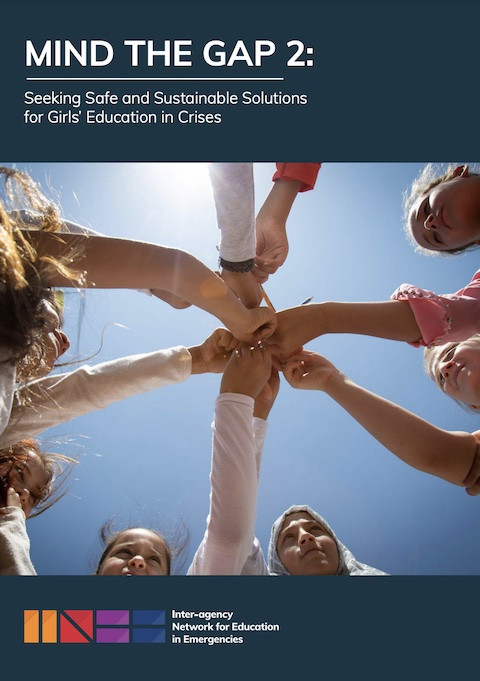 Mind the Gap 2: Seeking Safe and Sustainable Solutions for Girls’ Education in Crises Année de publication: 2022 Auteur: Ruth Naylor | Ella Page | Kate Sims Auteur institutionnel: Inter-agency Network for Education in Emergencies (INEE) This report summarizes progress, gaps, challenges and opportunities in improving education and training for girls and women affected by conflict and crisis. This report monitors progress since the first Mind the Gap report and highlights the following thematic areas: distance education and the digital divide, school-related gender-based violence, and girls’ education during climate crisis.The report aims to support the Charlevoix Declaration on Quality Education’s commitment to enhance the evidence base and monitor progress toward gender-equitable education in crises. The report draws from data on 44 crisis-affected countries, from recent research, and from a set of case studies of interventions in a range of crisis-affected contexts.
 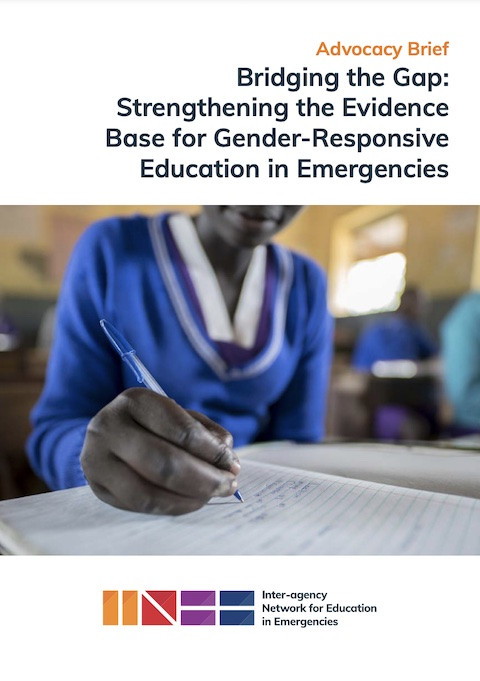 Bridging the Gap: Strengthening the Evidence Base for Gender-Responsive Education in Emergencies Année de publication: 2022 Auteur: Lauren Gerken | Sumbal Bashir Auteur institutionnel: Inter-agency Network for Education in Emergencies (INEE) This brief was developed by the INEE Gender Task Team in response to global calls for more and better data and evidence on gender-responsive EiE. The brief draws from findings of the 2021 and 2022 editions of the INEE Mind the Gap report on the state of girls’ education in emergencies, and from consultations with gender and education experts.The objectives of this brief are: To highlight key gaps in the evidence base on gender and EiE To provide strategic guidance and thematic content for new research initiatives focused on gender and EiE To promote collaborative action and knowledge-sharing among key actors working on gender and EiE
 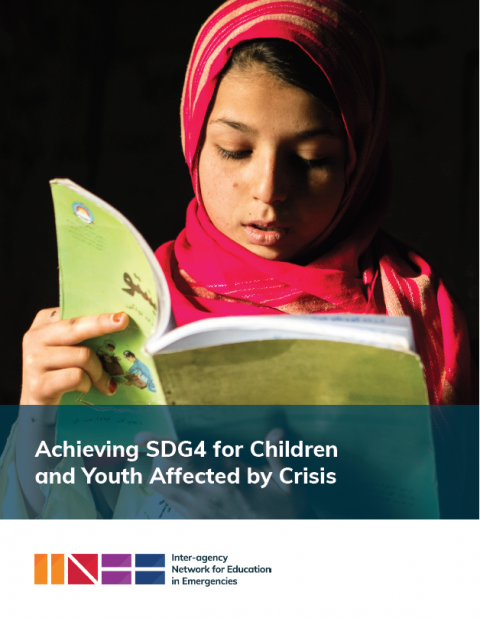 Achieving SDG4 for Children and Youth Affected by Crisis Année de publication: 2019 Auteur institutionnel: Inter-agency Network for Education in Emergencies (INEE) With the Sustainable Development Goal 4 (SDG4), the global community committed to ensuring a quality education for all children and youth. Despite this promise, children and youth in crisis contexts continue to be neglected. We will never achieve SDG4 unless all children and youth affected by conflict and crisis are able to access and attend school and learn in a quality, safe, relevant and inclusive education environment. There is an urgent need for governments and the international community to make and adhere to political, financial and legal commitments if we truly are to leave no child behind. This brief offers recommendations for addressing the disparities in safe, quality, inclusive education for children affected by crisis. It begins by highlighting key areas for policy and practice, and looks at ways to use the various tools developed by the Inter-agency Network of Education in Emergencies (INEE). It takes a look at overall themes and trends, as well as the specific issues of gender disparities, the importance of supporting teachers, children’s psycho-social wellbeing and the protection and safety of education in conflict.
 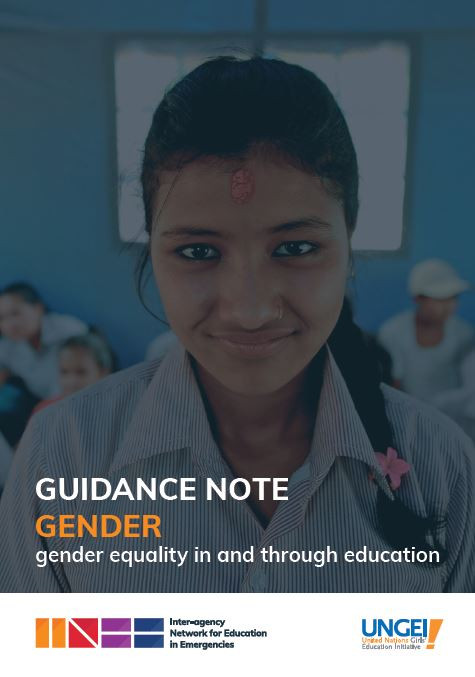 INEE Guidance Note on Gender: Equality in and Through Education Année de publication: 2019 Auteur institutionnel: Inter-agency Network for Education in Emergencies (INEE) With the launch of the Global Goals for Sustainable Development (SDGs) in 2015, the international community committed to providing inclusive and equitable quality education for all (SDG4) as well as achieving gender equality and the empowerment of all women and girls (SDG5). The Global Goals also emphasize the need to “leave no one behind” by focusing on those furthest behind first, such as those affected by crisis. In line with this, the Education 2030 Framework for Action stresses the importance of providing education in “safe, supportive and secure learning environments free from violence” and recommends a stronger, better coordinated response to ensure the protective space of education is maintained during crises and subsequent recovery efforts.In response to these global commitments, the INEE Guidance Note on Gender provides strategies to ensure that girls, boys, women, and men in contexts of conflict and crisis equally enjoy the protection and learning outcomes that quality education can provide. It also outlines principles for gender-responsive programming, in alignment with the INEE Minimum Standards for Education in Emergencies. The Guidance Note on Gender shows how attention to gender dynamics and social constraints will result in better education for all crisis-affected populations and help build inclusive, equitable education systems for the future. This guidance note also responds to recent developments in the humanitarian context, including the historic commitment made by G7 partners to quality education for girls in crisis situations. The ensuing Charlevoix Declaration on Quality Education for Girls, Adolescent Girls, and Women in Developing Countries recognizes that quality education can contribute to peace and stability as well as positive health and life outcomes for all. It is critical that the development community now harnesses this global momentum by working together to break the particular barriers that prevent too many girls and boys in situations of crisis and conflict from accessing the education they need. It is our hope that this Guidance Note on Gender will help better equip those at the frontlines of this work to do just that.