
Ressources
Explorez une large gamme de ressources sur le GCED afin d’approfondir votre compréhension et de renforcer vos activités de recherche, de plaidoyer, d’enseignement et d’apprentissage.
297 résultats trouvés
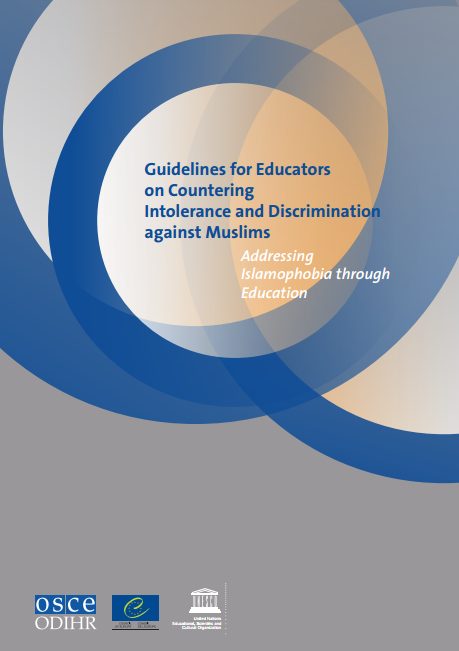 Principes directeurs à l'attention des éducateurs pour combattre l'intolérance et la discrimination à l'encontre des musulmans: aborder l'islamophobie à travers l'éducation Année de publication: 2013 Auteur institutionnel: UNESCO | Conseil de l'Europe | OSCE. Office for Democratic Institutions and Human Rights (ODIHR) Intolerance and discrimination against Muslims are not new phenomena. However, they have evolved and gained momentum in recent years, particularly under conditions of the “war on terror”, the global economic crisis, anxieties about national identity and difficulties in coping with the increased diversity in many societies. Such developments have contributed to a growth in resentment and fear of Muslims and Islam that often been fuelled by sections of the media and by some political discourse. Muslims are often portrayed as extremists who threaten the security and well-being of others.These stereotypes have impact not only on young people but also on their parents, as well as on teachers and other education professionals. This presents a new challenge for educators. While teachers cannot be expected to resolve the political and social tensions among communities, they can play a central role in shaping the attitudes and behaviours of young people. The actions and approaches adopted by teachers and school administrators can be crucial in promoting respect for diversity and mutual understanding, both in schools and in society.Developed by OSCE/ODIHR, the Council of Europe and UNESCO, these Guidelines aim to support educators in countering intolerance and discrimination against Muslims. They are intended for a wide audience, including teachers, principals and head teachers, education policymakers and officials, teacher trainers, teacher unions and professional associations, and NGOs. The Guidelines are relevant for both primary and secondary education and can also be used in non-formal education settings.
 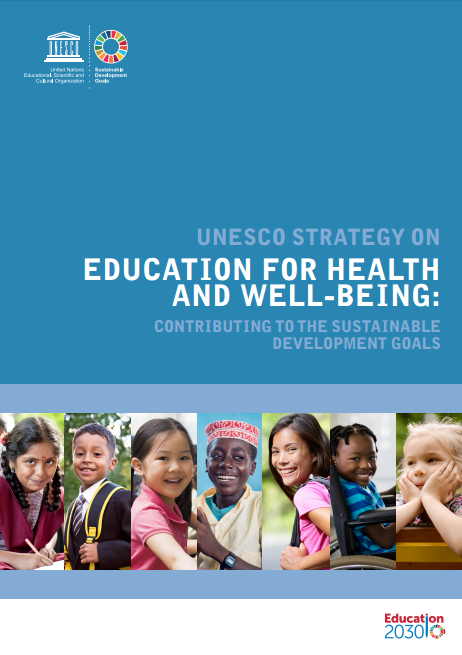 Stratégie de l'UNESCO sur l'éducation pour la santé et le bien-être: contribution aux Objectifs de développement durable Année de publication: 2016 Auteur institutionnel: UNESCO This strategy builds on UNESCO’s longstanding commitment to strengthen the links between education and health, reflecting international recognition that a more comprehensive approach to school health and coordinated action across sectors is needed. As stated in the 2015 Incheon Declaration, education develops the skills, values and attitudes that enable citizens to lead healthy and fulfilled lives, make informed decisions, and respond to local and global challenges. It updates previous UNESCO strategies and expands on UNESCO’s work on HIV and on promoting comprehensive sexuality education and safe and inclusive learning environments, placing more emphasis on the role of schools in promoting health. More specifically, it reflects recent developments in the global education, HIV and health agendas, and is aligned with the new UNAIDS 2016-2021 Strategy and the Sustainable Development Goals, in particular SDG 3 Health, SDG 4 Education and SDG 5 Gender Equality.
  Education aux valeurs par le sport (infographie) Année de publication: 2016 Auteur institutionnel: Organisation des Nations Unies pour l'éducation, la science et la culture (UNESCO)
 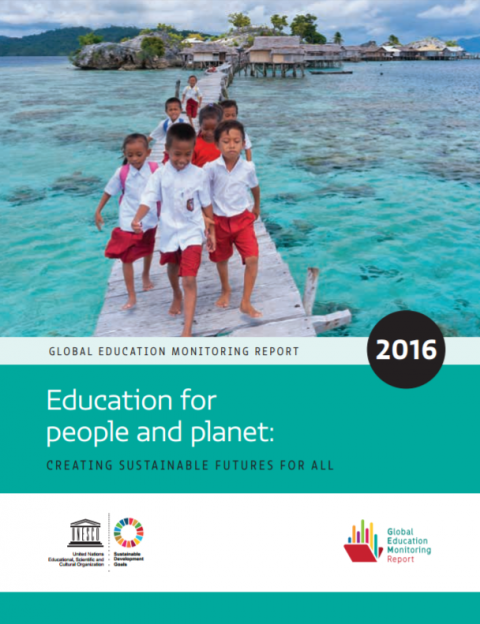 L'Education pour les peuples et la planète: créer des avenirs durables pour tous; Rapport mondial de suivi sur l'éducation, 2016 Année de publication: 2016 Auteur institutionnel: Organisation des Nations Unies pour l'éducation, la science et la culture (UNESCO) | Global Education Monitoring Report Team The GEM Report provides an authoritative account of how education is the most vital input for every dimension of sustainable development. Better education leads to greater prosperity, improved agriculture, better health outcomes, less violence, more gender equality, higher social capital and an improved natural environment. Education is key to helping people around the world understand why sustainable development is such a vital concept for our common future. Education gives us the key tools – economic, social, technological, even ethical – to take on the SDGs and to achieve them. These facts are spelled out in exquisite and unusual detail throughout the report. Yet the report also emphasizes the remarkable gaps between where the world stands today on education and where it has promised to arrive as of 2030.
  Lutte contre la violence de genre en milieu scolaire: orientations mondiales: Année de publication: 2016 Auteur institutionnel: UNESCO | United Nations Entity for Gender Equality and the Empowerment of Women (UN Women) More than 246 million children are subjected to gender-based violence in or around schools every year. This is a violation of their human rights, and a form of gender-discrimination that has far-reaching physical, psychological and educational consequences. Ending schoolrelated gender-based violence (SRGBV) is a priority for countries wishing to achieve ambitious global goals on inclusive and quality education for all and gender equality.WHAT IS THE AIM OF THIS GUIDANCE? This guidance aims to provide a comprehensive, one-stop resource on school-related gender-based violence (SRGBV), including clear, knowledge-based operational guidance, diverse case studies drawn from examples of promising practice and recommended tools for the education sector and its partners working to eliminate gender-based violence. It distils programme knowledge based on existing global literature, promising practices, expert recommendations and practitioner consensus.WHO IS THIS GUIDANCE FOR? The primary audience for this global guidance is the national education sector, including government policy-makers, education ministries, school administrators, educators and other school staff. The guidance may also have wider interest for other national and international stakeholders that are interested in addressing SRGBV, including NGOs, bilateral and multilateral agencies, teachers’ trade unions and policy-makers in other domestic sectors. The guidance is intended primarily for use in low- and middle-income settings, but is based on norms and principles that are universally applicable.WHAT IS COVERED IN THIS GUIDANCE? Promising practice case studies and recommended tools are embedded throughout the relevant sub-sections of the guidance. These provide readers with illustrative examples of implementation in real-life contexts and can serve as resources that have been successfully used – and can be adapted – for application in different contexts.This guidance complements other existing tools and materials for specific bilateral, multilateral and NGO audiences on violence against women and girls, and violence in schools. An expanded online version, which will be regularly updated, is available at www.endvawnow.org
 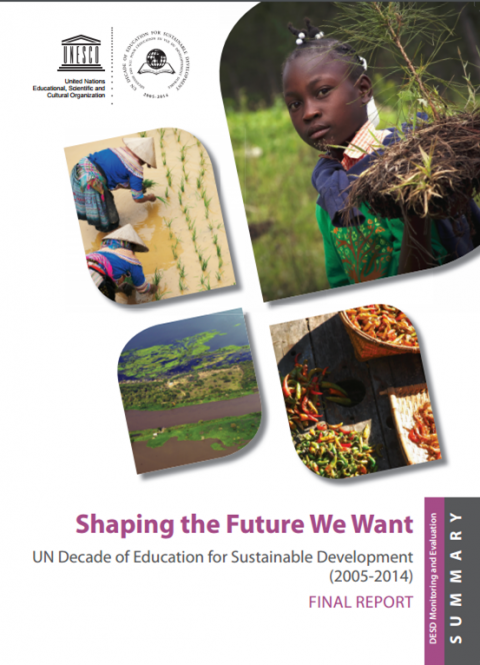 Façonner l’avenir que nous voulons: Décennie des Nations Unies pour l’éducation au service du développement durable (2005-2014) RAPPORT FINAL Année de publication: 2014 Auteur: Carolee Buckler | Heather Creech Auteur institutionnel: UNESCO Destiné aux responsables politiques et aux décideurs, ce document résume les principales conclusions et les grandes tendances, présente une synthèse des points clés, des défis et des initiatives à tous les niveaux et dans tous les domaines de l’éducation, ainsi que les mesures à adopter pour intensifier les actions décrites dans le Rapport final de suivi et d’évaluation 2014, Façonner l’avenir que nous voulons − Décennie des Nations Unies pour l’éducation au service du développement durable (2005-2014). Le Rapport final de suivi et d’évaluation examine les progrès qui ont été accomplis afin d’intégrer l’Éducation au développement durable (EDD) aux systèmes éducatifs et aux efforts déployés en faveur du développement durable. À partir des conclusions des deux précédents rapports mondiaux de suivi et d’évaluation de la Décennie et de l’évaluation de l’état actuel de l’EDD par les États membres et autres parties prenantes, ce rapport final décrit les résultats obtenus et les problèmes rencontrés au terme de dix années de progrès et d’action sur le plan de l’EDD aux niveaux mondial, national, régional et local, ainsi que dans tous les domaines et à tous les niveaux de l’éducation. Le rapport note en conclusion qu’au terme de la Décennie, l’EDD repose désormais sur des fondements solides et ce, grâce à une prise de conscience renforcée, à l’influence exercée sur les politiques et à la réalisation d’un grand nombre de projets respectueux des bonnes pratiques dans tous les domaines de l’éducation et de l’apprentissage. Les dix conclusions et tendances clés qui se dégagent à l’issue de ces dix années de travail serviront à l’avenir de guide à l’EDD. Le rapport montre également qu’en dépit des progrès accomplis, dans la plupart des pays, l’EDD n’a toujours pas été pleinement intégrée aux systèmes éducatifs.
 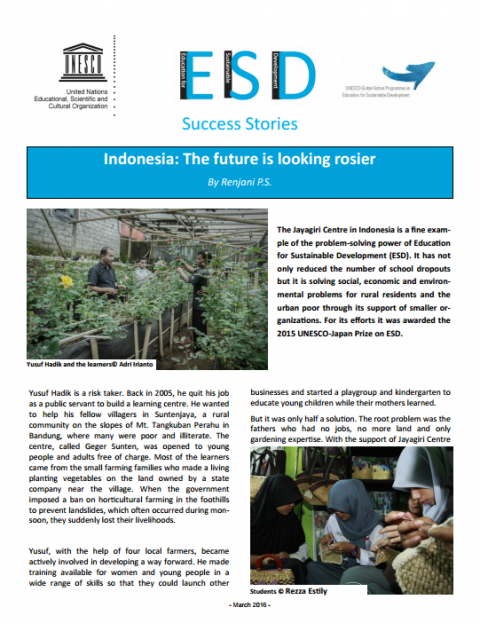 Indonésie: l'avenir s'annonce plus rose Année de publication: 2016 Auteur: P.S. Renjani Auteur institutionnel: UNESCO ESD Success Stories are showcasing compelling stories with a personal/human dimension from all five UNESCO regions (Africa, Arab States, Asia and Pacific, Europe & North America and Latin America & the Caribbean). The stories illustrate the wide diversity of ESD approaches and initiatives taking place in different parts of the world. They show how involvement with ESD has changed the lives of specific individual persons and how they have become more active in their community. Each story centers on one individual or a group of individuals.The Jayagiri Centre in Indonesia teaches environment-friendly business skills. It helps reduce the number of school dropouts and supports rural residents.
 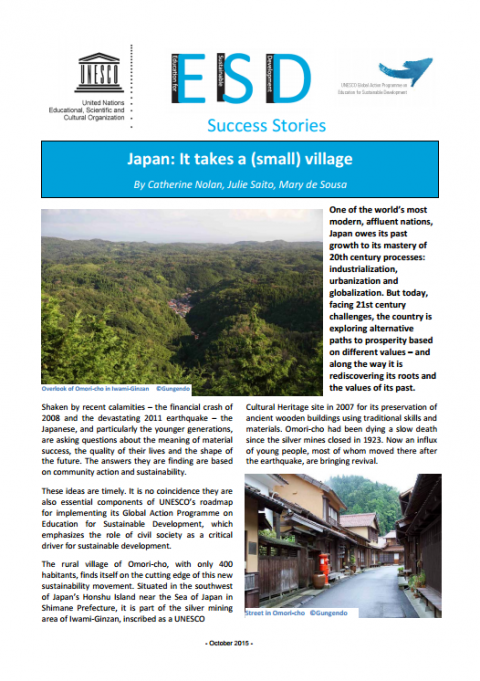 Japon: il suffit d'un (petit) village Année de publication: 2015 Auteur: Catherine Nolan | Julie Saito | Mary de Sousa Auteur institutionnel: UNESCO ESD Success Stories are showcasing compelling stories with a personal/human dimension from all five UNESCO regions (Africa, Arab States, Asia and Pacific, Europe & North America and Latin America & the Caribbean). The stories illustrate the wide diversity of ESD approaches and initiatives taking place in different parts of the world. They show how involvement with ESD has changed the lives of specific individual persons and how they have become more active in their community. Each story centers on one individual or a group of individuals.The small village of Omori-cho in Japan explores alternative paths to prosperity based on community action and sustainability.
 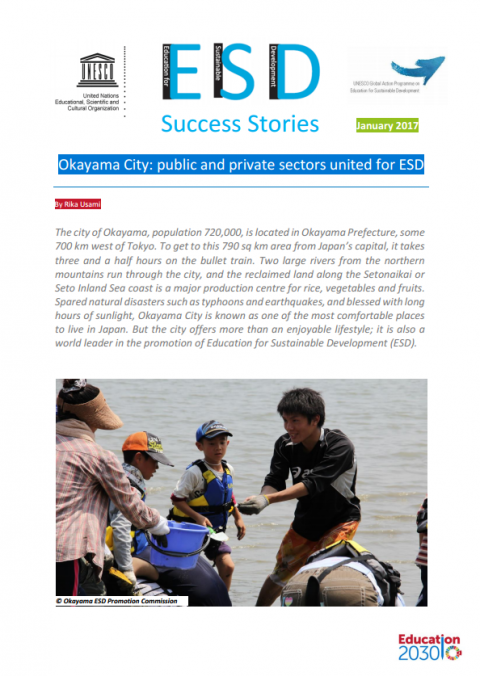 Okayama: les secteurs public et privé unis pour l'EDD Année de publication: 2017 Auteur: Rika Usami Auteur institutionnel: UNESCO
 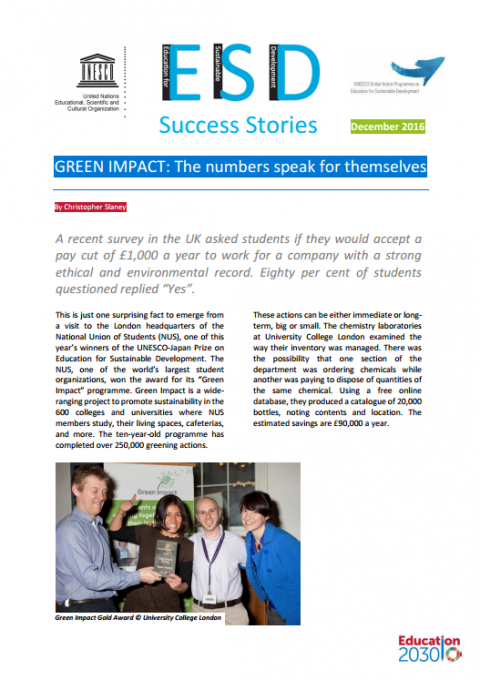 Green impact: des chiffres éloquents Année de publication: 2015 Auteur: Christopher Slaney Auteur institutionnel: UNESCO ESD Success Stories are showcasing compelling stories with a personal/human dimension from all five UNESCO regions (Africa, Arab States, Asia and Pacific, Europe & North America and Latin America & the Caribbean). The stories illustrate the wide diversity of ESD approaches and initiatives taking place in different parts of the world. They show how involvement with ESD has changed the lives of specific individual persons and how they have become more active in their community. Each story centers on one individual or a group of individuals.The National Union of Students (NUS) UK enables, accredits and awards university departments for sustainability efforts through its "Green Impact" scheme.