
Ressources
Explorez une large gamme de ressources sur le GCED afin d’approfondir votre compréhension et de renforcer vos activités de recherche, de plaidoyer, d’enseignement et d’apprentissage.
280 résultats trouvés
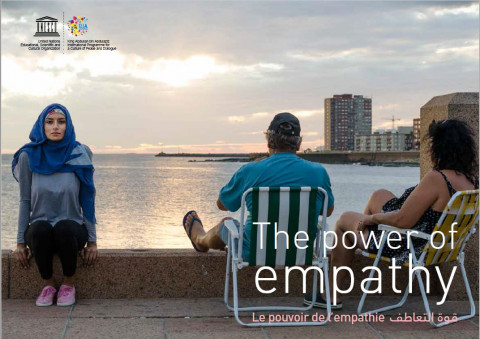 Le Pouvoir de l'empathie Année de publication: 2017 Auteur institutionnel: UNESCO This photobook is a tribute to the power of empathy and solidarity felt and expressed by young people. Its photographs and stories were selected from the response to the global youth contest “If I were…”, launched by UNESCO on social media in Arabic, English, French and Spanish in early 2017. UNESCO received some 837 submissions, from 117 countries, covering a wide variety of issues and experiences.Despite the gravity of the themes addressed in these beautiful pictures, hope emerges from the testaments of the young photographers which demonstrate not only a sensitivity to the situations of “others”, but, moreover, a resolve to help people recover and protect their rights and dignity. Cet ouvrage de photos rend hommage au pouvoir de l’empathie et aux sentiments de solidarité ressentis et exprimés par des jeunes. Les photographies et les textes qu’il contient ont été sélectionnés dans le cadre du concours mondial de la jeunesse « Et si j’étais… », lancé sur les réseaux sociaux de l’UNESCO en anglais, en arabe, en espagnol et en français, début 2017. L’UNESCO a reçu 837 candidatures de 117 pays, couvrant un large champ de questions et d’expériences. Malgré la gravité des thèmes abordés par chacune de ces superbes images, l’espoir se fait jour à mesure que les témoignages des jeunes photographes révèlent non seulement leur sensibilité à l’égard de la situation d’autrui, mais surtout une volonté d’aider les autres à recouvrer et à protéger leurs droits, leur dignité et la justice
  Guide du personnel enseignant pour la prévention de l’extrémisme violent Année de publication: 2016 Auteur institutionnel: Organisation des Nations Unies pour l'éducation, la science et la culture (UNESCO) Ce Guide a pour objectif d’aider les enseignants à offrir aux jeunes des possibilités d’apprentissage pertinentes et opportunes pour développer les connaissances, compétences et attitudes nécessaires pour renforcer leur résilience face à la propagande violente extrémiste. Il contient des conseils pratiques pour aborder la question de l'extrémisme en classe de manière pertinente et au moment adéquat, ainsi que sur les conditions à mettre en place pour créer un climat inclusif et propice au respect mutuel, à des discussions ouvertes et à l'exercice d'une pensée critique.
 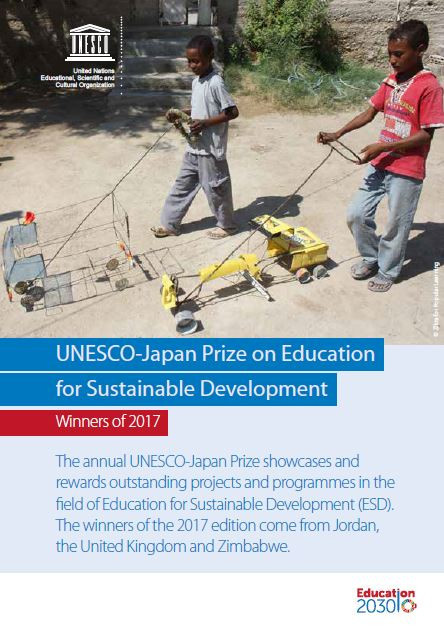 Prix UNESCO-Japon D'éducation en vue du Développement Durable: Lauréats de 2017 Année de publication: 2017 Auteur institutionnel: UNESCO L’année 2017 marque la troisième édition du Prix UNESCO-Japon. Les lauréats ont été sélectionnés parmi plus de 100 candidatures présentées par des gouvernements d’États membres de l’UNESCO et par des organisations non gouvernementales en partenariat officiel avec l'UNESCO. Les candidatures ont été évaluées par un jury indépendant composé de cinq experts internationaux de l’EDD, qui ont recommandé les trois lauréats à la Directrice générale de l’UNESCO.Parmi les lauréats de cette année figurent une école, une entreprise et une organisation à but non lucratif oeuvrant à la promotion de l’EDD, respectivement à l’échelle locale, régionale et internationale : l’école primaire Sihlengeni (République du Zimbabwe) ; l’entreprise sociale Zikra (Royaume hachémite de Jordanie) ; et le projet Hard Rain (Royaume-Uni de Grande-Bretagne et d'Irlande du Nord). Chaque lauréat recevra une récompense d’un montant de 50,000 dollars des États-Unis.La Directrice générale de l’UNESCO et le Ministre de l’éducation japonais remettront le Prix aux trois lauréats au cours d’une cérémonie qui se tiendra le 3 novembre 2017 au Siège de l’UNESCO à Paris, lors de la 39e session de la Conférence générale.
 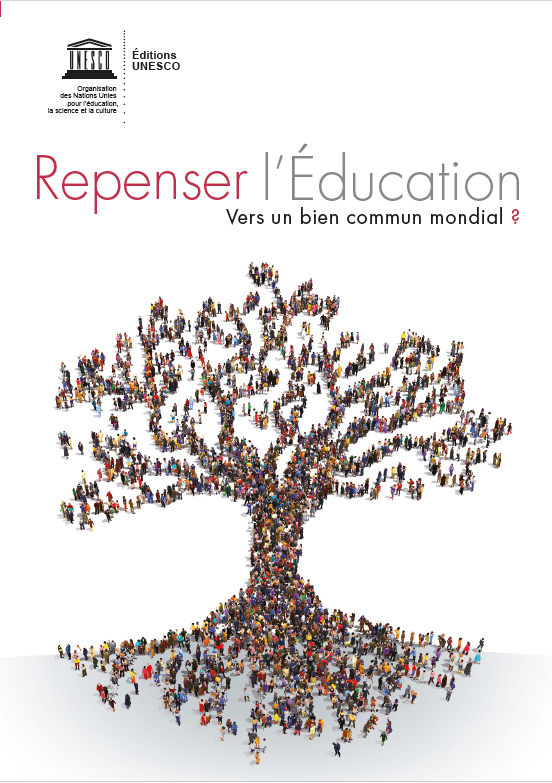 Repenser l'éducation: vers un bien commun mondial? Année de publication: 2015 Auteur institutionnel: UNESCO Les changements dans le monde d'aujourd'hui sont caractérisés par de nouveaux niveaux de complexité et de contradiction. Ces changements génèrent des tensions pour lesquelles il est prévu l'éducation pour préparer les individus et les communautés en leur donnant la possibilité d'adaptation et de réponse. Cette publication contribue à repenser l'éducation et l'apprentissage dans ce contexte. Elle se fonde sur l'une des principales tâches de l'UNESCO comme un observatoire mondial de la transformation sociale dans le but de stimuler le débat sur les politiques publiques. Il est un appel au dialogue entre tous les intervenants. Il est inspiré par une vision humaniste de l'éducation et du développement, fondée sur le respect de la vie et la dignité humaine, l'égalité des droits, la justice sociale, la diversité culturelle, la solidarité internationale et la responsabilité partagée pour un avenir durable. Ce sont les fondements de notre humanité commune. Ce livre améliore la vision fournie par les deux publications de point de repère de l'UNESCO: Apprendre à être: Le monde de l'éducation aujourd'hui et demain (1972), le «Rapport Faure», et l'apprentissage: Le trésor est caché dedans (1996), le «Rapport Delors».
 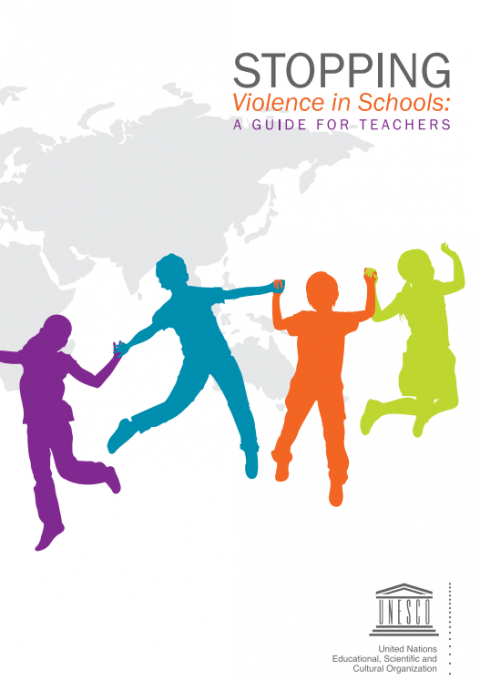 En finir avec la violence à l'école: guide à l'intention des enseignants Année de publication: 2014 Auteur institutionnel: UNESCO “Stopping Violence in Schools: A Guide for Teachers” examines various forms of violence that take place in schools, and offers practical suggestions as to what teachers can do to prevent them. Ten action areas are proposed, each with specific examples that teachers can adapt to address and prevent violence. Excerpts from relevant international normative instruments as well as a list of links to online resources for stopping violence in schools are annexed at the end of the book.
  70 citations pour la paix: celebrations du 70e anniversaire de l'UNESCO Année de publication: 2015 Auteur: Guila Clara Kessous Auteur institutionnel: Organisation des Nations Unies pour l'éducation, la science et la culture (UNESCO) This book, created to mark the 70th anniversary of the United Nations Educational Scientific and Cultural Organization (UNESCO), features 70 quotes from artists, intellectuals, activists, politicians and statesmen. The quotes all testify to a strong conviction that peace, in order to be sustainable, must be built upon a mutual understanding between people and the intellectual solidarity of humankind. But they also demonstrate that each person bears within himself a huge capacity for tolerance and dignity that he can choose to use to achieve this ideal.
 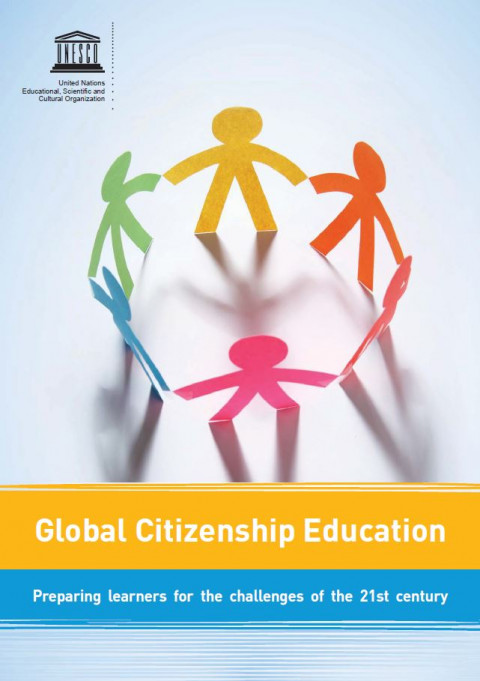 Éducation à la citoyenneté mondiale : Préparer les apprenants aux défis du XXIe siècle Année de publication: 2014 Auteur institutionnel: UNESCO Qu’est-ce que l’éducation à la citoyenneté mondiale ? Est-ce que nous l’apprenons à l’école ? Quels changements peut-elle générer ? Comment peut-elle être introduite dans les programmes scolaires et devenir une pratique courante ? Cette publication cherche à répondre à ces questions, ainsi qu’à d’autres encore.Pour l’UNESCO, l’éducation à la citoyenneté mondiale (ECM) renforce les connaissances, les compétences, les valeurs et les comportements dont les apprenants ont besoin pour construire un monde plus juste, pacifique et durable, et pour prospérer en tant que citoyens du monde au XXIe siècle.Dans un monde globalisé en rapide mutation, il est fondamental que les générations actuelles et futures développent la capacité d’agir dès aujourd’hui et de trouver des solutions aux problèmes mondiaux de demain.Le point de départ de l’ECM est la reconnaissance de l’apport de l’éducation dans la compréhension et la résolution de problèmes mondiaux complexes. C’est aussi la reconnaissance du rôle qu’elle a à jouer pour aller au-delà du simple développement de capacités cognitives – par exemple, lire, écrire et compter – en inculquant aux apprenants des valeurs et des compétences sociales et émotionnelles capables de promouvoir le changement social et la coopération entre les nations.Cette publication a pour objectif : d’améliorer la compréhension de l’ECM en tant qu’approche éducative et de ses implications sur les contenus éducatifs et les méthodes d’enseignement ; d’identifier des approches novatrices et de bonnes pratiques en matière d’ECM ; et de partager les enseignements tirés et les moyens de promouvoir davantage encore l’ECM. Cette publication a été préparée à l’intention des responsables des politiques chargés de l’éducation, des praticiens, des organisations de la société civile et des leaders de la jeunesse, à partir des conclusions de deux conférences internationales consacrées à l’ECM.
  Éducation pour la paix: la planification de la réforme du curriculum; lignes directrices pour l'intégration d'un programme d'éducation pour la paix dans les plans et politiques du secteur éducatif Année de publication: 2015 Auteur institutionnel: Organisation des Nations Unies pour l'éducation, la science et la culture (UNESCO) | UNESCO International Bureau of Education (IBE) | UNESCO International Institute for Educational Planning (IIEP) Cette trousse de ressources et de développement des capacités a été élaborée sur la base de la conviction que, dans le cadre d'un effort plus large social, économique et politique, l'éducation peut jouer un rôle important dans les efforts de consolidation de la paix d'un pays. Son but est d'aider les États membres à intégrer ou renforcer les programmes d'éducation à la paix dans leurs systèmes nationaux d'éducation pour promouvoir la paix et prévenir les conflits futurs. UNESCO, le BIE, et l'IIPE ont développé cette ressource dans le cadre du projet intersectoriel de l'UNESCO, Promouvoir une culture de la paix et de la non-violence en Afrique par l'éducation pour la paix et la prévention des conflits. Le paquet contient des directives techniques et des modules de formation de renforcement des capacités sur la politique, la conception des programmes et de la planification des programmes pour intégrer la paix et de prévention des conflits dans tous les aspects du système d'éducation. Il est destiné aux concepteurs de programmes et les planificateurs de l'Afrique. Le développement de l'emballage a reçu le soutien du Bureau d'Addis-Abeba de l'UNESCO, qui a participé à l'essai des matériaux à Addis-Abeba (Ethiopie) et Yaoundé (Cameroun).Cette ressource sera en outre aider à faire en sorte que les programmes, les ressources d'enseignement et d'apprentissage et la formation des enseignants sont en ligne avec la vision post-2015 de l'éducation pour le développement holistique. Cette vision reconceptualise l' éducation en termes de citoyenneté et de responsabilité globale en mettant l'accent sur l'inclusion et la cohésion sociale qui est mondiale dans l'orientation. À cet égard, Éducation à la Citoyenneté Mondiale (ECM) vise à habiliter les apprenants des connaissances, des compétences, des valeurs et des attitudes qui sont nécessaires pour forger des sociétés plus justes et inclusives, capables de résoudre les conflits existants et nouveaux défis mondiaux.
  MTB-MLE: langue maternelle basée sur l'éducation multilingue; les enseignements tirés d'une décennie de recherche et de pratique Année de publication: 2014 Auteur institutionnel: UNESCO Quel rôle la langue peut jouer dans l'amélioration de l'éducation pour les communautés de langue minoritaire? Quels sont les droits linguistiques? Quelle est la place langue maternelle basée sur l'éducation multilingue ont dans la réalisation d'autres objectifs de développement?Ces questions importantes ont été abordées par la 4e Conférence internationale sur la langue et de l'éducation. La conférence a réuni plus de 300 praticiens de 30 pays, ce qui reflète l'incroyable diversité de la région Asie-Pacifique et démontre clairement l'importance de la langue maternelle basée sur l'éducation multilingue (MTB-MLE). Cette brochure résume les principaux messages de cet événement historique. Education à la citoyenneté mondiale: préparer les apprenants aux défis du XXIe siècle Année de publication: 2015 Auteur institutionnel: UNESCO The United Nations Secretary-General’s Global Education First Initiative (GEFI) has established education as a means to ‘foster global citizenship’ – one of its three priority areas. To support this, UNESCO organized two landmark meetings on GCE in 2013. This publication aims to define the parameters of GCE by using the collective expertise, experience and wisdom of those participants who gathered at these landmark events, and to plan for future action in line with emerging thinking and other ongoing work. The review establishes that GCE has a critical role to play in equipping learners with competencies to deal with the dynamic and interdependent world of the twenty-first century. While GCE has been applied in different ways in different contexts, regions and communities, it has a number of common elements, which include fostering in learners. In formal settings, GCE can be delivered as an integral part of an existing subject (such as civic or citizenship education, social studies, environmental studies, geography or culture), or as an independent subject area. Integrated models appear to be more common. Some less traditional, but at least as effective, pathways for GCE have included the following: the use of information and communication technologies and social media, sport competitions and the use of art and music, and youth-led initiatives employing a wide variety of approaches. Both traditional and new horizons for GCE are profiled in this review. This publication also explores a number of enabling conditions for the promotion and implementation of GCE. These include: the existence of an open environment for universal values, the implementation of transformative pedagogy and support for youth-led initiatives. The review acknowledges that there are a number of ongoing tensions with the concepts of global citizenship and global citizenship education. While these tensions vary, they all point to the fundamental question of how to promote universality (e.g. common and collective identity, interest, participation, duty), while respecting singularity (e.g. individual rights, self-improvement). Some ways forward to resolve these tensions are suggested, whilst maintaining that challenges around theoretical elements of GCE should not undermine its practice. The processes documented in this publication have strengthened partnerships, built coalitions and contributed to improving the evidence base on the theory and practice of global citizenship education. While there are tasks that remain, this foundation bodes well for improving the enabling conditions and the practices highlighted in this review. By preparing learners to fulfil their potential in an increasingly globalized world, we are promoting transformed societies that are also better equipped to deal with the twenty-first century challenges and to seize twenty-first century opportunities.