
Ressources
Explorez une large gamme de ressources sur le GCED afin d’approfondir votre compréhension et de renforcer vos activités de recherche, de plaidoyer, d’enseignement et d’apprentissage.
845 résultats trouvés
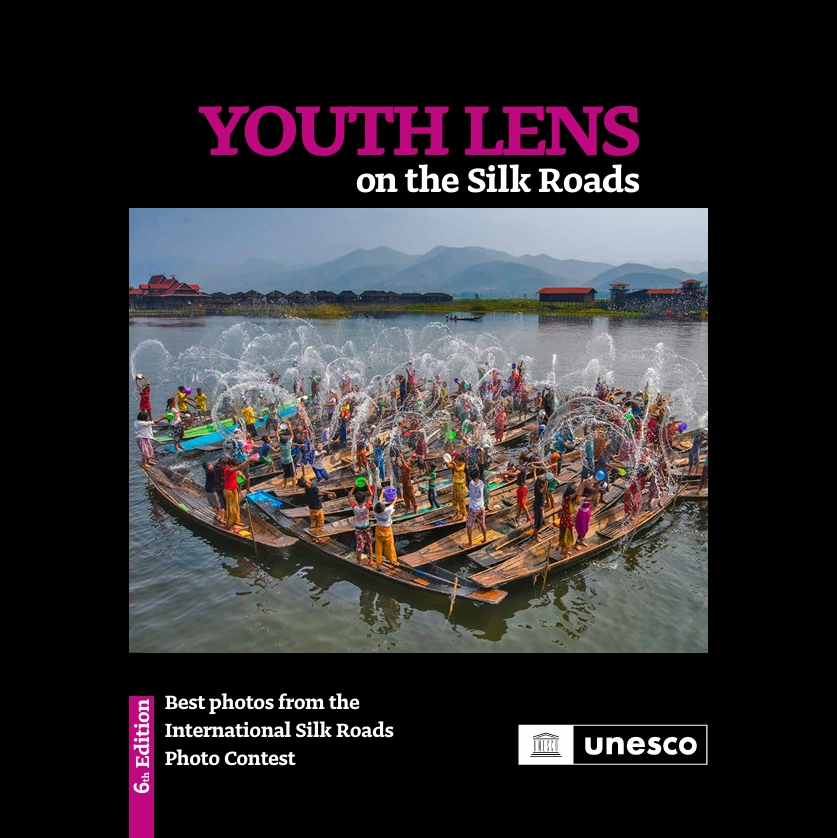 Youth Lens on the Silk Roads: Best Photos from the International Silk Roads Photo Contest; 6th Edition Année de publication: 2026 Auteur institutionnel: UNESCO This album presents the sixth edition of UNESCO’s Youth Eyes on the Silk Roads international photo contest. Organized by the UNESCO Silk Roads Programme, with the support of the Beijing International Peace Culture Foundation, this annual initiative invites talented young photographers from across the globe to explore the vibrant cultural heritage and diversity that thrive along these historic routes.The term “Silk Roads” symbolizes the vast network of historical trade routes linking East, South, and Southeast Asia with Central Asia, the Russian Steppes, the Indian Subcontinent, the Iranian and Anatolian Plateaus, and the Arabian Peninsula. These routes also extended into North and Northeast Africa and Europe, eventually reaching Western Europe and the Iberian Peninsula. Over centuries, these routes served as pathways for trade and vital corridors for cultural exchange, the dissemination of knowledge, and the blending of diverse traditions and practices. This intercultural exchange has significantly shaped contemporary societies, enriched identities, and fostered dialogue and mutual understanding among cultures.In this sixth edition, held under the theme ‘Life Celebrations’, young photographers have vividly documented festivities and cultural moments that highlight joy, unity, and shared heritage along the Silk Roads. Their powerful images capture how these celebrations and rituals continue to reflect and strengthen centuries-old connections between communities.The Youth Lens on the Silk Roads album presents 66 striking photographs from two age categories (14-17 and 18-25), illustrating the vibrant mosaic of cultural celebrations that unite communities across landscapes. Each image reveals the energy, resilience, and profound cultural richness of contemporary Silk Road societies. Together, these photographs celebrate the enduring legacy and dynamic spirit of the Silk Roads today.
  User Empowerment through Media and Information Literacy Responses to the Evolution of Generative Artificial Intelligence (GAI) Année de publication: 2024 Auteur: Divina Frau-Meigs Auteur institutionnel: UNESCO Key messages Artificial Intelligence and Generative AI are having a significant impact on people’s engagement with information, digital technology, and media. This raises concerns about control human agency and autonomy over information, decision making, gender equality, and freedoms in general. User empowerment through Media and Information Literacy (MIL) as a response to GAI, which is still in its infancy, needs to be fully deployed and public policy makers should be concerned in developing it well from the outset. MIL is necessary to build people’s ethical use of synthetic media, i.e. video, text, image or voice content fully or partially generated by AI-systems. The societal opportunities being deepened by GAI include: access to information, participation, employability, creativity, lifelong learning and creative industries. The societal potential risks being deepened by GAI include: disinformation, loss of data privacy, threats to integrity of elections, surveillance, lack of source reliability, discrimination, including gender-based and racial stereotypes, and copyrights violations. Building on familiarity in the face of urgency, AI literacy can be embedded in MIL to teach and train all sorts of communities (educators, librarians, youth workers, women networks, etc.). Ensuring explainable AI is key to both the design of MIL curricula and to the design of policy and governance around GAI. To build trust in information and education, source reliability needs to be revised to encompass the different types of “evidence” provided by GAI. MIL can train informed people from outside the technology industry to participate in the design, implementation and regulation of AI, in a manner that remains human-centered, gender-responsive and mindful of the public interest. Training for MIL is within the remit of governments and institutions of higher education, which have a duty to ensure MIL policy actions are sustained and strengthened over time, to be future-proof, in the face of an ever-evolving AI/GAI.
  International Day of Education 2025: Artificial Intelligence and Education: Preserving Human Agency in a World of Automation Année de publication: 2025 Auteur institutionnel: UNESCO International Day for Education 2025 aims to: Examine new possibilities offered by AI, especially for teaching, learning, assessment and educational administration. Promote the development of critical AI literacies by equipping educators and learners with the competencies needed to understand, use and influence AI technologies, in line with the UNESCO AI competency frameworks for teachers and students. Ensure that AI complements, rather than replaces, the essential human elements of learning, including the cultivation of in-person relationships and emotional intelligence.
  Transforming Knowledge and Research for Just and Sustainable Futures: Towards a New Social Imaginary for Higher Education (Education, Research and Foresight: Working Papers; No.33, 2024) Année de publication: 2024 Auteur: Leon Tikly Auteur institutionnel: UNESCO The paper considers why it is important to transform knowledge and research for just and sustainable futures and discusses the role of higher education in these transformation processes. The paper sets out how knowledge, research, and knowledge systems can be understood and critiques knowledge hierarchies that have emerged in the context of colonialism, leading to the marginalization of the knowledge systems and languages of the colonized. It is argued that there is a need to create new ecologies of knowledge that value and develop synergies between ‘all of the archives of the world’ and that can revitalize and expand the knowledge commons and contribute to more just and sustainable futures. Higher education has a pivotal role to play in the creation of new ecologies of knowledge and a revitalized knowledge commons through promoting socially and ethically engaged research, the decolonization and reorientation of university curricula and pedagogy to foster sustainable futures, and the democratization of universities to better represent historically marginalized groups. Underpinning this role must be a shift from a Western modernist social imaginary of higher education to one based on a new planetary consciousness.
  Guidelines for the governance of digital platforms: safeguarding freedom of expression and access to information through a multi-stakeholder approach Année de publication: 2023 Auteur institutionnel: UNESCO Guidelines for an Internet for TrustSafeguarding freedom of expression and the right to information while dealing with dis- and misinformation, hate speech, and conspiracy theories requires a multistakeholder approach. This is the reason why UNESCO, the leading UN agency for the promotion and protection of freedom of expression and to information, is launching Guidelines for the Governance of Digital Platforms. The Guidelines outline a set of duties, responsibilities and roles for States, digital platforms, intergovernmental organizations, civil society, media, academia, the technical community and other stakeholders to enable the environment where freedom of expression and information are in the core of digital platforms governance processes. The Guidelines were produced through a multi-stakeholder consultation that gathered more than 10,000 comments from 134 countries. These global-scale consultations fostered inclusive participation, ensuring a diversity of voices to be heard, including those from groups in situation of marginalization and vulnerability. Cultivating an Internet of Trust is a shared responsibility among all stakeholders. It calls upon us all to sustain an enabling environment for freedom of expression and the right to information.
  Solidarity as the Future of Education: Perspectives From the Ibero-American Experience of Service-Learning Année de publication: 2024 Auteur: Elena Massat Auteur institutionnel: UNESCO | Latin American Center for Service-Learning (CLAYSS) With this work we have proposed to put into dialogue the recent UNESCO document “Reimagining our futures together. A new social contract for education. Report of the international commission on the futures of education” with the theory and practice of service-learning in Ibero-America. We would like to show how UNESCO's proposal for education for the future can already be verified as a practice in many educational institutions in the region, which develop solidarity service-learning projects even in the most vulnerable contexts. In these experiences, solidarity ceases to be just learning content, to become an educational process, a pedagogy to learn to solve complex problems of reality, and to use the SDGs as a “curriculum” for the education of the future (UNESCO, 2022:54). These practices are deeply innovative, as the experts who comment on them point out, and we hope that they can be inspiring for many other educational institutions.
  Mainstreaming Social and Emotional Learning in Education Systems: Policy Guide Année de publication: 2024 Auteur institutionnel: UNESCO Why social and emotional learning is key to transform education Since 2015, there has been significant progress towards reimagining education for wider societal transformation in support of peace, justice, inclusion, equality and sustainability. Yet, the existing challenges have intensified, and new ones have emerged. The world is witnessing a resurgence of multiple forms of conflict and violence, from racism and discrimination, to hate speech and armed conflict. Our efforts to build sustainable peace through education are falling short. Some 250 million children are still out of school, and those in school are not acquiring the necessary knowledge and skills they need. This guide makes the case for integrating Social and Emotional Learning (SEL) in collective efforts to transform education. It highlights the impact of SEL in improving academic achievement, reducing drop- out rates, and improving overall mental health and well-being, and importantly, in strengthening emotional and relational dynamics of classrooms, schools, communities, and societies. The guide synthesizes the latest research and practice from the world, including case studies of concrete SEL implementation. It provides policy-makers with preliminary guidance to facilitate their conceptualization and integration of SEL in all facets of their education systems to build long-lasting peace and sustainable development.
  Reporting on Migrants and Refugees: Handbook for Journalism Educators Année de publication: 2023 Auteur institutionnel: UNESCO Covering migration: A challenge for journalism educators worldwide This handbook enables journalism educators worldwide to address one of the challenges of the 21st century – migration and refugee matters. In a set of thirteen modules, journalism educators are provided with a comprehensive curriculum. It covers all aspects needed to train analysis, research, presentation, marketing, and ethics of migration coverage.The handbook is unique as it comprises results of communication studies as well as political and social sciences. It has been developed by an international and cross-cultural group of media researchers, media educators and media practitioners.Journalism educators will be enabled to jump-start a new curriculum. Journalism students will learn that matters of migration and forced displacement are concerned about human beings and therefore require knowledge and awareness of accurate facts, reliable sources, ethical reporting and good practices. Experienced journalists will benefit from using the volume as a self-learning tool, and media development organizations may adapt the curriculum to their training plans.The project will impact a more comprehensive coverage of migrant and refugee matters in countries of origin, transit and destination, and a more balanced and informed public debate across countries and cultures.
  Mapping Cultural Policies in Small Island Developing States: Amplifying SIDS Voices in the Global Policy Dialogue on Culture and Sustainable Development Année de publication: 2025 Auteur institutionnel: UNESCO Mapping Cultural Policies in Small Island Developing StatesSpanning three sub-regions – the Atlantic, Indian Ocean and South China Sea (AIS), the Caribbean, and the Pacific – the Small Island Developing States (SIDS) represent 39 UNESCO Member States and 9 Associate Members. Countries and regional organizations have increasingly demonstrated their commitment in the context of fast-evolving policy landscape and cultural ecosystems, encompassing the different dimensions of culture through its diversity and a wide spectrum of concerned stakeholders. Today, a SIDS-specific, culture-led development vision is on the rise.Culture has a multifaceted impact on sustainable development pathways of the SIDS, from climate action, biodiversity protection and food security to economic diversification, social inclusion, gender equality or urban sustainability. The voices and aspirations of SIDS must be heard in the global policy dialogue, in acknowledgement of their priorities, opportunities and insights. International cooperation efforts by UNESCO and other organizations are also essential in identifying areas for future policy investment and adaptation at the national and regional levels.Following the UNESCO World Conference on Cultural Policies and Sustainable Development – MONDIACULT 2022, SIDS are championing culture for sustainable development towards the adoption of a new Programme of Action, the Antigua and Barbuda Agenda for SIDS 2024-2034.
  World Trends in Freedom of Expression and Media Development: Special Digital Focus 2015 Année de publication: 2017 Auteur: Iginio Gagliardone | Danit Gal | Thiago Alves Pinto | Gabriela Martinez Sainz Auteur institutionnel: UNESCO Given the success of the first World Trends report and the need for additional research, UNESCO led a second edition in the series, focusing in depth on selected digital-era trends. World Trends in Freedom of Expression and Media Development – Special Digital Focus 2015 provides a substantive analysis of key areas identified in the first World Trends as particularly relevant for further study, namely the issues of: online hate speech, protection of journalism sources, and the role of internet intermediaries in fostering freedom of expression, as well as continued focus on the safety of journalists. It also builds on issues raised in the 2015 UNESCO study titled Keystones to foster inclusive Knowledge Societies.