
Ressources
Explorez une large gamme de ressources sur le GCED afin d’approfondir votre compréhension et de renforcer vos activités de recherche, de plaidoyer, d’enseignement et d’apprentissage.
845 résultats trouvés
 UNESCO Green Citizens: Une voix globale pour des acteurs locaux du changement Année de publication: 2020 Auteur institutionnel: Organisation des Nations Unies pour l'éducation, la science et la culture (UNESCO) L’UNESCO lance l’initiative UNESCO Green Citizens, un projet phare visant à soutenir l’engagement des citoyens pour la planète. La campagne offre une voix globale aux acteurs locaux du changement, en mettant en lumière des projets citoyens innovants du monde entier.
  Global Guidance on Reopening Early Childhood Education Settings Année de publication: 2020 Auteur institutionnel: United Nations Children's Fund (UNICEF) | World Bank | UNESCO This guidance note outlines key principles and practical measures for decision-makers to consider before, during and after the transition from closure to reopening. It focuses on safe operations in ECE settings, staff training and support, child well-being and development, and parental communication and support.
  Supplement to Framework for Reopening Schools: Emerging Lessons From Country Experiences in Managing the Process of Reopening Schools Année de publication: 2020 Auteur institutionnel: UNESCO | United Nations Children's Fund (UNICEF) | World Bank | World Food Programme | UN. Office of the United Nations High Commissioner for Refugees (UNHCR) Education systems around the world continue to grapple with the complex decisions of when and how to reopen schools for in-person learning following widespread closures due to the COVID 19 pandemic. This supplement to the Framework for reopening schools, originally published jointly by UNICEF, UNESCO, the World Bank, the World Food Programme, and the UN Refugee Agency (UNHCR) in April 2020, summarizes emerging lessons learnt over the past months.The supplement follows the four main dimensions of the Framework (safe operations, focus on learning, wellbeing & protection, and reaching the most marginalized) and highlighting a number of country examples.
  Survey on Privacy in Media and Information Literacy With Youth Perspectives Année de publication: 2017 Auteur: Sherri Hope Culver | Alton Grizzle Auteur institutionnel: UNESCO This report aims to provide conceptual, development and policy recommendations to foster privacy in MIL, while enabling the critical engagement of people, including young women and men, in an environment conducive to sustainable development and to freedom of expression online and offline. It seeks to provide clarity on the complex issue of how MIL and privacy intersect.
  Media Literacy in Finland: National Media Education Policy Année de publication: 2019 Auteur institutionnel: European Training and Research Centre for Human Rights and Democracy (Austria) | UNESCO Media literacy in Finland is the media literacy policy and the national media education policy document, published by the Ministry of Education and Culture in 2019. The document updates and extends the cultural policy guidelines for media literacy published in 2013. The need to update the policy arose from the changes that have taken place in media culture and the broader than before target groups of media education in particular. The Program of the Government also highlights the need for media skills for all age groups, from children to seniors. The vision of the policy is to improve everyone’s opportunities to develop their media literacy.
 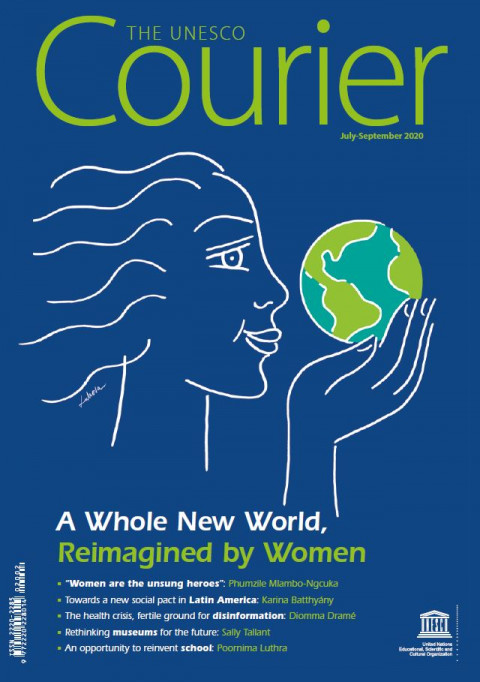 Les femmes prennent la parole (Le Courrier de l’UNESCO no. 2, Juillet-septembre 2020) Année de publication: 2020 Auteur institutionnel: UNESCO Politologues, journalistes, sociologues, chercheuses, écrivaines ou enseignantes dessinent les contours de l’après-pandémie, qu’il s’agisse de l’avenir des musées, des mutations de l’école, des dérives de l’information ou encore des enjeux de la recherche.Ce numéro trace un portrait en creux de notre époque, souligne les lignes de fracture que la crise sanitaire a mises à nu et montre l’ampleur des défis à relever. Il souligne aussi le potentiel de coopération scientifique, culturelle, éducative que cet événement inédit a révélé. Si les réflexions, le désir de changement et les mouvements d’entraide qui se sont manifestés ne restent pas sans lendemain, le monde pourrait réellement devenir plus solidaire, plus durable et plus égalitaire.
  Teaching Journalism for Sustainble Development: New syllabi Année de publication: 2015 Auteur: Banda Fackson Auteur institutionnel: UNESCO This work aims to expand the curriculum of UNESCO in education in journalism and includes new curricula covering current topics in the field of journalism education around the world. The document was prepared on the basis of standard curricula, as well as additional UNESCO publications under the general title “Collection of new curricula” in order to effectively respond to new problems faced by specialists and teachers in the field of journalism. Обучение журналистике в целях устойчивого развития: Новые учебные планы Année de publication: 2015 Auteur: Banda Fackson Auteur institutionnel: UNESCO Данная работа направлена на расширение учебных программ ЮНЕСКО по образованию в области журналистики и включает новые учебные планы охватывающие актуальные темы в области журналистского образования во всем мире. Документ подготовлен на основе типовых учебных программ, а также дополнительных публикаций ЮНЕСКО под общим названием «Сборник новых учебных программ», чтобы эффективно реагировать на новые проблемы, стоящие перед специалистами и преподавателями в области журналистики.
 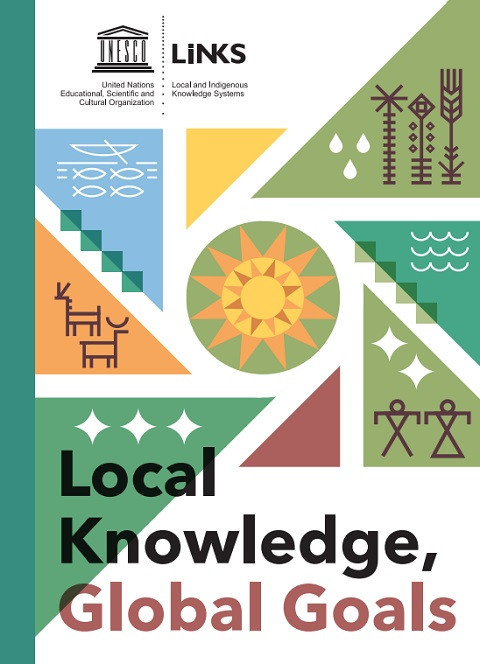 Local Knowledge, Global Goals Année de publication: 2017 Auteur: Douglas Nakashima | Jennifer Rubis | Peter Bates | Bárbara Ávila Auteur institutionnel: UNESCO Local and indigenous knowledge refers to the understandings, skills and philosophies developed by societies with long histories of interaction with their natural surroundings. For rural and indigenous peoples, local knowledge informs decision-making about fundamental aspects of day-to-day life. This knowledge is integral to a cultural complex that also encompasses language, systems of classification, resource use practices, social interactions, rituals and spirituality. These unique ways of knowing are important components of the world’s cultural diversity, and contribute to the achievement of Agenda 2030 and the Paris Agreement. Conocimientos locales, objetivos globales Année de publication: 2017 Auteur: Douglas Nakashima | Jennifer Rubis | Peter Bates | Bárbara Ávila Auteur institutionnel: UNESCO Los conocimientos locales e indígenas se refieren a las concepciones, habilidades y filosofías que las sociedades han desarrollado a lo largo de generaciones y de una larga interacción con su entorno natural. Para los pueblos rurales e indígenas, los conocimientos locales orientan la toma de decisiones sobre aspectos fundamentales de la vida cotidiana. Estos conocimientos forman parte integrante de un complejo cultural que incluye el idioma, los sistemas de clasificación, las prácticas relacionadas con el uso de los recursos, las interacciones sociales, los rituales y la espiritualidad. Estas formas de conocimiento excepcionales son elementos importantes de la diversidad cultural mundial, y contribuyen a la ejecución de la Agenda 2030 y el Acuerdo de París.