
Ressources
Explorez une large gamme de ressources sur le GCED afin d’approfondir votre compréhension et de renforcer vos activités de recherche, de plaidoyer, d’enseignement et d’apprentissage.
114 résultats trouvés
 Les réponses du secteur de l'éducation au changement climatique: document d'information avec des exemples internationaux Année de publication: 2012 Auteur institutionnel: UNESCO Bangkok Grâce à un examen des articles universitaires et des documents de projet, cet article explore la relation entre le secteur de l'éducation et le changement climatique. Il introduit comment l'éducation est à la fois touchée par et a un impact sur ce phénomène, et propose diverses réponses du secteur. Différents cadres théoriques pour où et comment le changement climatique l'éducation inscrit dans le secteur de l'éducation sont en béton avec des études de cas à travers le monde. Une introduction essentielle au changement climatique et de l'éducation, ce document rassemble la théorie, la politique et la pratique. Une lecture utile pour ceux qui travaillent soit dans le secteur de l'éducation ou sur le changement climatique.
 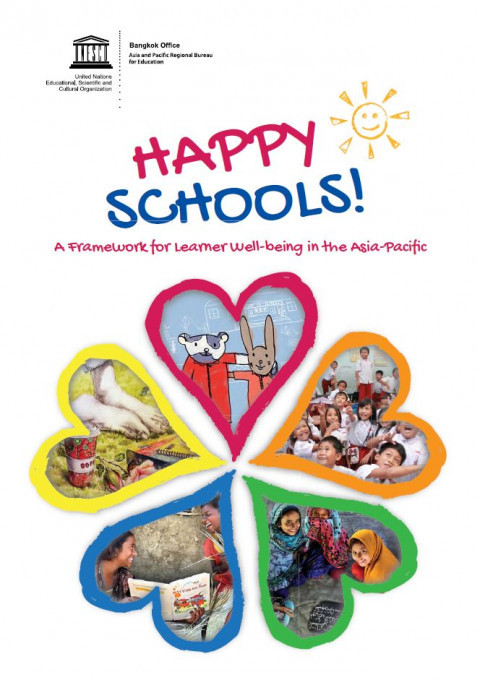 Happy Schools!: A Framework for Learner Well-being in the Asia-Pacific Année de publication: 2016 Auteur institutionnel: UNESCO Bangkok The Happy Schools Project was launched in June 2014 in the aim of promoting learner well-being and holistic development. It follows on the findings of UNESCO Bangkok’s research on ‘Learning to Live Together’, which examined the ways in which education systems can promote peace through education in the Asia-Pacific region. While the concept of ‘Learning to Live Together’ is often reflected at policy level, there is little evidence as to how it is implemented in practice. Therefore, the Happy Schools Project aims to identify and recognize proven practices at school level that integrate this concept. Écoles Heureux: Un cadre pour l'apprenant Bien-être dans la région Asie-Pacifique Année de publication: 2016 Auteur institutionnel: UNESCO Bangkok Le projet Bonne écoles a été lancé en Juin 2014, le but de promouvoir l'apprenant le bien-être et le développement holistique. Il en résulte sur les résultats de la recherche de l'UNESCO à Bangkok sur «Apprendre à vivre ensemble», qui a examiné la manière dont les systèmes éducatifs peuvent promouvoir la paix par l'éducation dans la région Asie-Pacifique. Bien que le concept de «Apprendre à vivre ensemble» se traduit souvent au niveau politique, il y a peu de preuves quant à la façon dont il est mis en œuvre dans la pratique. Par conséquent, des écoles Heureux vise à identifier et reconnaître les pratiques éprouvées au niveau des écoles qui intègrent ce concept. Счастливые школы: Основа благополучия учащихся в Азиатско-Тихоокеанском регионе Année de publication: 2016 Auteur institutionnel: UNESCO Bangkok Этот региональный доклад был подготовлен Региональным бюро ЮНЕСКО по образованию в Азиатско-Тихоокеанском регионе (ЮНЕСКО, Бангкок). В нем представлены результаты исследования проведенного в рамках проекта «Счастливые школы». Этот отчет, основанный на результатах серии мероприятий, проводимых в рамках проекта «Счастливые школы», признает важную взаимосвязь между счастьем и качеством образования. Он объединяет эти два элемента и призывает системы образования выходить за рамки традиционных областей обучения, чтобы охватить разнообразие талантов и умений, признавая ценности, сильные стороны и компетенции, которые способствуют как повышению счастья, так и благополучию учащихся, но также и их процветать и праздновать свои достижения.
  Happy Schools Art E-Exhibition Année de publication: 2016 Auteur institutionnel: UNESCO Bangkok Happy Schools Art E-Exhibition What does a Happy School look like to you? A happy learner is more likely to be a thriving one – better able to solve problems and apply critical thinking skills, more self-confident and likelier to form and foster positive relationships with others. Happy learners require Happy Schools, those that ensure the holistic development and well-being of students and the wider school community. In today’s rapidly changing world, we are faced with increasing mobility, life stress, competition, information overload, inequalities and environmental concerns. As these symptoms of ‘unhappiness’ begin to emerge, the Happy Schools Project calls for the need for education systems to reposition the school as more than a service for educational instruction, but rather, an environment which allows for social and emotional growth and development for learners to contribute to a more peaceful, just and equitable world. As part of UNESCO Bangkok’s Happy Schools Project, the Happy Schools team hosted an art contest in early 2016 in an effort to capture actions, moments and ideas that are promoting happiness in schools. All residents of the Asia-Pacific region were invited to submit images of any kind (photos, drawings, cartoons, paintings, graphics, and posters) along with a caption/description that captures the concept of Happy Schools. Thirty winners were selected from the pool of entries for the Happy Schools Art Exhibition and Report Launch (of the Happy Schools: A Framework for Learner Well-being in the Asia-Pacific report. The artwork will be on display for the Happy Schools Art Exhibition from 25 March to 3 April, 2016 at The Commons in Bangkok, Thailand, and available to view here as an e-exhibition. Écoles Heureux Art E-Exhibition Année de publication: 2016 Auteur institutionnel: UNESCO Bangkok Heureux Écoles d'art E-Exposition, qu'est-ce qu'une école heureux ressemble pour vous? Un apprenant heureux est plus susceptible d'être une entreprise florissante un - mieux à même de résoudre les problèmes et appliquer la pensée critique, plus confiant et plus susceptibles de former et de favoriser des relations positives avec les autres. Apprenants Heureux exigent l’écoles Heureux, ceux qui assurent le développement holistique et le bien-être des élèves et la communauté scolaire. Dans le monde en évolution rapide d'aujourd'hui, nous sommes confrontés à la mobilité croissante, le stress de la vie, la concurrence, la surcharge d'information, les inégalités et les préoccupations environnementales. Comme ces symptômes de «malheur» commencent à émerger, le projet Bonne écoles appelle à la nécessité pour les systèmes éducatifs pour repositionner l'école comme plus qu'un service pour l'enseignement de l'éducation, mais plutôt, un environnement qui favorise la croissance et le développement social et affectif pour apprenants de contribuer à un monde plus pacifique, juste et équitable. Dans le cadre du projet Écoles heureux de l'UNESCO à Bangkok, l'équipe Ecoles Heureux a organisé un concours d'art au début de 2016 dans le but de capturer des actions, des moments et des idées qui font la promotion du bonheur dans les écoles. Tous les résidents de la région Asie-Pacifique ont été invités à soumettre des images de toute nature (photos, dessins, bandes dessinées, peintures, graphiques et affiches) avec une légende / description qui capture le concept des écoles Heureux. Trente gagnants ont été sélectionnés à partir du pool d'entrées pour les écoles Bonne Exposition Art et Rapport de lancement (des écoles Heureux:. Un cadre pour l'apprenant le bien-être dans le rapport Asie-Pacifique, l'œuvre sera exposée pour l'Exposition Heureux Ecoles d'Art du 25 Mars au 3 Avril, 2016 au The Commons à Bangkok, en Thaïlande et à la disposition de la considérer comme un e-exposition)
  Natural disaster preparedness and education for sustainable development Année de publication: 2007 Auteur institutionnel: UNESCO Bangkok Natural Disaster Preparedness and Education for Sustainable Development provides details of the development of culturally appropriate and locally relevant educational material for natural disaster preparedness that targets key stakeholder groups and integrates Education for Sustainable Development (ESD) principles and strategies. It is expected to develop and strengthen a regional network to implement and further ESD initiatives throughout the region by promoting education for natural disaster preparedness as well as ESD. This will underpin an identified key area of the Hyogo Framework for Action 2005-2015: Building the Resilience of Nations and Communities to Disasters. The publication articulates the lessons learned by the four in-country project teams (i.e., the Maldives, Thailand, Indonesia and India) and two collaborating organizations (i.e., Asia/Pacific Cultural Centre for UNESCO and Bangladesh Red Crescent Society) in developing materials in collaboration with community groups in the Asia-Pacific region. It provides insights into effective techniques to develop locally relevant educational materials, and highlights some of the challenges in that field.
 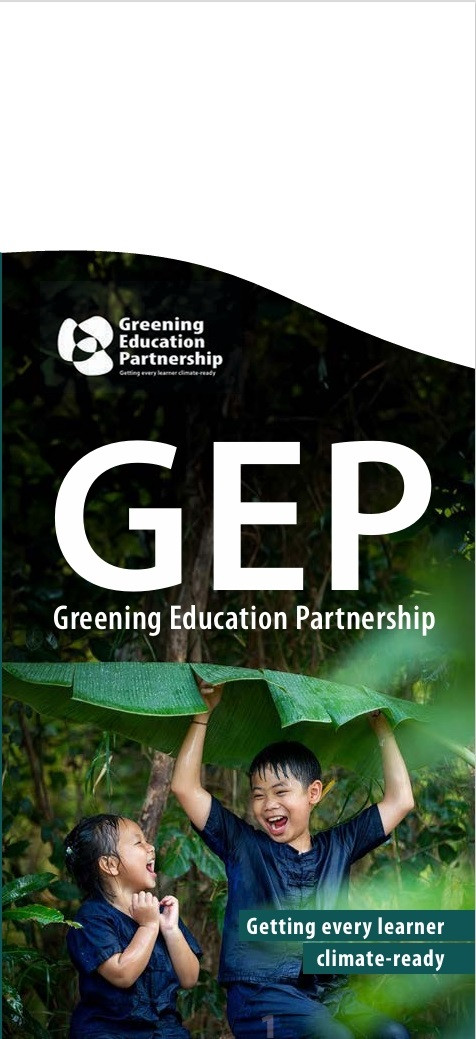 Greening Education Partnership: Getting Every Learner Climate-Ready Année de publication: 2024 Auteur institutionnel: UNESCO Bangkok The UN Secretary-General calls the climate crisis ‘a battle for our lives’, as we still struggle to transform our societies to reach the 1.5°C-degree path recommended by the Paris Agreement. Rapid and radical transformation at all levels and in many aspects of our life is required, with education as a central and powerful means to support the adaptation and strengthening of the resilience of learners and societies. It is also important to ensure that education systems become more resilient to climate change to create safe and climate-proof schools. Building off of the knowledge and practice accumulated in Education for Sustainable Development (ESD), a new Greening Education Partnership aims to deliver strong, coordinated and comprehensive action which will prepare every learner to acquire the knowledge, skills, values, and attitudes to tackle climate change and to promote sustainable development.
 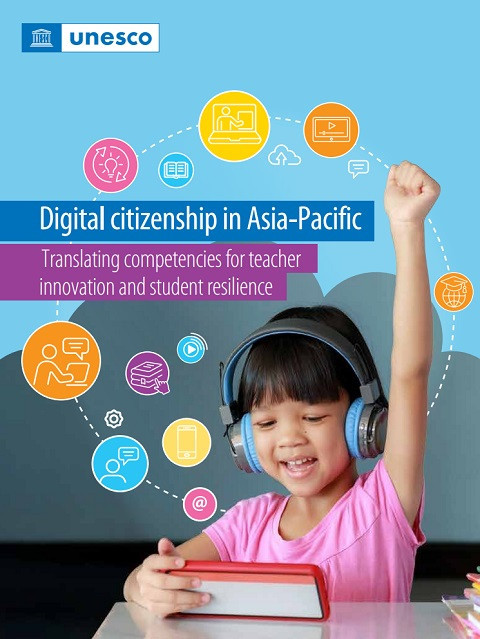 Digital Citizenship in Asia-Pacific: Translating Competencies for Teacher Innovation and Student Resilience Année de publication: 2023 Auteur institutionnel: UNESCO Bangkok A digitally-equipped and competent teaching force is crucial for cultivating students' digital citizenship skills. This UNESCO report, consisting of a comprehensive analysis comprising 15 countries in the Asia-Pacific region, unveils compelling evidence pertaining to what factors influence teachers' Information and Communication Technology (ICT) skills and their impact on students’ digital citizenship competencies. Perhaps unsurprisingly, the findings of this report show that students are developing most of their digital citizenship competencies through self-directed learning and outside of school. Nevertheless, teachers still play an important role, particularly in coaching students to use technology safely and effectively. Thus as UNESCO reports, Digital Creativity and Innovation remains relatively underdeveloped in all participating research countries. Additionally, female students tend to benefit more from teachers' guidance and advice, especially in terms of Digital Safety and Resilience. Support for teachers in terms of access to ICT infrastructure and training on ICT and pedagogical skills will contribute towards improving their ability to effectively guide and mentor their students, ultimately leading to better outcomes in terms of digital citizenship competencies. To achieve this, it is important for education systems to develop comprehensive and contextualized approaches to enhance digital citizenship capacities in teachers. Education policymakers and leaders are encouraged to use the 10 recommendations herein as a ‘roadmap’ to ensure that teachers are equipped with the necessary skills and knowledge to effectively integrate digital citizenship education into their teaching practices. This will ultimately help prepare students for the digital world and ensure their safety and well-being online.
  Asia-Pacific Education 2030: SDG 4 Midterm Review Année de publication: 2024 Auteur institutionnel: UNESCO Institute for Statistics (UIS) | UNESCO Bangkok This publication marks the conclusion of the collaborative national midterm reviews of SDG 4 achievement in the Asia-Pacific. More importantly, it represents the beginning of the final sprint to the 2030 finish line. It also serves as a comprehensive analytical and policymaking tool for all stakeholders in the region to reflect and be better prepared for the second half of the journey. At the midway point of implementing the Education 2030 Agenda, we are observing both challenges and progress in achieving Sustainable Development Goal 4 (SDG 4) in the Asia-Pacific. The region, overall, has made advances in reaching the globally and regionally most important targets under SDG 4, yet it is still far from delivering the common commitment of the Education 2030 Agenda, to ‘ensure inclusive and equitable quality education and promote lifelong learning opportunities for all’. Eight years into implementation, the Asia-Pacific has shown progress, especially in improving access to lower levels of basic education, as well as expanding early childhood education (ECE). Across most subregions of Asia and the Pacific, over 95% of primary school students complete primary education within the expected timeframe, while more than 80% of children one year before the official primary entry age are enrolled in organized early childhood education. However, participation in education is only one part of the puzzle, and the quality of learning, evidenced by limited data for the Asia-Pacific region on learning outcomes, remains concerning. More than half of students in Eastern and South-Eastern Asia do not reach the minimum proficiency level in mathematics at the end of lower secondary education. Overall and from a regional perspective, with priorities having accelerated in ECE, primary education reaching universal participation, and higher education being consistently regarded as prestigious to accomplish, secondary education is currently the weakest link apart from the chronically undervalued technical vocational education and training path. Fulfilling our commitment to the Education 2030 Agenda and leaving no one behind is not an easy endeavour and we need everyone on board in this unprecedented, yet necessary feat. This publication is meant to facilitate taking stock of the current situation and accelerate focused advances on the most relevant education topics for the Asia-Pacific region.