
Ressources
Explorez une large gamme de ressources sur le GCED afin d’approfondir votre compréhension et de renforcer vos activités de recherche, de plaidoyer, d’enseignement et d’apprentissage.
137 résultats trouvés
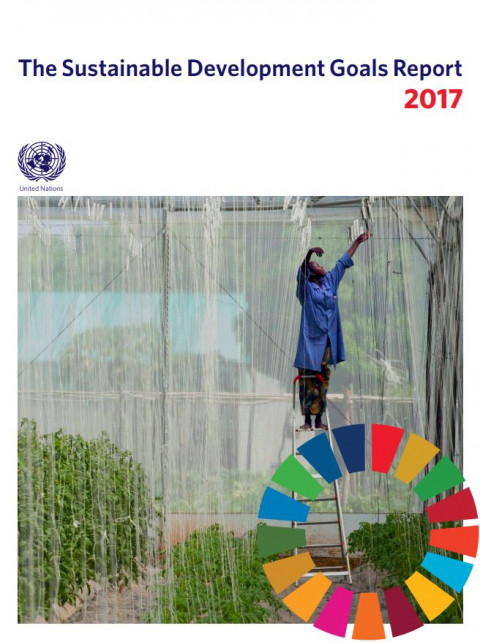 The Sustainable Development Goals Report 2017 Année de publication: 2017 Auteur institutionnel: United Nations (UN) In adopting the 2030 Agenda for Sustainable Development, world leaders resolved to free humanity from poverty, secure a healthy planet for future generations, and build peaceful, inclusive societies as a foundation for ensuring lives of dignity for all.This report provides a snapshot of our efforts to date. It stresses that high-level political leadership and new partnerships will be essential for sustaining momentum. It also underscores the need for reliable, timely, accessible and disaggregated data to measure progress, inform decision-making and ensure that everyone is counted.
  Participatory Planning to Achieve Structural Change with Equality: Citizen Participation Strategies in Multi-scale Planning Processes Année de publication: 2015 Auteur: Alicia Williner | Andrea Sanhueza | Carlos Sandoval Auteur institutionnel: United Nations (UN) This manual that ILPES places at the disposal of public officials and non-governmental agents working in the community, has the purpose of sharing a brief theoretical reflection on the current socio-political context through which this manual becomes important; and a set of methodological instruments that will bring the user closer to the social practice of a citizen participation process in the construction of a public management instrument. The manual is divided into two chapters: The first conceptualizes participatory multiscale planning, while also briefly introducing three topics of great importance to be incorporated into any participatory planning process and construction of public management instruments: the perspective of gender, the use of Convention 169 and Principle 10. The second chapter systematizes a set of methodological instruments that describe the stages of a citizen participation strategy to incorporate the multiscale public management instruments. The manual closes with two annexes, the last of which incorporates a set of tools that can be used in the stages of the construction of a citizen participation strategy. La Planificación Participativa para Lograr un Cambio Estructural Con igualdad: Las Estrategias de Participación Ciudadana en los Procesos de Planificación Multiescalar Année de publication: 2015 Auteur: Alicia Williner | Andrea Sanhueza | Carlos Sandoval Auteur institutionnel: United Nations (UN) Este manual que ILPES coloca a disposición de funcionarios públicos y agentes no gubernamentales que trabajan en la comunidad, tiene el propósito de compartir una breve reflexión teórica sobre el contexto socio-político actual por el cual este manual cobra importancia; y un conjunto de instrumentos metodológicos que acercarán al usuario a la práctica social de un proceso de participación ciudadana en la construcción de un instrumento de gestión pública. El manual se estructura en dos capítulos: El primero de ellos conceptualiza la planificación multiescalar participativa, a la vez que realiza una breve introducción a tres temas de suma relevancia a incorporar en todo proceso de planificación participativa y construcción de instrumentos de gestión pública: la perspectiva de género, el uso del Convenio 169 y del Principio 10. El segundo capítulo sistematiza un conjunto de instrumentos metodológicos que describen las etapas de una estrategia de participación ciudadana para incorporar a los instrumentos de gestión pública multiescalar. El manual cierra con dos anexos, el último de los cuales incorpora un conjunto de herramientas que podrán ser utilizadas en las etapas de la construcción de una estrategia de participación ciudadana.
  COVID-19 and Human Rights: We Are All in This Together Année de publication: 2020 Auteur institutionnel: United Nations (UN) Human rights are key in shaping the pandemic response, both for the public health emergency and the broader impact on people’s lives and livelihoods. Human rights put people centre-stage. Responses that are shaped by and respect human rights result in better outcomes in beating the pandemic, ensuring healthcare for everyone and preserving human dignity. But they also focus our attention on who is suffering most, why, and what can be done about it. They prepare the ground now for emerging from this crisis with more equitable and sustainable societies, development and peace.This paper aims to translate this Call into concrete action to assist with the response to the pandemic. It presents six key messages that must be central to an effective response to the COVID-19 pandemic.
  Summit of the Future Outcome Document: Pact for the Future, Global Digital Compact, and Declaration on Future Generations Année de publication: 2024 Auteur institutionnel: United Nations (UN) At the Summit of the Future on 22 September 2024, world leaders adopted a Pact for the Future that includes a Global Digital Compact and a Declaration on Future Generations. This Pact is the culmination of a years-long process to adapt international cooperation to the realities of today and the challenges of tomorrow. The hard work of implementation begins immediately. The adoption of the Pact demonstrates that countries are committed to an international system with the United Nations at its center. Leaders set out a clear vision of a multilateralism that can deliver on its promises, is more representative of today’s world and draws on the engagement and expertise of governments, civil society and other key partners.
  Summit of the Future Outcome Document: Pact for the Future, Global Digital Compact and Declarations on Future Generations Année de publication: 2024 Auteur institutionnel: United Nations (UN) World leaders adopt a Pact for the Future that includes a Global Digital Compact and a Declaration on Future Generations (A/RES/79/1). The Pact covers a broad range of themes including peace and security, sustainable development, climate change, digital cooperation, human rights, gender, youth and future generations, and the transformation of global governance.
  Declaration on a Culture of Peace Année de publication: 1999 Auteur institutionnel: United Nations (UN) Solemnly proclaims the present Declaration on a Culture of Peace to the end that Governments, international organizations and civil society may be guided in their activity by its provisions to promote and strengthen a culture of peace in the new millennium.
  The Sustainable development goals report 2016 Année de publication: 2016 Auteur institutionnel: United Nations (UN) This inaugural report on the global Sustainable Development Goals (SDGs) is a first accounting of where the world stands at the start of our collective journey to 2030. The report analyses selected indicators from the global indicator framework for which data are available as examples to highlight some critical gaps and challenges. The list of SDG indicators agreed upon by the UN Statistical Commission in March 2016 will be subject to refinements and improvements as methods and data availability improve. Every journey has a beginning and an end. Plotting that journey and establishing key milestones along the way requires accessible, timely and reliable disaggregated data. The data requirements for the global indicators are almost as unprecedented as the SDGs themselves and constitute a tremendous challenge to all countries. Nevertheless, fulfilling these requirements through building national statistical capacity is an essential step in establishing where we are now, charting a way forward and bringing our collective vision closer to reality
  Transforming our world: the 2030 Agenda for Sustainable Development Année de publication: 2015 Auteur institutionnel: United Nations (UN) This Agenda is a plan of action for people, planet and prosperity. It also seeks to strengthen universal peace in larger freedom. We recognize that eradicating poverty in all its forms and dimensions, including extreme poverty, is the greatest global challenge and an indispensable requirement for sustainable development. All countries and all stakeholders, acting in collaborative partnership, will implement this plan. We are resolved to free the human race from the tyranny of poverty and want and to heal and secure our planet. We are determined to take the bold and transformative steps which are urgently needed to shift the world on to a sustainable and resilient path. As we embark on this collective journey, we pledge that no one will be left behind.The 17 Sustainable Development Goals and 169 targets which we are announcing today demonstrate the scale and ambition of this new universal Agenda. They seek to build on the Millennium Development Goals and complete what they did not achieve. They seek to realize the human rights of all and to achieve gender equality and the empowerment of all women and girls. They are integrated and indivisible and balance the three dimensions of sustainable development: the economic, social and environmental. The Goals and targets will stimulate action over the next 15 years in areas of critical importance for humanity and the planet.
 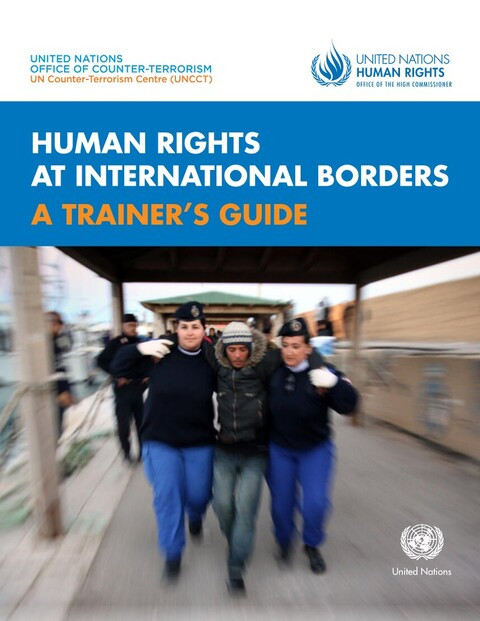 Human Rights at International Borders : A Trainer's Guide Année de publication: 2021 Auteur institutionnel: UN. Office of Counter-Terrorism (UNOCT) | UN. Office of the United Nations High Commissioner for Human Rights (UN. OHCHR) | United Nations (UN) International borders can be dangerous places for migrants, particularly for migrants in vulnerable situations. This capacity-building tool seeks to support States and particularly border officials in adopting a human rights-based and gender-responsive approach to border governance. Accompanying presentation slides and course materials have been developed for use in training courses or as a general information resource on the subject.