
Ressources
Explorez une large gamme de ressources sur le GCED afin d’approfondir votre compréhension et de renforcer vos activités de recherche, de plaidoyer, d’enseignement et d’apprentissage.
204 résultats trouvés
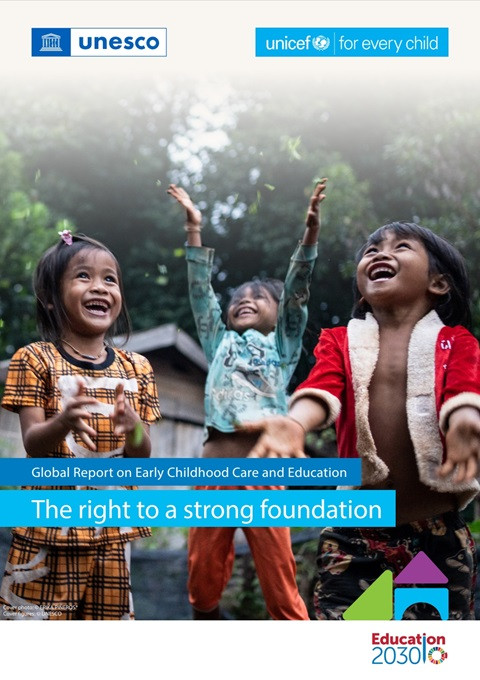 Global Report on Early Childhood Care and Education: The Right to a Strong Foundation Année de publication: 2024 Auteur institutionnel: UNESCO | United Nations Children's Fund (UNICEF) Inclusive and quality early childhood care and education (ECCE) are vital for promoting school readiness, foundational learning, and lifelong well-being. Yet almost 60% of children in low-income countries do not have access to early care and learning opportunities. To meet national targets of providing at least one year of organized learning before primary school, low-income and lower-middle-income countries must fill an annual financial gap of USD 21 billion and recruit at least six million more educators before 2030. The first global report, jointly published by UNESCO and UNICEF, offers insights into global and regional ECCE trends. The report, which is a key response to the commitments outlined in the Tashkent Declaration, synthesizes scientific evidence on ECCE’s importance, and exposes persistence gaps in policy and investment. It illustrates how countries have responded to providing equitable and quality ECCE opportunities. The report invites all stakeholders, from governments and policy-makers, to educators, parents and organizations, to ensure that the commitments made in the Tashkent Declaration are fully realized by building a strong foundation for every child.
  Global Report on Early Childhood Care and Education: The Right to a Strong Foundation; Key Highlights Année de publication: 2024 Auteur institutionnel: UNESCO | United Nations Children's Fund (UNICEF) This document is the key highlights of the Global Report on Early Childhood Care and Education: The Right to a Strong Foundation. Rapport mondial sur l’éducation et la protection de la petite enfance : le droit à une base solide; points saillants Année de publication: 2024 Auteur institutionnel: Organisation des Nations Unies pour l'éducation, la science et la culture (UNESCO) | United Nations Children's Fund (UNICEF) Ce document présente les points clés du Rapport mondial sur l'éducation et la prise en charge de la petite enfance : Le droit à une base solide.
 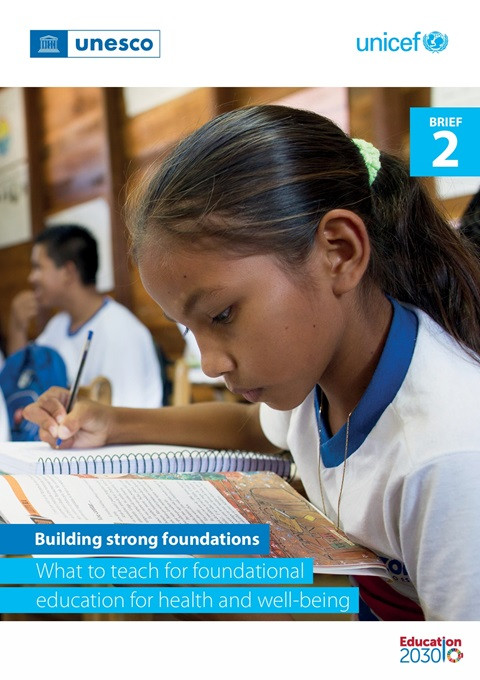 Building Strong Foundations: What to Teach for Foundational Education for Health and Well-being (Building Strong Foundations Brief; 2) Année de publication: 2024 Auteur institutionnel: UNESCO | United Nations Children's Fund (UNICEF) In a rapidly changing world, establishing strong foundations for children is vital for their well-being and resilience. Quality education is central to this endeavour and is the key to lifelong health and success. Recognizing that children thrive in the classroom when they are in good health, it is crucial to learn about health and well-being early on in primary schools. The Building strong foundations briefs, developed jointly by UNESCO and UNICEF, provide evidence-based guidance to support primary school-aged children to thrive through foundational education for health and well-being. Drawing from extensive research and consultations with leading experts from various fields and across the world, these briefs serve as a roadmap for education stakeholders to equip learners with the requisite knowledge and skills to navigate their current and future health and well-being needs. The present document is the second of four briefs. It is a go-to resource to better understand what makes a primary school curriculum effective in supporting health, well-being and learning. The brief provides practical tips and insights on integrating core thematic concepts for health and well-being into the curriculum, including concrete examples of learning objectives for lower primary and upper primary curricula. Whether a seasoned curriculum designer, a passionate educator or an individual involved in primary school curriculum processes, this brief equips readers with the tools to design impactful curricula for transformative learning, health and well-being.
  The Digital Transformation of Education: Connecting Schools, Empowering Learners Année de publication: 2020 Auteur: Ana Sepúlveda | Doreen Bogdan-Martin | Alex Wong | Chris Fabian | Borhene Chakroun | Anna Polomska | Samantha O’Riordan | Miguel Alcaine | Istvan Bozsoki | Vladimir Daigele | Jose Maria Diaz Batanero | Hani Eskandar | Aminata Amadou Garba | John Garrity | Farid Nakhli | Sylvia Poll Ahrens | Martin Schaaper | Christine Sund | Nancy Sundberg | Sandeep Taxali | Cleveland Thomas | Frank McCosker | James Lo | Fengchun Miao | Jaime Archundia | Janice Dean | Sophia Farrar | Sunita Grote | Aditi Poddar | Naroa Zurutuza | Nanjira Sambuli | Kavita Gupta Auteur institutionnel: International Telecommunication Union (ITU) | UNESCO | United Nations Children's Fund (UNICEF) This report looks into school connectivity and introduces a methodology and framework for mapping and connecting primary and secondary schools to the Internet. It aims to help governments, their partners and interested stakeholders to develop more holistic school connectivity plans. The analysis of this report provides a better understanding of the school connectivity landscape and requirements, to evaluate the benefits of different technologies for different environments, and to analyze business and financial models, as well as suitable content articulating connectivity with quality, safe, and inclusive learning.
 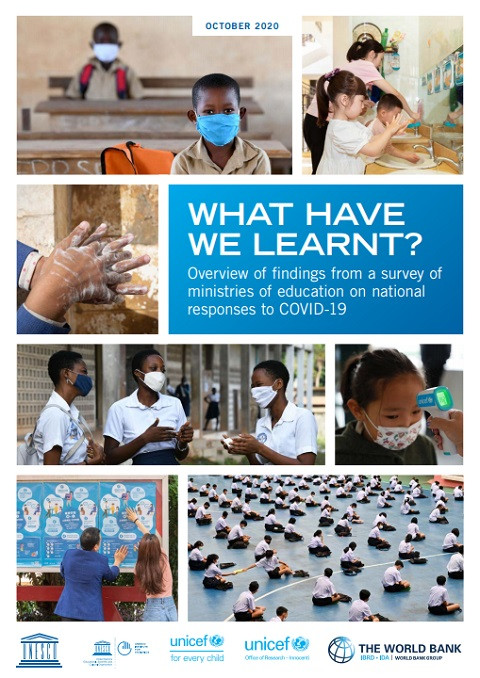 What Have We Learnt?: Overview of Findings From a Survey of Ministries of Education on National Responses to COVID-19 Année de publication: 2020 Auteur institutionnel: UNESCO | United Nations Children's Fund (UNICEF) | World Bank As part of the coordinated global education response to the COVID-19 pandemic, UNESCO, UNICEF and the World Bank conducted a Survey on National Education Responses to COVID-19 School Closures. In this joint report, the results of the first two rounds of data collection administered by the UNESCO Institute for Statistics (UIS) were analysed. They cover government responses to school closures from pre-primary to secondary education.
 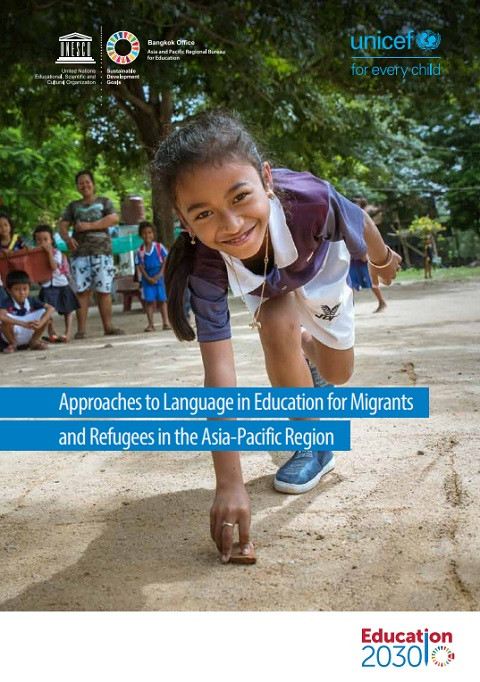 Approaches to Language in Education for Migrants and Refugees in the Asia-Pacific Region Année de publication: 2020 Auteur institutionnel: UNESCO | United Nations Children's Fund (UNICEF) UNESCO Bangkok commissioned this paper to examine strategies for addressing the needs of refugee, migrant and internally displaced children in the Asia-Pacific region. This document aims to create a stronger knowledge base to support Member States as they formulate education policies that are responsive to the needs of such children. This document aims to:Examine how linguistic diversity and human mobility intersect and impact minority, migrant and refugee children’s access to quality, inclusive educationLink policy priorities to promising practices, based on international frameworks and lessons learned from successful programmesRecommend steps for improving language-in-education policies and their implementation. To do this, this paper examines:Global and regional trends in migrationThe impact of migration on children’s educationLinguistic diversity and its implications for language-in-education policies and practicesResearch and resources that support inclusive quality education for migrant and refugee children.
 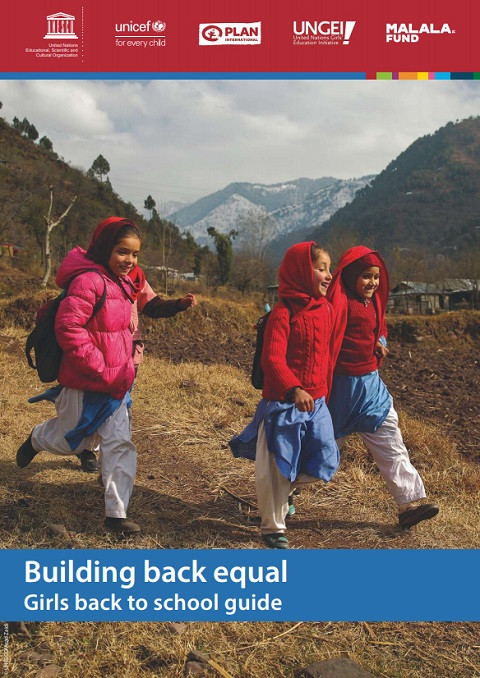 Building Back Equal: Girls Back to School Guide Année de publication: 2020 Auteur institutionnel: UNESCO | United Nations Children's Fund (UNICEF) | Plan International | United Nations Girls' Education Initiative (UNGEI) | Malala Fund The guide provides targeted inputs to ensure continuity of learning during school closures, and comprehensive, timely and evidence-based plans for reopening schools in a way that is safe, gender-responsive and child-friendly, and meets the needs of the most marginalised girls. This guide emphasizes an approach to ‘build back equal’ through gender-responsive measures that transform education systems, prioritise resilience and address the key bottlenecks and barriers to girls’ education, including: Gender-responsive data and evidence to inform action, including data disaggregated by sex and gender-responsive monitoring to identify promising practices to promote gender equality. Policies, laws and plans to advance girls’ rights, including the removal of discriminatory practices that impede girls’ educational participation and completion, and ability to apply their learning. Sustained financing to achieve results, protecting education financing for girls’ education, alongside health, social protection and economy recovery initiatives with an equity lens. Reforzar la igualdad: Guía para el regreso de las niñas a la escuela Année de publication: 2020 Auteur institutionnel: UNESCO | United Nations Children's Fund (UNICEF) | Plan International | United Nations Girls' Education Initiative (UNGEI) | Malala Fund La guía proporciona información específica para garantizar la continuidad del aprendizaje durante los cierres escolares, así como planes integrales, oportunos y fundados en datos empíricos para reabrir escuelas de forma segura, con perspectiva de género, adaptada a las necesidades de los niños, y que satisfaga las necesidades de las niñas más marginadas. Esta guía enfatiza un enfoque basado en “reforzar la igualdad”, a través de medidas con perspectiva de género que transformen los sistemas educativos, den prioridad a la resiliencia, y aborden los principales obstáculos y limitaciones para la educación de las niñas, incluyendo: Datos y pruebas con perspectiva de género para fundamentar las acciones, incluidos datos desglosados por sexo, y un seguimiento con perspectiva de género para identificar prácticas prometedoras para promover la igualdad de género. Políticas, leyes y planes para promover los derechos de las niñas, incluida la eliminación de las prácticas discriminatorias que impidan la participación y finalización educativa de las niñas, y la posibilidad de aplicar los conocimientos adquiridos. Financiamiento sostenido para lograr resultados, protegiendo el financiamiento educativo para las niñas, junto con iniciativas de salud, protección social y recuperación económica, con una perspectiva de igualdad de género. Reconstruire l’égalité: Guide de rescolarisation des filles Année de publication: 2020 Auteur institutionnel: UNESCO | United Nations Children's Fund (UNICEF) | Plan International | United Nations Girls' Education Initiative (UNGEI) | Malala Fund Le guide fournit des contributions ciblées pour assurer la continuité de l’apprentissage pendant les fermetures d’écoles ainsi que des plans complets et opportuns basés sur les données pour rouvrir les écoles de manière sûre, en tenant compte des questions de genre, ainsi qu’en répondant aux besoins des enfants et des filles les plus marginalisées. Ce guide met l’accent sur une approche visant à « reconstruire l’égalité », à travers des mesures tenant compte des questions de genre afin de transformer les systèmes éducatifs, de favoriser la résilience et de résoudre les principaux freins et obstacles à l’éducation des filles, dont : des données et des preuves tenant compte des questions de genre pour éclairer les actions, y compris des données ventilées par sexe et un suivi visant à identifier les pratiques prometteuses pour l’égalité des genres ; des politiques, des lois et des plans pour faire avancer les droits des filles, y compris l’élimination des pratiques discriminatoires qui entravent la participation des filles à l’éducation et leur capacité à mettre leur savoir en pratique ; des financements pérennes pour obtenir des résultats, qui protègent le financement de l’éducation des filles, ainsi que les initiatives en matière de santé, de protection sociale et de redressement économique sur un principe d’équité.