
Ressources
Explorez une large gamme de ressources sur le GCED afin d’approfondir votre compréhension et de renforcer vos activités de recherche, de plaidoyer, d’enseignement et d’apprentissage.
51 résultats trouvés
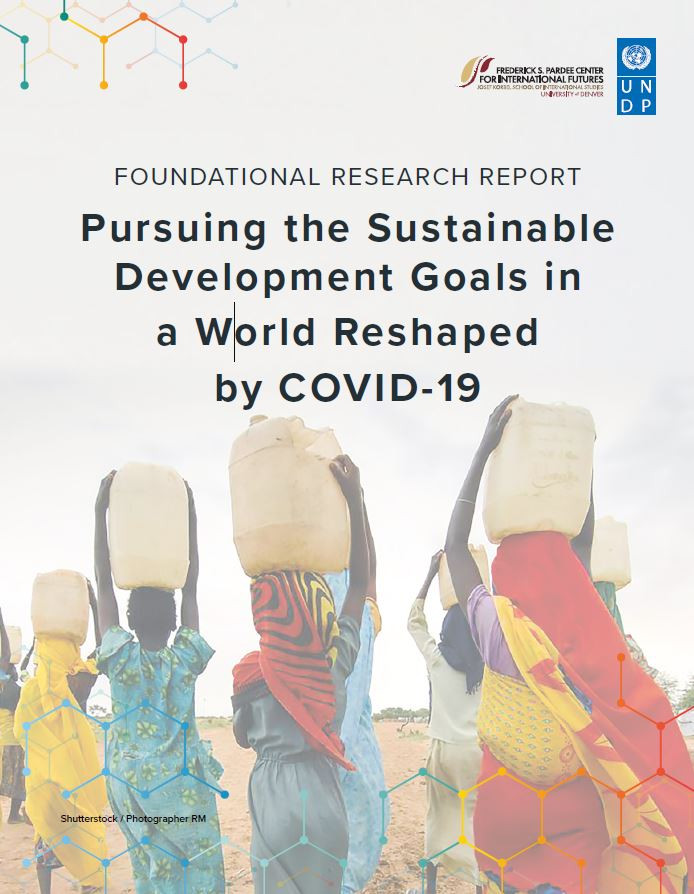 Pursuing the Sustainable Development Goals in a World Reshaped by COVID-19: Foundational Research Report Année de publication: 2021 Auteur: Barry B. Hughes | Taylor Hanna | Kaylin McNeil | David K. Bohl | Jonathan D. Moyer Auteur institutionnel: United Nations Development Programme (UNDP) | Frederick S. Pardee Center for International Futures This report advances existing monitoring and forecasting initiatives in three ways. First, it provides, for selected goals and targets, especially those related to human development, projections for the path of progress that the world seemed to be on prior to the outbreak of the COVID-19 pandemic. Second, despite the still very high levels of uncertainty around the ultimate course of the pandemic, it considers the possible impact on longer-term progress. Third, it explores the potential impact of a broad and integrated program of initiatives intended to move us more quickly toward achieving the goals.The SDG Push scenario successfully increases the rate of progress toward the targets sufficiently to overcome the global losses of even the High Damage COVID scenario before 2030 for most target variables. On top of the baseline COVID scenario it greatly increases the number of countries reaching target levels by 2030 and 2050.
 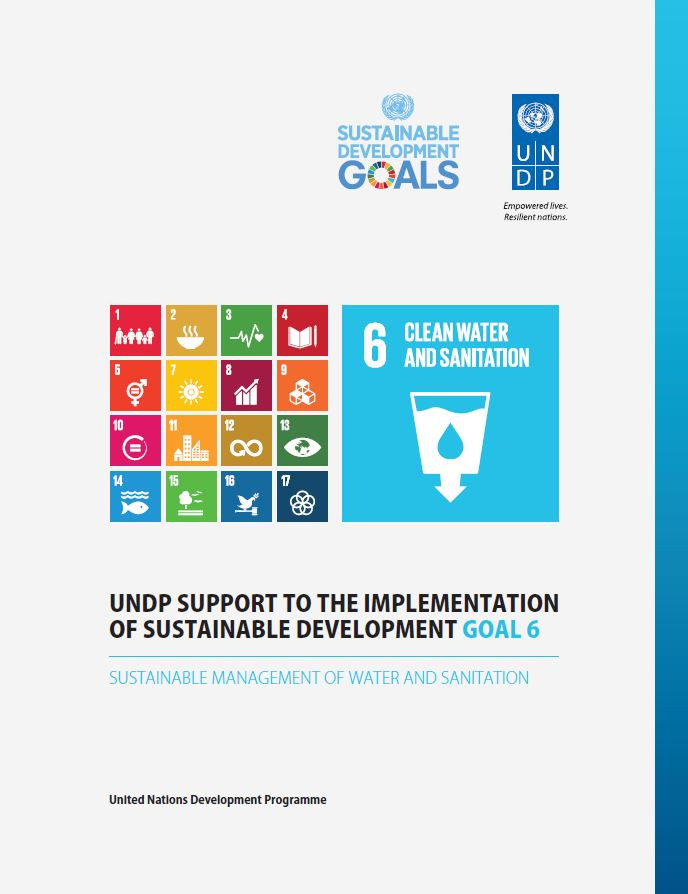 UNDP Support for the Implementation of Sustainable Development Goal 6: Sustainable Management of Water and Sanitation Année de publication: 2016 Auteur institutionnel: United Nations Development Programme (UNDP) This document provides a summary report on UNDP support for the implementation of SDG 6. The report focuses specifically on the sustainable management of water and sanitation services. This report is a micro-reference to these efforts in the field of water and sanitation services. دعم برنامج الأمم المتحدة الإنمائي لتنفيذ الهدف 6 من أهداف التنمية المستدامة: الإدارة المستدامة للمياه وخدمات الصرف الصحي Année de publication: 2016 Auteur institutionnel: United Nations Development Programme (UNDP) يقدم المستند تقرير ملخصا عن دعم برنامج الأمم المتحدة الإنمائي لتنفيذ الهدف 6 من أهداف التنمية المستدامة. ويركز التقرير بالتحديد على الإدارة المستدامة للمياه وخدمات الصرف الصحي. يعتبر هذا التقرير مرجع مصغر لهذه الجهود في مجال خدمة المياه والصرف الصحي.
  Moldova SDG Push Framework: Unlocking New Pathways to SDG Acceleration Année de publication: 2024 Auteur institutionnel: United Nations Development Programme (UNDP) SDG Push is about realizing development ambition and redefining how we build acceleration pathways. It helps pinpoint policy choices that ‘move the needle’ towards the achievement of the Sustainable Development Goals. A UNDP flagship initiative, SDG Push uses digital and data innovation, systems thinking, and futures approaches to provide a comprehensive and country-specific tool to plan and implement SDG breakthroughs in a variety of development contexts. SDG Acceleration Pathways, specific to context and need, were co-created in collaboration with Indonesia, Moldova, Namibia, Peru and South Africa. These pilots helped to refine the SDG Push approach and the digital SDG Push Diagnostic and formed the foundation of the Integrated SDG Insights Reports, presented at the 2023 SDG Summit. This integrated, modular approach includes the analysis of development trends and priorities with data visualization, integrating generative dialogue, foresight methods and economic modelling to assess the impact of potential accelerators.
  Namibia SDG Push Framework: Unlocking New Pathways to SDG Acceleration Année de publication: 2024 Auteur institutionnel: United Nations Development Programme (UNDP) SDG Push is about realizing development ambition and redefining how we build acceleration pathways. It helps pinpoint policy choices that ‘move the needle’ towards the achievement of the Sustainable Development Goals. A UNDP flagship initiative, SDG Push uses digital and data innovation, systems thinking, and futures approaches to provide a comprehensive and country-specific tool to plan and implement SDG breakthroughs in a variety of development contexts. SDG Acceleration Pathways, specific to context and need, were co-created in collaboration with Indonesia, Moldova, Namibia, Peru and South Africa. These pilots helped to refine the SDG Push approach and the digital SDG Push Diagnostic and formed the foundation of the Integrated SDG Insights Reports, presented at the 2023 SDG Summit. This integrated, modular approach includes the analysis of development trends and priorities with data visualization, integrating generative dialogue, foresight methods and economic modelling to assess the impact of potential accelerators.
  Peru SDG Push Framework: Unlocking New Pathways to SDG Acceleration Année de publication: 2024 Auteur institutionnel: United Nations Development Programme (UNDP) SDG Push is about realizing development ambition and redefining how we build acceleration pathways. It helps pinpoint policy choices that ‘move the needle’ towards the achievement of the Sustainable Development Goals. A UNDP flagship initiative, SDG Push uses digital and data innovation, systems thinking, and futures approaches to provide a comprehensive and country-specific tool to plan and implement SDG breakthroughs in a variety of development contexts. SDG Acceleration Pathways, specific to context and need, were co-created in collaboration with Indonesia, Moldova, Namibia, Peru and South Africa. These pilots helped to refine the SDG Push approach and the digital SDG Push Diagnostic and formed the foundation of the Integrated SDG Insights Reports, presented at the 2023 SDG Summit. This integrated, modular approach includes the analysis of development trends and priorities with data visualization, integrating generative dialogue, foresight methods and economic modelling to assess the impact of potential accelerators.
  South Africa SDG Push Framework: Unlocking New Pathways to SDG Acceleration Année de publication: 2024 Auteur institutionnel: United Nations Development Programme (UNDP) SDG Push is about realizing development ambition and redefining how we build acceleration pathways. It helps pinpoint policy choices that ‘move the needle’ towards the achievement of the Sustainable Development Goals. A UNDP flagship initiative, SDG Push uses digital and data innovation, systems thinking, and futures approaches to provide a comprehensive and country-specific tool to plan and implement SDG breakthroughs in a variety of development contexts. SDG Acceleration Pathways, specific to context and need, were co-created in collaboration with Indonesia, Moldova, Namibia, Peru and South Africa. These pilots helped to refine the SDG Push approach and the digital SDG Push Diagnostic and formed the foundation of the Integrated SDG Insights Reports, presented at the 2023 SDG Summit. This integrated, modular approach includes the analysis of development trends and priorities with data visualization, integrating generative dialogue, foresight methods and economic modelling to assess the impact of potential accelerators.
  Developing Global Guidance for Child Rights Impact Assessments in Relation to the Digital Environment: Summary of Initial Project Findings Année de publication: 2024 Auteur institutionnel: United Nations Development Programme (UNDP) | German Institute of Development and Sustainability (IDOS) The age of technology and the Internet have brought tremendous benefits, including for children. However, the spread of digital technologies also comes with a broad spectrum of risks and harms to which children can be particularly vulnerable. Under the UN Guiding Principles on Business and Human Rights and the Children’s Rights and Business Principles, businesses have a responsibility to identify, assess, and address relevant human rights risks, including risks to children’s rights. With respect to the digital environment, a rapidly evolving landscape and the emergence of new technologies has changed the nature and severity of actual and potential child rights risks relating to business activities. In response, UNICEF has initiated a project to assess the current child rights impact assessment (CRIA) landscape in relation to digital business activities and develop new guidance to support robust implementation going forward. A summary of initial project findings is now available here. Further project outputs including the updated guidance (currently under development) are anticipated in late 2024.
  Inter-Agency Policy Brief: Accelerating SDG Localization to Deliver on the Promise of the 2030 Agenda for Sustainable Development Année de publication: 2024 Auteur institutionnel: United Nations Centre for Human Settlement Programme (UN Habitat) | UN. Department of Economic and Social Affairs (UN. DESA) | United Nations Development Programme (UNDP) SDG localization is the process of adapting and customizing the SDGs and translating them into local development plans and strategies that fit the needs, context, and priorities of a particular region or locality, in coherence with national frameworks. It means placing local communities at the center of sustainable development and anchoring development action on the principles of inclusion, partnership, and multilevel governance, with adequate data and financing availability at the local level. This inter-agency policy brief examines the critical role of local and regional governments in accelerating achievement of the 2030 Agenda and provides policy recommendations to help advance the essential work of localizing SDG action. This policy brief was prepared by UNDESA, UN Habitat and UNDP in close collaboration with the Global Taskforce of Local and Regional Governments and United Cities and Local Governments, with input from the United Nations Regional Commissions: UNECA, UNECE, UNECLAC, UNESCAP, and UNESCWA.
 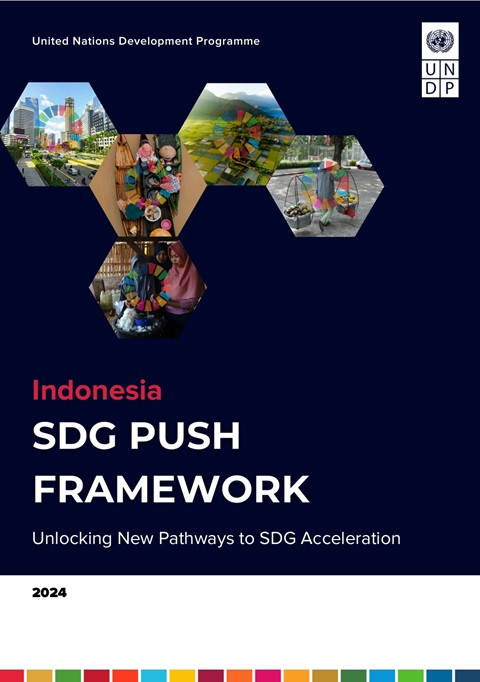 Indonesia SDG Push Framework: Unlocking New Pathways to SDG Acceleration Année de publication: 2024 Auteur institutionnel: United Nations Development Programme (UNDP) SDG Push is about realizing development ambition and redefining how we build acceleration pathways. It helps pinpoint policy choices that ‘move the needle’ towards the achievement of the Sustainable Development Goals. A UNDP flagship initiative, SDG Push uses digital and data innovation, systems thinking, and futures approaches to provide a comprehensive and country-specific tool to plan and implement SDG breakthroughs in a variety of development contexts. SDG Acceleration Pathways, specific to context and need, were co-created in collaboration with Indonesia, Moldova, Namibia, Peru and South Africa. These pilots helped to refine the SDG Push approach and the digital SDG Push Diagnostic and formed the foundation of the Integrated SDG Insights Reports, presented at the 2023 SDG Summit. This integrated, modular approach includes the analysis of development trends and priorities with data visualization, integrating generative dialogue, foresight methods and economic modelling to assess the impact of potential accelerators.