
Ressources
Explorez une large gamme de ressources sur le GCED afin d’approfondir votre compréhension et de renforcer vos activités de recherche, de plaidoyer, d’enseignement et d’apprentissage.
15 résultats trouvés
 Участие женщин в делах государства: Казахстан 2022 Année de publication: 2022 Auteur institutionnel: United States Agency for International Development (USAID) Цель предусматривает обеспечение полного и значимого участия женщин и равных возможностей для лидерства на всех уровнях принятия решений в политической, экономической и общественной жизни.
 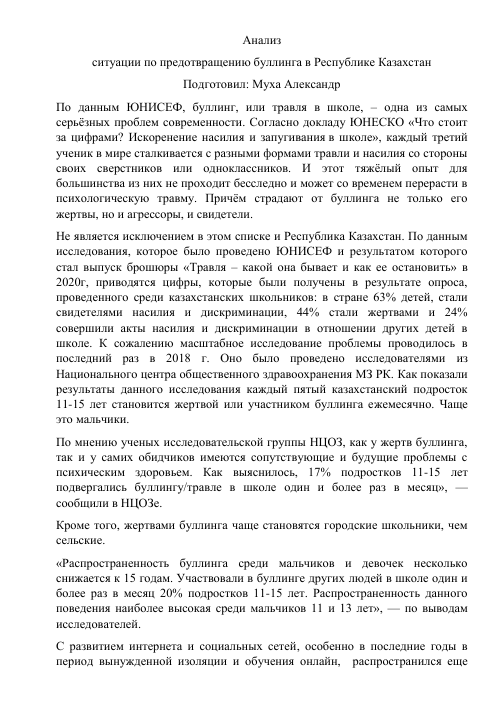 Анализ ситуации по предотвращению буллинга в Республике Казахстан Année de publication: 2022 Auteur: Муха Александр Auteur institutionnel: United States Agency for International Development (USAID) По данным ЮНИСЕФ, буллинг, или травля в школе, – одна из самых серьѐзных проблем современности. Согласно докладу ЮНЕСКО «Что стоит за цифрами? Искоренение насилия и запугивания в школе», каждый третий ученик в мире сталкивается с разными формами травли и насилия со стороны своих сверстников или одноклассников. И этот тяжѐлый опыт для большинства из них не проходит бесследно и может со временем перерасти в психологическую травму.
 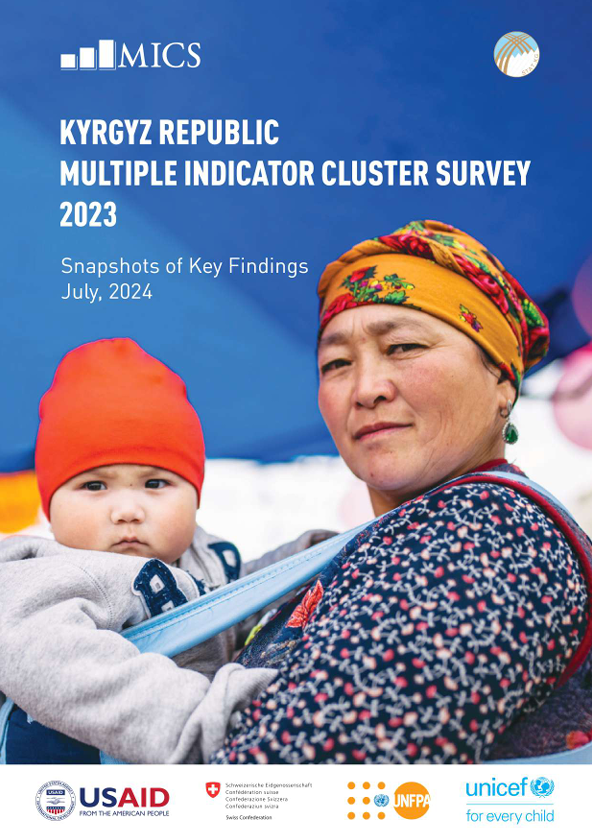 Kyrgyz Republic Multiple Indicator Cluster Survey 2023: Snapshots of Key Findings July, 2024 Année de publication: 2024 Auteur institutionnel: National Statistical Committee of the Kyrgyz Republic | UNICEF Kyrgyzstan | United Nations Population Fund (UNFPA) | United States Agency for International Development (USAID) | Government of Switzerland The 5th round of Multiple Indicator Cluster Survey (MICS) covers 7,200 households across Kyrgyzstan, measuring 185 indicators related to healthcare, education, and social protection for women and children. MICS 2023 produced data for 32 global Sustainable Development Goal (SDG) indicators, disaggregated by key characteristics such as gender, age, geographic location, income level and disability. Кластерное обследование по многим показателям в Кыргызстане 2023: Обзор основных статистических данных Июль 2024г. Année de publication: 2024 Auteur institutionnel: National Statistical Committee of the Kyrgyz Republic | UNICEF Kyrgyzstan | United Nations Population Fund (UNFPA) | United States Agency for International Development (USAID) | Government of Switzerland Национальный статистический комитет КР презентовал результаты нового Кластерного обследования по многим показателям (КОМП). В рамках исследования, было опрошено 7,2 тыс. домохозяйств по всему Кыргызстану по 185 показателям, связанных со здравоохранением, образованием и социальной защитой женщин и детей. В результате КОМП-2023 были собраны данные для 32 глобальных показателей Целей устойчивого развития (ЦУР), дезагрегированные по ключевым признакам, таким как пол, возраст, географическое положение, уровень дохода и наличие инвалидности.
 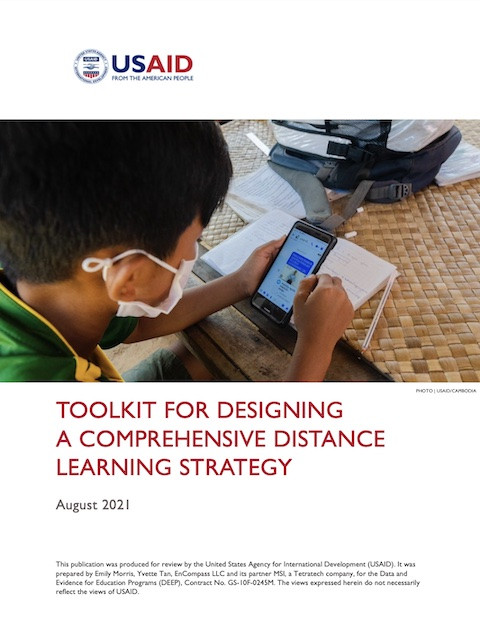 Toolkit for Designing a Comprehensive Distance Learning Strategy Année de publication: 2021 Auteur: Emily Morris | Yvette Tan Auteur institutionnel: United States Agency for International Development (USAID) The purpose of this toolkit is to provide practical guidance (tools, examples, and resources) for designing a comprehensive distance learning strategy that covers an entire education sector or system.
  School-Related Gender-Based Violence Measurement Toolkit Année de publication: 2020 Auteur: Dexis Consulting Group Auteur institutionnel: United States Agency for International Development (USAID) This toolkit delivers practical guidance and resources for measuring the prevalence and extent of students’ experiences of school-related gender-based violence (SRGBV), and provides methods for assessing key risk factors and drivers of SRGBV. This toolkit contains a conceptual framework for measuring SRGBV, a school- based survey for measuring experiences of SRGBV, risk factors, and drivers, as well as practical guidance for implementing the survey.
 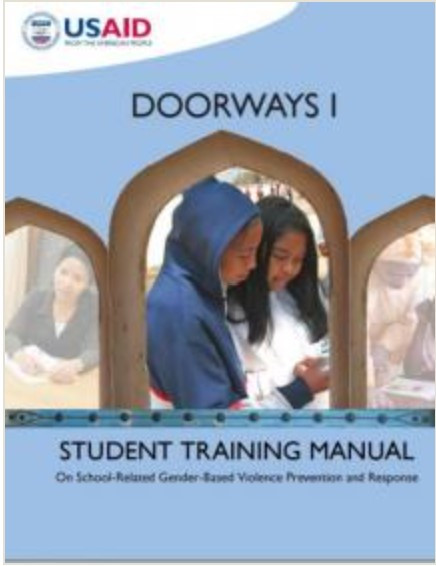 دليل تدريب الطالب: التعامل مع العنف القائم على النوع الاجتماعي في المدارس وكيفية تجنبه Année de publication: 2009 Auteur institutionnel: United States Agency for International Development (USAID) تم تصميم وتمويل برنامج التدريب "مداخل" من قبل الوكالة الأمريكية للتنمية الدولية ( USAID ) لبرنامج "المدارس الآمنة"؛ لتمكين المعلمين، وأفراد المجتمع، والطلاب من التعامل مع العنف القائم على النوع الاجتماعي في المدارس وكيفية تجنبه؛ ذلك لأن العنف داخل وخارج المدارس أصبح مشكلة عالمية ذات تأثيرات خطيرة على التحصيل العلمي، وصحة وسلامة الأطفاله؛ كما أن الإيذاء البدني، والجنسي، والنفسي الذي يتعرض له الأولاد، والبنات على أيدي المعلمين، أو الزملاء أو الآخرين؛ يؤدي إلى تسرب الأطفال من المدرسة، وقد يترك جروحًا تبقى آثارها لفترة طويلة مخفية عن الأنظار . Student Training Manual: Dealing with and How to Avoid Gender-Based Violence in Schools Année de publication: 2009 Auteur institutionnel: United States Agency for International Development (USAID) The Doorways training program was designed by the U.S. Agency for International Development (USAID)-funded Safe Schools Program (Safe Schools) to enable teachers, community members and students to prevent and respond to school related gender-based violence (SRGBV).1 Violence in and around schools is a worldwide problem with serious implications for the educational attainment, health and well-being of all children.2 The physical, sexual and psychological abuse suffered by both girls and boys at the hands of teachers, classmates and others drives children out of school and can leave long-lasting scars invisible to the eye.
  Transforming Systems in Times of Adversity: Education and Resilience; White Paper Année de publication: 2019 Auteur: Ritesh Shah Auteur institutionnel: United States Agency for International Development (USAID) This white paper was commissioned to provide USAID, including Missions, Regional Bureaus, Pillar Bureaus, and the Office of U.S. Foreign Disaster Assistance (OFDA), with an overview of global and Agency thinking and practice on education and resilience and a foundation and justification for positioning USAID education efforts more concretely within a resilience frame.The white paper is organized into three key sections. The first section outlines the business case for resilience, explaining how and why resilience is an important consideration for education programs to consider in contexts of crisis and conflict and how education is well poised as a sector to contribute to strengthening resilience. The second section presents a conceptual framework for understanding how resilience operates through and within the education sector and program interventions. The third section provides a series of key considerations for developing and supporting USAID education programs with a resilience lens or focus.
  Beyond Access: Toolkit for Integrating Gender-based Violent Prevention and Response into Education Projects Année de publication: 2015 Auteur institutionnel: United States Agency for International Development (USAID) This toolkit was developed to support implementation of the U.S. Strategy to Prevent and Respond to Gender-based Violence Globally. It provides guidance and resources for USAID technical and program officers working on education to increase understanding of GBV in the education context and strengthen integration of a gender-based violence (GBV) response into projects and activities. Because reducing school-related GBV is a high priority for USAID in all school systems globally, this toolkit includes school-related GBV, but the overall focus is GBV in the education context broadly.The Toolkit provides:The United States government definition of GBV and USAID’s definition of school-related GBVExplanation for why integrating GBV prevention and response improves education outcomes, and the evidence on the prevalence of GBV in the education sectorGuiding principles to ensure the well-being of those at risk for, and survivors of, GBVIllustrative GBV prevention and response activities by the USAID Education Strategy GoalsGuidance on how to integrate GBV prevention and response throughout theUSAID Program Cycle to be able to monitor, evaluate, learn, and adapt education projects and activities accordingly, and it includes illustrative indicators for measuringGBV prevention and response for each of the USAID Education Strategy goals.