
Ressources
Explorez une large gamme de ressources sur le GCED afin d’approfondir votre compréhension et de renforcer vos activités de recherche, de plaidoyer, d’enseignement et d’apprentissage.
51 résultats trouvés
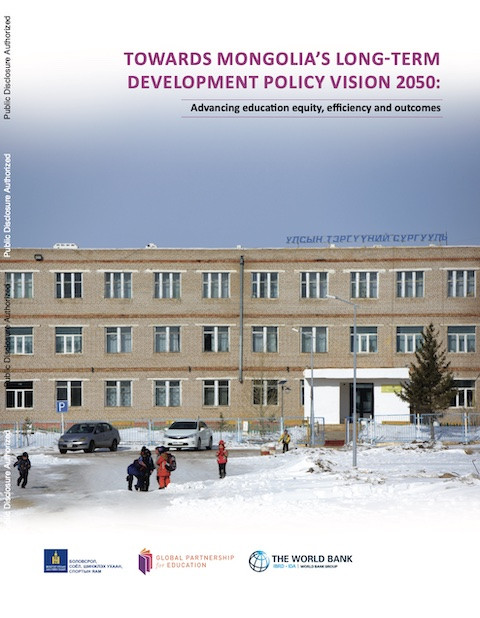 Towards Mongolia’s Long-Term Development Policy Vision 2050: Advancing Education Equity, Efficiency and Outcomes Année de publication: 2020 Auteur institutionnel: Mongolia Ministry of Education, Culture, Science and Sports | World Bank This report seeks to synthesize and analyze education outcomes with a view of identifying the main priorities for strengthening the education sector in support of Mongolia’s Sustainable Development Vision 2050. The report highlights data and findings generated from a series of source reports (see bibliography) related to the goals and targets set out in the Vision 2050. The report is composed of six thematic chapters: Access; Equity; Internal Efficiency, Education Cost and Finance; External Efficiency; Management. Each chapter will include an overview of the current situation and recent development with a focus on, key achievements and persistent challenges. As a synthesis report, the information on each topic is not exhaustive but rather seeks to present key findings. Specific activities highlighted in the Vision 2050 have been included at the beginning of each chapter and a complete mapping by activity is annexed (Annex 1. Vision 2050 Chapter mapping). This synthesis report draws on conclusions, finding, data and surveys produced in collaboration with MECSS by the Asian Development Bank, the Global Partnership for Education and the World Bank. The synthesis also draws from key UNESCO reports. The scope, research, and focus of the source reports differ, and precise findings are, on occasions, incongruent however the overall conclusions are fundamentally compatible. Whereas most of the source reports focus on one or two key stages, the synthesis report seeks to extract cross-cutting and/or recurring challenges that have an impact, positive or negative, on equity, efficiency and outcomes which ultimately may contribute to the implementation of Vision 2050. Mongolia’s State Education Policy (2014-2024) states: ‘Education is the main key factor of each citizen’s lifelong support and guarantee of life quality, and of the State’s societal and economical, science and technological development, and guarantee of national independence and security. Mongolian State shall develop education as a leading sector in society’.
 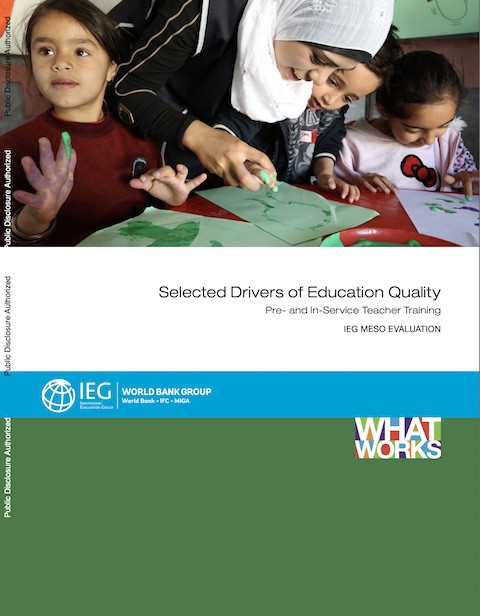 Selected Drivers of Education Quality: Pre- and In-Service Teacher Training Année de publication: 2019 Auteur institutionnel: World Bank This evaluation examines how the World Bank has supported two types of professional development to improve teacher capacity—preservice and in-service training—and identifies how these drivers of education quality can be better designed, implemented, and scaled up.
 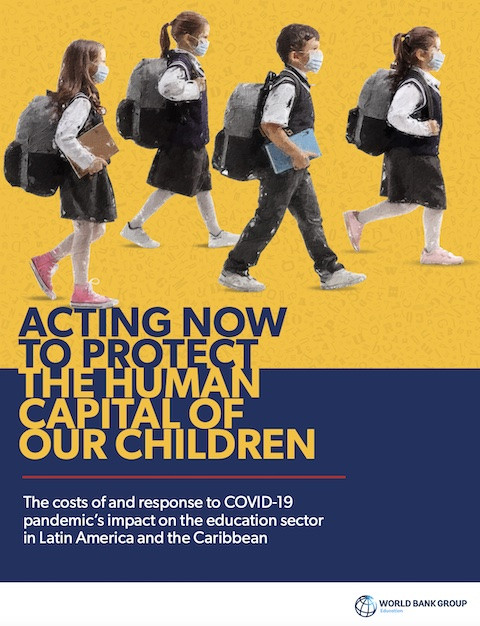 Acting Now to Protect the Human Capital of Our Children: The Costs of and Response to COVID-19 Pandemic’s Impact on the Education Sector in Latin America and the Caribbean Année de publication: 2021 Auteur institutionnel: World Bank The sanitary and economic shocks caused by the COVID-19 pandemic brought about the most significant disruption in the history of the education sector in Latin America and the Caribbean region, leading to school closures at all levels and affecting over 170 million students throughout the region. Despite the tremendous efforts made by countries to mitigate the lack of in-person education through remote learning, education is taking a serious hit and outcomes are plummeting in the region. Learning poverty by the end of primary education could increase by more than 20 percent. Over 2 in 3 lower secondary education students could fall below minimum proficiency levels, and learning losses will be substantially larger for the most disadvantaged students. There is no time to lose. All countries must act now to make sure schools are ready to reopen safely and effectively country-wide so as to speed up the recovery process from the dramatic effects of the pandemic. They can leverage many emerging lessons and evidence, and must protect public funding for education, to enable this reopening process. While education systems face a challenge like no other, this exceptionally difficult situation also opens a window of opportunity to build back better their education systems to become more effective, equitable and resilient. Actuemos ya para proteger el capital human de nuestros ninos: Los costos y la respuesta ante el impacto de la pandemia de COVID-19 en el sector educativo de América Latina y el Caribe Année de publication: 2021 Auteur institutionnel: World Bank El doble shock, sanitario y económico, generado por la pandemia COVID-19 provocó, sin duda alguna, la mayor disrupción en la historia del sector educativo en la región de América Latina y el Caribe, llevando al cierre masivo de escuelas en todos los niveles educativos y afectando a más de 170 millones de estudiantes en toda la región. A pesar de los enormes esfuerzos realizados por los países para tratar de mitigar la falta de educación presencial a través de sistemas de educación a distancia, el impacto sobre la educación está siendo demasiado alto y los aprendizajes se están desplomando en la región. La “pobreza de aprendizaje” al final de la educación primaria podría aumentar en más del 20 por ciento. Más de 2 de cada 3 estudiantes de educación secundaria podrían caer por debajo de los niveles mínimos de rendimiento esperados, y las pérdidas de aprendizaje serán sustancialmente mayores para los estudiantes más desfavorecidos. Realmente no hay tiempo que perder. Todos los países deberían actuar ya mismo para asegurarse que las escuelas estén listas para reabrir de manera segura y eficaz en todo el país a fin de acelerar el proceso de recuperación de los dramáticos efectos de la pandemia. Hay muchas lecciones y evidencias de experiencias positivas que van emergiendo y que pueden ser aprovechadas por los países, los cuales también deben asegurarse de proteger el financiamiento público de la educación, para facilitar este proceso de reapertura. Aun cuando los sistemas educativos de toda la región enfrentan un desafío jamás experimentado, esta situación excepcionalmente difícil también abre una ventana de oportunidad para poder ayudar a reconstruir los sistemas educativos para lograr que sean más efectivos, más equitativos y más resilientes.
  [Video] Central Asian Kids Share Their Views on Gender Inequality Année de publication: 2020 Auteur institutionnel: World Bank In Central Asia, and around the world, women earn 30% less than men. In anticipation of March 8, we asked the children what they think about it. [Видео] Что говорят дети в Центральной Азии о гендерном неравенстве в оплате труда Année de publication: 2020 Auteur institutionnel: World Bank В Центральной Азии, и по всему миру, женщины зарабатывают на 30% меньше, чем мужчины. В преддверии 8 марта мы спросили детей, что они думают об этом.
 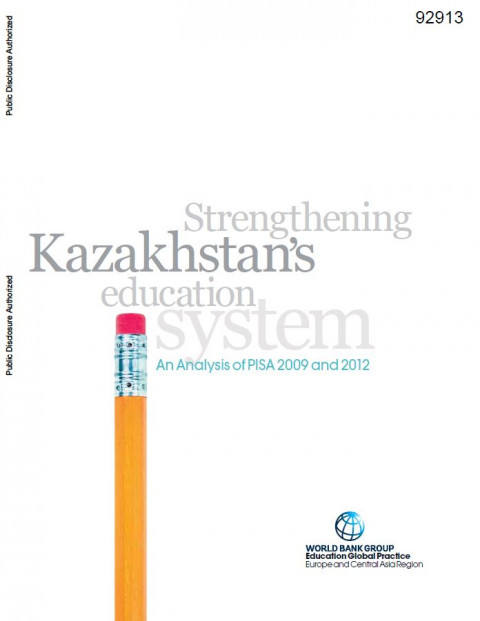 Strengthening Kazakhstan's Education Systems: An Analysis of PISA 2009 and 2012 Année de publication: 2014 Auteur: Keiko Inoue | Lucas Gortazar Auteur institutionnel: World Bank This report is the result of the World Bank's education sector providing technical and analytical support to the Government of the Republic of Kazakhstan (RK) from 2013 to 2015 under the leadership of Keiko Inoue (Senior Education Specialist, Europe and Central Asia Region, World Bank) as part of the Joint Economic Research. This report is also part of a series of PISA country reporting programs prepared by the Education Sector for the Europe and Central Asia Region, and it is also the second World Bank report on the effectiveness of the education system in Kazakhstan based on an analysis of PISA data. Укрепление системы образования Казахстана: Анализ результатов исследования PISA, проводимого в 2009 и 2012 годах Année de publication: 2014 Auteur: Keiko Inoue | Lucas Gortazar Auteur institutionnel: World Bank Этот отчет является результатом работы сектора образования Всемирного банка по технической и аналитической поддержке правительства Республики Казахстан (РК) в период с 2013 по 2015 год под руководством Кейко Иноуэ (старший специалист по образованию, Регион Европы и Центральной Азии, Всемирный банк) в рамках Программы Совместных Экономических Исследований. Этот отчет также является частью серии программы страновых отчетов PISA, подготовленной Сектором образования по региону Европы и Центральной Азии, а также это второй отчет Всемирного Банка о результативности системы образования РК на основе анализа данных PISA.
 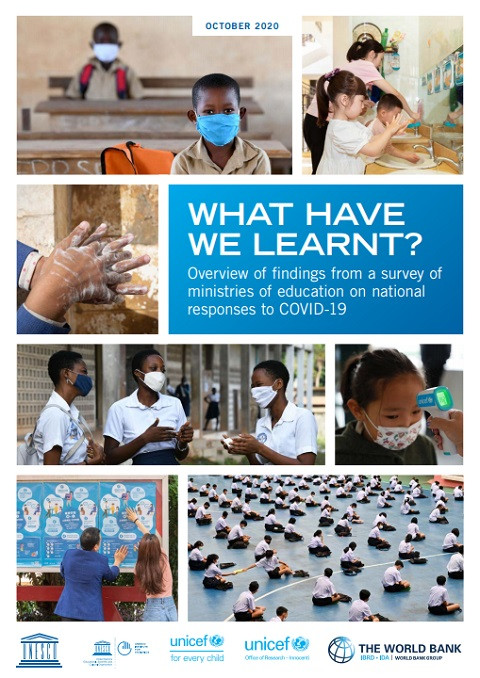 What Have We Learnt?: Overview of Findings From a Survey of Ministries of Education on National Responses to COVID-19 Année de publication: 2020 Auteur institutionnel: UNESCO | United Nations Children's Fund (UNICEF) | World Bank As part of the coordinated global education response to the COVID-19 pandemic, UNESCO, UNICEF and the World Bank conducted a Survey on National Education Responses to COVID-19 School Closures. In this joint report, the results of the first two rounds of data collection administered by the UNESCO Institute for Statistics (UIS) were analysed. They cover government responses to school closures from pre-primary to secondary education.
 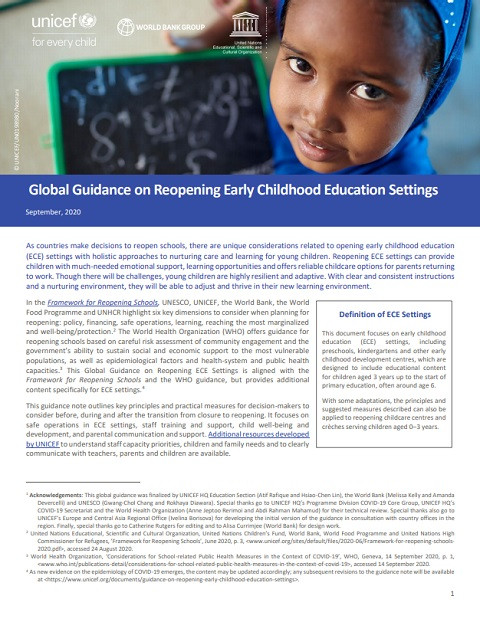 Global Guidance on Reopening Early Childhood Education Settings Année de publication: 2020 Auteur institutionnel: United Nations Children's Fund (UNICEF) | World Bank | UNESCO This guidance note outlines key principles and practical measures for decision-makers to consider before, during and after the transition from closure to reopening. It focuses on safe operations in ECE settings, staff training and support, child well-being and development, and parental communication and support.