
Ressources
Explorez une large gamme de ressources sur le GCED afin d’approfondir votre compréhension et de renforcer vos activités de recherche, de plaidoyer, d’enseignement et d’apprentissage.
26 résultats trouvés
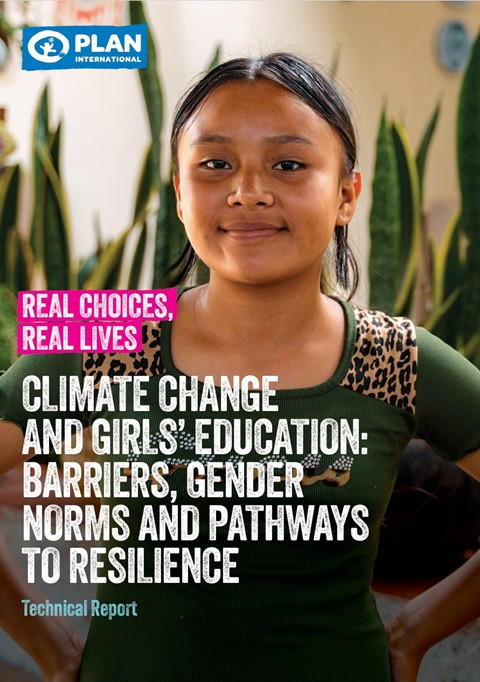 [Rapport technique] Changement climatique et éducation des filles: entraves, normes sexistes et chemins vers la resilience Année de publication: 2023 Auteur institutionnel: Plan International This is the technical report of the Climate Change and Girls' Education: Barriers, Gender Norms and Pathways to Resilience for further detail on the findings and research itself.
 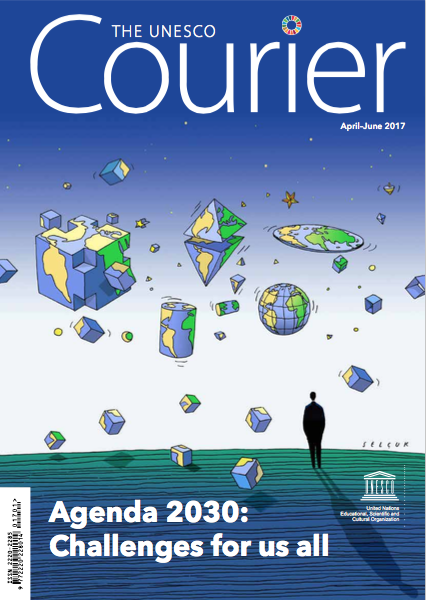 Défis 2030: un agenda pour tous Année de publication: 2017 Since 1948, the UNESCO Courier has served as a platform for international debates on issues that concern the entire planet. This first issue of 2017, which marks the Courier’s revival after
a five-year break, is no exception to the rule: experts, public figures, artists and journalists from around the world have come together to discuss topical issues.Climate change and sustainable energy (p. 23), the future of cities and Smart Cities (p. 15), access to water and the state of groundwater (p. 19), educational policies and the importance they give to girls (p. 8), new technologies and their role in establishing efficient democratic institutions (p. 27), alliances and partnerships that must be forged to advance towards a better world
(p. 31) — these are some of the subjects that constitute the main dossier,
Wide angle, of this issue dedicated to Sustainable Development Goals (SDGs).UNESCO is closely associated with the development and implementation of this international road map that aims
to achieve the seventeen objectives established by the UN, which is convinced that culture, though officially absent from the SDGs, is at the heart of sustainable development policies (p. 12). Elyx, the jovial character created by Yacine Ait Kaci (YAK) and designated virtual ambassador of the UN, supports the Courier in its mission to make palpable the different realities around the world. These are illustrated by a number of SDGs and highlight the players who participate in achieving this agenda for everyone. These include the international community, states, civil society, local communities and authorities, the private sector, and the partnerships that these players set up between each other.The Ideas section, which is dedicated
to another highly topical issue — the current perception of Islam — suggests considering a reinterpretation of the Koran (p. 42) and the sharia (p. 48).
This issue of the Courier also features a reference text on the Different Aspects of Islamic Culture. Launched in 1977, in the wake of a monumental work produced by UNESCO Publishing on general and regional histories, this comprehensive work was completed in November 2016, with the publication of two volumes that constitute an important contribution to the current debate on Islam.In the Current affairs section for the April-June 2017 quarter, the Courier
will celebrate the launch of the World Book Capital programme in Conakry
on 23 April (p. 70) and the International Jazz Day, with the Cuban pianist Chucho Valdés (p. 58) on 30 April in Havana.The Courier will also participate in the celebration of several other international days such as the World Press Freedom Day on 3 May (p. 62), the World Oceans Day on 8 June (p. 65), and the International Day for the Elimination of Sexual Violence in Conflict on 19 June (p. 61).This issue of the Courier also invites you to delve into the peculiar and largely unknown world of Jeju Island’s haenyeo, the women divers from the Republic of Korea. Discover, through the stunning images in the Zoom section, the exceptional destinies of these extraordinary women (p. 36).We hope you enjoy reading this issue!
Défis 2030: un agenda pour tous Année de publication: 2017 Since 1948, the UNESCO Courier has served as a platform for international debates on issues that concern the entire planet. This first issue of 2017, which marks the Courier’s revival after
a five-year break, is no exception to the rule: experts, public figures, artists and journalists from around the world have come together to discuss topical issues.Climate change and sustainable energy (p. 23), the future of cities and Smart Cities (p. 15), access to water and the state of groundwater (p. 19), educational policies and the importance they give to girls (p. 8), new technologies and their role in establishing efficient democratic institutions (p. 27), alliances and partnerships that must be forged to advance towards a better world
(p. 31) — these are some of the subjects that constitute the main dossier,
Wide angle, of this issue dedicated to Sustainable Development Goals (SDGs).UNESCO is closely associated with the development and implementation of this international road map that aims
to achieve the seventeen objectives established by the UN, which is convinced that culture, though officially absent from the SDGs, is at the heart of sustainable development policies (p. 12). Elyx, the jovial character created by Yacine Ait Kaci (YAK) and designated virtual ambassador of the UN, supports the Courier in its mission to make palpable the different realities around the world. These are illustrated by a number of SDGs and highlight the players who participate in achieving this agenda for everyone. These include the international community, states, civil society, local communities and authorities, the private sector, and the partnerships that these players set up between each other.The Ideas section, which is dedicated
to another highly topical issue — the current perception of Islam — suggests considering a reinterpretation of the Koran (p. 42) and the sharia (p. 48).
This issue of the Courier also features a reference text on the Different Aspects of Islamic Culture. Launched in 1977, in the wake of a monumental work produced by UNESCO Publishing on general and regional histories, this comprehensive work was completed in November 2016, with the publication of two volumes that constitute an important contribution to the current debate on Islam.In the Current affairs section for the April-June 2017 quarter, the Courier
will celebrate the launch of the World Book Capital programme in Conakry
on 23 April (p. 70) and the International Jazz Day, with the Cuban pianist Chucho Valdés (p. 58) on 30 April in Havana.The Courier will also participate in the celebration of several other international days such as the World Press Freedom Day on 3 May (p. 62), the World Oceans Day on 8 June (p. 65), and the International Day for the Elimination of Sexual Violence in Conflict on 19 June (p. 61).This issue of the Courier also invites you to delve into the peculiar and largely unknown world of Jeju Island’s haenyeo, the women divers from the Republic of Korea. Discover, through the stunning images in the Zoom section, the exceptional destinies of these extraordinary women (p. 36).We hope you enjoy reading this issue! 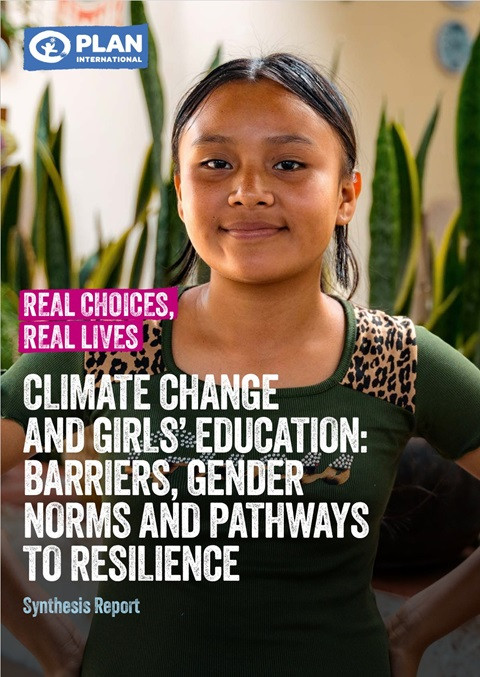 [Rapport de synthèse] Changement climatique et éducation des filles: entraves, normes sexistes et chemins vers la resilience Année de publication: 2023 Auteur institutionnel: Plan International This research explores the relationship between climate change and girls' education: what are the direct and indirect impacts of climate change on girls' access to school and completion of their education? How do these impacts intersect with existing gender barriers to education? And how does your education help girls respond and adapt to climate change in their communities? A synthesis report and summary are also available, along with the technical report for more details on the conclusions and the research itself.
 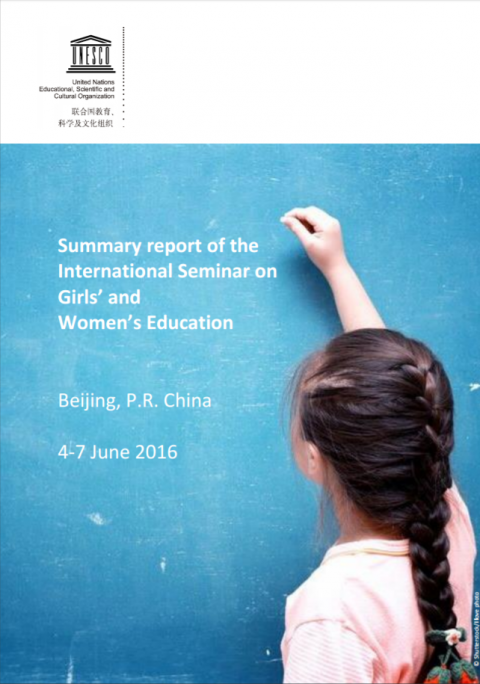 Rapport du Séminaire international sur l'éducation des filles et des femmes, Beijing, République populaire de Chine, 4-7 juin 2016 Année de publication: 2016 Auteur institutionnel: National Commission of the People's Republic of China for UNESCO | UNESCO Beijing The International Seminar on Girls’ and Women’s Education, held 4-6 June 2016 in Beijing, explored benefits of education on girls and women along with barriers to the achievement of gender equality in education. It provided a platform for dialogue on the role of education for girls and women, particularly in the context of the 2030 Agenda for Sustainable Development, and specifically in reaching SDG 4 and supporting the achievement of other SDGs. The event also marked the first award ceremony of the UNESCO Prize for Girls’ and Women’s Education, which honoured two laureates for their outstanding innovation and contributions to advancing girls’ and women’s education. This publication presents a synthesis of information that was shared during the seminar’s sessions, and the findings and recommendations originating from the exchanges.
  [Résumé analytique] Changement climatique et éducation des filles: entraves, normes sexistes et chemins vers la resilience Année de publication: 2023 Auteur institutionnel: Plan International This is the Executive Summary for the report: Climate Change and Girls’ Education: Barriers, Gender Norms and Pathways to Resilience. The full technical report and accompanying synthesis report are also available.
  Déchiffrer le Code: L'Éducation des Filles et des Femmes aux Sciences, Technologie, Ingénierie et Mathématiques (STEM) Année de publication: 2017 Auteur institutionnel: Organisation des Nations Unies pour l'éducation, la science et la culture (UNESCO) Malgrédes améiorations notables ces dernièes déennies, l’éucation n’est pas universellement disponible et les inéalité entre les genres persistent, souvent en déaveur des filles. Des facteurs socio-culturels et éonomiques complexes et lié entre eux pèent non seulement sur les possibilité de scolarisation des filles mais aussi sur la qualitéde l’éucation qu’elles recevront, les éudes qu’elles suivront et, au bout du chemin, leurs carrièes et leurs parcours de vie. Une préccupation majeure tient àla faiblesse de la participation et des réultats des filles dans les éudes de sciences, technologie, ingéierie et mathéatiques (STEM). Les STEM sous-tendent le Programme de déeloppement durable àl’horizon 2030 et l’éucation aux STEM peut apporter aux apprenants les connaissances, les compéences et les comportements néessaires àdes sociéé inclusives et durables. Laisser les filles et les femmes àl’éart de l’éucation et des professions des STEM non seulement les prive de la possibilitéde contribuer aux STEM et d’en bééicier, mais aussi perpéue le fosséentre les sexes et, plus gééalement, les inéalité sociales et éonomiques. Le présent rapport vise à« déhiffrer le code » en déryptant les facteurs qui entravent ou facilitent la participation, la réssite et la réention des filles et des femmes dans l’éucation aux STEM et, en particulier, ce que peut faire le secteur de l’éucation pour promouvoir l’intéê et l’engagement des filles et des femmes dans l’éucation aux STEM et finalement dans les carrièes des STEM. Il entend constituer une ressource pour les parties prenantes de l’éucation et autres personnes qui travaillent àpromouvoir l’éalitédes genres.
  UNESCO Malala Fund for Girls' Right to Education Auteur institutionnel: Organisation des Nations Unies pour l'éducation, la science et la culture (UNESCO) The UNESCO Malala Fund for Girls’ Right to Education was launched in 2012 to expand girls’ access to quality education, especially in countries affected by conflict and disaster.
 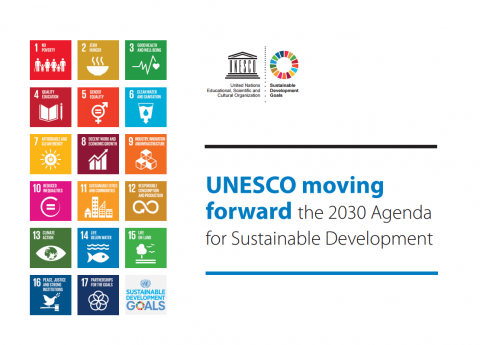 L'UNESCO fait avancer le Programme de développement durable à l'horizon 2030 Année de publication: 2017 Auteur institutionnel: Organisation des Nations Unies pour l'éducation, la science et la culture (UNESCO) The United Nations 2030 Agenda for Sustainable Development, with its 17 Sustainable Development Goals, sets forth a bold new framework for development cooperation over the next 15 years. This agenda aspires to ensure prosperity and well-being for all women and men, while protecting our planet and strengthening the foundations for peace.
  L’éducation transforme la vie Année de publication: 2017 Auteur institutionnel: Organisation des Nations Unies pour l'éducation, la science et la culture (UNESCO) Grâce au nouveau Programme audacieux de développement durable entériné par la communauté internationale en septembre 2015, le monde s’est fixé pour objectif d’éradiquer la pauvreté à l’horizon 2030 à travers 17 Objectifs de développement durable (ODD). Ces objectifs ambitieux ont été adoptés à l’unanimité par les 193 États membres de l’Organisation des Nations Unies. C’est à ces derniers qu’incombe en premier lieu la responsabilité de les réaliser. L’éducation, cruciale pour atteindre l’ensemble des ODD, bénéficie d’un objectif dédié, l’ODD 4, visant à « assurer l’accès de tous à une éducation de qualité, sur un pied d’égalité, et promouvoir les possibilités d’apprentissage tout au long de la vie ».L’UNESCO est la seule agence des Nations Unies chargée de tous les aspects de l’éducation et possède également un réseau mondial d’instituts et de bureaux spécialisés. C’est pourquoi elle s’est vue confier la direction et la coordination de cet objectif, aux côtés de ses partenaires, par le biais de l’agenda Éducation 2030.
 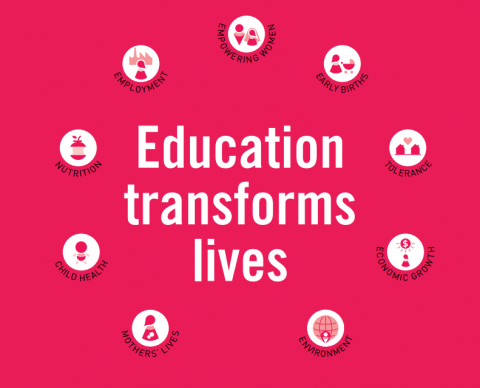 L'Education transforme nos existences Année de publication: 2013 Auteur institutionnel: UNESCO Education lights every stage of the journey to a better life, especially for the poor and the most vulnerable. Education’s unique power to act as a catalyst for wider development goals can only be fully realized, however, if it is equitable. That means making special efforts to ensure that all children and young people – regardless of their family income, where they live, their gender, their ethnicity, whether they are disabled – can benefit equally from its transformative power. Education empowers girls and young women, in particular, by increasing their chances of getting jobs, staying healthy and participating fully in society – and it boosts their children’s chances of leading healthy lives. To unlock the wider benefits of education, all children need the chance to complete not only primary school but also lower secondary school. And access to schooling is not enough on its own: education needs to be of good quality so that children actually learn. Given education’s transformative power, it needs to be a central part of any post-2015 global development framework.