
Ressources
Explorez une large gamme de ressources sur le GCED afin d’approfondir votre compréhension et de renforcer vos activités de recherche, de plaidoyer, d’enseignement et d’apprentissage.
14 résultats trouvés
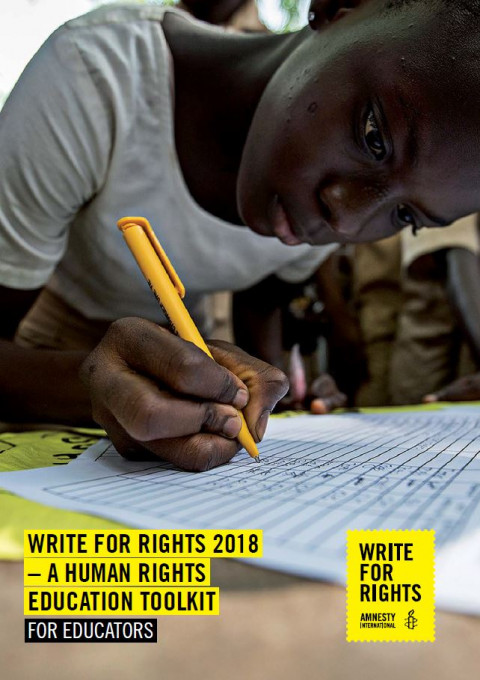 Écrire pour les droits 2018: Manuel d´éducation aux droits humains pou les éducateurs et éducatrices Année de publication: 2018 Auteur institutionnel: Amnesty International La campagne annuelle Écrire pour les droits est l’une des plus importantes actions d’Amnesty International autour des droits humains. L’édition 2018 est axée sur les défenseures des droits humains qui sont victimes de violations de leurs droits fondamentaux ou en grand danger du fait de leur position sur certaines questions relatives aux droits humains.Le manuel Éducation aux droits humains vise à favoriser la participation des enseignant-e-s et de leurs élèves à la campagne Écrire pour les droits. Il offre une perspective large sur les questions relatives aux droits humains et la possibilité de sensibiliser les jeunes à des préoccupations mondiales. En en apprenant davantage et en rédigeant des lettres convaincantes pour aider à mettre fin aux violations des droits humains et à obtenir justice, les enseignant-e-s et leurs élèves contribuent au mouvement international des droits humains et voient par elles/eux-mêmes que les mots peuvent faire la différence.Ce manuel est destiné aux élèves de 13 ans et plus pour une utilisation en contexte scolaire, tant en classe que dans des clubs ou des manifestations organisées à l’école. Les activités peuvent cependant être adaptées à des contextes d’apprentissage plus informels comme des groupes de jeunes et des associations. Le manuel propose des activités générales sur les droits humains et met en avant six défenseures des droits humains choisies au titre de la campagne Écrire pour les droits qui ont apporté des contributions extraordinaires à la progression des droits fondamentaux dans le monde entier.
  Guide d'utilisation du manuel d'apprentissage de la démocratie pour les jeunes en Tunisie, à l'attention des formateurs et adultes-relais Année de publication: 2013 Auteur institutionnel: UNESCO Rabat The main aim of these manual and guide is to raise awareness among Tunisian youth about the values of democracy, human rights and responsible citizenship, and empower youth to make their voice heard during this critical period in the Tunisian democratic transition.
  Education à la citoyenneté et aux droits de l'homme: manuel pour les jeunes au Maroc Année de publication: 2015 Auteur institutionnel: UNESCO Rabat | Conseil national des droits de l'homme (Morocco) Prepared by UNESCO, in collaboration with the Moroccan National Human Rights Council (CNDH) and the support of the Spanish Agency for International Development Cooperation (AECID), this manual aims to sensitize young Moroccan to the fundamental concepts of citizenship and human rights. This educational tool, which consists of 20 didactic cards that describe and explain Morocco national legislation on human rights, documents the human rights international conventions and instruments and puts them in perspective in the Moroccan legislative context. The manual also includes practical exercises adapted to a young audience.
  Manuel d'apprentissage de la démocratie pour les jeunes en Tunisie Année de publication: 2011 Auteur institutionnel: UNESCO Rabat The main aim of these manual and guide is to raise awareness among Tunisian youth about the values of democracy, human rights and responsible citizenship, and empower youth to make their voice heard during this critical period in the Tunisian democratic transition.
  Les droits humains: 13 idées reçues à déconstruire Année de publication: 2022 Auteur: Céline Branaa | Louise Pluyaud | Louise Savri Auteur institutionnel: Commission nationale consultative des droits de l'homme (CNCDH) Destiné aux 14-20 ans, ce livre vise à faire connaître les droits humains et rappelle la place majeure qu’ils occupent dans nos vies ainsi que dans l’organisation de notre société contemporaine. Aujourd’hui, les droits humains sont remis en cause par différents mouvements qui contestent leur utilité, leur efficacité ou encore leur universalité. Les liens entre certaines violations des droits fondamentaux, le changement climatique, les dangers du numérique, et tant d’autres aspects contemporains restent d’ailleurs bien souvent incompris voire méconnus. La CNCDH est convaincue de l’urgence de réaffirmer que les droits humains constituent le fondement d’une société démocratique. À cette fin, les membres de la CNCDH ont souhaité déconstruire 13 des idées reçues les plus souvent entendues ou diffusées dans les médias et sur les réseaux sociaux. À travers 13 chapitres illustrés, correspondant chacun à une idée reçue, les droits humains apparaissent au cœur de notre civilisation à la manière d’une référence actuelle et indispensable. Le lecteur y est invité à devenir acteur de leur promotion. Cet ouvrage rappelle à quel point les droits fondamentaux ne sont pas une construction appartenant au passé mais bien un outil nécessaire pour le temps présent. Mettant en avant la richesse des droits humains cet ouvrage est invitation à anticiper un avenir commun dans lequel la dignité et la liberté de la personne humaine représentent une promesse accessible. Pour toutes et tous.
 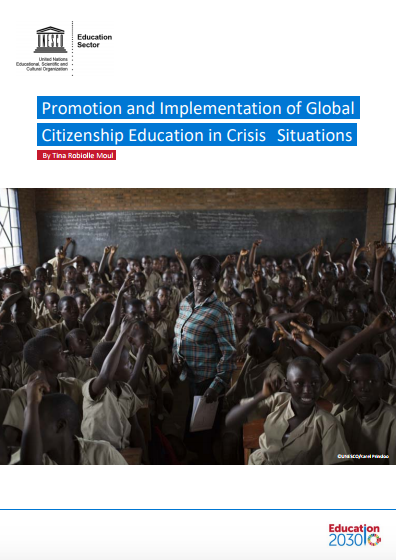 Promotion and implementation of global citizenship education in crisis situations Année de publication: 2017 Auteur: Robiolle Moul, Tina Auteur institutionnel: Organisation des Nations Unies pour l'éducation, la science et la culture (UNESCO) Crisis situations affect the realization of human rights of many people and communities across all regions of the world. Within UNESCO’s relevant areas of work, GCED is a powerful approach to education that can empower people to recover from crises and transform their communities into peaceful and sustainable societies. UNESCO commissioned a desk study that aimed at reviewing existing research on the promotion and implementation of GCED and related programs in countries affected by crisis situations, with particular attention to initiatives benefiting the refugee population. This study unveils the key challenges these programs encounter in such contexts, as well as promising practices that can guide the design and implementation of future GCED in crisis situations. This report is a synthesis of this desk study and supports the evidence that, after analyzing the context and the available means, GCED and related programs can and should be systematically adapted and implemented in crisis situations, including in response to refugee crises.
  Rôle et responsabilités de l'UNESCO dans la mise en oeuvre de l'éducation à la citoyenneté mondiale et la promotion de l'éducation relative à la paix et aux droits de l'homme et de l'éducation en vue du développement durable Année de publication: 2015 Auteur institutionnel: UNESCO This document is an addendum to document 196 EX/32. This item was included in the provisional agenda of the 196th session of the Executive Board at the request of Austria and Italy
 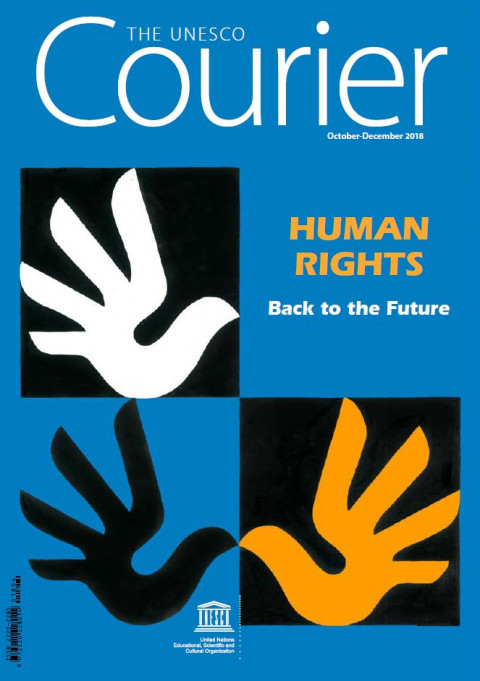 Droits de l’homme : retour vers le futur (Le Courrier de l’UNESCO no. 4, octobre-décembre 2018) Année de publication: 2018 Auteur institutionnel: Organisation des Nations Unies pour l'éducation, la science et la culture (UNESCO) Benedetto Croce, Aldous Huxley, Humayun Kabir, Harold J. Laski, Lo Chung-Shu, Jacques Maritain, F. S. C. Northrop, Arnold Schoenberg, Pierre Teilhard de Chardin : voici quelques-uns des contributeurs de ce numéro du Courrier. Pour marquer le soixante-dixième anniversaire de la Déclaration universelle des droits de l’homme, adoptée le 10 décembre 1948, nous avons décidé de faire un détour par le passé, afin de mieux nous orienter dans l’avenir. Ce qui explique le titre de ce numéro : « Retour vers le futur ». Nous sommes donc en 1946. Alors que le spectre de la guerre totale hante tous les esprits, « la communauté internationale a besoin de formuler un énoncé moral qui exprime adéquatement son indignation collective et son espoir (pour utopique qu'il fût) d'un avenir meilleur », explique Mark Goodale, auteur de l’article introductif et consultant pour Grand angle. Un dossier qui dévoile tout un pan méconnu de l’histoire de la Déclaration universelle des droits de l’homme : l’enquête mondiale sur les fondements philosophiques des droits de l’homme, décidée lors de la première Conférence générale de l’UNESCO (novembre-décembre 1946), lancée l’année suivante par le premier Directeur général, Julian Huxley, et coordonnée par le jeune philosophe français Jacques Havet. L’UNESCO a réuni autour de ce projet l’élite intellectuelle du monde de l'après-guerre et apporté ainsi une contribution essentielle à la réflexion sur les droits de l’homme. Elle demeure aujourd’hui d’une étonnante actualité. Tout aussi actuels sont les dessins de Notre invité, l’artiste péruvien Fernando Bryce qui puise son inspiration dans cette période historique « où l'idée de progrès ouvrait réellement de multiples perspectives ». Sa série The Book of Needs (Le livre des nécessités), qui transfigure en œuvres d’art des pages du Courrier des années 1948 - 1954, fait l’objet du supplément à ce numéro.
 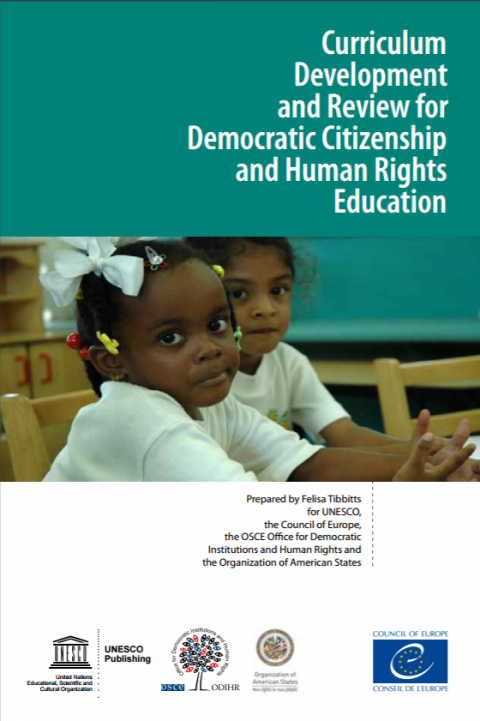 Élaboration et révision des programmes d'enseignement pour l'éducation à la citoyenneté démocratique et aux droits de l'homme Année de publication: 2016 Auteur institutionnel: UNESCO | Conseil de l'Europe | Organization of American States (OAS) | OSCE. Office for Democratic Institutions and Human Rights (ODIHR) Education for democratic citizenship and human rights education are vital for peaceful, sustainable and inclusive societies based on respect for the human rights of every person. Effective teaching and learning processes require well-trained teachers, positive learning environments and high-quality learning materials. This is underpinned by education policy, including curriculum development and review, which is the main focus of this book. The strengthening of education policies in the fields of education for democratic citizenship and human rights lies at the very heart of the efforts of the Council of Europe, the United Nations Educational, Scientific and Cultural Organization, the Office for Democratic Institutions and Human Rights of the Organization for Security and Co-operation in Europe, and the Organization of American States. These organisations have jointly produced this publication in order to support states’ commitment to fostering citizenship and human rights education and improving access to quality education for all.
  Rapport de synthèse sur l'application par les États membres de la Recommandation de 1974 sur l'éducation pour la compréhension, la coopération et la paix internationales et l'éducation relative aux droits de l'homme et aux libertés fondamentales Année de publication: 2013 Auteur institutionnel: UNESCO Background: In accordance with 34 C/Resolution 87, 177 EX/Decision 35 (I) and 184 EX/Decision 20, the Executive Board has monitored the implementation of the 1974 Recommendation concerning Education for International Understanding, Cooperation and Peace and Education relating to Human Rights and Fundamental Freedoms. Pursuant to 192 EX/Decision 20 (III), the Director-General hereby submits the consolidated report on the implementation by Member States of the Recommendation.Purpose: This document reports on the results of the Fifth Consultation on the Implementation of the Recommendation concerning Education for International Understanding, Cooperation and Peace and Education relating to Human Rights and Fundamental Freedoms (covering the period 2009-2012). The analysis was prepared on the basis of 55 national reports from Member States received by the Secretariat.