
Ressources
Explorez une large gamme de ressources sur le GCED afin d’approfondir votre compréhension et de renforcer vos activités de recherche, de plaidoyer, d’enseignement et d’apprentissage.
14 résultats trouvés
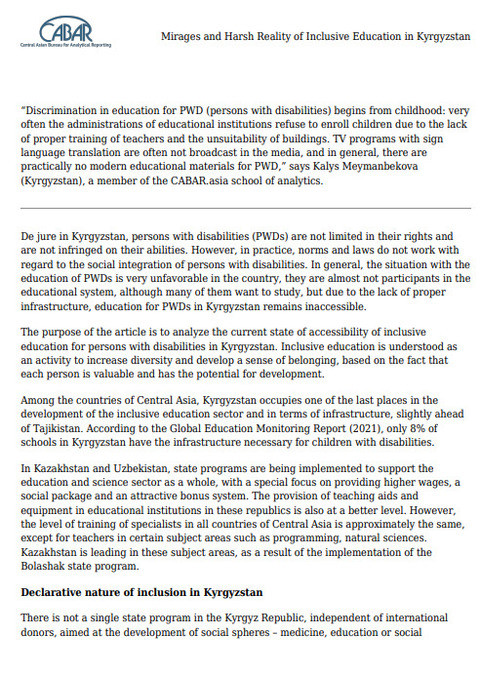 Mirages and Harsh Reality of Inclusive Education in Kyrgyzstan Année de publication: 2022 Auteur: Kalys Meymanbekova Auteur institutionnel: Central Asian Bureau for Analytical Reporting (CABAR) The purpose of the article is to analyze the current state of accessibility of inclusive education for persons with disabilities in Kyrgyzstan. Inclusive education is understood as an activity to increase diversity and develop a sense of belonging, based on the fact that each person is valuable and has the potential for development. Миражи и суровая реальность инклюзивного образования в Кыргызстане Année de publication: 2022 Auteur: Kalys Meymanbekova Auteur institutionnel: Central Asian Bureau for Analytical Reporting (CABAR) Целью статьи является анализ текущего положения доступности инклюзивного образования для ЛОВЗ Кыргызстана. Инклюзивное образование понимается как деятельность по расширению разнообразия и развитию чувства сопричастности, основанная на том, что каждый человек ценен, и у него есть потенциал развития.
 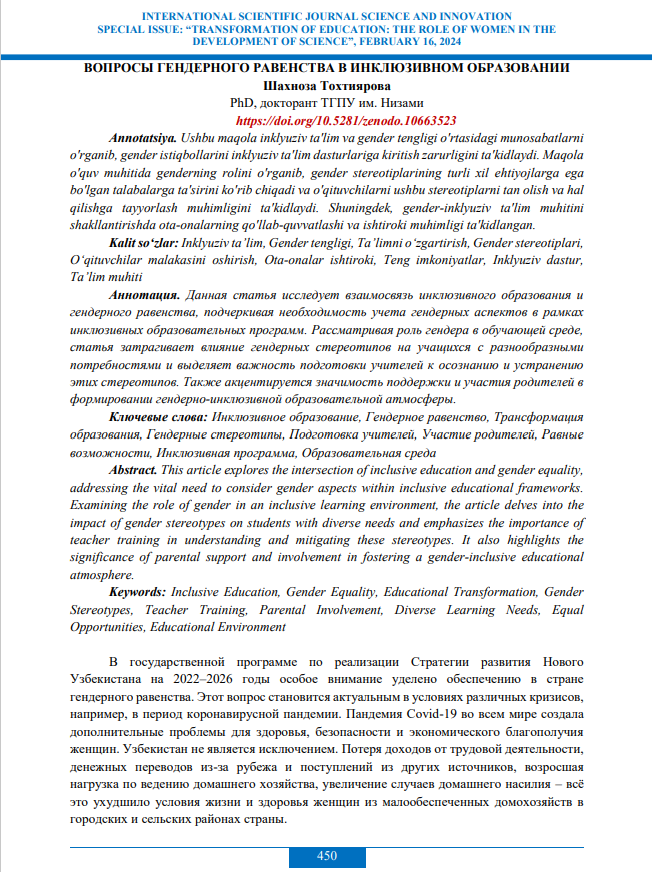 Gender Equality Issues in Inclusive Education Année de publication: 2024 Auteur: Шахноза Тохтиярова Auteur institutionnel: Наука и ииновации This article explores the intersection of inclusive education and gender equality, addressing the vital need to consider gender aspects within inclusive educational frameworks. Examining the role of gender in an inclusive learning environment, the article delves into the impact of gender stereotypes on students with diverse needs and emphasizes the importance of teacher training in understanding and mitigating these stereotypes. It also highlights the significance of parental support and involvement in fostering a gender-inclusive educational atmosphere. Вопросы гендерного равенства в инклюзивном образовании Année de publication: 2024 Auteur: Шахноза Тохтиярова Auteur institutionnel: Наука и ииновации Данная статья исследует взаимосвязь инклюзивного образования и гендерного равенства, подчеркивая необходимость учета гендерных аспектов в рамках инклюзивных образовательных программ. Рассматривая роль гендера в обучающей среде, статья затрагивает влияние гендерных стереотипов на учащихся с разнообразными потребностями и выделяет важность подготовки учителей к осознанию и устранению этих стереотипов. Также акцентируется значимость поддержки и участия родителей в формировании гендерно-инклюзивной образовательной атмосферы.