
Ressources
Explorez une large gamme de ressources sur le GCED afin d’approfondir votre compréhension et de renforcer vos activités de recherche, de plaidoyer, d’enseignement et d’apprentissage.
19 résultats trouvés
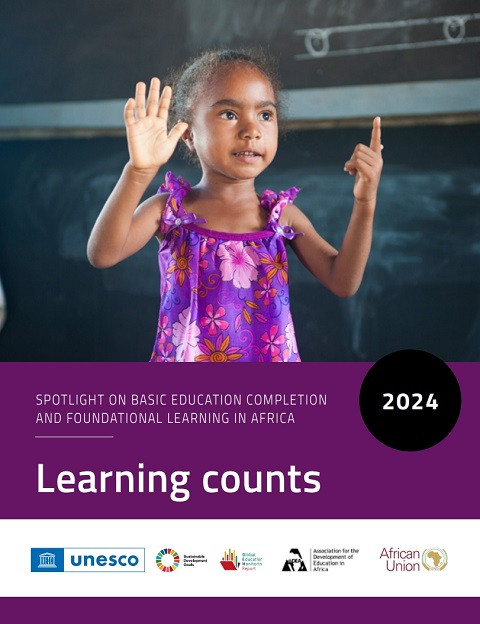 Learning Counts: Spotlight on Basic Education Completion and Foundational Learning in Africa, 2024 Année de publication: 2024 Auteur institutionnel: Global Education Monitoring Report Team | Association for the Development of Education in Africa (ADEA) | African Union The African Union’s designation of 2024 as the Year of Education highlights the critical importance of education for equipping young Africans with the skills essential for their own and for the continent’s development. It is also a recognition of the multiple challenges ahead before every child can complete primary school having acquire the foundational skills that open the door for lifelong learning. Currently the out-of-school population is rising, one in five children do not complete primary school and, of those who do, only about one in five achieve minimum proficiency in reading and mathematics. African countries have set targets on primary completion and foundational learning but to effectively translate their ambitions into results, the 2024 Spotlight continental report emphasizes the importance of coherence between their curricula, textbooks, teacher guides and assessments. It evaluates the alignment of these policy documents with each other but also with a global standard of what students are expected to know and by when. It also assesses how these key documents are used in classrooms and what the implications are for children’s opportunities to learn. This report is the second in a series of three envisaged between 2022 and 2025, each covering some 12 countries of which a selection is examined in depth, in dialogue with education ministries and national stakeholders. The focus countries for this second Spotlight report cycle were Mauritania, Niger, South Africa, Uganda, and Zambia. The statistics and analysis presented in this publication aim to feed into the policy dialogue mechanism under the auspices of the African Union and its Continental Education Strategy for Africa. In particular, the Spotlight series aims to spark debate on foundational learning among African countries and encourage them to identify areas for joined action, given that they share a lot of policy challenges.
  أثر التعلم التعاوني على التحصيل المدرسي والميول الدراسية لمادة الرياضيات لدى التلاميذ المتأخرين دراسيا Année de publication: 2012 Auteur: Burio Murad Auteur institutionnel: Baji Mukhatar University تعد مشكلة التأخر الدراسي من المشكلات الشائعة في الوسط المدرسي والأكثر تناولا من طرف الباحثين والمختصين لم لها من تأثير سلبي على الجانب النفسي للتلميذ، فهي تعرقل تقدمه الدراسي ونموه المعرفي على اعتبار أن هذه المرحلة هي مرحلة نمو متعدد الجوانب فهو جسدي نفسي، ووجداني ومعرفي. كما تساهم في إهدار الموارد المالية المخصصة للتربية وبناء عليه فتداعيات الظاهرة تمتد إلى الأسرة والمجتمع ككل. والمتأخرون دراسيا عادة ما يتميزون بمستوى ذكاء عادي وبصحة جسدية مقبولة، غير أن مستوى تحصيلهم أقل من مستواهم الحقيقي أو من مستوى أقرانهم من نفس السن، وقد أطلقت عليهم عدة تسميات مثل بطيئي التعلم، المتخلفون دراسيا ....الخ. وظاهرة التأخر الدراسي قد تكون عامة في جميع المواد الدراسية أو خاصة بمادة معينة، وحسب المختصين والمسؤولين تسجل أعلى نسب التأخر الدراسي في مادة الرياضيات وذلك في جميع المستويات الدراسية.وفي هذه الدراسة تم التركيز على استراتيجية التعلم التعاوني للتحقق من فعاليتها في زيادة تحصيل التلاميذ في مادة الرياضيات وتحسين ميولهم اتجاهها، والدافع من اختيار مادة الرياضيات هو نسب الرسوب المرتفعة في المادة، وكذلك أهميتها بالنسبة لتعلم باقي المواد الأخرى العلمية. The Effect of Cooperative Learning on School Achievement and Academic Tendencies for Mathematics among School-related Students Année de publication: 2012 Auteur: Burio Murad Auteur institutionnel: Baji Mukhatar University Academic delay is a prevalent problem in the educational setting, and it is one of the most frequently addressed by researchers and professionals. It has no detrimental influence on the student's psychological development since it impedes his academic progress and cognitive development, given that this stage is a stage of diverse growth, as it is physical, psychological, emotional, and cognitive. It also contributes to wasting financial resources allocated to education and, accordingly, the repercussions of the phenomenon extend to the family and society as a whole. Those who are falling behind in school typically have a normal level of intelligence and good physical condition, but their level of achievement is lower than their true level or the level expected of them.In this study, the focus was on the cooperative learning strategy to verify its effectiveness in increasing students’ achievement in mathematics and improving their inclinations towards it.
  Gender Inequality in Learning Achievement in Primary Education: What can TERCE Tell Us? Année de publication: 2016 Auteur institutionnel: UNESCO Santiago Existing research identifies several significant, subject-based gender inequalities in education. Male learners have significant advantages in mathematics and female learners have no less significant advantages in reading and writin. Such considerable differences in achievement may have important consequences for the future wellbeing of students. In order to shed light on this phenomenon in Latin America, this report analyzes the gender gaps in educational achievement in the Third Regional Comparative and Explanatory Study (TERCE) led by the Latin American Laboratory for Assessment of the Quality of Education (LLECE). Inequidad de género en los logros de aprendizaje en educación primaria ¿Qué nos puede decir TERCE? Année de publication: 2016 Auteur institutionnel: UNESCO Santiago Existing research identifies several significant, subject-based gender inequalities in education. Male learners have significant advantages in mathematics and female learners have no less significant advantages in reading and writin. Such considerable differences in achievement may have important consequences for the future wellbeing of students. In order to shed light on this phenomenon in Latin America, this report analyzes the gender gaps in educational achievement in the Third Regional Comparative and Explanatory Study (TERCE) led by the Latin American Laboratory for Assessment of the Quality of Education (LLECE).
  Pandemic-Related Disruptions to Schooling and Impacts on Learning Proficiency Indicators: A Focus on the Early Grades Année de publication: 2021 Auteur: Martin Gustafsson Auteur institutionnel: UNESCO Institute for Statistics (UIS) This report focusses on the impacts of the pandemic on learning proficiency, specifically as measured by Sustainable Development Goal (SDG) Indicator 4.1.1. Over the last couple of decades, there has been a growing awareness of how crucial learning proficiency, especially that of younger children, is for human development. The evidence is clear that improvements in proficiency underpin future economic development, and the building of more cohesive and equal societies. The indicators on learning proficiency are among the most discussed indicators within the SDG framework. This report explains the impact of COVID-19 on learning losses for primary-aged children and the need for an effective response.
  Educación para la ciudadanía mundial: temas y objetivos de aprendizaje Année de publication: 2015 Auteur institutionnel: UNESCO This publication, titled Global Citizenship Education: Topics and learning objectives, is the first pedagogical guidance from UNESCO on global citizenship education. It is the result of an extensive research and consultation process with experts from different parts of the world. This guidance draws on the UNESCO publication Global Citizenship Education: Preparing learners for the challenges of the 21st century and the outcomes of three key UNESCO events on global citizenship education: the Technical Consultation on Global Citizenship Education (September 2013), as well as the First and Second UNESCO Fora on Global Citizenship Education, organized in December 2013 and January 2015 respectively. Before it was finalized, the guidance was field-tested by education stakeholders in selected countries in all regions to ensure its relevance in different geographical and socio-cultural contexts. Following the foundational work of UNESCO to clarify the conceptual underpinnings of global citizenship education and provide policy and programmatic directions, this document has been developed in response to the needs of Member States for overall guidance on integrating global citizenship education in their education systems. It presents suggestions for translating global citizenship education concepts into practical and age-specific topics and learning objectives in a way that allows for adaptation to local contexts. It is intended as a resource for educators, curriculum developers, trainers as well as policy-makers, but it will also be useful for other education stakeholders working in non-formal and informal settings.
  Воспитание глобальной гражданственности: темы и цели обучения Année de publication: 2015 Auteur institutionnel: UNESCO Данная публикация, озаглавленная «Воспитание глобальной гражданственности: темы и цели обучения» является первым, подготовленным ЮНЕСКО, педагогическим руководством в области воспитания глобальной гражданственности. Она является результатом обширных исследований и консультаций с участием экспертов из разных частей мира. Это руководство основывается на публикации ЮНЕСКО «Воспитание глобальной гражданственности: подготовка учащихся к проблемам XXI века» и результатах трех ключевых мероприятий ЮНЕСКО в области воспитания глобальной гражданственности: технической консультации по воспитанию глобальной гражданственности (сентябрь 2013 г.), а также первого и второго форумов ЮНЕСКО по воспитанию глобальной гражданственности, прошедших в декабре 2013 г. и январе 2015 г. До составления окончательного варианта руководства оно было протестировано заинтересованными сторонами в области образования в отдельных странах во всех регионах для обеспечения его актуальности в различных географических и социо-культурных ситуациях.
  التربية على المواطنة العالمية: مواضيع وأهداف تعلمية Année de publication: 2015 Auteur institutionnel: UNESCO هذا الدليل "التربية على المواطنة العالمية: المواضيع والأهداف التعلمية" هو أول التوجيهات التربوية لليونسكو حول تعليم المواطنة العالمية. أتى هذا الدليل نتيجة لبحوث معمقة وعملية استشارية مع خبراء من مختلف أصقاع العالم. يرتكز هذا التوجيه على دليل اليونسكو» التربية على المواطنة العالمية: تحضير المتعلمين لتحديات القرن الواحد والعشرين " ومخرجات الأحداث لليونسكو حول التربية على المواطنة العالمية: المشاورة الفنية حول التربية على المواطنة العالمية (أيلول/سبتمبر 2013) وندوة اليونسكو الأولى والثانية حول التربية على المواطنة العالمية، واللتين عقدتا في كانون الأول/ديسمبر 2013 وكانون الثاني/يناير من العام 2015 على التوالي. قبل الانتهاء من العمل على هذا التوجيه، اختبره أصحاب المصلحة في المجال التعليمي اختباراً ميدانياً في عدد من الدول المنتقاة بغية الحرص على ملاءمته للسياقات الجغرافية والاجتماعية الثقافية المختلفة. تهدف التربية على المواطنة العالمية إلى أن تشكل قوة تحويلية، وبناء المعرفة والمهارات والقيم والسلوكيات التي يحتاج إليها المتعلمون ليتمكنوا من المساهمة في عالم أكثر دمجاً وعدلا وسلاماً. ويقدم هذا الدليل اقتراحات لترجمة مفاهيم التربية على المواطنة العالمية إلى مواضيع وأهداف تعلمية عملية ومراعية للأعمار بطريقة تسمح بمواءمتها مع السياقات المحلية. ويهدف الدليل إلى أن يشكل مورداً للمربين ومطوري المناهج والمدربين، بالإضافة إلى صانعي السياسات، فضلا عن كونه مهماً أيضاً لغيرهم من أصحاب المصلحة في المجال التعليمي، العاملين في أطر نظامية أو غير نظامية. يعرّف الدليل بالتربية العالمية ومقوماتها التعلمية وكيفية إدماجها في النطم التربوية وتطبيقها داخل الصف.
  세계시민교육: 학습 주제 및 학습 목표 Année de publication: 2015 Auteur institutionnel: 유네스코 세계시민교육은 학습자들이 더 포용적이고, 정의롭고, 평화로운 세상을 만드는 데 이바지할 수 있도록 필요한 지식, 기능, 가치, 태도를 길러줌으로써 변혁적인 교육을 달성하고자 한다.이 책 『세계시민교육 : 학습 주제 및 학습 목표』는 세계시민교육에 대한 유네스코의 첫 교수·학습 지침서이다. 세계시민교육의 개념을 지역적 맥락에 맞게 활용할 수 있도록 실제 연령별 학습 주제 및 학습 목표로 구체화한 제안을 담고 있다. 교육자, 교육과 정 개발자, 교사교육자 및 정책입안자를 대상으로 개발된 본 지침서는 무형식 및 비형식 교육환경에 있는 교육 관계자들에게도 유용한 자료가 될 것이다.