
Ressources
Explorez une large gamme de ressources sur le GCED afin d’approfondir votre compréhension et de renforcer vos activités de recherche, de plaidoyer, d’enseignement et d’apprentissage.
5 résultats trouvés
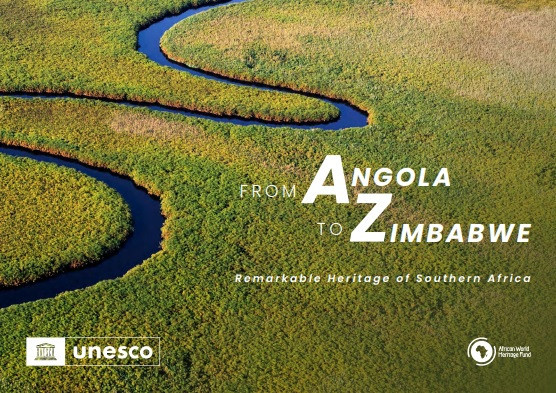 From Angola to Zimbabwe: remarkable heritage of Southern Africa Année de publication: 2022 Auteur institutionnel: UNESCO Harare | African World Heritage Fund A celebration of Southern Africa’s rich and diverse heritageToday, Southern Africa’s diverse heritage faces a rising number of challenges which need to be addressed, including climate change, natural disasters, conflicts, urban development and tourism pressures. The region currently has 42 World Heritage sites and 24 Living Heritage elements inscribed on the UNESCO World Heritage and Intangible Cultural Heritage Lists, making it a vibrantly rich home to cultural diversity and human creativity. However, more work needs to be done to further recognize the value of Southern Africa’s multifaceted heritage and enhance its protection in the face of increasing threats.World Heritage sites in the region continue to play an essential role in the lives of the communities who live in and around them, as they constitute a source of pride, history and knowledge, a powerful driver of local economic development, and a vital resource for reconciliation, social integration and sustainable peace. Similarly, Southern Africa’s living heritage elements provide communities with a strong sense of identity and help create a favorable environment for nurturing cultural diversity and human creativity.Inviting you on a journey of discovery from Angola’s Mbanza Kongo to Zimbabwe’s Mbende Jerusarema dance, this publication provides a new outlook on the exceptional heritage that can be found in the countries of the Southern African Development Community region and emphasizes the need for its long-term protection and safeguarding as a shared responsibility.
  Saving our world heritage Année de publication: 2023 Auteur: Hopkinson, Leo Auteur institutionnel: UNESCO
  Urban heritage for resilience: consolidated results of the implementation of the 2011 Recommendation on the Historic Urban Landscape; 3rd Member States Consultation Année de publication: 2023 Auteur institutionnel: UNESCO <Short summary>Integrating heritage conservation with urban development plans: fosters inclusive and sustainable local development Urban heritage, including its tangible and intangible attributes, constitutes a key resource in enhancing the liveability of urban areas and fosters economic development and social cohesion in a changing global environment. The UNESCO 2011 Recommendation on the Historic Urban Landscape has contributed towards promoting a holistic approach to managing historic urban areas. The third Member States consultation on the implementation of the 2011 Recommendation conducted between June to November 2022 emphasizes both the importance and the urgency of integrating heritage conservation with urban development plans, disaster risk reduction and climate action at the local level.The report covered six thematic areas of implementation that captured the key principles of the 2011 Recommendation in the framework of the 2030 Agenda for Sustainable Development, including the mapping and inventorying of heritage values and attributes, governance mechanisms, laws, regulations, and planning tools to protect these different attributes, inclusive and participatory decision-making, equitable economic development, the impacts of climate change, and the use of digital technologies for managing urban heritage including capacity building.The publication includes key recommendations emerging from consultations with international experts, exchanging innovative practices, developing guidance, tools, and initiatives, notably on planning, civic engagement, regulatory frameworks and financial mechanisms and management to support the implementation of the 2011 Recommendation.
 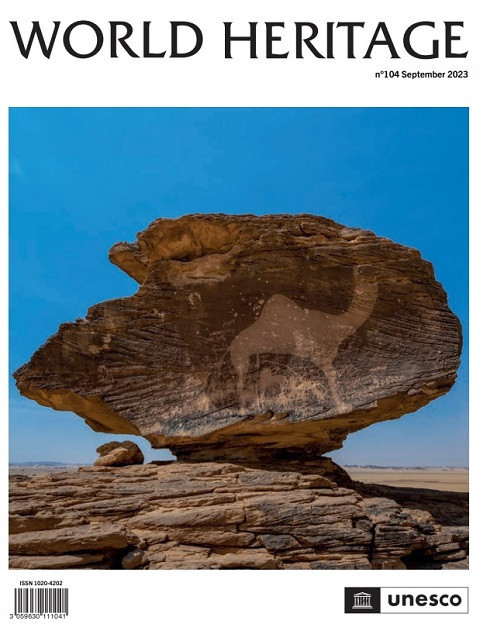 World Heritage, No.104 Année de publication: 2023 Auteur institutionnel: UNESCO As the extended 45th session of the World Heritage Committee begins in the Kingdom of Saudi Arabia, we express our gratitude to our hosts for convening the first in-person Committee since the onset of COVID-19. Surrounded by old friends and young professionals alike, we are reminded that this meeting is more than the sum of important decisions taken. It is a powerful platform where we rekindle the sense of ‘heritage community’ and renew our commitment to heritage. This issue of World Heritage magazine features African heritage leaders who are empowering peers and creating positive ripple effects from Egypt to Mozambique. A report on climate change details the critical benefits provided by World Heritage forests notably through carbon absorption, with one caveat – their capacity will continue to decline unless we act now. A compelling story comes from Havana, Cuba, where a major UNESCO programme Transcultura is blending tangible heritage, intangible practices and contemporary creativity, true to the way culture intersects in the local communities. Readers may notice the new design of this World Heritage magazine, which pays homage to the original iconic look. The first issue in 1996 put a spotlight on the accelerating international cooperation to conserve Angkor, bearing fruit in 2004 with the removal from the List of World Heritage in Danger. Just as the magazine has been a witness to history, it continues to champion the evolving principles of heritage safeguarding. This is why this revamped magazine will centrally feature stories of custodians, innovators and trailblazers, in line with the 'fifth C' (Communities) of the Strategic Objectives. The words by the 80-year-old Havana resident Noemí Moreno should echo with many of us: 'In the end, we are nothing more than a bird that comes and flies away. History is what remains'. And so we get to work together, pooling experience gained over the past five decades of the 1972 Convention and the ancestral knowledge passed down over centuries, to preserve the remnants of history as best as we can. Patrimoine mondial, No.104 Année de publication: 2023 Auteur institutionnel: UNESCO Alors que la 45e session élargie du Comité du patrimoine mondial s'ouvre au Royaume d'Arabie saoudite, nous exprimons notre gratitude à nos hôtes pour avoir invité le premier Comité en personne à se réunir depuis le début de la COVID-19. Entourés de vieux amis et de jeunes professionnels, nous nous rappelons que cette réunion est plus que la somme des décisions importantes qui ont été prises. C'est une plateforme puissante où nous ravivons le sens de la « communauté du patrimoine » et renouvelons notre engagement en faveur du patrimoine. Ce numéro du magazine Patrimoine Mondial présente des responsables africains du patrimoine qui, de l'Égypte au Mozambique, responsabilisent leurs pairs et créent des effets d'entraînement positifs. Un rapport sur le changement climatique détaille les avantages cruciaux offerts par les forêts du patrimoine mondial, notamment par l'absorption du carbone, avec une mise en garde : leur capacité continuera à diminuer si nous n'agissons pas maintenant. Une histoire passionnante nous vient de La Havane, à Cuba, où un programme majeur de l'UNESCO, Transcultura, mêle patrimoine matériel, pratiques immatérielles et créativité contemporaine, fidèle à la façon dont la culture s'entrecroise dans les communautés locales. Les lecteurs remarqueront peutêtre la nouvelle maquette de ce magazine Patrimoine Mondial, qui rend hommage à l'aspect iconique d'origine. Le premier numéro, paru en 1996, a mis en lumière l'accélération de la coopération internationale pour la conservation d'Angkor, qui a porté ses fruits en 2004 avec le retrait du site de la Liste du patrimoine mondial en péril. Tout comme le magazine a été un témoin de l'histoire, il continue à défendre les principes évolutifs de la sauvegarde du patrimoine. C'est pourquoi le nouveau magazine Patrimoine Mondial présentera essentiellement des histoires de gardiens, d'innovateurs et de pionniers, conformément au « cinquième C » (Communautés) des objectifs stratégiques. Les mots de Noemí Moreno, une habitante de La Havane âgée de 80 ans, devraient trouver un écho chez beaucoup d'entre nous : « En fin de compte, nous ne sommes rien d'autre qu'un oiseau qui vient et s'envole. L'Histoire, c'est ce qui reste. » C'est pourquoi nous devons œuvrer ensemble, en mettant en commun l'expérience acquise au cours des 50 dernières années de la Convention de 1972 et les connaissances ancestrales transmises au fil des siècles, afin de préserver au mieux les vestiges de l'histoire.