
Ressources
Explorez une large gamme de ressources sur le GCED afin d’approfondir votre compréhension et de renforcer vos activités de recherche, de plaidoyer, d’enseignement et d’apprentissage.
53 résultats trouvés
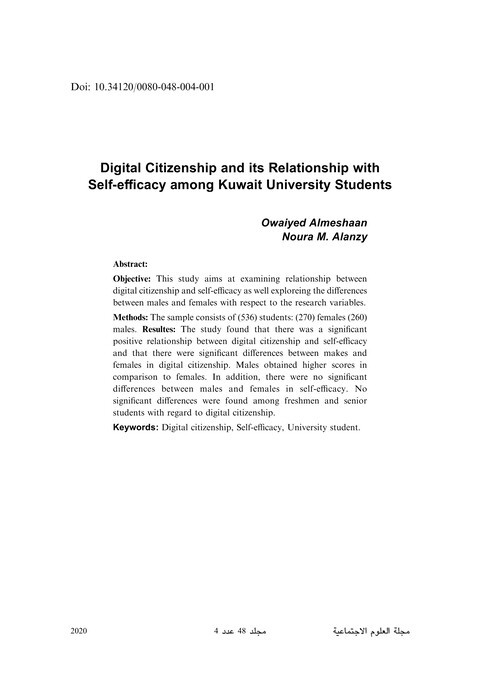 Digital Citizenship and Its Relationship With Self-Efficacy Among Kuwait University Students (Journal of Social Sciences; vol.48, no.4) Année de publication: 2020 Auteur: Owaiyed Almeshaan | Noura Alanzy Auteur institutionnel: Kuwait University This study aims at examining relationship between digital citizenship and self-efficacy as well exploring the differences between males and females with respect to the research variables.Methods: The sample consists of (536) students: (270) females (260) males. Results: The study found that there was a significant positive relationship between digital citizenship and self-efficacy and that there were significant differences between males and females in digital citizenship. Males obtained higher scores in comparison to females. In addition, there were no significant differences between males and females in self-efficacy. No significant differences were found among freshmen and senior students with regard to digital citizenship.
  المواطنة في العصر الرقمي: نموذج مملكة البحرين Année de publication: 2017 Auteur: ندى علي حسن بن شمس Auteur institutionnel: معهد البحرين للتنمية السياسية البحث يجيب عن التساؤل الرئيس التالي: ما فعالية برنامج مقترح قائم على الشبكة العالمية لتنمية قيم المواطنة لطالب جامعة البحرين في ضوء متطلبات العصر الرقمي؟ ويتفرع من التساؤل الرئيس للبحث التساؤلات الفرعية الآتية: 1 -ما قائمة قيم المواطنة اللازمة لطالب جامعة البحرين في ضوء متطلبات العصر الرقمي؟ 2 -ما صورة البرنامج المقترح القائم على الشبكة العالمية) بالأنشطة الحوارية – بدون الأنشطة الحوارية( لتنمية قيم المواطنة لطالب جامعة البحرين في ضوء متطلبات العصر الرقمي؟ 3 –ما فعالية البرنامج المقترح القائم على الشبكة العالمية بصورتيه )بالأنشطة الحوارية – بدون الأنشطة الحوارية( لتنمية قيم المواطنة لطالب جامعة البحرين في ضوء متطلبات العصر الرقمي؟ Citizenship in the Digital Age: The Model of the Kingdom of Bahrain Année de publication: 2017 Auteur: ندى علي حسن بن شمس Auteur institutionnel: معهد البحرين للتنمية السياسية The research answers the following main question: What is the effectiveness of a proposed program based on the global network for developing citizenship values for students of the University of Bahrain in light of the requirements of the digital age? The main question of the research is divided into the following sub-questions: 1- What is the list of citizenship values required for a student at the University of Bahrain in light of the requirements of the digital age? 2- What is the image of the proposed program based on the global network (with dialogue activities - without the dialogue activities) to develop citizenship values for students of the University of Bahrain in light of the requirements of the digital age? 3 - What is the effectiveness of the proposed program based on the global network in its two forms (with dialogue activities - without the dialogue activities) to develop Citizenship values for a University of Bahrain student in light of the requirements of the digital age?
  مجلة تنمية الموارد البشرية مج. 6، ع. 2، 2015 Année de publication: 2015 Auteur institutionnel: University Mohamed Lamine Debaghine - Setif2 مجموعة من الأوراق العلمية لعدد من الباحثين. هذه الاوراق منشورة في مجلة تنمية الموارد البشرية، العدد 2، 2015. هذه الاوراق جميعها تركز على المواطنة، وتستخدم منهجيات مختلفة. Human Resources Development Journal Vol. 6, no. 2, 2015 Année de publication: 2015 Auteur institutionnel: University Mohamed Lamine Debaghine - Setif2 A set of scientific papers for a number of researchers. These papers are published in the Human Resources Development Magazine, Issue 2, 2015. All these papers focus on citizenship, and they use different methodologies.
  2020 미디어교육 우수사례 공모전 수상작 모음집 Année de publication: 2021 Auteur institutionnel: 시청자미디어재단 「2020 미디어 교육 우수사례 공모전」은 전국 미디어교육의 다양한 사례 발굴 및 격려를 통해 미디어교육에 대한 인식을 제고하고, 건강한 미디어 문화를 확산하기 위해 마련한 행사입니다. 지난해 12월 4일 본선심사를 통해 선발된 최종 10개의 수상작을 첨부로 공유드리니, 학교 및 사회미디어교육의 다양한 사례 분석에 참고하시기 바랍니다.※ 수상작 모음집은 분량 관계상 공모전 제출서류 및 발표자료 일부를 발췌하여 제작하였으며, 해당 내용과 사진은 시청자미디어재단의 동의없이 무단으로 사용할 수 없음을 알려드립니다.
 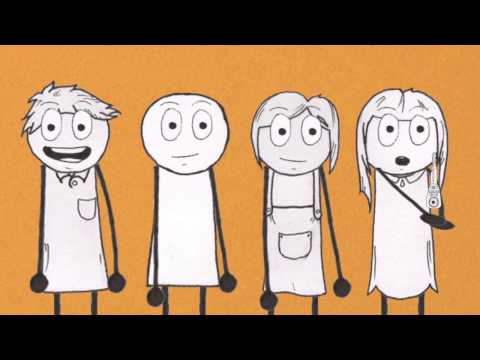 What is Media Literacy? Année de publication: 2017 Auteur institutionnel: Media Literacy Now Intended as a tool for advocates, the video introduces the concept of media literacy as a key that unlocks meaning behind the messages that we see, and allows us to be more thoughtful and deliberate as we create our own messages such as those we create and share on social media.
 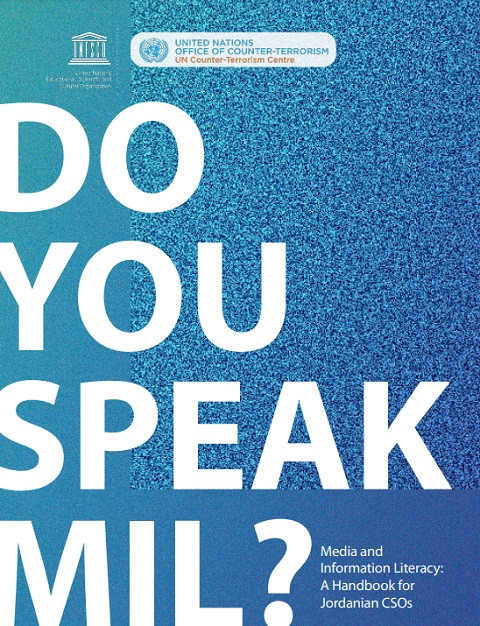 Do You Speak MIL?: Media and Information Literacy; A Handbook for Jordanian CSOs Année de publication: 2020 Auteur: Milica Pesic | Lucien Michael Steinberg | Anoud Al-Zou’bi Auteur institutionnel: Media Diversity Institute | UNESCO | UN. Office of Counter-Terrorism (UNOCT) This publication, “Do You Speak MIL?: Media and Information Literacy – A Handbook for Jordanian CSOs,” provides civil society organizations (CSOs) with practical tools to integrate Media and Information Literacy (MIL) into their training programs. Each chapter includes a technical introduction, thought-provoking questions, and real-life examples to guide trainers. Published in 2020, this handbook is a valuable resource for promoting MIL within Arab countries, intending to empower communities to navigate the evolving media landscape.
 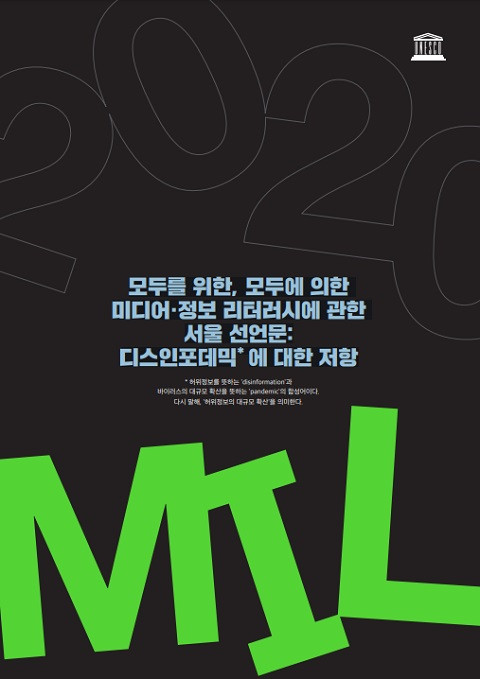 Seoul Declaration on Media and Information Literacy for Everyone and by Everyone: A Defence Against Disinfodemics Année de publication: 2020 Auteur institutionnel: UNESCO On the 10th anniversary of Global Media and Information Literacy Week, stakeholders from all over the world gave a resounding affirmation as to the urgency to strengthen people’s media and information literacy competencies. The number of celebratory events increased from one hundred events in 2019 to over three hundred events in 2020.The outcomes of the deliberations in the Feature Conference and Youth Agenda Forum have been immortalized in the Seoul Declaration on Media and Information Literacy for Everyone and by Everyone: A Defence against Disinfodemics. This Seoul Declaration benefited from a consultation with close to one thousand registered participants.Through the Seoul Declaration, partners and participants called for media and information literacy for all. They:Emphasized that “media and information literacy (MIL) is a core competency for addressing the disinfodemic, and that MIL also contributes to access to information, freedom of expression, protection of privacy, prevention of violent extremism, promotion of digital security and combating hate speech and inequality”.Recognized “UNESCO’s effort to promote a Global MIL Cities Framework to stimulate creative learning about MIL in city spaces and the involvement of non-traditional actors in promoting MIL”.Called on duty bearers at the national to city levels to “commit to advancing ‘Media and Information Literacy for Everyone and by Everyone’ through policy and resource allocation across all relevant areas, including education, health, elections, child protection, climate, gender equality, governance and regulation, to mention some examples”.Urged technological intermediaries to “play an accountable role, through institutionalized multi-stakeholder systems, as part of the social endeavor to tackle disinformation and to build communities that are media and information literate”.Requested UNESCO, in cooperation with other UN Agencies, to “maintain a focus on inclusion of disadvantaged groups in MIL engagements, and to continue to foster gender equality in relation to MIL.”
 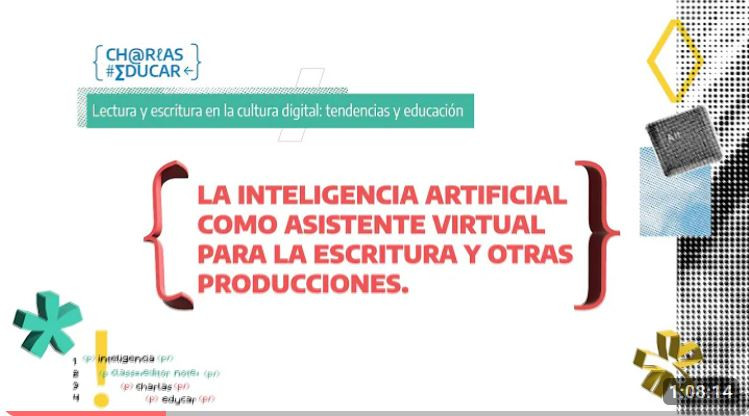 Reading and Writing in Digital Culture: Trends and Education Année de publication: 2023 Auteur: Carina Maguregui Auteur institutionnel: Educ.ar This video presents an expanded talk whose central theme or narrative thread, «Reading and writing in digital culture: trends and education», provides a contextual framework for three possible itineraries or expansions: a.) Artificial intelligence as a virtual assistant for writing and other productions; b) Ecosystem of screens and platforms, and c) The right to digital disconnection.Each expansion—itinerary or talk—is self-contained, has a presentation, development and closure. However, the three complement each other and, in some way, dialogue with each other. The most important thing is that they provide a much richer overview.