
Ressources
Explorez une large gamme de ressources sur le GCED afin d’approfondir votre compréhension et de renforcer vos activités de recherche, de plaidoyer, d’enseignement et d’apprentissage.
9 résultats trouvés
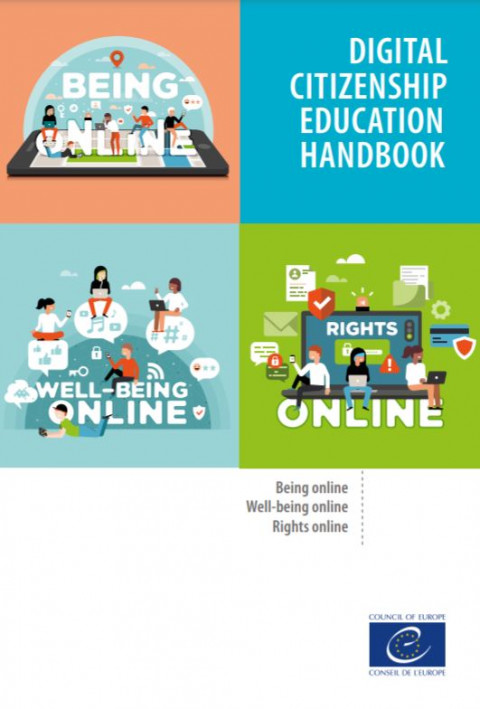 Digital Citizenship Education Handbook Année de publication: 2019 Auteur: Janice Richardson | Elizabeth Milovidov Auteur institutionnel: Council of Europe Digital citizenship and engagement involves a wide range of activities, from creating, consuming, sharing, playing and socialising, to investigating, communicating, learning and working. Competent digital citizens are able to respond to new and everyday challenges related to learning, work, employability, leisure, inclusion and participation in society, respecting human rights and intercultural differences.This Digital citizenship education handbook is designed to help educators and other interested adults understand and deal with them. It builds on the Council of Europe’s Reference Framework of Competences for Democratic Culture and the achievements of our longstanding Education for Democratic Citizenship programme, and complements the Internet literacy handbook as part of a coherent approach to educating citizens for the society of the future.
 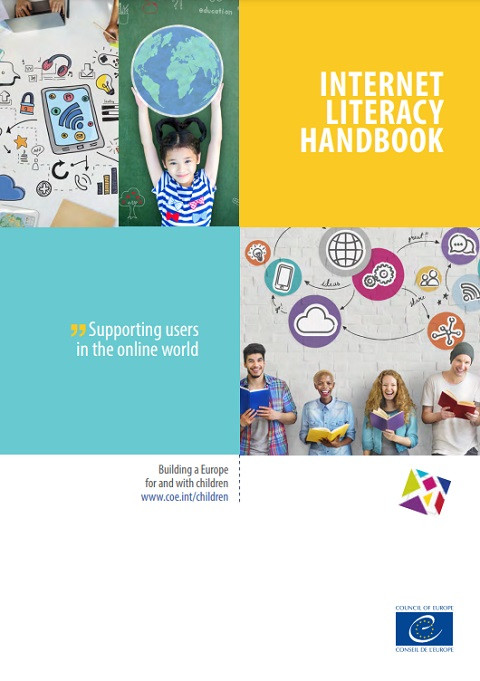 Internet Literacy Handbook: Supporting Users in the Online World Année de publication: 2017 Auteur: Janice Richardson | Elizabeth Milovidov | Martin Schmalzried Auteur institutionnel: Council of Europe Since the first edition of the Internet Literacy Handbook was issued in 2003 the world of the Internet has changed tremendously. The number of Internet users has risen; users are increasingly younger, trends in how people use the Internet and what they are looking for evolve, and new pitfalls in, for example, personal security arise seemingly overnight.This new edition takes into account the myriad changes, although the object of the Handbook still remains, namely to offer families, educators and policy-makers sufficient technical know-how to allow them to navigate, with young people, through communication technology. The new edition also expands the scope of the Fact sheets anchoring previously “new” concepts of digital citizenship and digital parenting. This edition includes 26 Fact sheets arranged under 6 thematic headings including a heading specifically dedicated to “Looking Forward” towards the future of the Internet. The Handbook is designed to be easy to use and helpful, as illustrated by the Fact sheet entitled “Finding quality information on the Web”. It is also available online, where it can be downloaded either in its full format or per individual factsheet. Manuel de maîtrise de l'internet: Accompagner les utilisateurs dans le monde en ligne Année de publication: 2017 Auteur: Janice Richardson | Elizabeth Milovidov | Martin Schmalzried Auteur institutionnel: Conseil de l'Europe Depuis la publication de la première édition du Manuel de maîtrise d’Internet en 2003, le monde en ligne a beaucoup changé. Les Internautes sont de plus en plus jeunes, leur nombre a augmenté, leurs usages d’Internet et l’objet de leurs recherches évoluent et de nouveaux dangers, par exemple en matière de sécurité individuelle, apparaissent chaque jour. Cette nouvelle édition tient compte de ces nombreux changements mais conserve son objectif, qui est de donner aux familles, aux enseignants et aux décideurs politiques des connaissances techniques suffisantes pour pouvoir naviguer, avec les jeunes, dans le monde des technologies de la communication. La nouvelle édition étend également le contenu des Fiches d’information aux concepts qui étaient alors «nouveaux» de citoyenneté numérique et de parentalité numérique, ce qui porte le nombre de fiches à 26, organisées en six thématiques dont l’une est spécialement consacrée à l’avenir d’Internet. Le manuel se veut convivial et pratique, comme l’illustre la fiche intitulée « Trouver de l’information de qualité sur le web ». Il est également accessible en ligne où il peut être téléchargé dans son intégralité ou fiche par fiche.
 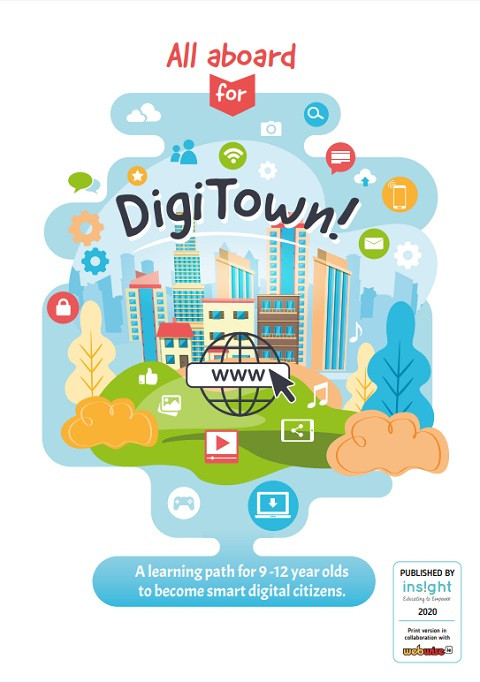 All Aboard for DigiTown: A Learning Path for 9 -12 Year Olds to Become Smart Digital Citizens Année de publication: 2020 Auteur: Janice Richardson | Veronica Samara Auteur institutionnel: Webwise “All Aboard for DigiTown!”is a fun, entertaining learning journey for young digital citizens through 10 digital themes centred on ‘Being online’, ‘Well-being online’ and ‘Rights online’. These are based on the Council of Europe’s successful Digital Citizenship Education model. As children progress through the stories, exercises and individual and group activities in the book, they will learn about using digital technology wisely, behaving respectfully and responsibly, and cooperating meaningfully online and offline. They end their journey with a backpack of badges to remind them of what being a digital citizen really means. A final section provides solutions, and offers teachers and parents a detailed overview of the competences their children are developing in order to better guide them on their path towards digital citizenship.The book can be used both in class, at home and in distance learning. It is adapted to the learning needs of children in the final years of elementary school (age around 9-12 years).
 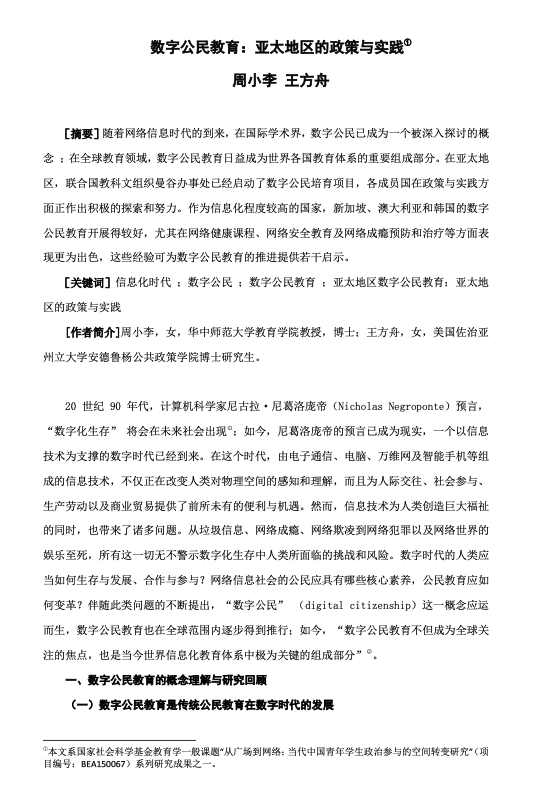 数字公民教育: 亚太地区的政策与实践 Année de publication: 2019 Auteur: 周小李 | 王方舟 随着网络信息时代的到来,在国际学术界,数字公民已成为一个被深入探讨的概 念 ;在全球教育领域,数字公民教育日益成为世界各国教育体系的重要组成部分。在亚太地 区,联合国教科文组织曼谷办事处已经启动了数字公民培育项目,各成员国在政策与实践方 面正作出积极的探索和努力。作为信息化程度较高的国家,新加坡、澳大利亚和韩国的数字 公民教育开展得较好,尤其在网络健康课程、网络安全教育及网络成瘾预防和治疗等方面表 现更为出色,这些经验可为数字公民教育的推进提供若干启示。
 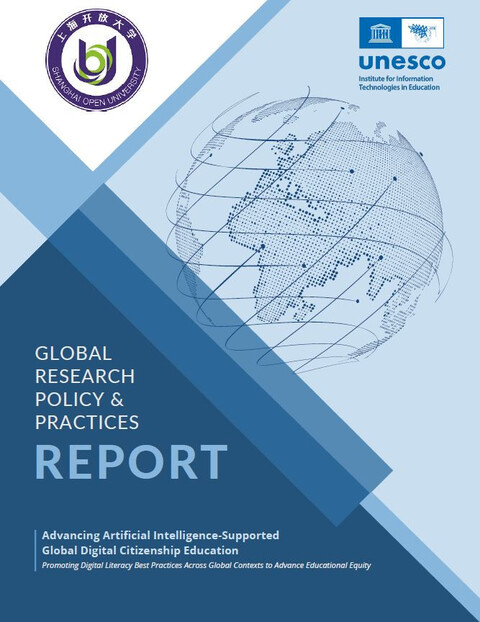 Global Research Policy & Practices Report: Advancing Artificial Intelligence-Supported Global Digital Citizenship Education Année de publication: 2022 Auteur institutionnel: UNESCO Institute for Information Technologies in Education (IITE) | Shanghai Open University The UNESCO Institute for Information Technologies in Education (IITE) was established as an integral part of UNESCO by the General Conference of UNESCO at its 29th session November 1997) and is located in Moscow, Russian Federation. IITE is the only UNESCO Category 1 Institute that holds a global mandate for ICT in education.In line with the new Education 2030 Agenda, IITE has developed its strategic priority areas to meet new demands and tasks ahead. The mission of IITE in the new era is promoting the innovative use of ICT and serving as facilitator and enabler for achieving Sustainable Development Goal 4 (SDG 4) through ICT-enabled solutions and best practices. This report, supported by the Online Learning Consortium (OLC), is published in partnership with Shanghai Open University (SOU) to help amplify best practices regarding artificial ntelligence, digital literacy, and digital citizenship instruction for lifelong learning and success. 全球政策与实钱研究报告: 以人工智能为支撑,推动全球数字公民教育 Année de publication: 2022 Auteur institutionnel: UNESCO Institute for Information Technologies in Education (IITE) | Shanghai Open University 1997年11月,联合国教科文组织大会在第二十九届会议上设立联合国教科文组织教育信息技术研究所(以下简称 “本研究所),确定其办公地点在俄罗斯联邦莫斯科。本研究所是联合国教科文组织一类机构中唯一在教育领域拥 有信息与通信技术全球授权的机构,并根据新的《2030 年教育议程》, 确定了战略优先领域,以满足未来的新需求 和新任务。其在新时代的使命是以信息与通信技术为支撑,制订解决方案,形成最佳实践,加强创新使用信息与通 信技术,促进和推动实现可持续发展目标 4。在线学习联盟对本工具包给予支持,并与上海开放大学合作将其发布, 旨在帮助推广有关人工智能、数字素养和数字公民教育的最佳实践,以实现终身学习和取得成功,并为政策制定者 和执业者提供一个评估框架和评价工具,以衡量支持学习和参与实践在设计、交付和实施方面所取得的重大进步。
  Introductory News Literacy: Adapted from High Five 2012; The Integrated Language Arts and Journalism Curriculum for Middle School Students Année de publication: 2013 Auteur institutionnel: American Press Institute The American Press Institute’s Introductory News Literacy Units are lightweight general usage lesson plans for introducing middle school students to how to read and understand news media and current events. While the Institute offers more specific and in-depth materials and ideas for promoting news literacy, these new units provide a resource for the time-pressed teacher working with students at an important age. Split into three units of one-to-two weeks each, the curriculum briefly overviews critical elements in news understanding and healthy processes for determining source information and bias. Individual lessons can be adapted and used to fit specific classroom needs.
 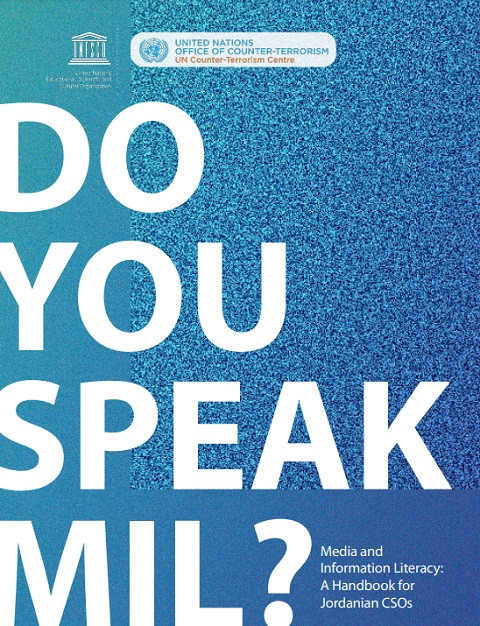 Do You Speak MIL?: Media and Information Literacy; A Handbook for Jordanian CSOs Année de publication: 2020 Auteur: Milica Pesic | Lucien Michael Steinberg | Anoud Al-Zou’bi Auteur institutionnel: Media Diversity Institute | UNESCO | UN. Office of Counter-Terrorism (UNOCT) This publication, “Do You Speak MIL?: Media and Information Literacy – A Handbook for Jordanian CSOs,” provides civil society organizations (CSOs) with practical tools to integrate Media and Information Literacy (MIL) into their training programs. Each chapter includes a technical introduction, thought-provoking questions, and real-life examples to guide trainers. Published in 2020, this handbook is a valuable resource for promoting MIL within Arab countries, intending to empower communities to navigate the evolving media landscape.