
Ressources
Explorez une large gamme de ressources sur le GCED afin d’approfondir votre compréhension et de renforcer vos activités de recherche, de plaidoyer, d’enseignement et d’apprentissage.
28 résultats trouvés
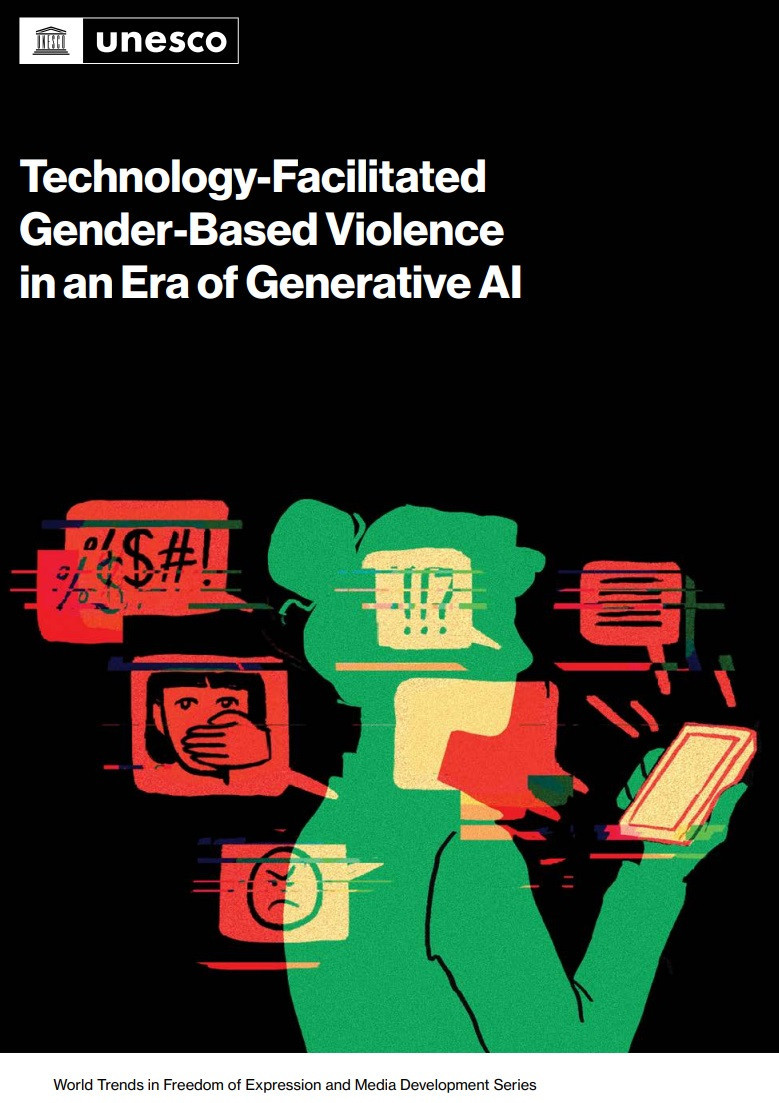 Technology-facilitated gender-based violence in an era of generative AI Année de publication: 2023 Auteur institutionnel: UNESCO <Short summary>Experiments reveal how generative AI facilitates gender-based violence Generative Artificial Intelligence (AI) — deep-learning models that create voice, text, and image — are revolutionizing the way people access information and produce, receive and interact with content. While technological innovations like ChatGPT, DALL-E and Bard offer previously unimaginable gains in productivity, they also present concerns for the overall protection and promotion of human rights and for the safety of women and girls.The arrival of generative AI introduces new, unexplored questions: what are the companies’ policies and normative cultures that perpetuate technology-facilitated gender-based violence and harms? How do AI-based technologies facilitate gender-specific harassment and hate speech? What “prompt hacks” can lead to gendered disinformation, hate speech, harassment, and attacks? What measures can companies, governments, civil society organisations and independent researchers take to anticipate and mitigate these risks?A combination of measures are proposed to be put in place by generative AI companies and the technology companies that platform them, regulators and policy makers, by civil society organisations and independent researchers, as well as users.
 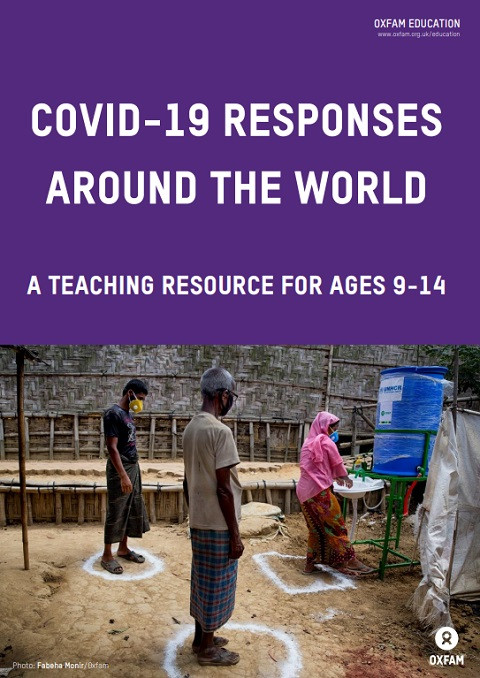 COVID-19 Responses Around the World: A Teaching Resource for Ages 9-14 Année de publication: 2021 Auteur institutionnel: Oxfam GB This resource helps learners to discuss their thoughts and feelings about the pandemic with others. Learners will also find out about ways to stop the current ‘infodemic’ – the rapid spread of misinformation and disinformation about COVID-19.This material will help learners to:discuss their thoughts and feelings about COVID-19.investigate some of the incredible ways in which people have been responding to this crisis.understand the difference between information, disinformation and misinformation.consider their own responses to the pandemic and possible actions that they might take to manage their own wellbeing and support others.
  Information Neighbourhoods Année de publication: 2020 Auteur institutionnel: Shout Out UK | U.S. Embassy London | Association for Citizenship Teaching (ACT) We live in a world where information has a variety of purposes. So how can you identify what each type of information is trying to do? Now more than ever, media literacy (the ability to critically analyse information) is critical for us as citizens and for our democracy to function. This video explains what Information neighbourhoods exist and how to identify them.
  Disinfodemic: Deciphering COVID-19 Disinformation (Policy Brief; 1) Année de publication: 2020 Auteur: Julie Posetti | Kalina Bontcheva Auteur institutionnel: UNESCO The purpose of this brief is to provide a structure for understanding the COVID-19 disinfodemic and the responses to it, highlighting practices which have a bearing on the UN Sustainable Development Goals (SDGs), the right to health and the right to freedom of expression. SDG 16.10 calls for “public access to information and fundamental freedoms”. Désinfodémie: Déchiffrer la désinformation sur le COVID-19 (Note d’orientation; 1) Année de publication: 2020 Auteur: Julie Posetti | Kalina Bontcheva Auteur institutionnel: UNESCO Le but de cette note d’orientation est de présenter une structure pour comprendre la désinfodémie sur le COVID-19 et les réponses possibles, en mettant en évidence les pratiques liées aux Objectifs de développement durable (ODD) des Nations Unies, le droit à la santé et le droit à la liberté d’expression. L’ODD 16.10 appelle à « un accès public à l’information et aux libertés fondamentales ». Desinfodemia: Descifrando la desinformación sobre el COVID-19 (Policy Brief; 1) Année de publication: 2020 Auteur: Julie Posetti | Kalina Bontcheva Auteur institutionnel: UNESCO El propósito de este resumen es presentar una estructura para comprender la ‘desinfodemia’ del COVID-19 y las respuestas respectivas, resaltando las prácticas pertinentes a los Objetivos de Desarrollo Sostenible de la ONU, al derecho a la salud y al derecho a la libertad de expresión. EL ODS16.10 subraya la necesidad de “acceso público a la información y libertades fundamentales”.
  Input for Report on Disinformation Année de publication: 2021 Auteur institutionnel: International Federation of Library Associations and Institutions (IFLA) IFLA responded to a call for inputs about human rights impacts of measures against disinformation, issued by the United Nations Special Rapporteur on the promotion and protection of the right to freedom of opinion and expression. Concerns over – and dialogue about ways to address – the negative impacts of false and misleading information online have remained high on the agenda over the past months, particularly in light of prominent examples of health and electoral dis- and mis-information.Disinformation, uniquely challenging in the increasingly dense and complex digital information environment, interferes with individuals’ ability to make informed decisions and realise their essential human rights. However, the new call for inputs by the UN Special Rapporteur also draws attention to the concerns about human rights impacts of measures which different stakeholders – from states to online platforms, human rights organisations and others – take to combat disinformation.These include, of course, the impacts of broadly- or vaguely-defined “fake news” laws on freedom of expression and opinion; or internet shutdowns that bear a heavy cost on people’s access to information as a driver of development and rights.In light of this, IFLA’s submission highlights the potential of media and information literacy interventions to help address the challenges of mis- and dis-information. Drawing on the global library field’s experiences, it points to some possible good practices and insights from the ongoing work and research in this field – from targeted and tailored outreach initiatives that can help reach those who are not currently in formal education, to scalability and replicability of interventions.Of course, this is an emerging field. Our understanding of how media and information literacy interventions can be effectively leveraged against disinformation, pitfalls to avoid and ways to maximise impact, continues to evolve. That’s why the submission emphasises the need for more research and cross-stakeholder collaboration – and libraries can and do offer valuable practical and theoretical insights for this ongoing discussion.
  Elections and Media in Digital Times (In Focus Series: Global Trends in Freedom of Expression and Media Development) Année de publication: 2019 Auteur: Tarlach McGonagle | Maciek Bednarski | Mariana Francese Coutinho | Arthur Zimin Auteur institutionnel: UNESCO Digital companies are enabling politicians, political parties and voters to communicate in unprecedented ways, and expanding opportunities for seeking, receiving and imparting political information and ideas. Alongside positive developments, there also growing concerns about emerging and increasing threats to the integrity and credibility of elections, as well as the media's contribution to free, fair, transparent and peaceful electoral processes.This report highlights three converging trends in media and elections in digital times: the rise of disinformation, intensifying attacks on journalists, and disruptions linked to the use of information and communication technology in electoral arrangements. Offering possible responses to the challenges at hand, this study is a tool for governments, election practitioners, media organizations, journalists, civil society, the private sector, academia and individuals. Выборы и СМИ в цифровую эпоху (Серия в фокусе: Мировые тенденции в области свободы выражения мнений и развития СМИ) Année de publication: 2019 Auteur: Tarlach McGonagle | Maciek Bednarski | Mariana Francese Coutinho | Arthur Zimin Auteur institutionnel: UNESCO ИТ компании дают возможность политикам, политическим партиям и избирателям общаться беспрецедентными способами, расширяют возможности для поиска, получения и распространения политической информации и идей. Наряду с позитивными сторонами растет озабоченность по поводу вырисовывающихся и усиливающихся угроз целостности и авторитету выборов, а также вкладу средств массовой информации в свободные, справедливые, транспарентные и мирные избирательные процессы.В настоящем докладе освещаются три сходящиеся тенденции, связанные со СМИ и выборами в цифровую эпоху: рост дезинформации, усиление нападений на журналистов и перебои в предоставлении информационно-коммуникационных технологий в период выборов. Это исследование, предлагая возможные ответы на стоящие перед нами проблемы, является своего рода инструментом для правительств, специалистов по проведению выборов, организаций средств массовой информации, журналистов, гражданского общества, частного сектора, научных кругов и отдельных лиц.
  United Nations Global Principles for Information Integrity : Recommendations for Multi-stakeholder Action Année de publication: 2024 Auteur institutionnel: United Nations (UN) Technological advances have revolutionized communications, connecting people on a previously unthinkable scale. They have supported communities in times of crisis, elevated marginalized voices and helped mobilize global movements for racial justice and gender equality. Yet these same advances have enabled the spread of misinformation, disinformation and hate speech at an unprecedented volume, velocity and virality, risking the integrity of the information ecosystem. New and escalating risks stemming from leaps in AI technologies have made strengthening information integrity one of the urgent tasks of our time. This clear and present global threat demands coordinated international action. The United Nations Global Principles for Information Integrity show us another future is possible.