
Ressources
Explorez une large gamme de ressources sur le GCED afin d’approfondir votre compréhension et de renforcer vos activités de recherche, de plaidoyer, d’enseignement et d’apprentissage.
28 résultats trouvés
 Principes mondiaux des Nations Unies pour l’intégrité de l’information: Recommandations pour une action multipartite Année de publication: 2024 Auteur institutionnel: United Nations (UN) Les avancées technologiques ont révolutionné les communications, connectant les personnes à une échelle autrefois inimaginable. Elles ont soutenu les communautés en temps de crise, amplifié les voix marginalisées et contribué à la mobilisation mondiale pour la justice raciale et l’égalité des genres. Pourtant, ces mêmes avancées ont également favorisé la propagation de la désinformation, des informations fallacieuses (ou « fake news ») et des discours de haine à une vitesse, une ampleur et une viralité sans précédent, menaçant ainsi l’intégrité de l’écosystème informationnel. Les risques émergents et croissants liés aux progrès rapides de l’intelligence artificielle font du renforcement de l’intégrité de l’information l’un des défis les plus urgents de notre époque. Cette menace mondiale, claire et actuelle, exige une action internationale coordonnée. La publication Principes mondiaux des Nations Unies pour l’intégrité de l’information nous montrent qu’un autre avenir est possible.
 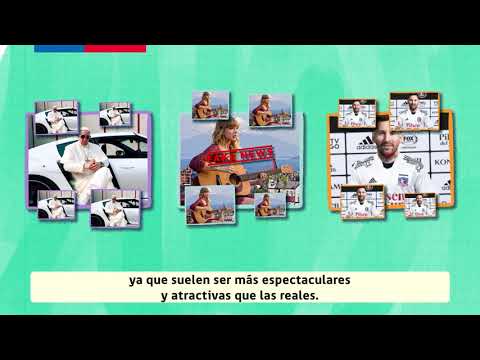 Chapter 4: What Is Disinformation and How Do We Deal With It? Année de publication: 2024 Auteur institutionnel: Chile. Ministry of the General Secretariat of Government Why have fake news become so popular? How can we avoid them when doing homework, assignments and getting informed about what is happening in the country and the world? In this capsule, aimed at parents, guardians and tutors, we will learn what disinformation is, more popularly known as the phenomenon of fake news, along with advice on how to confront it and not continue its spread. This capsule was produced by the Ministry of the General Secretariat of Government in collaboration with Mineduc, within the framework of the Citizenship and Digital Literacy Plan. Capítulo 4: ¿Qué es y cómo enfrentamos la desinformación? Année de publication: 2024 Auteur institutionnel: Chile. Ministry of the General Secretariat of Government ¿Por qué se han hecho tan populares las noticias falsas? ¿Cómo podemos evitarlas al momento de hacer tareas, trabajos e informarnos de lo que sucede en el país y en el mundo? En esta cápsula, dirigida a padres, madres, apoderadas y apoderados conoceremos lo que es la desinformación, más popularmente conocida como el fenómeno de las fake news, junto con consejos para enfrentarla y no continuar su propagación. Esta cápsula fue realizada por el Ministerio Secretaría General de Gobierno en colaboración con Mineduc, en el marco del Plan Ciudadanía y Alfabetización Digital.
  Spot and Fight Disinformation Année de publication: 2021 Auteur institutionnel: European Commission The pandemic demonstrated just how fast misleading or false information can spread online. With this toolkit, secondary school teachers can help their students separate what is real from what is fake when they are browsing online. The toolkit is comprised of an editable presentation (which includes real life examples and group exercises) and an instruction booklet for teachers. Detectar y combatir desinformación Année de publication: 2021 Auteur institutionnel: European Commission La pandemia ha puesto de manifiesto la rapidez con que informaciones falsas se propagan en línea. Con este kit de herramientas, los profesores de enseñanza secundaria pueden ayudar a sus alumnos a distinguir lo verdadero de lo falso cuando navegan por internet. El kit de herramientas se compone de una presentación editable y de un folleto de instrucciones. Repérer et combattre la désinformation Année de publication: 2021 Auteur institutionnel: European Commission La pandémie a montré à quel point les fausses informations se diffusent rapidement en ligne. Grâce à cette boîte à outils, les enseignants du secondaire peuvent aider leurs élèves à démêler le vrai du faux lorsqu’ils naviguent en ligne. Elle se compose d’une présentation éditable et d’une brochure contenant des instructions.
  Disinformation and Peacebuilding in Sub-saharan Africa: Security Implications of AI-Altered Information Environments; Research Report Année de publication: 2024 Auteur: Eduardo Albrecht | Eleonore Fournier-Tombs | Rebecca Brubaker Auteur institutionnel: United Nations University | Interpeace This report aims to further explore the way in which AI technologies as they currently stand impact peace and conflict, and what methods might be used to mitigate their adverse effects - through the development of better tools and the inclusion of peace and conflict considerations in AI governance frameworks. The report proposes the following recommendations: 1. More funding and support should be provided to civil society organization efforts to expand media literacy and fact-checking initiatives using AI tools to enhance capabilities. 2. Governments need to work with civil society to develop and implement comprehensive, transparent legal frameworks combating disinformation. These legislative measures need to support digital and media literacy campaigns and fact-checking organizations. 3. Social media companies need to expand investment and research into understanding local information environments, so they can better identify and respond to instances of disinformation in all contexts in which they operate and enhance transparency. 4. Peacebuilding organizations need to carefully consider local media ecosystems and information environments when conducting conflict analyses, and factor these dynamics into their projects' frameworks.
  Disinformation and Peacebuilding in Sub-Saharan Africa : Security Implications of AI-Altered Information Environments : Research Report Année de publication: 2024 Auteur: Eduardo Albrecht | Eleonore Fournier-Tombs | Rebecca Brubake Auteur institutionnel: United Nations University This report aims to further explore the way in which AI technologies as they currently stand impact peace and conflict, and what methods might be used to mitigate their adverse effects - through the development of better tools and the inclusion of peace and conflict considerations in AI governance frameworks. The report proposes the following recommendations: 1. More funding and support should be provided to civil society organization efforts to expand media literacy and fact-checking initiatives using AI tools to enhance capabilities. 2. Governments need to work with civil society to develop and implement comprehensive, transparent legal frameworks combating disinformation. These legislative measures need to support digital and media literacy campaigns and fact-checking organizations. 3. Social media companies need to expand investment and research into understanding local information environments, so they can better identify and respond to instances of disinformation in all contexts in which they operate and enhance transparency. 4. Peacebuilding organizations need to carefully consider local media ecosystems and information environments when conducting conflict analyses, and factor these dynamics into their projects' frameworks.
 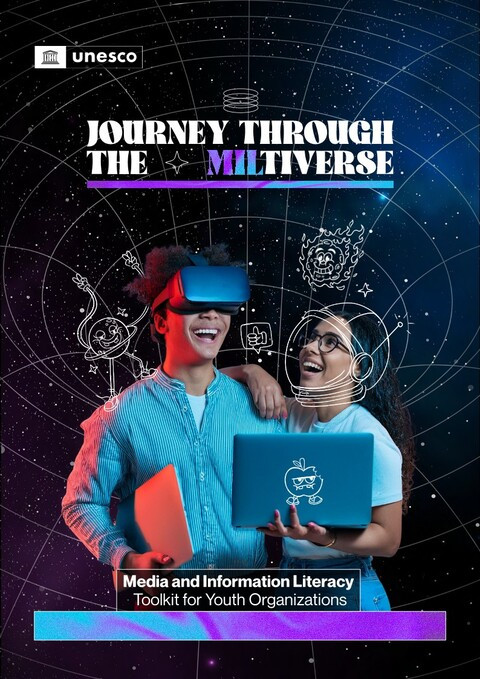 Journey through the MILtiverse: Media and Information Literacy Toolkit for Youth Organizations Année de publication: 2024 Auteur: Sandra Acero Pulgarin | Natalia González-Gil | Alejandro Santamaría Virviescas Auteur institutionnel: UNESCO Empowering Youth Organizations with and for Media and Information LiteracyIn an era where digital interactions dominate, young people must be equipped with more than just basic digital literacy skills. Media and Information Literacy (MIL) has become an essential competency, enabling them to critically navigate the overwhelming ow of information in our fast-paced and complex information ecosystem. \With the Internet user base getting younger every day — data shows that one in three internet users is a child — countries worldwide are increasingly working on integrating MIL into their education systems. Despite these advancements, many young people still grapple with challenges such as disinformation, hate speech, and other harmful online content. Additionally, new technologies continue to emerge, creating challenges with unknown impacts. For example, 80% of young people aged 10 to 24 use AI multiple times a day for education, entertainment, and other purposes. Global youth organizations are at the forefront of UNESCO’s eorts to promote MIL among young people through informal education. This toolkit serves as a primary resource to help these organizations incorporate MIL into their strategies, policies, and operations, aiming to make MIL a lasting component of their practices and peer-to-peer educational programs. Join us on this journey through the MILtiverse and empower the next generation by making MIL a fundamental life competence for their futures.
  Countering Holocaust Denial and Distortion through Education: A Guide for Teachers Année de publication: 2025 Auteur institutionnel: UNESCO Antisemitic hate speech, disinformation, and conspiracy theories thrive during crises, making it vital for teachers to address these issues in school curricula. Social media has significantly amplified the spread of such harmful content, including Holocaust denial and distortion. These falsehoods, rooted in antisemitic prejudice and conspiratorial thinking, threaten our shared historical memory and promote hatred. To effectively combat these issues, it is essential to have a comprehensive understanding of the Holocaust —how and why the genocide of the Jewish people occurred. This knowledge helps us recognize the causes and risk factors, contributing to the prevention of future atrocity crimes and the fight against antisemitism. In the digital age, it is also imperative to be able to decipher the manipulation of history, and the misrepresentation of the past.The guide provides teachers with the necessary tools and guidance to prevent the spread of Holocaust denial and distortion. It equips teachers with knowledge, teaching principles, and strategies to foster digital literacy, historical understanding, and critical thinking in learners. Aimed primarily at history and social sciences teachers, it outlines key concepts, teaching methods, and approaches to counter Holocaust denial and distortion.