
Ressources
Explorez une large gamme de ressources sur le GCED afin d’approfondir votre compréhension et de renforcer vos activités de recherche, de plaidoyer, d’enseignement et d’apprentissage.
13 résultats trouvés
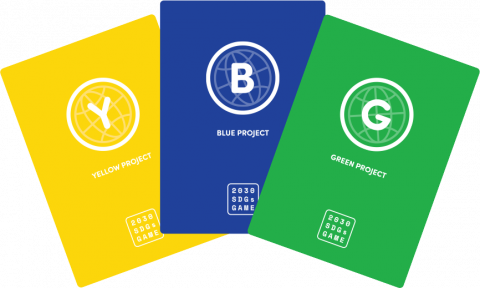 2030 SDGs GAME Année de publication: 2016 Auteur institutionnel: Imacocollabo The 2030 SDGs Game is a multiplayer, in-person, card-based game that simulates taking the “real world” into the year 2030. Designed in Japan in 2016, this experience has become a powerful and impactful social phenomenon in Japan, earning extensive media coverage and reaching over 12,000 participants last year. 2030 SDGs Game events are held in corporate, governmental, educational, and community settings, and now has over 100 trained facilitators in a rapidly growing community within Japan. Now, due to a growing demand to bring the game to the rest of the world, we have created an English edition and are beginning to introduce it to a wider audience overseas. The game is designed to be played with anywhere from 5 to 50 players. (That number can be expanded to a maximum of around 200 with multiple parallel ‘worlds’ operating at the same time.) Play time is approximately 1 hour; with the necessary explanation and reflection afterward, it requires a minimum of 90 minutes, and generally works best in a 2 ½ hour time frame.
 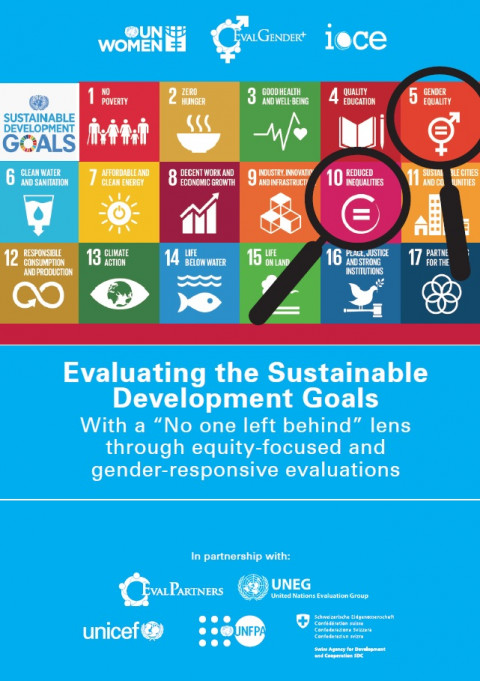 Evaluating the Sustainable Development Goals with a “No one left behind” lens through equity-focused and gender-responsive evaluation Année de publication: 2016 Auteur: Michael Bamberger | Marco Segone | Florencia Tateossian The purpose of this publication is to provide guidance on how to integrate an equity-focused and gender-responsive (EFGR) approach to national evaluation systems that should inform national Sustainable Development Goal (SDG) reviews. This guidance is intended to support national evaluation systems on how to integrate EFGR evaluations to inform the national reviews of SDGs. The guidance is expected to primarily serve national evaluation systems, the UN system, multilateral and bilateral development agencies, academic institutions, including specialized research centres and think tanks, private foundations, the private sector, and voluntary organizations of professional evaluators. Оценка Целей Устойчивого Развития на основе принципа «Развитие для всех без исключения» через призму гендерного равенства и социальной справедливости Année de publication: 2016 Auteur: Michael Bamberger | Marco Segone | Florencia Tateossian Цель данной публикации – предоставить рекомендации относительно возможных путей интеграции принципов социальной справедливости и гендерного равенства в национальные системы оценки, которые должны будут передавать информацию для страновых обзоров Целей в области устойчивого развития (ЦУР). Статистический анализ с учетом гендера и дезагрегированных показателей, хотя и имеет важное значение, должен дополняться оценками, проводимыми на основе принципов социальной справедливости и гендерного равенства, для того, чтобы развитие охватывало всех без исключения. Руководство в первую очередь предназначено для лиц, вовлеченных в национальные системы оценки; системы Организации Объединенных Наций; многосторонних и двусторонних агентств развития; академических институтов, в том числе специализированных исследовательских и аналитических центров; частных фондов; организаций частного сектора и добровольных объединений в области профессиональной оценки.
 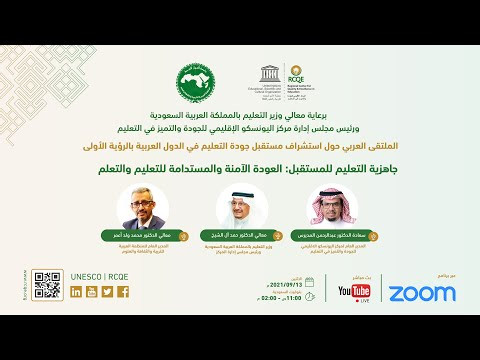 Readiness for Education for the Future: A Safe and Sustainable Return to Teaching and Learning Année de publication: 2021 Auteur institutionnel: Regional Center for Quality and Excellence in Education (RCQE) Predicting the future of quality education is a complex process, but it is an inevitable necessity, and anticipation and preparation for every new and changing must be the goal of education in its present and future. Today, education in all countries of the world faces unprecedented challenges, most notably the Corona pandemic, Covid-19, in conjunction with previous challenges of acceleration in knowledge and technological development, as well as economic crises and conflicts in some countries, unfamiliar contexts that made this symposium review the issue of education and its safe return to it after Corona pandemic. جاهزية التعليم للمستقبل: العودة الآمنة والمستدامة للتعليم والتعلم Année de publication: 2021 Auteur institutionnel: Regional Center for Quality and Excellence in Education (RCQE) التنبؤ بمستقبل جودة التعليم عملية معقدة إلا أنها ضرورة حتمية، والتحسب والاستعداد لكل مستجد ومتغير يجب أن يكون غاية التربية في حاضرها ومستقبلها. اليوم يواجه التعليم في جميع دول العالم تحديات غير مسبوقة أبرزها جائحة كورونا Covid-19 بتزامن مع تحديات سابقة من تسارع في التطور المعرفي والتكنولوجي، وكذلك أزمات اقتصادية وصراعات في بعض الدول، سياقات غير مألوفة جعلت من عملية تستعرض هذه الندوة قضية التعليم والعودة الامنة له بعد جائحة كورونا.
  International Task Force on Teachers for Education 2030 Strategic Plan 2018–2021 Année de publication: 2018 Auteur institutionnel: UNESCO With the end of the EFA era, the TTF has decided to articulate its activities around the newly adopted international education goals. The Strategic Plan 2018–2021 builds on the Sustainable Development Goals (SDGs), especially the SDG 4.c target on teachers, and the Education 2030 Incheon Declaration and Framework for Action adopted in 2015. Plan stratégique 2018 - 2021. Équipe spéciale internationale sur les enseignants pour Éducation 2030 Année de publication: 2018 Auteur institutionnel: UNESCO Avec la fin de l'ère EPT, l'Équipe spéciale sur les enseignants a décidé d'articuler ses activités autour des objectifs d'éducation internationale nouvellement adoptés. Le Plan stratégique 2018-2021 se fonde sur les Objectifs de Développement Durable (ODD), en particulier sur la cible 4.c de l'ODD 4 sur les enseignants, ainsi que sur la Déclaration d'Incheon et le Cadre d'action Éducation 2030 adoptés en 2015. Ce nouveau plan stratégique a été informé par une évaluation externe réalisée en 2016-2017. Les conclusions et les recommandations de l'évaluation ont été discutées par le comité directeur du de l'Équipe spéciale sur les enseignants en mai 2017 et donnent certaines des orientations de ce plan stratégique. Plan Estratégico 2018 - 2021. Equipo especial internacional sobre docentes para Educación 2030 Année de publication: 2018 Auteur institutionnel: UNESCO Con el final de la era de la EPT, la TTF ha decidido articular sus actividades en torno a los objetivos educativos internacionales recientemente adoptados.El Plan Estratégico 2018-2021 se basa en los Objetivos de Desarrollo Sostenible (ODS), especialmente en la meta del ODS 4.c sobre docentes, y en la Declaración de Incheon y el Marco de Acción para la realización del Objetivo de Desarrollo Sostenible 4 adoptados en 2015.Este nuevo Plan Estratégico fue informado por una evaluación externa realizada en 2016-2017. Las conclusiones y recomendaciones de la evaluación fueron discutidas por el Comité Directivo de la TTF en mayo de 2017 e impulsan algunas de las direcciones estratégicas de este Plan Estratégico.
  UNESCO Associated Schools Network: guide for national coordinators Année de publication: 2018 Auteur institutionnel: UNESCO This document describes in detail the history of the UNESCO Associated Schools Network, its mission, goals, management, membership, and other information. It is a guide for National Coordinators who are the link between the schools in their country, their National Commission and other national authorities, and the International Coordinator at UNESCO. Сеть ассоциированных школ ЮНЕСКО: Руководство для национальных координаторов Année de publication: 2018 Auteur institutionnel: UNESCO В данной работе подробно описывается история Сети ассоциированных школ ЮНЕСКО (Сеть ПАШ), ее миссия, цели, управление, членство и др. информация. Она является руководством для национальных координаторов, которые осуществляют взаимосвязь между школами своей страны, ее национальной комиссией по делам ЮНЕСКО и другими национальными властями18, а также международным координатором в Штаб-квартире ЮНЕСКО.