
Ressources
Explorez une large gamme de ressources sur le GCED afin d’approfondir votre compréhension et de renforcer vos activités de recherche, de plaidoyer, d’enseignement et d’apprentissage.
46 résultats trouvés
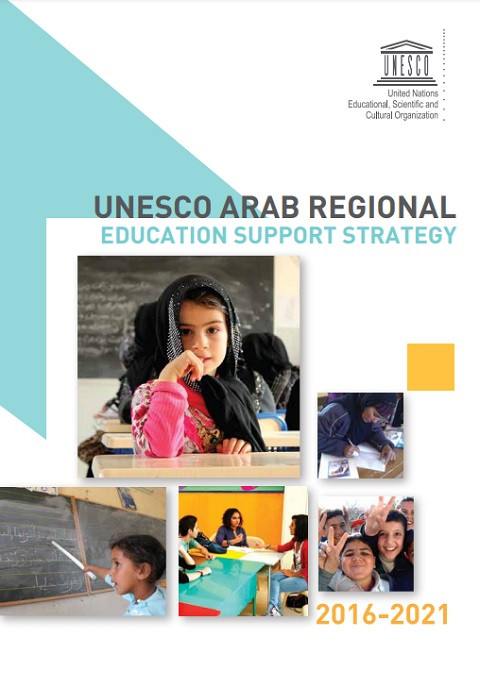 UNESCO Arab Regional Education Support Strategy: 2016-2021 Année de publication: 2016 Auteur institutionnel: UNESCO Beirut Covering the period of 2016-2021, this strategy document aims to provide tangible support for each Member State in the Arab Region, taking into account national needs and priorities and thus employing nationally relevant approaches based on the Agenda 2030 for Sustainable Development.
 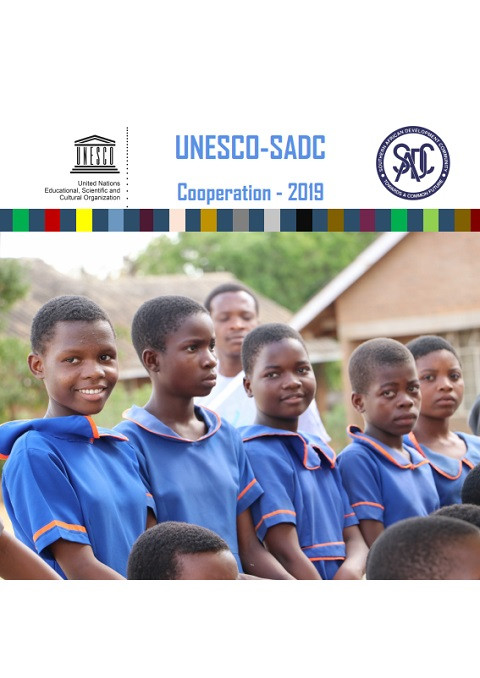 UNESCO-SADC: Cooperation 2019 Année de publication: 2020 Auteur institutionnel: UNESCO Harare UNESCO and SADC have a long standing history that culminated in the signing of a Memorandum of Understanding (MOU) in 1996. In 2017, UNESCO and SADC developed a Joint Programme of Action (JPA) which identifies concrete area of cooperation. These include education; technical and vocational education and training (TVET); youth; HIV and health education; science, technology and innovation (STI); water security, renewable energy and disaster risk management; culture; communication and information (including media for SDGs); and data for development.The purpose of this magazine is to highlight UNESCO’ work to improve education quality in the southern Africa region in partnership with SADC.
 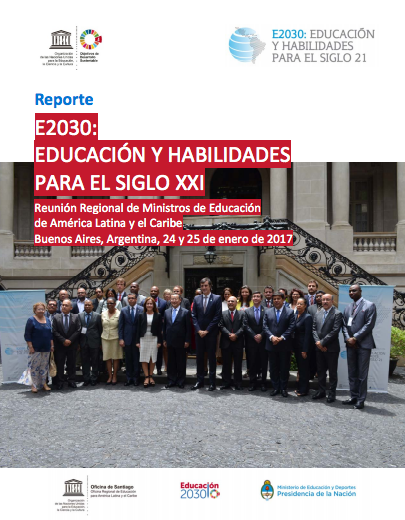 E2030: education and skills for the 21st century, report Année de publication: 2017 Auteur institutionnel: UNESCO Santiago The UNESCO Regional Bureau for Education in Latin America and the Caribbean, OREALC/UNESCO Santiago, in collaboration with the Ministry of Education and Sport of the Republic of Argentina, organized the Regional Meeting of Ministers of Education of Latin America and the Caribbean – “E2030: Education and skills for the 21st century”. Ministers of Education and high-level representatives of the education sector of the Member States of LAC; bilateral, regional and multilateral organizations; United Nations agencies; representatives of civil society; stakeholders and UNESCO experts participated in the meeting, which was held on 24-25 January 2017 in Buenos Aires, Argentina. This was the first ministerial meeting to be organized within the framework of the 2030 Agenda for Sustainable Development and its 17 Sustainable Development Goals (SDGs), in particular SDG 4 – “Ensure inclusive and quality education for all and promote lifelong learning”. It provided a space for dialogue between ministers of education and other stakeholders to debate SDG 4 in the context of the 2030 SDG Agenda. Discussions and information sharing on various topics related to the SDG 4 targets, and on the coordination mechanisms and monitoring instruments conducive to the achievement of E2030 enabled LAC Member States to reach a common vision and understanding of E2030 in the region. This joint approach on E2030 for the region is laid down in the Declaration of Buenos Aires, which ministers adopted at the end of the meeting. E2030: educación y habilidades para el siglo XXI; reporte Année de publication: 2017 Auteur institutionnel: UNESCO Santiago The UNESCO Regional Bureau for Education in Latin America and the Caribbean, OREALC/UNESCO Santiago, in collaboration with the Ministry of Education and Sport of the Republic of Argentina, organized the Regional Meeting of Ministers of Education of Latin America and the Caribbean – “E2030: Education and skills for the 21st century”. Ministers of Education and high-level representatives of the education sector of the Member States of LAC; bilateral, regional and multilateral organizations; United Nations agencies; representatives of civil society; stakeholders and UNESCO experts participated in the meeting, which was held on 24-25 January 2017 in Buenos Aires, Argentina. This was the first ministerial meeting to be organized within the framework of the 2030 Agenda for Sustainable Development and its 17 Sustainable Development Goals (SDGs), in particular SDG 4 – “Ensure inclusive and quality education for all and promote lifelong learning”. It provided a space for dialogue between ministers of education and other stakeholders to debate SDG 4 in the context of the 2030 SDG Agenda. Discussions and information sharing on various topics related to the SDG 4 targets, and on the coordination mechanisms and monitoring instruments conducive to the achievement of E2030 enabled LAC Member States to reach a common vision and understanding of E2030 in the region. This joint approach on E2030 for the region is laid down in the Declaration of Buenos Aires, which ministers adopted at the end of the meeting. E2030: education and skills for the 21st century, report Année de publication: 2017 Auteur institutionnel: UNESCO Santiago The UNESCO Regional Bureau for Education in Latin America and the Caribbean, OREALC/UNESCO Santiago, in collaboration with the Ministry of Education and Sport of the Republic of Argentina, organized the Regional Meeting of Ministers of Education of Latin America and the Caribbean – “E2030: Education and skills for the 21st century”. Ministers of Education and high-level representatives of the education sector of the Member States of LAC; bilateral, regional and multilateral organizations; United Nations agencies; representatives of civil society; stakeholders and UNESCO experts participated in the meeting, which was held on 24-25 January 2017 in Buenos Aires, Argentina. This was the first ministerial meeting to be organized within the framework of the 2030 Agenda for Sustainable Development and its 17 Sustainable Development Goals (SDGs), in particular SDG 4 – “Ensure inclusive and quality education for all and promote lifelong learning”. It provided a space for dialogue between ministers of education and other stakeholders to debate SDG 4 in the context of the 2030 SDG Agenda. Discussions and information sharing on various topics related to the SDG 4 targets, and on the coordination mechanisms and monitoring instruments conducive to the achievement of E2030 enabled LAC Member States to reach a common vision and understanding of E2030 in the region. This joint approach on E2030 for the region is laid down in the Declaration of Buenos Aires, which ministers adopted at the end of the meeting. E2030: education and skills for the 21st century, report Année de publication: 2017 Auteur institutionnel: UNESCO Santiago The UNESCO Regional Bureau for Education in Latin America and the Caribbean, OREALC/UNESCO Santiago, in collaboration with the Ministry of Education and Sport of the Republic of Argentina, organized the Regional Meeting of Ministers of Education of Latin America and the Caribbean – “E2030: Education and skills for the 21st century”. Ministers of Education and high-level representatives of the education sector of the Member States of LAC; bilateral, regional and multilateral organizations; United Nations agencies; representatives of civil society; stakeholders and UNESCO experts participated in the meeting, which was held on 24-25 January 2017 in Buenos Aires, Argentina. This was the first ministerial meeting to be organized within the framework of the 2030 Agenda for Sustainable Development and its 17 Sustainable Development Goals (SDGs), in particular SDG 4 – “Ensure inclusive and quality education for all and promote lifelong learning”. It provided a space for dialogue between ministers of education and other stakeholders to debate SDG 4 in the context of the 2030 SDG Agenda. Discussions and information sharing on various topics related to the SDG 4 targets, and on the coordination mechanisms and monitoring instruments conducive to the achievement of E2030 enabled LAC Member States to reach a common vision and understanding of E2030 in the region. This joint approach on E2030 for the region is laid down in the Declaration of Buenos Aires, which ministers adopted at the end of the meeting.
 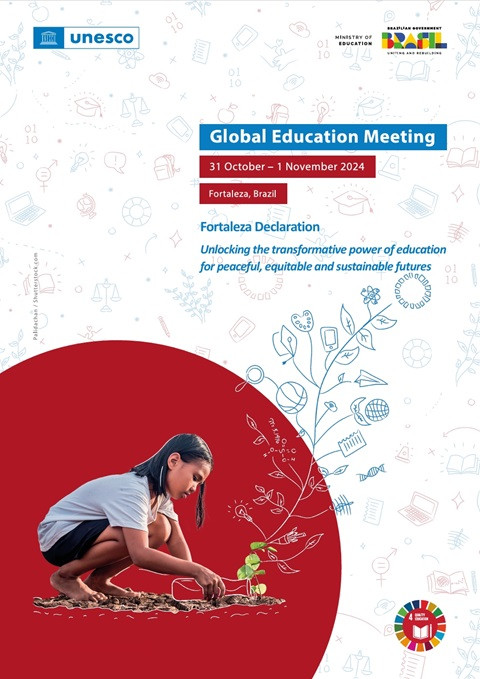 Global Education Meeting: Fortaleza Declaration; Unlocking the Transformative Power of Education for Peaceful, Equitable and Sustainable Futures Année de publication: 2024 Auteur institutionnel: UNESCO | Brazil. Ministry of Education The 2024 Global Education Meeting (GEM), held in Fortaleza, Brazil, marked a significant milestone in the global pursuit of education equity and financing, with the adoption of the powerful Fortaleza Declaration by over 650 participants including over 50 Ministers from across the globe. Reunión mundial sobre la educación: Declaración de Fortaleza; Aprovechar el poder transformador de la educación para forjar futuros pacíficos, equitativos y sostenibles Année de publication: 2024 Auteur institutionnel: UNESCO | Brazil. Ministry of Education Este documento recoge la declaración de los ministros, los jefes y los miembros de las delegaciones nacionales, los representantes de los organismos de las Naciones Unidas, los asociados humanitarios y para el desarrollo, las organizaciones internacionales y regionales, las organizaciones de la sociedad civil, la profesión docente, los jóvenes y los estudiantes, el sector privado y las fundaciones, a partir de su participación en la Reunión Global sobre Educación (GEM) 2024, llevada a cabo los días 31 de octubre y 1° de noviembre. Esta reunión, organizada por la UNESCO y con sede en Brasil, tuvo el propósito de trazar la ruta para que la educación sea la prioridad de las naciones, las regiones y el mundo como un elemento clave para alcanzar todos los ODS, adoptando un enfoque integrado y de aprendizaje permanente, centrado en el fortalecimiento y la transformación de la educación.
  UNESCO’s GLOBAL/REGIONAL COORDINATION OF AND SUPPORT FOR THE IMPLEMENTATION OF SDG 4 – EDUCATION 2030 Année de publication: 2017 Auteur institutionnel: 유네스코
  UNESCO’s GLOBAL/REGIONAL COORDINATION OF AND SUPPORT FOR THE IMPLEMENTATION OF SDG 4 – EDUCATION 2030 Année de publication: 2017 Auteur institutionnel: UNESCO