
Ressources
Explorez une large gamme de ressources sur le GCED afin d’approfondir votre compréhension et de renforcer vos activités de recherche, de plaidoyer, d’enseignement et d’apprentissage.
201 résultats trouvés
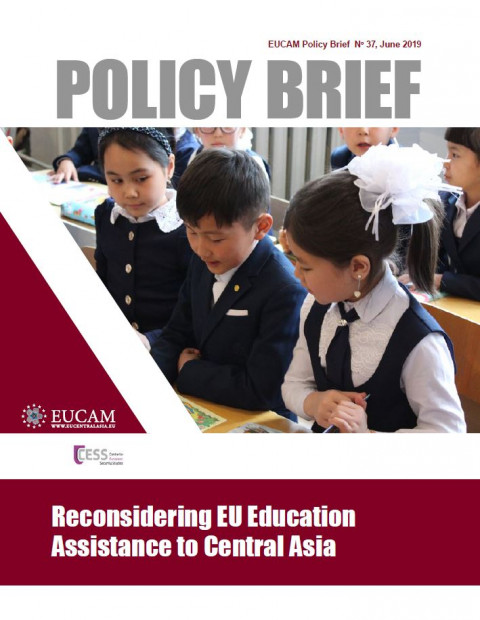 Новый взгляд на содействие ЕС образовательному сектору в Центральной Азии (Брифинг EUCAM No. 37, сентябрь 2019) Année de publication: 2019 Auteur: Sebastien Peyrouse Auteur institutionnel: Europe-Central Asia Monitoring (EUCAM) Этот брифинг основан на более углубленном исследовании системы образования в Центральной Азии, которое включает интервью в регионе (с учителями, родителями и учащимися) в Казахстане, Кыргызстане и Узбекистане.Ряд выводов позаимствованы из работы Себастьяна Пейруза ‘How to Strengthen Western Engagement in Central Asia: Spotlight on EU Education Assistance in Uzbekistan’, PONARS Policy Memo, no. 524, апрель 2018,http://www.ponarseurasia.org/memo/strengthen-western-engagement-central-asia-spotlight-eu-education-assistance-uzbekistan.
  Aprender a vivir juntos: ¿hemos fracasado? Síntesis de las reflexiones y los aportes surgidos durante la 46a Conferencia Internacional de Educación de la UNESCO, Ginebra, 5-8 de septiembre de 2001 Année de publication: 2003 Auteur institutionnel: UNESCO International Bureau of Education (IBE) | UNESCO Brasilia The present book is based mainly on the work of the forty-sixth session of the International Conference on Education (ICE), organized by UNESCO’s International Bureau of Education (IBE) and held in Geneva from 5 to 8 September 2001. The theme of the conference was ‘Education for All for Learning to Live Together: Contents and Learning Strategies - Problems and Solutions’. Unless stated otherwise, the numerous quotations chosen to illustrate the points made in this book are from ICE documents and contributions. The Conclusions and Proposals for Action adopted by the 2001 ICE are provided in Chapter V.The ICE is the only regularly occurring event during which Ministers of Education from all over the world can meet. It therefore serves as a unique and highly appreciated international forum for high-level dialogue on educational issues and their policy implications.The 2001 ICE brought together over 600 participants from 127 countries, including in particular 80 Ministers and 10 Vice-Ministers of Education, as well as representatives of intergovernmental and non-governmental organizations. The themes of the 2001 ICE were, and still are, very relevant all over the world: those in charge of education have become well aware of the necessity and complexity of living together, as well as of the role and limits of education in this respect.The ICE was inspired by abundant literature dealing with the principle issues that participants debated, including: Preparatory reports;National reports presented by the Member States;Examples of initiatives and good practice (including those presented at the conference as video case studies);Messages from Ministers of Education attending the Conference;And contributions from the numerous researchers, experts, educationists and decision makers at all levels of education who also participated in the Netforum between April and August 2001.More information and opinions on the vast issue of Education for All for Learning to Live Together were added during the Conference itself, in the form of keynote addresses, presentations and debates during the two plenary sessions, six thematic workshops and the special session devoted to partnerships with civil society.The present book draws on this wealth of experience, research, opinions, ideas and visions of the future. It seeks to contribute to bringing the debate on Education for All for Learning to Live Together closer to actors of the global educational community. By setting out ins concise way the key issues and proposed actions, and illustrating them with concrete examples, numerous quotations and a number of questions, this book is intended particularly for teacher trainers, teachers themselves and their professional organizations, as well as for all actors in civil society who endeavour to improve the quality of education, to encourage dialogue and to foster in this way the capacity for living together.Neither a ‘conference report’ nor a scientific or academic work, this book is intended to be a sort of ‘gallery of photographs’ of the forty-sixth session of the ICE – its atmosphere of dialogue, the themes of its debates, and the first-hand descriptions and experiences exchanged. Far from prescribing norms or standards, it intends to share information, ideas and practices, rather like the ICE itself, in a spirit of exchange and dialogue. Planning education with and for youth Année de publication: 2015 Auteur: Anja Hopma | Lynne Sergeant Auteur institutionnel: UNESCO International Institute for Educational Planning (IIEP) As a central stakeholder in education, young people should be involved in educational planning. This publication focuses on the rationale for and obstacles to youth involvement, as well as the efforts of ministries of education to engage youth in their planning work. It is based on discussions and recommendations that emerged from the high-level international policy forum on ‘Engaging youth in planning education for social transformation’ organized by the UNESCO International Institute for Educational Planning (IIEP) in Paris from 16 to 18 October 2012. This policy forum set out to explore the following broad themes: (i) youth engagement in planning education for conflict transformation and peace building; (ii) strengthening young people’s skills and opportunities for civic engagement within formal and non-formal education systems; and (iii) enhancing the relevance of education systems for young people in their transition to employment. This publication draws on the exchanges during the pre-forum online debates, discussions among participants during the forum, and testimonials from practitioners and youth. Planifier l'éducation avec et pour les jeunes Année de publication: 2015 Auteur: Anja Hopma | Lynne Sergeant Auteur institutionnel: UNESCO International Institute for Educational Planning (IIEP) En tant que partie prenante centrale dans l'éducation, les jeunes doivent être impliqués dans la planification de l'éducation. Cette publication met l'aCECnt sur les raisons et les obstacles à la participation des jeunes, ainsi que les efforts des ministères de l'éducation pour engager les jeunes dans leur travail de planification. Il est basé sur des discussions et des recommandations issues du forum de politique internationale de haut niveau sur «Engager les jeunes dans l'enseignement de la planification pour la transformation sociale» organisé par l'Institut international de l'UNESCO pour la planification de l'éducation (IIPE) à Paris du 16 au 18 Octobre 2012. Cette forum politique a entrepris d'explorer les grands thèmes suivants: (i) l'engagement des jeunes dans l'enseignement de la planification pour la transformation des conflits et de consolidation de la paix; (Ii) le renforcement des compétences et des possibilités d'engagement civique dans les systèmes formels et d'éducation non formelle des jeunes; et (iii) l'amélioration de la pertinence des systèmes d'éducation pour les jeunes dans leur transition vers l'emploi. Cette publication se fonde sur les échanges au cours de la pré-forum en ligne des débats, des discussions entre les participants lors du forum, et des témoignages de praticiens et les jeunes. Repenser l'éducation: vers un bien commun mondial? Année de publication: 2015 Auteur institutionnel: UNESCO The changes in the world today are characterized by new levels of complexity and contradiction. These changes generate tensions for which education is expected to prepare individuals and communities by giving them the capability to adapt and to respond. This publication contributes to rethinking education and learning in this context. It builds on one of UNESCO’s main tasks as a global observatory of social transformation with the objective of stimulating public policy debate. It is a call for dialogue among all stakeholders. It is inspired by a humanistic vision of education and development, based on respect for life and human dignity, equal rights, social justice, cultural diversity, international solidarity, and shared responsibility for a sustainable future. These are the fundamentals of our common humanity. This book enhances the vision provided by the two landmark UNESCO publications: Learning to Be: The world of education today and tomorrow (1972), the ‘Faure Report’, and Learning: The treasure within (1996), the ‘Delors Report’.
  反思教育:向 “全球共同利益” 的理念转变? Année de publication: 2015 Auteur institutionnel: UNESCO 当今世界的错综复杂和矛盾冲突,达到了前所未有的程度。这些变化引发了紧张不安,人们寄希望于教育能够培养个人和社会掌握适应变化并做出反应的能力。本出版物有助于在这一背景下反思教育与学习。本书立足于教科文组织作为全球社会变革观测站的主要任务,目的是促进公共政策辩论。本书呼吁所有利益攸关方开展对话。这是一部在人文主义教育观和发展观的启迪下完成的作品,以尊重生命和人类尊严、权利平等、社会正义、文化多样性、国际团结和为创造可持续的未来承担共同责任为基础,而这些正是人性的基本共同点。本书彰显了教科文组织具有里程碑意义的两部出版物提出的愿景——《学会生存:教育世界的今天和明天》(《富尔报告》,1972年)和《学习:内在的财富》(《德洛尔报告》,1996年)。
  Replantear la educación: ¿Hacia un bien común mundial? Année de publication: 2015 Auteur institutionnel: UNESCO Los cambios del mundo actual se caracterizan por niveles nuevos de complejidad y contradicción. Estos cambios generan tensiones para las que la educación tiene que preparar a los individuos y las comunidades, capacitándolos para adaptarse y responder. Esta publicación contribuye a replantear la educación y el aprendizaje en este contexto. Parte de una de las tareas principales que tiene encomendada la UNESCO como observatorio mundial de las transformaciones sociales y tiene como objetivo fomentar los debates públicos sobre políticas.Es una llamada al diálogo entre todos los interesados. Se inspira en una concepción humanista de la educación y el desarrollo, basada en el respeto a la vida y a la dignidad humana, la igualdad de derechos, la justicia social, la diversidad cultural, la solidaridad internacional y la responsabilidad compartida de un futuro sostenible. Éstos son los fundamentos de nuestra humanidad común. El presente libro ahonda en la visión que presentaban dos publicaciones memorables de la UNESCO: Aprender a ser: la educación del futuro (1972), el ‘Informe Faure’; y La educación encierra un tesoro (1996), el ‘Informe Delors’. 2013 Asia-Pacific Education Research Institutes Network (ERI-Net) regional study on: transversal competencies in education policy and practice (Phase I): regional synthesis report Année de publication: 2015 Auteur institutionnel: UNESCO Bangkok The Asia-Pacific region has been spearheading global, social, and economic development for the last several decades. Millions of people have been lifted out of poverty and basic education (primary and lower secondary) has become near universal in many countries in the region. Upper secondary and higher education enrollment rates have also increased significantly. However, while these are tremendous achievements, education quality remains a major concern among emerging economies and industrialized nations alike. While some countries in the region excel in international assessments, such as the Programme for International Student Assessment (PISA), the Trends in International Mathematics and Science Study (TIMSS), and the Progress in International Reading Literacy Study (PIRLS), other countries still attain low scores. National assessment results of countries that have not participated in international assessments reveal large knowledge and skills disparities among students of the same country. In some cases the results also indicate a very low attainment level of basic skills, even after years of schooling.At the same time, the debate surrounding what actually constitutes quality education and learning in the 21st century is ongoing. There is a growing concern that education systems are focusing too much on the accumulation of academic “cognitive” skills at the expense of the more elusive and hard-to-measure “nonacademic” skills and competencies. The accumulation of these skills and competencies, which include skills and competencies in efficient communication with others, innovative thinking, respect for diversity and the environment, conflict resolution, team work, problem solving, and so on, is not only important for students to be adequately prepared for the world of work, but is also paramount in ensuring future generations are equipped to live meaningful, sustainable, and responsible lives in a rapidly changing and interconnected world.1 The effects of the limited attention paid to such skills and competencies in education can be felt in a number of domains and include, for example: poor respect for diversity (including socio-economic, ethnic, and gender equality), neglect of environmental issues, and a lack of innovation and social entrepreneurship among students.To counter these challenges, many countries and economies in the Asia-Pacific region have introduced, or are in the process of introducing, policy and curriculum changes aimed at enhancing the cultivation of such “non-academic” skills and competencies in learners. To date, these important reforms in the Asia-Pacific region have not been widely documented, and hence, in 2013 members of the Asia-Pacific Education Research Institutes Network (ERI-Net), hosted by UNESCO Bangkok since 2009, agreed to make this their next topic of investigation. The research aims to document and consolidate reform initiatives for knowledge dissemination and policy consideration to the benefit of countries and economies in the Asia-Pacific region and beyond. In phase I, the 2013 ERI-Net research examined how different countries and economies in the region define and apply “non-academic” skills (often termed “non-cognitive skills”) in their education policies, practices, and curriculum frameworks, and identified emerging trends and challenges. This report synthesizes ten case studies and includes important information and insights gained from the discussions held during the ERI-Net annual meeting 2013.The objectives of the report are: (i) to capture the movements in the realm of “non-academic” learning in ten education systems in the Asia-Pacific region; (ii) to identify possible policy recommendations for promoting and enhancing well-rounded and holistic learning; and, (iii) to suggest further stages of investigation. 2013 Réseau des instituts de recherche en éducation en Asie-Pacifique (ERI-Net) Année de publication: 2015 Auteur institutionnel: UNESCO Bangkok La région Asie-Pacifique a été le fer de lance du développement mondial, social et économique depuis plusieurs décennies. Des millions de personnes ont été sorties de la pauvreté et de l'éducation de base (primaire et secondaire) est devenue quasi universelle dans de nombreux pays de la région. taux de scolarisation secondaire et le supérieur ont également augmenté de manière significative. Cependant, alors que ce sont des réalisations remarquables, la qualité de l'éducation demeure une préoccupation majeure parmi les économies émergentes et les pays industrialisés aussi bien. Alors que certains pays de la région d'exceller dans les évaluations internationales, telles que le Programme international pour le suivi des acquis des élèves (PISA), les Tendances de l'enquête internationale sur les mathématiques et les sciences (TEIMS) Le Programme international de recherche en lecture scolaire (PIRLS), et d'autres pays encore atteindre des scores faibles. Les résultats nationaux des pays qui n'ont pas participé aux évaluations internationales d'évaluation révèlent de grandes disparités entre les connaissances et les compétences chez les élèves d'un même pays. Dans certains cas, les résultats indiquent également un niveau de réalisation très faible des compétences de base, même après des années de scolarité.Dans le même temps, le débat entourant ce qui constitue effectivement l'éducation et un apprentissage de qualité dans le 21ème siècle est en cours. Il y a une préoccupation croissante que les systèmes éducatifs se concentrent trop sur l'accumulation de compétences académiques «cognitives» au détriment des compétences plus insaisissables et difficiles à mesurer "non académiques" et les compétences. L'accumulation de ces aptitudes et compétences, qui comprennent les compétences et les compétences en communication efficace avec les autres, la pensée novatrice, le respect de la diversité et de l'environnement, la résolution des conflits, le travail d'équipe, la résolution de problèmes, et ainsi de suite, est non seulement important pour les étudiants d'être adéquatement préparé pour le monde du travail, mais elle est aussi primordiale pour assurer les générations futures sont équipés pour mener une vie enrichissante, durables et responsables dans un monde1 en évolution rapide et interconnecté les effets de l'attention accordée à ces aptitudes et compétences en matière d'éducation peut se faire sentir dans un certain nombre de domaines et comprennent, par exemple: faible respect de la diversité (y compris l'égalité socio-économique, ethnique et le sexe), la négligence des questions environnementales, et un manque d'innovation et de l'entrepreneuriat social chez les étudiants.Pour contrer ces difficultés, de nombreux pays et économies de la région Asie-Pacifique ont mis en place ou sont en train d'introduire des changements de politiques et de programmes visant à améliorer la culture de ces aptitudes et compétences «non universitaires» chez les apprenants. À ce jour, ces réformes importantes dans la région Asie-Pacifique n'a pas été largement documentés, et donc, en 2013 les membres de l'Education Research Institutes Réseau Asie-Pacifique (ERI-Net), organisé par l'UNESCO à Bangkok depuis 2009, a aCECpté de faire cette leur sujet suivant l'enquête. La recherche vise à documenter et à consolider les initiatives de réforme pour la diffusion des connaissances et l'examen de la politique au profit des pays et des économies de la région Asie-Pacifique et au-delà. Dans la phase I, la recherche 2013 ERI-Net examiné comment les pays et les économies différentes dans la région de définir et d'appliquer les compétences «non universitaires» (souvent appelés «compétences non cognitives») dans leurs politiques d'éducation, des pratiques et des cadres du curriculum, et identifié les tendances et les défis nouveaux. Ce rapport synthétise dix études de cas et comprend des informations et des connaissances importantes acquises à partir des discussions tenues lors de la réunion annuelle ERI-Net 2013.Les objectifs du rapport sont les suivants: (i) de capturer les mouvements dans le domaine de la «non-académique" apprentissage dans dix systèmes d'éducation dans la région Asie-Pacifique; (Ii) de formuler des recommandations politiques possibles pour la promotion et l'amélioration de l'apprentissage bien équilibrée et holistique; et, (iii) à proposer d'autres stades de l'enquête. Education for citizenship and democracy in a globalized world: a comparative perspective Année de publication: 2005 Auteur institutionnel: Inter-American Development Bank The present document, Education for Citizenship and Democracy in a Globalized World: A Comparative Perspective, was developed in response to a request from the members of the Regional Policy Dialogue/Education Network. The studies in this document were presented and discussed during the VII Regional Policy Dialogue meeting held in January 2005 at the Inter-American Development Bank ’s headquarters in Washington, D.C. Within the general context of recent economic and political developments in Latin America and the Caribbean, experts regard free market and democracy as the fundamental economic and political paradigm leading to modernization and development in the global market. There is a concern in a number of democratic nation-states about levels of political engagement, particularly among the youths. This is cited as a reason for strengthening citizenship education.The studies presented in this document discuss Education for Citizenship and Democracy and the role of schools as systematic providers of the civic knowledge and the participatory practices that are the foundation of democracy. Among all of the institutions that facilitate the acquisition and development of skills for democratic participation, the school is the one that provide students with the competencies to effectively participate as citizens in a democracy. There has been an increasing interest in citizenship education both in the national and international contexts. At the national level, the aim is to pursue commitment and political participation, particularly from youth. In the international sphere, the objective is to find answers to the challenges such as immigration, global communications and trade across international borders and to a new level of awareness and appreciation for human rights. By providing a comprehensive overview of progress made by industrialized countries in the field of citizenship education, this study intents to share lessons learnt and effective practices which may be applied in the context of Latin America and the Caribbean. In addition, this study includes three experiences from Latin American countries (Chile, Colombia and Mexico) that were presented during the VII Regional Policy Dialogue. The three experiences show a practical and positive approach to the feasibility of introducing citizenship education in the schools of the Region. The cases present examples of reforms that evolved from the traditional civic education into an engaging education for citizenship and democracy. The Inter American Development Banks trusts that this publication will contribute to the discussions among member countries and create alternatives for the strengthening of democracy in the Region through education and citizenship.