
Ressources
Explorez une large gamme de ressources sur le GCED afin d’approfondir votre compréhension et de renforcer vos activités de recherche, de plaidoyer, d’enseignement et d’apprentissage.
105 résultats trouvés
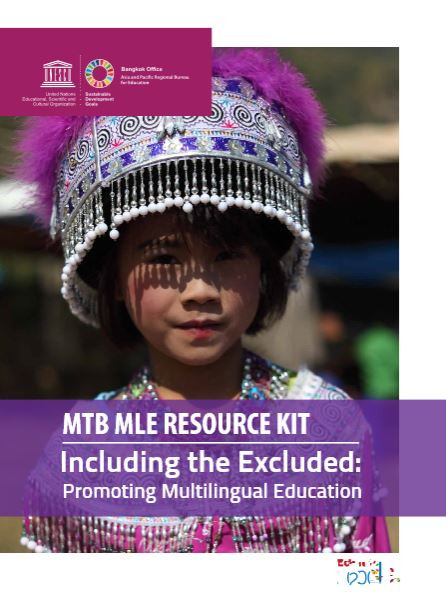 MTB MLE resource kit: Including the excluded: promoting multilingual education Année de publication: 2016 Auteur: Susan Malone Auteur institutionnel: UNESCO Bangkok Who Can Use this Resource Kit?This MTB MLE Resource Kit is for people who are committed to the idea that all children have the right to quality education in a language they speak and understand. MTB MLE programmes that are sustained within the formal education system require contributions from all stakeholders, working together and supporting one another. The next three booklets were developed for three specific stakeholder groups: policy makers, programme implementers and community members. These three booklets, with the case studies, provide a “big picture” of successful MTB MLE programmes and suggestions for the roles each group can take as they plan, implement and maintain their programmes. How Can You Use this Resource Kit?Each booklet is organized around key questions about MTB MLE that are frequently asked by policy makers, implementers and community members. Responses to each question include examples of specific activities that are part of successful MTB MLE programmes in a variety of contexts. Working together, stakeholders can identify the specific activities that are best suited for their own situation and make the best use of all available resources.
  Education for Sustainable Development Policy for the Education Sector Année de publication: 2017 Auteur institutionnel: Kenya. Ministry of Education | UNESCO Nairobi This ESD Policy provides for the incorporation of key themes of sustainable development such as poverty alleviation, human rights, innovation, health and environmental protection and climate change into the Kenyan education system. It promotes competencies such as critical thinking, crativity and making decisions in a collaborative way.
 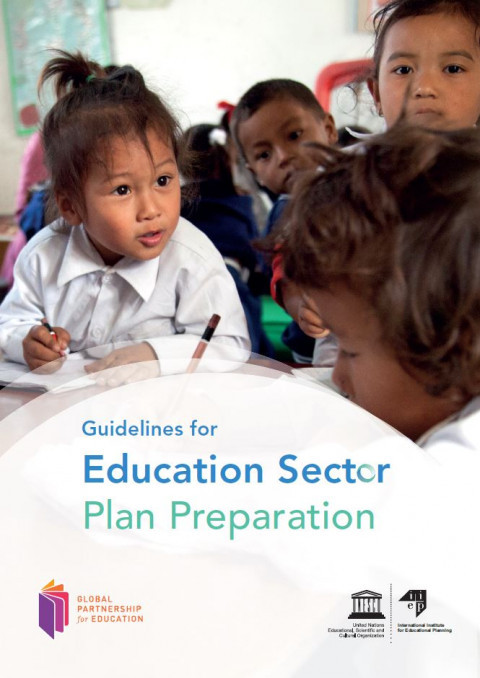 Guidelines for education sector plan preparation Année de publication: 2015 Auteur institutionnel: UNESCO International Institute for Educational Planning (IIEP) | Global Partnership for Education (GPE) At the World Education Forum, in Dakar in 2000, the international community pledged that no country with a credible plan to achieve the Education for All goals would be thwarted by a lack of resources. Since then, the development of an education sector plan (ESP) has become a priority in many countries. ESPs present the policies and strategies for national education reform, and are a powerful tool for coordinating partners and for mobilizing additional domestic and external resources. They have become a critical instrument for governments to signal to all potential investors that their education policies are credible, sustainable, and worthy of investment. The consensus on the need for credible ESPs is strong. However, what does a credible plan require in terms of government leadership, knowledge and data, institutional and human capacities, and dialogue among the education stakeholders? What are the criteria that establish the credibility of a plan?The purpose of these guidelines is to assist countries in preparing credible education sector plans. A second document, Guidelines for Education Sector Plan Appraisal, can be utilized to check whether the plan responds to the expected requirements. In certain contexts of vulnerability, confl ict, or crisis, countries may also consider the development of a transitional education plan, more short-term and action-oriented, and adjusted to the context and available capacities for situation analysis and data requirements. Specifi c guidelines are being prepared. However references to fragile contexts or vulnerability situations are streamlined in these guidelines. These guidelines are not exhaustive. They should be adapted to country contexts and needs. They present an overview of sector analysis, consultative processes, policy reform, strategy development, plan implementation, and monitoring. They do not replace technical manuals on specific tools and methodologies that are used at the various steps of the development of a plan.
 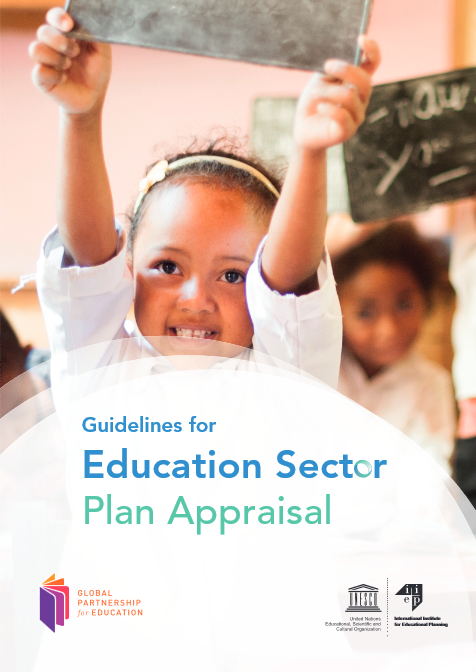 Guidelines for education sector plan appraisal Année de publication: 2015 Auteur institutionnel: UNESCO International Institute for Educational Planning (IIEP) | Global Partnership for Education (GPE) At the World Education Forum, in Dakar in 2000, the international community pledged that no country with a credible plan to achieve the Education for All goals would be thwarted by a lack of resources. Since then, the development of an education sector plan (ESP) has become a priority in many countries. ESPs present the policies and strategies for national education reform, and are a powerful tool for coordinating partners and for mobilizing additional domestic and external resources. They have become a critical instrument for governments to signal to all potential investors that their education policies are credible, sustainable, and worthy of investment.The consensus on the need for credible ESPs is strong. However, what does a credible plan require in terms of government leadership, knowledge and data, institutional and human capacities, and dialogue among the education stakeholders? What are the criteria that establish the credibility of a plan? The purpose of these guidelines is to assist education stakeholders in appraising the soundness, relevance, and coherence that form the credibility of ESPs. The primary objective of an appraisal report is to support the finalization of a credible ESP. It provides a fair review of the ESP strengths and areas in need of improvement before the endorsement by partners which signifies their commitment to support the implementation of the ESP. These guidelines are meant to be adapted to national contexts and needs. The stakeholders should discuss the scope and the methodology of the appraisal to be used, and develop a common vision of the whole process. The appraisal process should be participatory, and grounded in the political and technical dialogue for ESP development. It should involve consultations, interviews with key stakeholders, and field visits, in addition to a desk review of the ESP and any other relevant documents. It is good practice to organize a validation workshop of the appraisal report’s findings, conclusions, and recommendations to feed into the ESP finalization. The appraisal process should occur early enough in the ESP development process to allow time for decision-makers to open consultations on these conclusions and recommendations in order to improve the final version of the ESP.
  Education for developing a global Omani citizen: current practices and challenges Année de publication: 2014 Auteur: Saif Al-Maamari Auteur institutionnel: Redfame Publishing Oman is a developing country which reformed its educational system in 1998 in order to meet the challenges of the 21st century, especially economic challenges. Strength of national identity and developing a sense of global citizenship were among the priorities of the new educational reform. This paper is based on a review of current practices regarding global citizenship education in educational system. The purpose of this theoretical study was to explore the current provision of the aspects of global citizenship education in Omani schools. Specifically, the study attempts to identify the current practices that are implemented by Omani schools to help Omani students to develop a sense of effective global citizenship. The study indicates that Omani education is not nationally centered as it aims to develop students who have global awareness. The study shows employing different approaches to develop a sense of global citizenship, namely, a separate school subject; integrated theme in social studies education, participation in some international initiatives in global citizenship education, and celebrating the international days and decades. Global education in Austria Auteur institutionnel: North-South Centre of the Council of Europe This National Report on Global Education in Austria is part of the European Global Education Peer Review Process, which was initiated in 2002 with the purpose of increasing and improving global education in Council of Europe member states. This report is the culmination of a peer review process led by an international peer review team. Through research and interviews with key stakeholders, information was gathered and critical perspectives developed about the current state of, and the future prospects for, global education in Austria. This year–long process, facilitated by the North-South Centre of the Council of Europe, was developed in partnership with the Austrian Strategy Group for Global Education as the national counterpart in the process. It involved the Ministry of Foreign Affairs, the Ministry of Education, the Austrian Development Agency (ADA), KommEnt, and the NGO and academic communities.This Peer Review report recognises the relatively strong tradition of global education in Austria. Austrian support for GE is reflected in the range of committed organisations involved in GE, and the many initiatives and projects in the formal and non-formal education sectors, and in civil society. Chapter 1 below provides an introduction to the report and the process generally. Chapter 2 outlines the context of global education in Austria. Chapter 3 examines global education in the formal education sector. Chapter 4 focuses on the important and varied work taking place in non-formal education, civil society organisations and other sectors in this field. Chapter 5 provides, in summary fashion, an outline of the key observations and recommendations of the Peer Review. Education for citizenship and coexistence: reference document Année de publication: 2014 Auteur: Iván Fernández Lefort Auteur institutionnel: Bogotá. District Secretariat of Education | Proyecto Educación para la Ciudadanía y la Convivencia (PECC) The Secretariat of Education of Bogotá has established education for citizenship and coexistence as one of the main topics of the Educative Sector Plan. The purpose is to strengthen the participatory, democratic and convivial processes that are developed at public schools. Therefore, the Secretariat of Education of Bogotá has created the Education for Citizenship and Civic Coexistence project. This document gathers the theoretical framework of citizenship and civic coexistence, orientated to the creation of curricula, learning communities and participatory spaces related to the development of civic capabilities that lead to a balance between academic knowledge and citizenship knowledge. It is mainly aimed for school managers, teachers and people interested in knowing the bases and orientations the project has, in order to be implemented at schools. Educational guideline: education for citizenship and coexistence Année de publication: 2014 Auteur: Adriana Carrillo Monsalve | Lizbeth Guerrero Cuan | Katherine Porras Torrent | Rigoberto Solano Salinas | Yudy Velásquez Hoyos Auteur institutionnel: Bogotá. District Secretariat of Education | Proyecto Educación para la Ciudadanía y la Convivencia (PECC) This document contains the pedagogical principles that make the Education for Citizenship and Civic Coexistence not just a project, rather a proposal of an education policy sustained in the transformation of society, human welfare and the development of citizenship skills. Therefore, it is directed mainly to School Directors, coordinators, educational mediators and facilitators of Citizenship and Civic Coexistence, who wish to start the processes of strengthening citizen capabilities in their educational communities. In this document you can find what we have called the Learning Citizenship Path, a pedagogical tool that identifies learning in citizenship for each of the educational cycles in three dimensions -Individual, Societal, systemic- This Learning Citizenship Path facilitates the curricular integration of citizenship learning in a pedagogical and practical framework, with transversal projects and educational practices, taking into account citizenship skills and new knowledge. Planning education with and for youth Année de publication: 2015 Auteur: Anja Hopma | Lynne Sergeant Auteur institutionnel: UNESCO International Institute for Educational Planning (IIEP) As a central stakeholder in education, young people should be involved in educational planning. This publication focuses on the rationale for and obstacles to youth involvement, as well as the efforts of ministries of education to engage youth in their planning work. It is based on discussions and recommendations that emerged from the high-level international policy forum on ‘Engaging youth in planning education for social transformation’ organized by the UNESCO International Institute for Educational Planning (IIEP) in Paris from 16 to 18 October 2012. This policy forum set out to explore the following broad themes: (i) youth engagement in planning education for conflict transformation and peace building; (ii) strengthening young people’s skills and opportunities for civic engagement within formal and non-formal education systems; and (iii) enhancing the relevance of education systems for young people in their transition to employment. This publication draws on the exchanges during the pre-forum online debates, discussions among participants during the forum, and testimonials from practitioners and youth. Advocacy kit for promoting multilingual education: including the excluded Année de publication: 2007 Auteur institutionnel: UNESCO Bangkok This kit was prepared for all of those who want to ensure that “Education for All” does, indeed, include everyone! The kit will be especially valuable for policy makers, education practitioners and specialists who want to improve access to and quality of education for those excluded by language. It will also be helpful for speakers of ethnic minority languages who want to improve the education situation in their own communities. This kit is designed to raise awareness on the importance of mother tongue-based multilingual education (MLE). It presents key arguments and facts about MLE and provides important insights about the value and benefits of providing education in learners’ mother tongue. The kit also presents ideas, research findings and concrete examples that you can use to think about your own situation and suggests steps for taking actions to make your school system more responsive to linguistic diversity. The kit is not a definitive textbook, and it will not have an answer for every problem that you might face. To help you as much as possible, at the end of each booklet we have included lists of references. In addition, each booklet contains a glossary of terms and, at the front of each booklet is a one-page summary of its contents. This kit contains three main booklets. Each booklet has a designated audience: 1) policy makers, 2) education programme planners and practitioners and 3) community members. Please remember that developing MLE requires contributions from everyone at all levels. For that reason, we encourage you to use all three booklets along with other available resources as you work together to plan, implement and sustain your MLE programmes. This kit can be used in many different ways. For those who are already involved in MLE programmes, you might use these ideas to help you to promote mother tongue instruction and strengthen your programme. Those who are not familiar with multilingual education but want to improve educational access for minority language students might use these booklets to identify specific points that they can investigate and discuss in their own contexts.