
Ressources
Explorez une large gamme de ressources sur le GCED afin d’approfondir votre compréhension et de renforcer vos activités de recherche, de plaidoyer, d’enseignement et d’apprentissage.
105 résultats trouvés
 Citizenship education and coexistence: workshop reports Année de publication: 2014 Auteur institutionnel: Bogotá. Secretaría de Educación del Distrito (SED) The present document contains the reports of the work and conclusions built during the Technical Workshop on Education for Citizenship and coexistence, for which were raised the following objectives:Assess the relevance of Education for Citizenship and coexistence proposed by the District Education Secretary,assess the training materials of the Toolbox produced for the implementation of Education for Citizenship and coexistence,and strengthen and consolidate this proposal.
  Schools for Conflict or for Peace in Afghanistan Année de publication: 2015 Auteur: Dana Burde The publication provides a systematic analysis of the relationship between education and conflict, tracing how different approaches have been applied in Afghanistan as the rationale for aid has shifted from a policy of benign neglect, to an effort to support war, to an effort to mitigate conflict. Using this history as a case study, the book explores how foreign intervention in education can contribute either to conflict or to peace..
 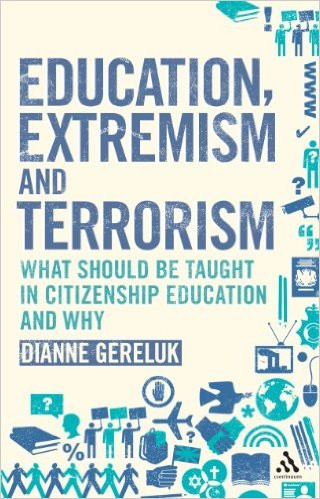 Education, Extremism and Terrorism: What should be Taught in Citizenship Education and Why Année de publication: 2012 Auteur: Dianne Gereluk Should educators be exploring terrorism and extremism within their classrooms? If so, what should they be teaching, and how? Dianne Gereluk draws together the diverging opinions surrounding these debates, exploring and critiquing the justifications used for why these issues should be addressed in schools. She goes on to consider the ways in which educators should teach these topics, providing practical suggestions. Education, Poverty and Terrorism: Is There a Causal Connection? Année de publication: 2003 Auteur: Alan B. Krueger | Jitka Maleckova Auteur institutionnel: American Economic Association In the authors' view, any connection between poverty, education and terrorism is indirect, complicated and probably quite weak. Instead of viewing terrorism as a direct response to low market opportunities or ignorance, the article suggests it is more accurately viewed as a response to political conditions and long-standing feelings of indignity and frustration that have little to do with economics. Case Study - Pakistan: Education, Religion and Conflict Année de publication: 2015 Auteur: Raza Rumi Auteur institutionnel: Tony Blair Faith Foundation | McGill University Pakistan is in the midst of crisis. It is threatened by virulent extremist groups and is suffering from a failing education system that is poorly funded and politically manipulated. It promulgates an undefined Islamo-nationalist ideology that lays the foundations for widespread acceptance of ideologically motivated violence. Reforms to the curriculum have been legislated but are badly implemented by the country's politicians; the international community has largely turned a blind eye to these shortcomings. Unless aid and advocacy are specifically focused on far-reaching educational reform that directly tackles extremism, the long-term consequences will be extremely severe.
  Homegrown terrorism and transformative learning: an interdisciplinary approach to understanding radicalization Année de publication: 2010 Auteur: Alex S. Wilner | Claire-Jehanne Dubouloz Since 2001, a preponderance of terrorist activity in Europe, North America and Australia has involved radicalized Westerners inspired by Al Qaeda. Described as ‘homegrown terrorism’, perpetrators are citizens and residents born, raised, and educated within the countries they attack. While most scholars and policy-makers agree that radicalization plays a central role in persuading Westerners to embrace terrorism, little research properly investigates the internal and cognitive processes inherent to radicalization. Transformative learning theory, developed from the sciences in education, health and rehabilitation, provides an unconventional and interdisciplinary way to understand the radicalization process. The theory suggests that sustained behavioural change can occur when critical reflection and the development of novel personal belief systems are provoked by specific triggering factors. Engaging and Educating Women and Girls in the Prevention of Violent Conflict and Violent Extremism Année de publication: 2014 Auteur: Kathleen Kuehnast Auteur institutionnel: United States Institute of Peace (USIP) Dr. Kathleen Kuehnast, director of the Center for Gender and Peacebuilding at the U.S. Institute of Peace, testified on the importance of engaging and educating women and girls in conflict zones in order to prevent and mitigate violent conflict and violent extremism. Abu Dhabi Memorandum on Good Practices for Education and Countering Violent Extremism Année de publication: 2014 Auteur: Sara Zeiger Auteur institutionnel: Hedayah Foundation The contents of this brief are based on the discussions that occurred from 3 to 4 November 2014 at an expert workshop on Research Trends in Countering Violent Extremism hosted by Hedayah in Abu Dhabi, United Arab Emirates. The purpose of this two-day expert roundtable was to bring together researchers, policymakers and practitioners in a closed discussion of the current trends in CVE research. The goals at the meeting were to address the current research outcomes in countering violent extremism; determine the critical gaps in research on CVE; identify the new and emerging threats of violent extremism; and establish a recommended research agenda for Hedayah and CVE researchers in the coming two years. Gain or Drain: Understanding Public Private Partnerships in Education Année de publication: 2013 Auteur institutionnel: Asia South Pacific Association for Basic and Adult Education (ASPBAE) As a facilitating tool for education campaign coalitions and other education campaigners to begin to build deeper appreciation and understanding of the issue, this Primer specifically seeks to:• Contribute to achieving clarity on the origin, scope and context of PPPs in education• Provide a simple guideline in assessing PPP initiatives to measure how they relate to realising the right to education• Help education campaign coalitions and networks deepen their analyses and define their operational positions for policy engagement on PPP initiatives. International conference: reorienting TVET policy towards education for sustainable development: final report Année de publication: 2010 Auteur institutionnel: UNESCO International Centre for Technical and Vocational Education and Training (UNEVOC) | Internationale Weiterbildung und Entwicklung | Colombo Plan Staff College for Technician Education This publication reports on the ESD review-responsive and future-oriented programme on “Reorienting TVET Policy Towards Education for Sustainable Development”, jointly organized by the UNESCO-UNEVOC International Centre in Bonn, Germany, InWEnt – Capacity Building International, Germany and Colombo Plan Staff College for Technician Education in Manila, Philippines.