
Ressources
Explorez une large gamme de ressources sur le GCED afin d’approfondir votre compréhension et de renforcer vos activités de recherche, de plaidoyer, d’enseignement et d’apprentissage.
237 résultats trouvés
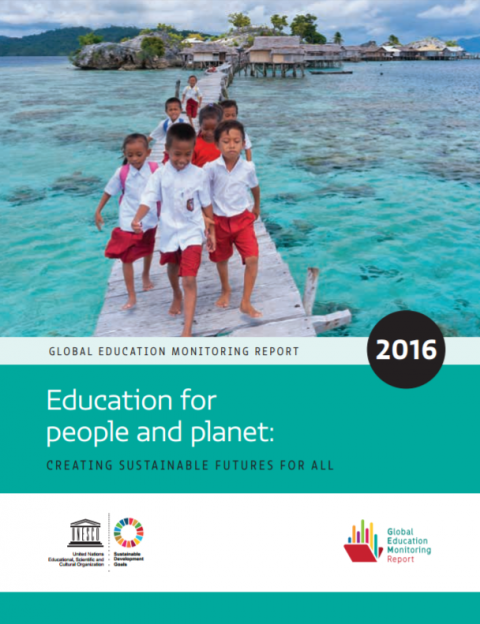 L'Education pour les peuples et la planète: créer des avenirs durables pour tous; Rapport mondial de suivi sur l'éducation, 2016 Année de publication: 2016 Auteur institutionnel: UNESCO | Global Education Monitoring Report Team The GEM Report provides an authoritative account of how education is the most vital input for every dimension of sustainable development. Better education leads to greater prosperity, improved agriculture, better health outcomes, less violence, more gender equality, higher social capital and an improved natural environment. Education is key to helping people around the world understand why sustainable development is such a vital concept for our common future. Education gives us the key tools – economic, social, technological, even ethical – to take on the SDGs and to achieve them. These facts are spelled out in exquisite and unusual detail throughout the report. Yet the report also emphasizes the remarkable gaps between where the world stands today on education and where it has promised to arrive as of 2030. Образование в интересах людей и планеты: построение устойчивого будущего для всех 2016 г Année de publication: 2016 Auteur institutionnel: UNESCO | Global Education Monitoring Report Team Всемирный доклад по мониторингу образования (ВДМО), ранее известный как Всемирный доклад по мониторингу образования для всех, является независимым по содержанию, авторитетным и основанным на фактическом материале ежегодным докладом, который публикуется ЮНЕСКО, о ходе работы по осуществлению глобальных целей и задач в сфере образования, принятых международным сообществом в 2015 г. в качестве элемента целей в области устойчивого развития (ЦУР). Его цель – отслеживать ход работы по выполнению задач в сфере образования, которые являются элементами нового комплекса целей в области устойчивого развития (ЦУР). Подготовкой содержания ВДМО и обеспечением его качества занимается опытная группа сотрудников под руководством директора ВДМО.ВДМО – это единственное в своем роде, всеобъемлющее, аналитическое и авторитетное справочное издание для мониторинга и обзора сферы образования в глобальном масштабе. За период с 2002 г., в течение которого вышло в свет 12 изданий доклада, группа по его подготовке приобрела обширный опыт в вопросах мониторинга и стратегического анализа, а также снискала высочайшую общемировую репутацию за широкий тематический охват – от проблем неравенства, гендерных отношений и преподавания до конфликтов, грамотности, ухода за детьми младшего возраста и их обучения.Цель доклада – обеспечивать информацию и оказывать влияние на уровне национальной, региональной и международной политики в области образования, в том числе в сферах финансирования и оказания помощи, посредством авторитетного фактологического обзора прогресса и сбалансированного анализа наиболее острых проблем, стоящих перед странами и другими заинтересованными сторонами. В этой публикации тщательно рассматриваются детали масштабной повестки дня для проведения реформы образования; она рассчитана прежде всего на лиц, принимающих решения: министров, политиков, парламентариев, специалистов по планированию в сфере образования.Не менее значимым является более широкий спектр групп гражданского общества, включая ассоциации преподавателей, неправительственные организации, университетские исследовательские кадры, молодежные сети и средства массовой информации. Способствуя более широкому осмыслению вопросов образования, доклад открывает возможности для обсуждения, обмена опытом и просвещения.Презентации доклада на глобальном, региональном и национальном уровнях, организуемые в течение года во всех регионах мира, активно освещаются в прессе и вызывают большой интерес на местах. Помимо этих мероприятий, ознакомление с докладом все чаще сопровождается политическими семинарами для вовлечения руководящих должностных лиц и парламентариев в дискуссии, посвященные ключевым темам и рекомендациям доклада. Ознакомление с изложенными в докладе выводами происходит также в ходе министерских совещаний, международных ученых конференций, курсов профессиональной подготовки для практических специалистов в области образования и семинаров с участием представителей правительств, доноров, НПО, исследователей и преподавателей. Кроме того, они распространяются через средства массовой информации и социальные сети.Краткое изложение докладов ВДМО издается на всех шести языках ООН (английском, арабском, испанском, китайском, русском и французском), а также на ряде других языков (включая бангла, вьетнамский, индонезийский, кхмерский, немецкий, португальский, тайский, хинди и японский). Полный текст доклада также издается на официальных языках ООН. Все версии наряду со справочными документами и статистическими данными размещаются на этом веб-сайте. Education for People and Planet: Creating Sustainable Futures for All, Global Education Monitoring Report, 2016 Année de publication: 2016 Auteur institutionnel: UNESCO | Global Education Monitoring Report Team Education for People and Planet: Creating Sustainable Futures for All explores the complex relationship between education and the new 2030 Agenda for Sustainable Development, covering six fundamental pillars – Planet, Prosperity, People, Peace, Place and Partnerships. This report shows that education will not deliver its full potential unless participation rates increase dramatically and sustainable development guides education system reform. It also warns of the destructive impact that climate change, conflict, unsustainable consumption and the increasing gap between rich and poor have on education. A huge transformation is needed if we are to create sustainable futures for all. Informe de Seguimiento de la Educación en el Mundo, 2016: La Educación al servicio de los pueblos y el planeta: creación de futuros sostenibles para todos Année de publication: 2016 Auteur institutionnel: UNESCO | Global Education Monitoring Report Team Education for People and Planet: Creating Sustainable Futures for All explores the complex relationship between education and the new 2030 Agenda for Sustainable Development, covering six fundamental pillars – Planet, Prosperity, People, Peace, Place and Partnerships. This report shows that education will not deliver its full potential unless participation rates increase dramatically and sustainable development guides education system reform. It also warns of the destructive impact that climate change, conflict, unsustainable consumption and the increasing gap between rich and poor have on education. A huge transformation is needed if we are to create sustainable futures for all.
  Teacher Training for Multicultural Education in Favour of Democracy and Sustainable Development: the Territorial Approach Année de publication: 1995 Auteur: Raúl Galiardi | Paula Bernadini Mosconi Auteur institutionnel: UNESCO This publication is part of the book Teacher Training and Multiculturalism: National Studies. This book presents the outcomes concerning the initial training systems of teachers in eight countries at different levels of development in different regions of the world but who are faced with a common challenge to educate for cultural diversity. Both the conclusions of each particular study and the general outcomes demonstrate the complexity of the problems and the benefits of comparative analysis. Overcoming prejudices and stereotypes is not an easy task nor likely to be achieved in the short term. Mentalities change far more slowly than knowledge and, because of this, educational strategies need to be applied in the long term. This study also shows that it is necessary to improve the exchange of experiences as well as contacts between people and institutions who are confronted with the same problems in different contexts. The publication of the initial outcomes of this project is intended to enrich the quality of discussions between specialists and institutions who, in different parts of the world, are concerned by multicultural education as an instrument to promote understanding, respect and dialogue between cultures.
  Citizenship education: does it have a place in the curriculum? Année de publication: 2005 Auteur: Carol Mutch Auteur institutionnel: NZCER Press The call for citizenship education as a compulsory part of the curriculum has met with a varied response worldwide. While everyone would espouse the ideals of ensuring our young people grow up to be active and fair-minded citizens, why does citizenship education not figure more prominently in our curriculum?This article discusses the past, present, and possible future of citizenship education in the New Zealand curriculum. L’éducation à la Citoyenneté: a-t-il une place dans le programme? Année de publication: 2005 Auteur: Carol Mutch Auteur institutionnel: NZCER Press L’appel à propositions sur l'éducation à la citoyenneté comme une partie obligatoire du programme a rencontré une réponse variée dans le monde entier. Alors que tout le monde serait épouser les idéaux de sorte que nos jeunes grandissent pour devenir des citoyens actifs et équitable d'esprit, pourquoi l'éducation à la citoyenneté figurait pas une place plus importante dans notre programme? Cet article décrit le passé, le présent et l'avenir possible de l'éducation civique dans le programme Nouvelle-Zélande. التقرير العالمي لرصد التعليم ٢٠١٦ - التعليم من أجل الناس والكوكب: بناء مستقبل مستدام للجميع Année de publication: 2016 Auteur institutionnel: UNESCO | Global Education Monitoring Report Team يستند هذا التقرير العالمي لرصد التعليم الذي أصدرته اليونسكو إلى تجربة وخبرة التقارير العالمية السابقة لرصد التعليم للجميع، كما تناط به مهمة جديدة وهي تقييم التقدم الذي يحرزه التعليم في إطار جدول أعمال 2030. وهذا التقرير العالمي لرصد التعليم لعام 2016، وهو الأول من هذه السلسلة التي ستتواصل على مدى 15 عاماً، يستكشف العلاقة المعقدة بين التعليم والجوانب الأخرى للتنمية المستدامة، إلى جانب رصد الآثار المترتبة على الهدف 4 للتنمية المستدامة. ويبين أن التعليم لن يجود بكامل إمكاناته لدفع العالم إلى الأمام ما لم تتحسن معدلات الالتحاق بالمدارس تحسُّناً كبيراً، ويصبح التعلم عملية متواصلة مدى الحياة، وتتماهى نُظم التعليم تماماً مع التنمية المستدامة. Guide de mise en œuvre écoles éducation à l'environnement primaire et secondaire Année de publication: 2005 Auteur institutionnel: China. Ministry of Environmental Protection L'ONU a proposé le développement durable et l'éducation environnementale dans l'Agenda 21 comme un objectif d'éducation pour le XXIe siècle. Dans de nombreux pays développés, l'éducation environnementale est devenue une partie importante de l'éducation qui est compatible avec le développement social. La Chine est également confrontée à de graves problèmes environnementaux qui font plus de demandes pour le mode de développement économique et le niveau de protection de l'environnement. Depuis les années 1980, bien que l'éducation environnementale a été effectuée dans les écoles primaires et secondaires, sa concentration était plus que la transmission des connaissances de l'environnement. Afin de nourrir l'idée de développement durable pour les étudiants et les encourager à prendre des mesures pour un avenir durable, le Ministère de l'éducation de la RPC a officiellement intégré l'éducation environnementale dans le cadre de la fondation des écoles primaires et secondaires. Ce guide vise à fournir des conseils concrets pour les enseignants et autres éducateurs à organiser des activités pour favoriser la compréhension globale du système environnemental des élèves et de développer leurs capacités à prendre des responsabilités pour la protection de l'environnement dans la vie sociale. Il donne également des conseils pour les services administratifs de l'école pour gérer et soutenir ces activités, d'exploiter et de développer de multiples ressources en éducation à l'environnement, et d'appliquer des méthodes et des stratégies pour l'éducation environnementale. En outre, il fournit des méthodes d'évaluation de l'éducation environnementale en tant que point de départ pour ajuster et améliorer la mise en œuvre de l'éducation environnementale. 中小学环境教育实施指南 Année de publication: 2005 Auteur institutionnel: China. Ministry of Environmental Protection The UN proposed sustainable development and environmental education in Agenda 21 as an educational goal for the twenty-first century. In many developed countries, environmental education has become an important part of education that is compatible with social development. China is also facing serious environmental problems that make more demands for mode of economic development and level of environment protection. Since the 1980s, although environmental education has been carried out in primary and secondary schools, its concentration was no more than imparting environmental knowledge. In order to nurture the idea of sustainable development for students and encourage them to take action for a sustainable future, the Ministry of Education of PRC has formally incorporated environmental education in the foundation course of primary and secondary schools. This guide aims to provide concrete advice for teachers and other educators to organize activities to foster students’ comprehensive understanding of the environmental system and develop their capacities to take responsibilities for environment protection in social life. It also gives advice for the school’s administrative departments to manage and support these activities, to exploit and develop multiple environmental education resources, and to apply different methods and strategies to environmental education. In addition, it provides methods of evaluating environmental education as a starting point to adjust and improve the implementation of environmental education.