
Ressources
Explorez une large gamme de ressources sur le GCED afin d’approfondir votre compréhension et de renforcer vos activités de recherche, de plaidoyer, d’enseignement et d’apprentissage.
72 résultats trouvés
 From Where I Stand: A Gender Equality Project for the Global Goals; Project Briefing Auteur institutionnel: United Nations Children's Fund (UNICEF) This project enables you to think about and contribute to encouraging women and girls to have equal opportunities to be heard and to have real opportunities to participate in all political, economic and public spheres.
  From Where I Stand: A Gender Equality Project for the Global Goals Auteur institutionnel: United Nations Children's Fund (UNICEF) This project enables you to think about and contribute to encouraging women and girls to have equal opportunities to be heard and to have real opportunities to participate in all political, economic and public spheres.
 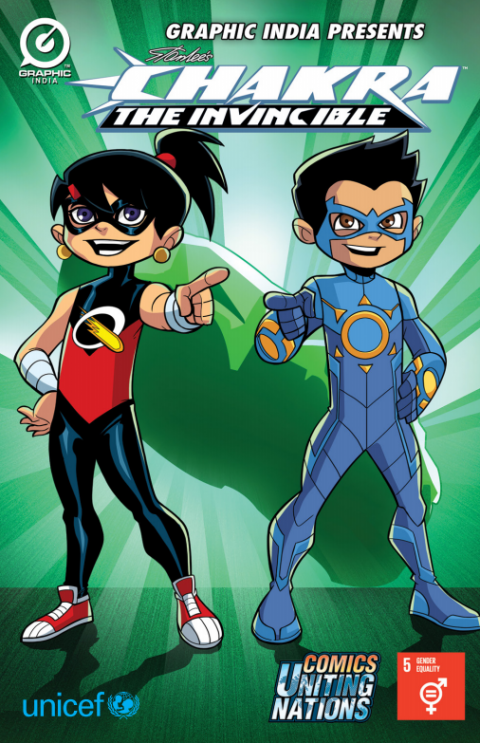 Chakra the Invincible; Gender Equality Année de publication: 2015 Auteur: Stan Lee | Sharad Devarajan | Gotham Chopra | Ashwin Pande | Jeevan J. Kang | Sesha Sainan Devarajan | Aditya Bidikar | Nilesh S. Mahadik Auteur institutionnel: Graphic India Pte. ltd | POW Entertainment The legendary Stan Lee and Sharad Devarajan bring their character Chakra the Invincible to teach children about the global goals! Chakra takes to the streets of Mumbai to teach children a lesson on gender equality and girls' empowerment.
 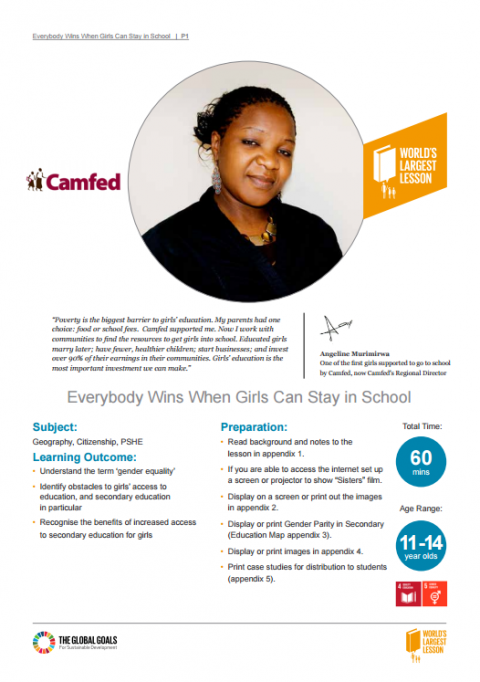 Everybody Wins When Girls Can Stay in School Auteur institutionnel: United Nations Children's Fund (UNICEF) World’s Largest Lesson is a collaborative education project to support the announcement of the United Nations Global Goals for Sustainable Development.Learning outcomes of the project: • Understand the term ‘gender equality’ • Identify obstacles to girls’ access to education, and secondary education in particular • Recognise the benefits of increased access to secondary education for girls
 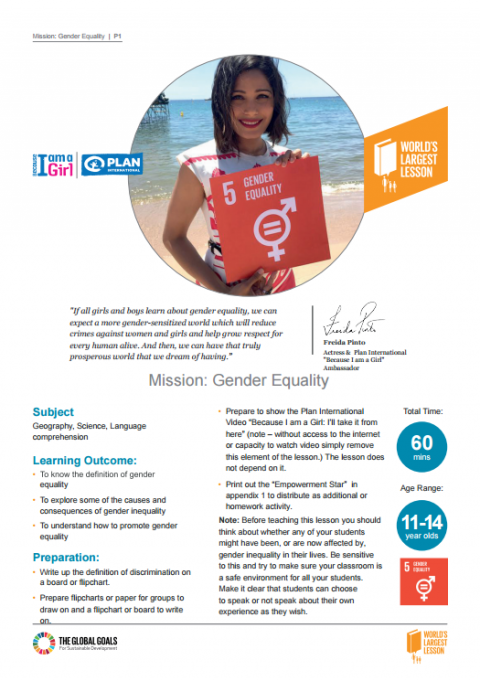 Mission: Gender Equality Auteur institutionnel: United Nations Children's Fund (UNICEF) World’s Largest Lesson is a collaborative education project to support the announcement of the United Nations Global Goals for Sustainable Development. Learning outcomes of the project: • To know the definition of gender equality • To explore some of the causes and consequences of gender inequality • To understand how to promote gender equality
  Address by Irina Bokova, Director-General of UNESCO on the occasion of the opening of the PGA High-Level SDG Action Event on Education SDG4 Année de publication: 2017 Auteur institutionnel: UNESCO. Director-General, 2009-2017 (Bokova, I.G.) This address was given by Irina Bokova, Director-General of UNESCO on the occasion of the opening of the PGA High-Level SDG Action Event on Education SDG4.
 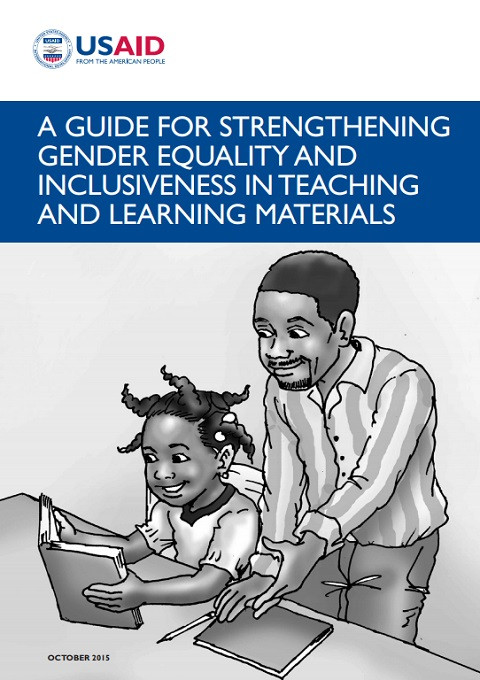 A Guide for Strengthening Gender Equality and Inclusiveness in Teaching and Learning Materials Année de publication: 2015 Auteur institutionnel: RTI International | United States Agency for International Development (USAID) The purpose of this guide is to provide guidance on how to represent members of all subgroups of a society in teaching and learning materials in equitable and non-stereotypical ways. Reviewers can use the strategies proposed in this guide to evaluate existing teaching and learning materials across primary and secondary levels. Authors or developers can employ the strategies to inform the development of new materials. This guide is organized according to themes that emerged from the review of relevant literature. Each theme reflects a particular type of bias that should be considered when evaluating or developing teaching and learning materials.
 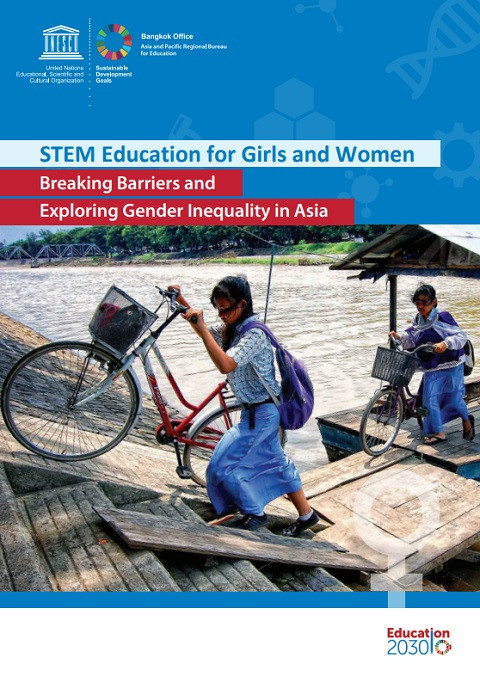 STEM Education for Girls and Women: Breaking Barriers and Exploring Gender Inequality in Asia Année de publication: 2020 Auteur institutionnel: UNESCO Bangkok | UNESCO Science, Technology, Engineering and Mathematics (STEM) fields are considered catalysts for the achievement of the 2030 Agenda for Sustainable Development. Yet, particularly for STEM fields, girls and women, for a multitude of social, cultural and psychological reasons, engage and participate at a lower rate than boys and men. This research collection aims to highlight the contextual barriers that girls and women face in STEM education and careers and offer concrete examples of interventions that successfully encourage participation of girls and women in STEM. These eight case studies from across Asia explore both the barriers and the achievements in SDG 4 and SDG 5, and give context-specific analysis of different aspects of gender disparities in the respective countries.
 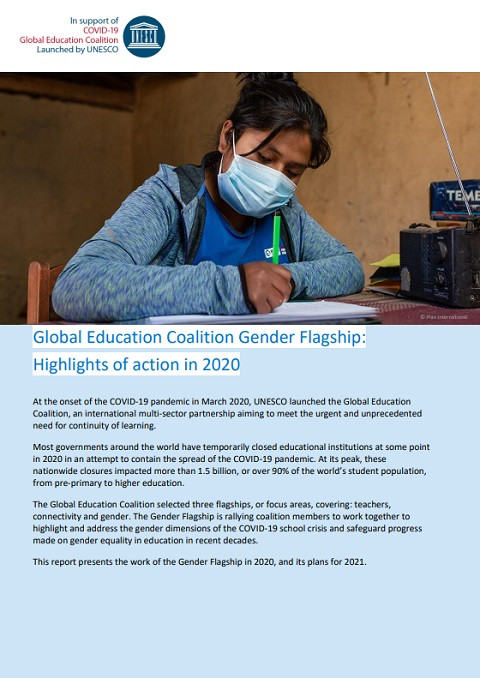 Global Education Coalition Gender Flagship: Highlights of Action in 2020 Année de publication: 2021 Auteur institutionnel: UNESCO | Global Education Coalition At the onset of the COVID-19 pandemic in March 2020, UNESCO launched the Global Education Coalition, an international multi-sector partnership aiming to meet the urgent and unprecedented need for continuity of learning.Most governments around the world have temporarily closed educational institutions at some point in 2020 in an attempt to contain the spread of the COVID-19 pandemic. At its peak, these nationwide closures impacted more than 1.5 billion, or over 90% of the world’s student population, from pre-primary to higher education. The Global Education Coalition selected three flagships, or focus areas, covering: teachers, connectivity and gender.The Gender Flagship is rallying coalition members to work together to highlight and address the gender dimensions of the COVID-19 school crisis and safeguard progress made on gender equality in education in recent decades.This report presents the work of the Gender Flagship in 2020, and its plans for 2021.
 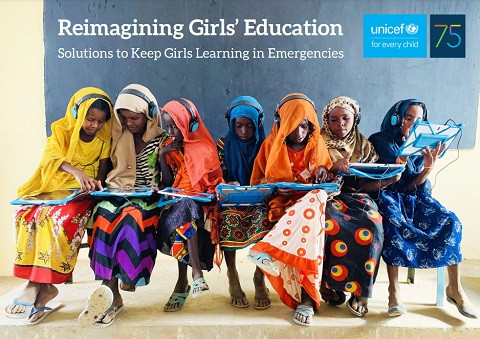 Reimagining Girls’ Education: Solutions to Keep Girls Learning in Emergencies Année de publication: 2021 Auteur institutionnel: United Nations Children's Fund (UNICEF) Reimagining Girls’ Education: Solutions to Keep Girls Learning in Emergencies presents an empirical overview of what works to support learning outcomes for girls in emergencies. Research shows that girls in emergencies are disadvantaged at all stages of education and are more likely to be out-of-school than in non-emergency settings. Girls are also struggling to learn.This solutions book seeks to highlight promising evidence-based actions in education for decision makers who are designing and implementing interventions to support girls’ education in low and middle-income country humanitarian settings and settings where education has been interrupted by the COVID‑19 pandemic. It documents practical examples of approaches that have been or are being tested, and from which lessons can be drawn.The overarching aim is that this evidence be used to inform programming in crises and support diverse stakeholders in mitigating the impact of emergencies on girls’ education.