
Ressources
Explorez une large gamme de ressources sur le GCED afin d’approfondir votre compréhension et de renforcer vos activités de recherche, de plaidoyer, d’enseignement et d’apprentissage.
72 résultats trouvés
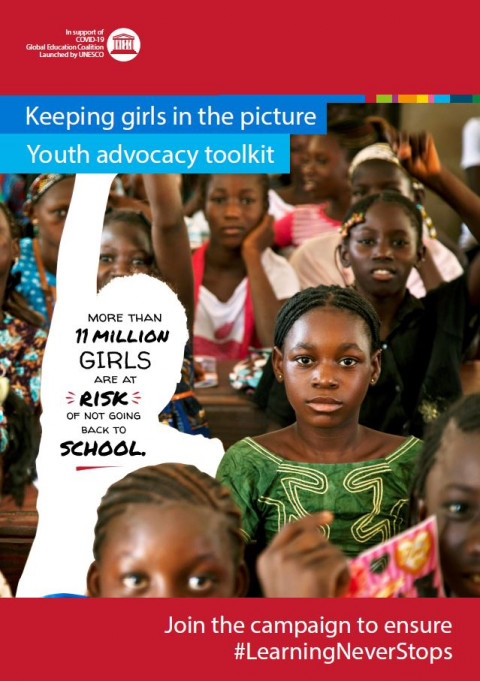 Keeping Girls in the Picture: Youth Advocacy Toolkit Année de publication: 2020 Auteur institutionnel: UNESCO | Global Education Coalition The COVID-19 pandemic has caused the largest school closures and education disruption in history, with more than 1.5 billion students affected at the height of the crisis. Over 767 million of these students were girls.Now, another major challenge is looming. Over 11 million girls – from pre-primary to tertiary education - may not return to school in 2020. This alarming number not only threatens decades of progress made towards gender equality, but also puts girls around the world at risk of adolescent pregnancy, early and forced marriage, and violence. For many girls, school is more than just a key to a better future. It’s a lifeline.This is why UNESCO and members of the Global Education Coalition’s Gender Flagship are launching a new #LearningNeverStops campaign focusing on ‘keeping girls in the picture.’The campaign calls for efforts to safeguard progress made on girls’ education, ensure girls’ learning continuity during school closures, and promote girls’ safe return to school once these reopen. It also sheds light on the 130 million girls who were already out of school before the pandemic, and calls on the international community to urgently work together to guarantee their right to education.
  Final Report: 2016 UNESCO/KOICA Joint Fellowship Programme Année de publication: 2016 Auteur institutionnel: APCEIU This report provides an overview of the activities carried out during the 2016 UNESCO/KOICA Joint Fellowship Programme held in Republic of Korea from 1 September - 31 October, 2016.In its 10th year of implementation, UNESCO/KOICA Joint Fellowship Programme 2016 invited 25 educators from 17 countries in Africa and the Asia-Pacific region for two months; from September 1st to October 31st. The overarching goal of the Programme was to enhance the capacities of participating educators under the themes of “Teacher Training for Basic Education,” “Use of ICT for Education (or e-Learning),” “Leadership in Global Education” and “Girls’ Education.” Composed of various segments such as lectures, workshops, hands-on activities, and seminars, which were closely interlinked with each module, the modules were designed to enable the participants to reorient their perspectives on educational development, to gain essential knowledge and skills, and furthermore to produce meaningful and relevant outputs that could be widely applied in their local contexts.For more information, please contact APCEIU's Office of Education and Training at ent@unescoapceiu.org.
 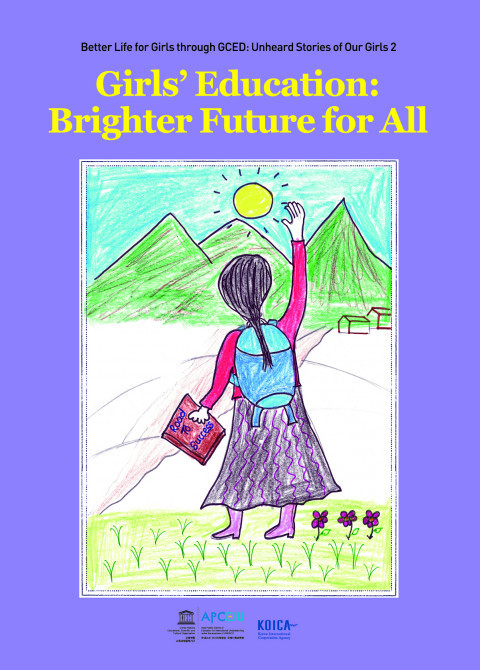 Better Life for Girls through GCED: Unheard Stories of Our Girls 2: Girl's Education: Brighter Future for All Année de publication: 2016 Auteur institutionnel: APCEIU The "Better Life for Girls through GCED: Unheard Stories of Our Girls" series depict stories of girls from different parts of the world. Coming from Africa and Asia, 25 educators have written stories about their girls during the programme to share with readers all over the world. As the title implies, these series are about real people living on the fringes of society especially girls in their neighbor having challenges on their way to access quality education.
 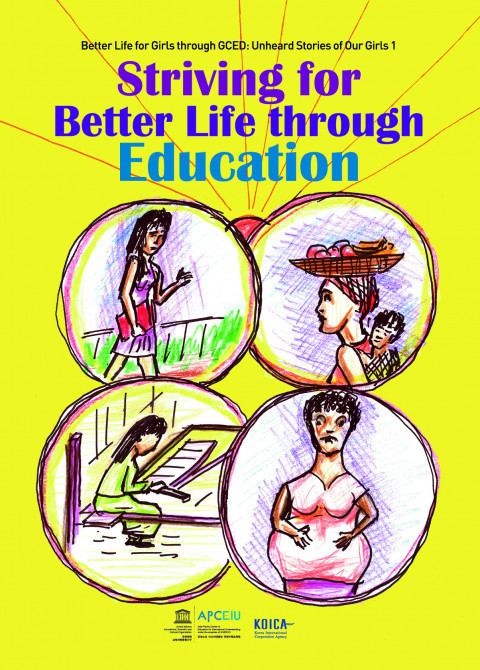 Better Life for Girls through GCED: Unheard Stories of Our Girls 1: Striving for Better Life through Education Année de publication: 2016 Auteur institutionnel: APCEIU 2016 UNESCO/KOICA Fellowship Programme Better Life for Girls through GCED: Unheard Stories of Our Girls The "Better Life for Girls through GCED: Unheard Stories of Our Girls" series depict stories of girls from different parts of the world. Coming from Africa and Asia, 25 educators have written stories about their girls during the programme to share with readers all over the world. As the title implies, these series are about real people living on the fringes of society especially girls in their neighbor having challenges on their way to access quality education.
 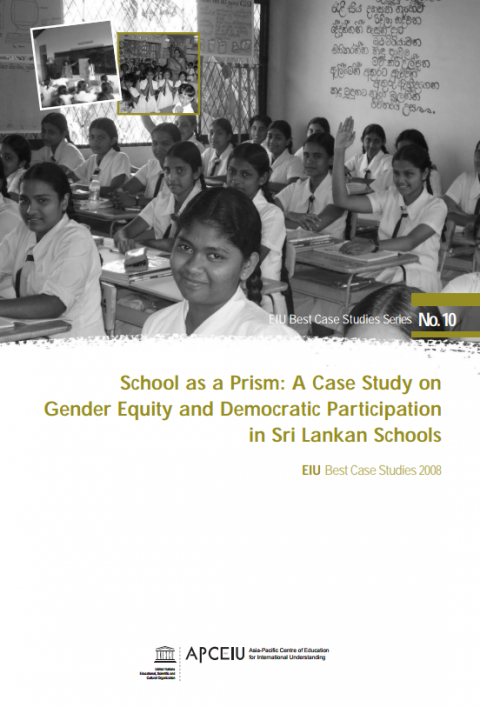 EIU Best Practices Series No. 10: School as a Prism: A Case Study on Gender Equity and Democratic Participation in Sri Lanka Schools Année de publication: 2008 Auteur institutionnel: APCEIU This report is one of the APCEIU's EIU Best Practices Series, which aims to encourage educators, scholars, and activists to implement and share local initiatives on EIU. The Series No.10 introduces a study of nine schools in Sri Lanka, which has been conducted to analyze current practices of gender education and provide suggestions for improvement. Upon careful assessment of documentary surveys, interviews, self-reports, and historical data analysis, the result indicates that gender equality and democratic participation are substantially provided and prioritized in Sri Lankan schools, in lieu of EIU theme of social justice. As common challenges still exist, the research notes the need to further examine learning patterns of boys and girls, classroom-specific gender issues, and good practices that promote role of women in democratic participation.
  Protect Her Rights, Strengthen Your Laws: Her Atlas; Status Report on Girls’ and Women’s Right to Education Année de publication: 2022 Auteur institutionnel: UNESCO UNESCO’s Her Education, our future initiative, Her Atlas was launched in 2019 with the aim to enhance public knowledge and monitor the status of national constitutions, legislation and regulations related to girls’ and women’s education rights in order to encourage countries to take actions to improve their legal frameworks. Three years after its launch, the research phase has been completed: overall, the legal frameworks of 196 countries have been thoroughly analyzed to evaluate the level of protection of girls’ and women’s right to education around the world. In an interactive world map format, Her Atlas uses a color-coded scoring system to monitor 12 indicators of legal progress towards gender equality in the right to education. This report marks the completion of the first research phase and intends to highlight some key trends outlined by the research work, and to emphasize examples of legal provisions regarding some aspects of girls’ and women’s right to education guaranteed by States’ domestic laws.
 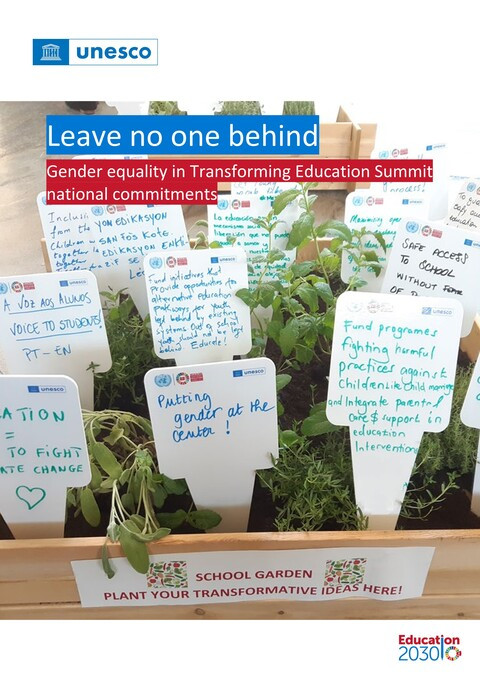 Leave No One Behind: Gender Equality in Transforming Education Summit National Commitments Année de publication: 2023 Auteur institutionnel: UNESCO The Transforming Education Summit was convened in response to a global crisis in education – one of equity and inclusion, quality and relevance. This paper applies a gender lens to the national statements of commitments made by countries during the Summit. It considers the scope of commitments to gender equality and gender- transformative education, common gender themes and considerations emerging across commitments, and notable gaps. It aims to inform future actions by the Global Platform to Drive Leadership and Accountability for Gender Equality and Girls’ and Women’s Empowerment in and through Education, and support to country action to transform education systems to advance gender equality.
 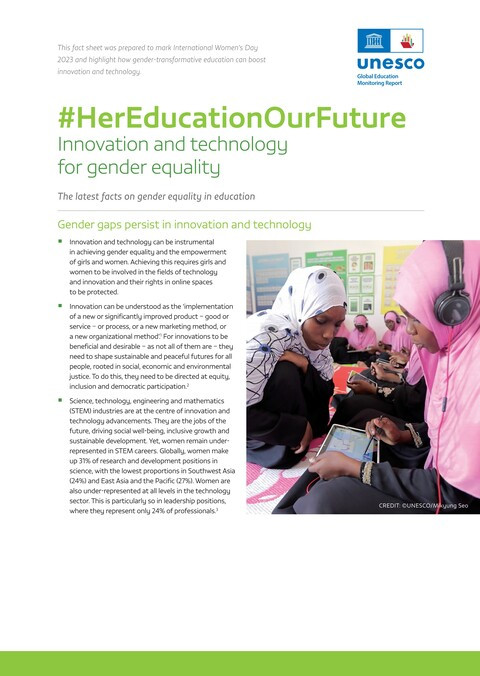 #HerEducationOurFuture: Innovation and Technology for Gender Equality; the Latest Facts on Gender Equality in Education Année de publication: 2023 Auteur institutionnel: UNESCO | Global Education Monitoring Report Team Gender gaps persist in innovation and technology Innovation and technology can be instrumental in achieving gender equality and the empowerment of girls and women. Achieving this requires girls and women to be involved in the fields of technology and innovation and their rights in online spaces to be protected.
 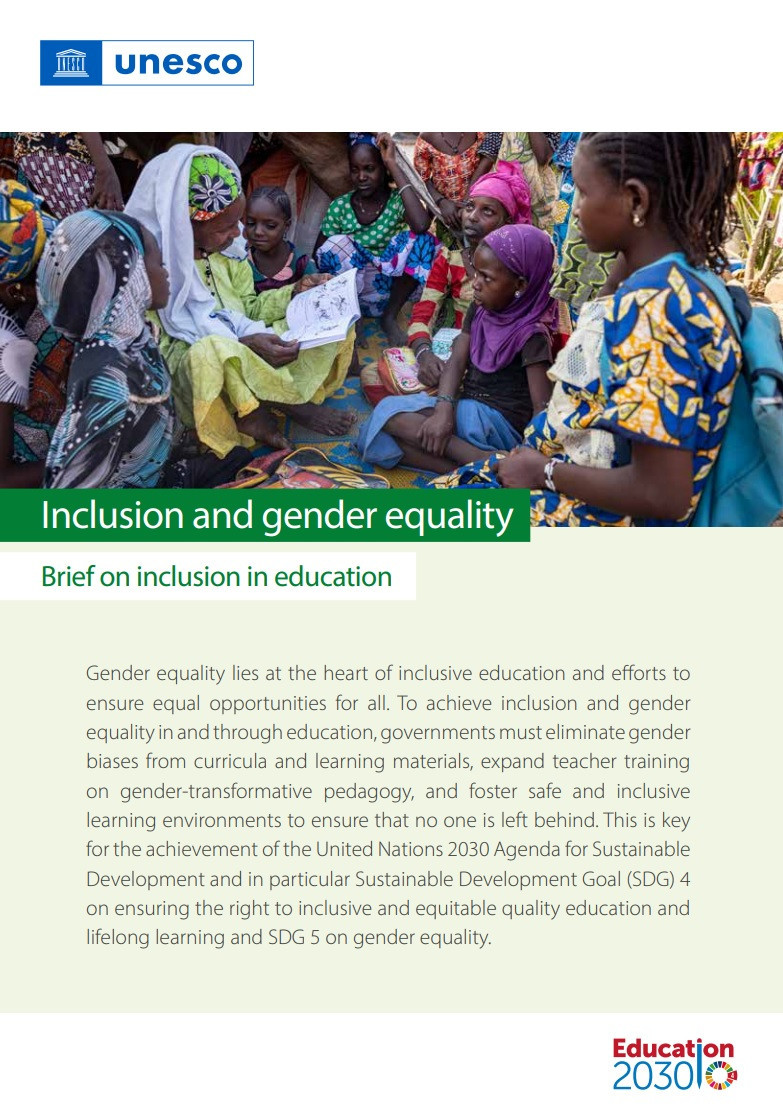 Inclusion and gender equality: brief on inclusion in education Année de publication: 2023 Auteur institutionnel: UNESCO <Brief on inclusion in education>Gender equality lies at the heart of inclusive education and efforts to ensure equal opportunities for all. To achieve inclusion and gender equality in and through education, governments must eliminate gender biases from curricula and learning materials, expand teacher training on gender-transformative pedagogy, and foster safe and inclusive learning environments to ensure that no one is left behind. This is key for the achievement of the United Nations 2030 Agenda for Sustainable Development and in particular Sustainable Development Goal (SDG) 4 on ensuring the right to inclusive and equitable quality education and lifelong learning and SDG 5 on gender equality.<Introduction>Gender refers to the socially constructed roles and relationships, personality traits, attitudes, behaviours, values, relative power and influence that society ascribes to the two sexes on a differential basis. Gender affects people’s lives every day in myriad ways. Gendered expectations, whether of oneself or of others, impact the choices people make. They structure people’s relationships and have the power to shape what people believe they can and should accomplish. Gendered power structures distribute and influence power, often resulting in systemic inequalities (UNESCO, 2021).Gender also intersects with other characteristics which can exacerbate education exclusion, such as age, geography, poverty, disability, ethnicity, indigeneity, language, religion, and migration or displacement status. Addressing the overlapping differences that create disadvantage and marginalization can help to build more inclusive and equitable education systems.Achieving gender equality in and through education is essential for inclusive education and inclusive societies. It is key to the achievement of the United Nations 2030 Agenda for Sustainable Development and in particular Sustainable Development Goal (SDG) 4 on ensuring the right to inclusive and equitable quality education and lifelong learning and SDG 5 on gender equality. In any country’s context, this means ensuring all learners have equal access to all levels of education, equal educational pathways and equal opportunities to apply the outcomes of their education. A world where inclusion and gender equality in and through education is achieved allows girls and boys, women and men and non-binary people to have equal rights and opportunities to education and the power and agency to shape their lives and futures.This brief discusses how gender equality impacts learners’ inclusion and the ways in which gender equality and inclusion are interconnected in education.
 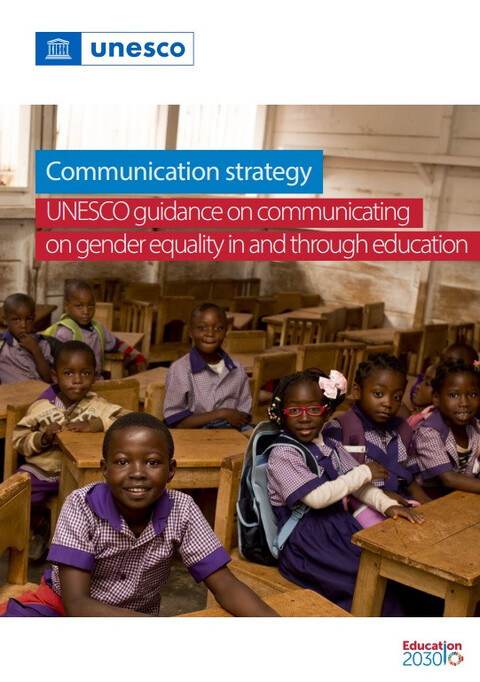 Communication Strategy: UNESCO Guidance on Communicating on Gender Equality in and through Education Année de publication: 2022 Auteur institutionnel: UNESCO About 259 million children and youth are out of school according to the UNESCO Institute for Statistics, including 127 million girls and 132 million boys. Twothirds of the 750 million non-literate adults around the world are women. This gender disparity remains one of the persistent challenges in adult literacy and education. The COVID-19 pandemic has exacerbated existing challenges, disrupting the education of over 1.5 billion learners. UNESCO estimates that close to 24 million children and youth, including over 11 million girls and 13 million boys, may drop out of school due to the pandemic’s economic impact. A window of opportunity is now more than ever open to build back equal. This communication strategy is designed to provide strategic guidance on communicating on gender equality in and through education. While prepared for UNESCO Education Sector staff, including those at Headquarters, in Field/Regional/Cluster Offices and in Institutes as well as for implementing partners, a broader audience of gender focal points, partners, Member States and others with an interest in and commitment to gender equality in and through education may also find this strategy particularly useful.