
Ressources
Explorez une large gamme de ressources sur le GCED afin d’approfondir votre compréhension et de renforcer vos activités de recherche, de plaidoyer, d’enseignement et d’apprentissage.
224 résultats trouvés
 Education, Citizenship and National Integration Année de publication: 2014 Auteur: Radwa Ammar Auteur institutionnel: Social Contract Center This research paper is an introduction that explains the role of citizenship education as a basis for building a cohesive society capable of facing challenges. The paper reviews various international concepts and experiences to shed light on the importance of conducting in-depth field studies to discuss the relationship between citizenship education and national integration among members of society. It also aims to identify the most important topics, and ways of offering that It is compatible with the targeted communities by these educational programs, and to develop a strategy for educational institutions in the country to adopt this type of studies.
 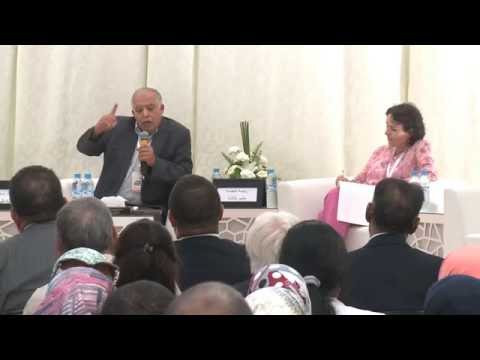 Education and Citizenship: Summer University 2016 Année de publication: 2016 Auteur: Abdullah Saaf Auteur institutionnel: General Delegation for Prison Administration and Reintegration (DGAPR) This video is a lecture given to women prisoners in Morocco, and it is a rehabilitation program. The lecture by Dr. Abdullah Sa`f talks about citizenship and inclusion in society, and discusses the relationship between education and citizenship.
  Democracy in the Educational Institution: Between the Qualification of Schooling and the Rooting of Training Année de publication: 2017 Auteur: Abdel Karim Belhadj | Abd al-Ilah Shrayat Auteur institutionnel: Supreme Council for Education, Training, and Scientific Research This paper discusses the relationship between school and democracy. It shows the intersection between them. Then the paper turns on how to educate for democracy. The paper concludes with a vision for global citizenship education.
  NISSEM Global Briefs (Volume II): Educating for the Social, the Emotional and the Sustainable; Pedagogy, Practice and Materials Année de publication: 2020 Auteur: Andy Smart | Margaret Sinclair Auteur institutionnel: Networking to Integrate SDG Target 4.7 and SEL skills into Educational Materials (NISSEM) The timeframe for achieving the Sustainable Development Goals (SDGs) is tight, and the world also faces the consequences of Covid-19. NISSEM Global Briefs aim to show how SDG Target 4.7 themes and social and emotional learning (SEL) can be embedded in education policies, programs, curricula, materials, and practice, to help make progress towards sustainable development.
 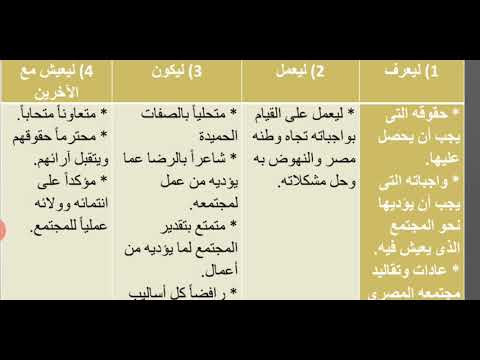 How to be a Good Citizen Année de publication: 2020 Auteur institutionnel: Helalia Language School This video is an educational lesson for the first year of middle school. The lesson focuses on what a good citizen is and how a student can be a good citizen.
  Becoming Citizens in a Changing World: IEA International Civic and Citizenship Education Study 2016 International Report Année de publication: 2017 Auteur: Wolfram Schulz, John Ainley, Julian Fraillon, Bruno Losito, Gabriella Agrusti, Tim Friedman Auteur institutionnel: International Association for the Evaluation of Educational Achievement (IEA) The International Civic and Citizenship Education Study 2016 (ICCS 2016) investigated the ways in which young people are prepared to undertake their roles as citizens in a range of countries in the second decade of the 21st century. It studied students’ knowledge and understanding of civics and citizenship as well as students’ attitudes, perceptions, and activities related to civics and citizenship. Based on nationally representative samples of students, the study also examined differences among countries in relation to these outcomes of civic and citizenship education, and explored how cross-national differences relate to student characteristics, school and community contexts, and national characteristics. As the second cycle of this study, ICCS 2016 is a continuation and an extension of ICCS 2009.
  Inspiring Global Citizens - An Educator's Guide Année de publication: 2017 Auteur institutionnel: AGA Khan Foundation Canada This resource is intended for use by teachers of intermediate and secondary school grades to support education about global development and related themes such as global citizenship. The activities included in the resource are designed to assist students in increasing their understanding of the interconnectedness of the world, of the factors contributing to global inequalities, and of some effective and sustainable ways to help reduce global poverty. It is hoped that students will be inspired to take action to make their own contribution to improving lives everywhere.
  Global Citizenship in the Classroom: A guide for teachers Année de publication: 2015 Auteur institutionnel: Oxfam GB A practical and reflective guide full of practical tools and ideas that can be applied to almost any topic to develop learner participation and global learning. Address by Irina Bokova, Director-General of UNESCO on the occasion of the Plenary Session: Education for Intercultural Citizenship, AoC Third Global Forum; Brazil, 29 May 2010 Année de publication: 2010 Auteur institutionnel: UNESCO. Director-General, 2009-2017 (Bokova, I.G.) This is an address by Irina Bokova, Director-General of UNESCO on the occasion of the plenary session for Education for Intercultural Citizenship in Brazil, on 29 May 2010. She insisted the importance of education for 'Learning to Live together'. She also highlited education for inter-cultural understanding as an important theme for the 21st centry.
  Radicalisations Awareness Network (RAN) Edu's Guide on training programmes 'Effective and confident teachers and other school staff' Année de publication: 2016 Auteur institutionnel: Radicalisations Awareness Network (RAN) This document will help teachers, principals, schools and (local and national) authorities discuss and design training programmes. Different training modules are identified, like (de)polarisation training, critical thinking, and how to turn a school into a safe and democratic mini society.