
Ressources
Explorez une large gamme de ressources sur le GCED afin d’approfondir votre compréhension et de renforcer vos activités de recherche, de plaidoyer, d’enseignement et d’apprentissage.
276 résultats trouvés
 Haus der Wannsee-Konferenz The Memorial and Educational Centre of the House of the Wannsee Conference provides school teachers with diverse ways to broach the persecution and murder of European Jews, the history of National Socialism and the aftermath. A permanent exhibition under expert guidance is proposed, multi-day seminars are conducted and online or downloadable activities and advice are available for helping teachers to approach this topic in class. / Le Centre commémoratif et éducatif de la chambre de la conférence de Wannsee fournit aux enseignants des écoles avec diverses façons d'aborder la persécution et assassiner des Juifs d'Europe, l'histoire du national-socialisme et les conséquences. Une exposition permanente sous la direction d'experts est proposé, des séminaires de plusieurs jours sont menées et des activités et des conseils en ligne ou téléchargeables sont disponibles pour aider les enseignants à aborder ce sujet en classe. Teaching about the Holocaust : Major educational predicaments, proposals for reform, and change - An international perspective Année de publication: 2013 Auteur: Zehavit Gross The aim of this article is to analyze the findings of a research project on how the Holocaust is taught around the world. The project analyzes central issues and educational events that occur while teaching the Holocaust "behind the classroom door," in public schools in different countries. Researchers from 10 nations participated in the project: Germany, Austria, Switzerland, Poland, Estonia, Scotland, Australia, the United States, Canada and Israel. One of the major findings of this research was that although the official establishment is very interested in teaching the subject of the Holocaust, teachers can find it hard to teach because of resistance by their students, who occasionally react in class with cynical, racist, anti-Semitic and antidemocratic remarks. In all the countries, researchers indicate three principal ways of handling the question of the Holocaust: education, teacher training, and research. (By the author) The challenges of Holocaust introduction and remembrance - particular and universal aspects in formal and informal interdisciplinary curricula in Israel and abroad Année de publication: 2011 Auteur: Nitza Davidovich | Dan Soen | Anat Hezkelovich In the present framework, an attempt was made to compare Holocaust instruction in Israel and in France. The comparison between the formal and informal curricula in both countries shows that both systems share this study's basic assumption concerning the inherent potential of teaching the Holocaust to the younger generation. Nevertheless, each country has a clear goal toward which it directs its students. The State of Israel, the Jewish state, perceives the Holocaust mainly through nationalist and Zionist eyes, directing the younger generation to learn particular lessons. The French model, in contrast, represents a shortened version ... devoted to the universal lessons of the Holocaust. But in the end, both systems would benefit by adopting some of the elements of the other. (By the author)
 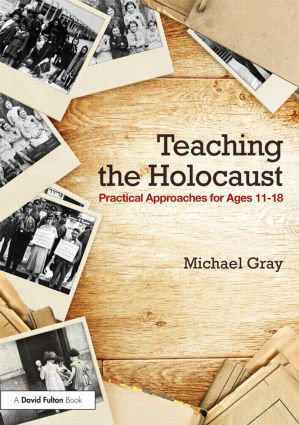 Teaching the Holocaust : Practical approaches for ages 11-18 Année de publication: 2015 Auteur: Michael Gray Teaching the Holocaust is an important but often challenging task for those involved in modern Holocaust education. What content should be included and what should be left out? How can film and literature be integrated into the curriculum? What is the best way to respond to students who resist the idea of learning about it? This book, drawing upon the latest research in the field, offers practical help and advice on delivering inclusive and engaging lessons along with guidance on how to navigate through the many controversies and considerations when planning, preparing and delivering Holocaust education. Whether teaching the subject in History, Religious Education, English or even in a school assembly, there is a wealth of wisdom that will make the task easier for you and make the learning experience more beneficial for the student. (By the publisher)
  Teaching and Studying the Holocaust - Annoted version Teaching and Studying the Holocaust is comprised of thirteen chapters by some of the most noted Holocaust educators in the United States. In addition to chapters on establishing clear rationales for teaching this history and Holocaust historiography, the book includes individual chapters on incorporating primary documents, first person accounts, film, literature, art, drama, music, and technology into a study of the Holocaust. It concludes with an extensive and valuable annotated bibliography especially designed for educators. Chapter Ten instructs how to make effective use of technology in teaching and learning about the Holocaust. The final section of the book includes a bibliography especially developed for teachers that lists invaluable resources. (By the publisher)
  Handbuch Nationalsozialismus und Holocaust. Historisch-politisches Lernen in Schule, außerschulischer Bildung und Lehrerbildung. The educational field of National Socialism and the Holocaust is an indispensable part of historical-political learning in schools, non-formal education and teacher training. This manual gives new impetus to the theoretical discussion as well as to the practical educational work. Basic theoretical texts are complemented by methodological suggestions as well as by accounts based on personal experience and presentations of projects with national and international perspectives. The fact that today, more than sixty years after the events, adolescents have hardly any direct access to this phase of German and European history, and the question of how to deal with this challenge, are here of central importance. The contributions in the manual focus on the following themes: The fundamentals of National Socialism and the Holocaust as an educational field. School practices: Learning from classroom instruction. School practices: Learning from projects. Practices in teacher education. Practices in memorial sites and non-formal educational institutions. International approaches. (By the publisher) Genocide & The Shoah (The Holocaust) : Intellectual Tools for Education & Public Policy Decision The article reviews anti-Semitism from a multi-disciplinary perspective by focusing on the influence of American anti-Semitism on the German Nazis; exploring the endurance of anti-Semitism in Germany via its intellectual and scholastic elite; and exploring the political psychology of Hitlerism prior to the Second World War. The article then examines the problem that although anti-Semitism may be a necessary condition of genocide, it is not a sufficient one. This required the understanding of the jump from anti-Semitism, that is repressive and dominating, to the decision to exterminate a population of human beings completely. This also required a more carefully exploration of the specific features of the Nazi decision process as well as its framework of social control. With this background, the article focuses on developing the theoretical and methodological intellectual skills that have been developed in the context of the policy sciences in order to provide an approach to the challenges generated by the problems of mass murder and genocide, which would guide policy makers to more realistic, timely and effective interventions. The article then explores distinctive but interrelated intellectual tasks that are required for research to guide inquiry and policy making and which include a disciplined commitment to the clarification of the value goals implicated by the problems of mass murder and genocide. These intellectual tasks require a careful specification of the trends in past decisions that have sought, in some measure of efficacy, to respond to these problems. They would also require an understanding of the scientific conditions that have shaped the nature of these trends in order to be able to forecast about the prospect of genocide and mass murder, which could be understood as a tentative forecast of an optimistic and a pessimistic nature, and the possibility of constraining it. Finally, theory requires an element of creativity. That creativity would be expressed in terms of the provided interaction between human values and the art/aesthetic process, which is suggested as a tool for realizing the never again goal. The creative aspect of this would be the invention of strategies that might direct intervention of a trend in the direction of a more optimistic possible future. (By the author) Fear and deference in Holocaust education. The pitfalls of “engagement teaching” according to a report by the British Historical Association This article questions the effectiveness of “engagement teaching” when dealing with controversial subjects by exploring the role of fear in contemporary education about the Holocaust in the United Kingdom. It begins by assessing a governmental report about education and a series of related press reports and chain emails, whose assumption that secondary school teachers are afraid of teaching controversial subjects triggered an international scandal about Holocaust education in the UK in April 2007. The author argues that three forms of respectful fear or deference are undermined in Holocaust teaching: epistemological; political; and intergenerational . The article further demonstrates that the object of fear expressed by journalists and the public was not the Holocaust itself, but the reversal of deferential relations between teachers and pupils in the school classroom and the supposition that we may not learn from history. Whereas history education is held up by policy-makers as a safeguard of social stability and of the transmission of values, the application of “engagement teaching” to controversial subjects may in fact undermine the authority of historical education and the enlightenment principles on which it is founded. (By the author) L’enseignement de l’histoire et les mémoires douloureuses du XXe siècle. Enquête sur les représentations enseignantes This article discusses the teaching of sensitive topics related to the memory and history of the 20th century, mainly the issues of the extermination of Jews and the wars of national liberation. The survey, conducted between 2000 and 2003 at the Academie de Versailles, highlights the specific difficulties in this teaching from primary school to secondary school, in different disciplines ‒ literature, history and philosophy. The report also leads to an analysis of the representations that are formed on these subjects, both by students and teachers. (By the author - Translation) Quand les mémoires déstabilisent l’école. Mémoire de la Shoah et enseignement This work is based primarily on the subject of the Holocaust, but it attempts to define cross-cutting issues in the category of teaching “sensitive” subjects, assuming we can build a common paradigm. To do this, it brings together the perspectives of historians, philosophers, teachers and participating witnesses, inviting us to return to the fundamental questions underlying the act of transmission. Each contribution brings us to reflect on what it is we are trying to transmit, and suggests a systematic exploration of the difficulties inherent in these transmissions: the magnitude and complexity of the historical problem, the extreme moral and political exigencies, the intricate intermingling of memory, the historian’s work, and civic commitment. What to do with negative commemorations? We cannot forget, repent, deny or trivialize. We can only question our modern societies and their ambivalence. (By the author - Translation)