
Ressources
Explorez une large gamme de ressources sur le GCED afin d’approfondir votre compréhension et de renforcer vos activités de recherche, de plaidoyer, d’enseignement et d’apprentissage.
451 résultats trouvés
 Acuerdo de París Année de publication: 2015 Auteur institutionnel: United Nations (UN) El Acuerdo de París es un tratado internacional sobre el cambio climático jurídicamente vinculante. Fue adoptado por 196 Partes en la COP21 en París, el 12 de diciembre de 2015 y entró en vigor el 4 de noviembre de 2016. Su objetivo es limitar el calentamiento mundial a muy por debajo de 2, preferiblemente a 1,5 grados centígrados, en comparación con los niveles preindustriales. Accord de Paris Année de publication: 2015 Auteur institutionnel: United Nations (UN) L'Accord de Paris est un traité international juridiquement contraignant sur les changements climatiques. Il a été adopté par 196 Parties lors de la COP 21, la Conférence des Nations unies sur les changements climatiques à Paris, France, le 12 décembre 2015. Il est entré en vigueur le 4 novembre 2016. Son objectif primordial est de maintenir « l'augmentation de la température moyenne mondiale bien en dessous de 2°C au-dessus des niveaux préindustriels » et de poursuivre les efforts « pour limiter l'augmentation de la température à 1,5°C au-dessus des niveaux préindustriels. » ПАРИЖСКОЕ СОГЛАШЕНИЕ Année de publication: 2015 Auteur institutionnel: United Nations (UN) Парижское соглашение – юридически обязательный международный договор по тематике изменения климата. Он был принят 196 Сторонами на 21-й сессии Конференции Сторон Рамочной конвенции ООН об изменении климата (КС-21 РКИК ООН) 12 декабря 2015 года в Париже. Вступление Соглашения в силу состоялось 4 ноября 2016 года. Задача Парижского соглашения – удержание прироста глобальной средней температуры намного ниже 2 градусов Цельсия сверх доиндустриальных уровней при приложении усилий в целях ограничения роста температуры до 1,5 градусов Цельсия. 巴黎协定 Année de publication: 2015 Auteur institutionnel: United Nations (UN) 《巴黎协定》是一项具有法律约束力的气候变化国际条约。2015年12月12日,该协定在巴黎举行的《联合国气候变化框架公约》第二十一次缔约方会议上获得196个缔约方通过,并于2016年11月4日生效。其目标是将全球气温升幅控制在工业化前水平以上低于2℃,最好是1.5℃之内。
  New Citizenship, Culture of Peace and Democratic Integration: Pedagogical Guidelines and Didactic Proposals Année de publication: 2015 Auteur institutionnel: Argentina. Ministry of Education | Chile. Ministry of Education This document is an input that, in the form of a guide of pedagogical guidelines and teaching proposals, seeks to support the development of the objectives of the New Citizenship, Culture of Peace and Democratic Integration Program, promoted by the Ministry of Education of Argentina and the Ministry of Education of Chile. The first section corresponds to an introductory section, which communicates the principles on which the program is based. The second section is made up of the axes and chapters that structure the guide. Each axis (four in total) is subdivided into two chapters, articulated around the topic that the axis addresses and which is briefly presented at the beginning of it. Nueva ciudadanía, cultura de paz e integración democrática: Lineamientos pedagógicos y propuestas didácticas Année de publication: 2015 Auteur institutionnel: Argentina. Ministry of Education | Chile. Ministry of Education El presente documento es un insumo que, bajo la forma de una guía de lineamientos pedagógicos y propuestas didácticas, busca apoyar el desarrollo de los objetivos del Programa Nueva Ciudadanía, Cultura de Paz e Integración Democrática, que promueven el Ministerio de Educación de Argentina y el Ministerio de Educación de Chile. La primera sección corresponde a un apartado introductorio, que comunica los principios en que se basa el programa. La segunda sección está conformada por los ejes y capítulos que estructuran la guía. Cada eje (cuatro en total) está subdividido en dos capítulos, articulados en torno al tema que el eje releva y que es presentado, brevemente, al inicio de este.
 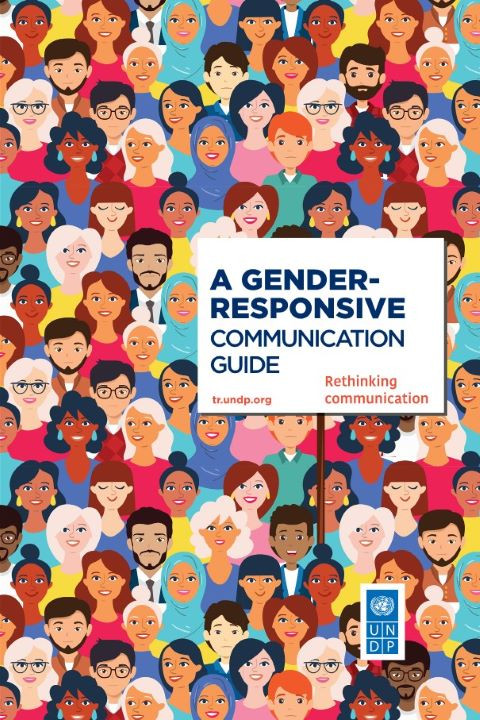 A Gender-Responsive Communication Guide; Rethinking Communication Année de publication: 2021 Auteur: Gökçe Bayrakçeken Tüzel | İdil Safiye Soyseçkin Ceylan | Deniz Şilliler Tapan | Kıvanç Özvardar Auteur institutionnel: United Nations Development Programme (UNDP) Language is a mechanism, a tool, that influences thoughts, shapes gender roles and therefore carries a great potential for establishing gender equality in societies. It shows how we perceive life and also determines it. Language plays an important role in the formation of our thoughts and behaviors, hence the construction of our reality about gender. As UNDP Turkey, we ground on gender equality and women’s empowerment principles in all of our programs and interventions, within the institution and in all forms of communication with our partners. The reason we prepared this guide is to determine the ways to have a gender responsive approach when communicating both in the office and with the institutions, organizations, and individuals we work with.The language we use begins to take shape from the moment we are born. It is kneaded within the norms, thoughts, and actions of the society we live in and becomes a set of rules that we unconsciously internalize. Therefore, we often use a sexist language even without realizing and thus reproduce it at every turn.Based on the idea that transformation begins with awareness, this guide offers a stimulating path to the limits of our language, demonstrates how it reproduces gender inequality, and offers ways for changing this.We believe that gender responsive communication is a sign of commitment to gender equality for any country, community or institution. Therefore, we invite you to become the transformation itself by following this sign.We would like to thank you in advance for your interest and dedication to using a gender responsive language and hope that this guide will help us on the way to become a gender-equal society.
 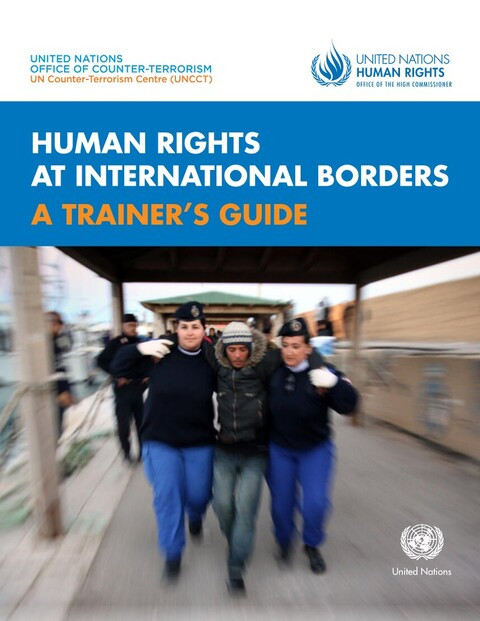 Human Rights at International Borders : A Trainer's Guide Année de publication: 2021 Auteur institutionnel: United Nations (UN) | UN. Office of Counter-Terrorism (UNOCT) | UN. Office of the United Nations High Commissioner for Human Rights (UN. OHCHR) International borders can be dangerous places for migrants, particularly for migrants in vulnerable situations. This capacity-building tool seeks to support States and particularly border officials in adopting a human rights-based and gender-responsive approach to border governance. Accompanying presentation slides and course materials have been developed for use in training courses or as a general information resource on the subject.
 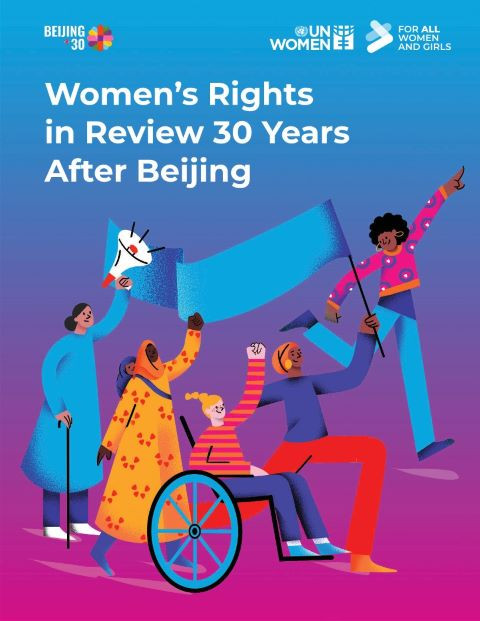 Women’s Rights in Review 30 Years after Beijing Année de publication: 2025 Auteur institutionnel: United Nations Entity for Gender Equality and the Empowerment of Women (UN Women) In 2025, the world celebrates 30 years of achievement on the Beijing Declaration and Platform for Action, a visionary 1995 plan agreed by 189 governments to achieve the equal rights of all women and girls. The UN Secretary-General’s report on the 30-year review and appraisal of the Beijing Declaration and Platform for Action reflects global, regional, and national reviews of 159 countries, summarizing progress and priorities for further action. It finds that many countries have made strides on gender equality and women’s empowerment, from banning discrimination in employment to adopting gender-responsive climate action plans. Innovation is accelerating progress, and opportunities are opening to scale up proven strategies. Yet gender discrimination remains deeply embedded in all economies and societies, imposing chronic constraints on the rights and hopes of women and girls.
 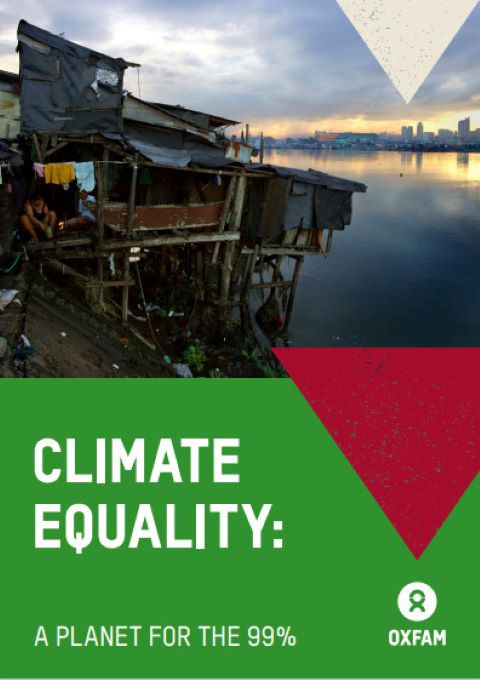 Climate Equality: A Planet for the 99% Année de publication: 2023 Auteur: Ashfaq Khalfan | Astrid Nilsson Lewis | Carlos Aguilar | Max Lawson | Safa Jayoussi | Jacqueline Persson | Nafkote Dabi | Sunil Acharya Auteur institutionnel: Oxfam International The world faces twin crises of climate breakdown and runaway inequality. The richest people, corporations and countries are destroying the world with their huge carbon emissions. Meanwhile, people living in poverty, those experiencing marginalization, and countries in the Global South are those impacted the hardest. Women and girls, Indigenous Peoples, people living in poverty and other groups experiencing discrimination are particularly at a disadvantage. The consequences of climate breakdown are felt in all parts of the world and by most people, yet only the richest people and countries have the wealth, power and influence to protect themselves. With that power comes huge responsibility.If no action is taken, the richest will continue to burn through the carbon we have left to use while keeping the global temperature below the safe limit of 1.5°C, destroying any chance of ending poverty and ensuring equality. The world needs an equal transformation. Only a radical reduction in inequality, transformative climate action and fundamentally shifting our economic goals as a society can save our planet while ensuring wellbeing for all.