
Ressources
Explorez une large gamme de ressources sur le GCED afin d’approfondir votre compréhension et de renforcer vos activités de recherche, de plaidoyer, d’enseignement et d’apprentissage.
76 résultats trouvés
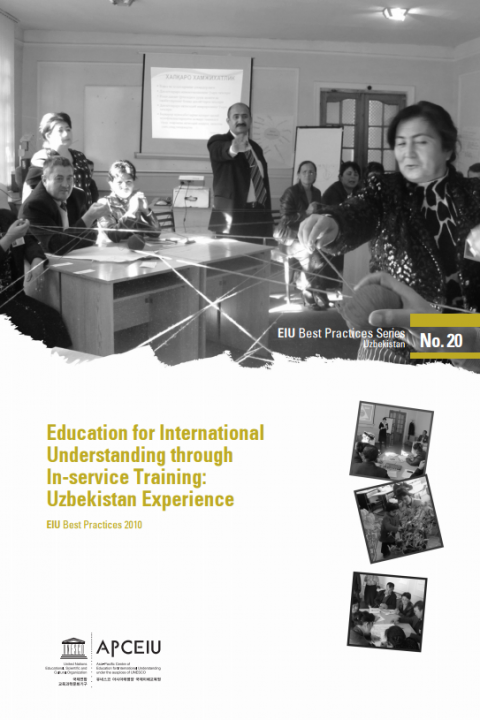 EIU Best Practices Series No. 20: Education for International Understanding through In-service Training: Uzbekistan Experience Année de publication: 2010 Auteur: Mukhamadjon Aliyev Auteur institutionnel: APCEIU This monograph is one of APCEIU's EIU Best Practices Series, which aims to encourage educators, scholars, and activists to implement and share local initiatives on EIU. The Series No.20 introduces EIU projects undertaken by the Avloni In-Service Teacher Training Institute in Uzbekistan. The programme integrates EIU concepts into the public education through in-service training programs, promotes EIU concepts in different subjects and projects, and broadcasts good practices in the field of global citizenship education nationwide. Although it is still in the process of improvement, the programme is expected to raise awareness of EIU and empower education managers, principals and teachers in Uzbekistan.
 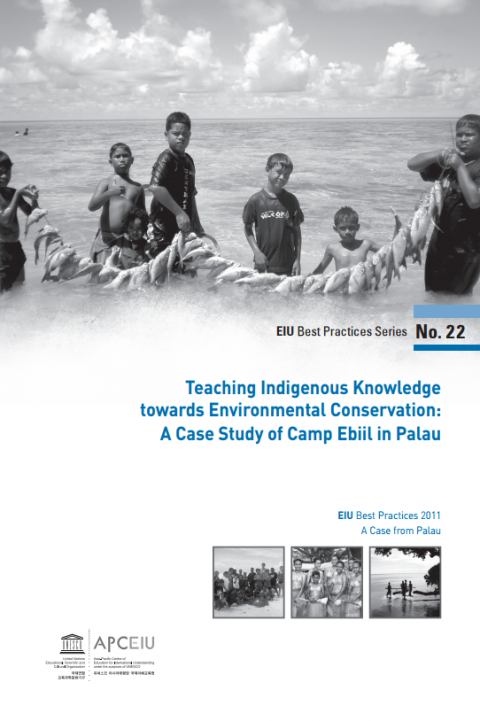 EIU Best Practices Series No. 22: Teaching Indigenous Knowledge towards Environmental Conservation: A Case Study of Camp Ebiil in Palau Année de publication: 2011 Auteur: Ann Kloulechad Singeo Auteur institutionnel: APCEIU This monograph is one of APCEIU's EIU Best Practices Series, which aims to encourage educators, scholars, and activists to implement and share local initiatives on EIU. The Series No.22 introduces a case study of community-based education program from Camp Emiil in Palau that promote protection of one's identity and heritage by teaching the youth with the traditional knowledge. The camp allows young participants to take direct part in fun activities and learning opportunities to immerse in culture and nature. Through such experiential learning, participants become more knowledgeable about ethnic practices and acquire important character building skills and conservation knowledge.
 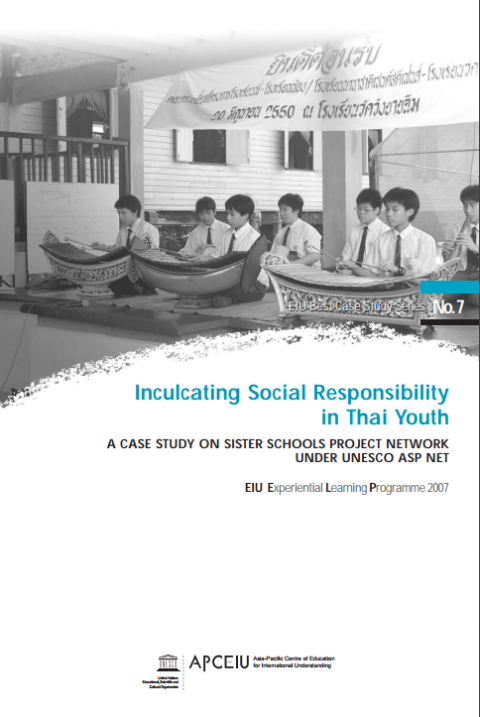 EIU Best Practices Series No. 7: Inculcating School Responsibility in Thai Youth: A Case Study on Sister Schools Project Network under UNESCO ASPNet Année de publication: 2007 Auteur institutionnel: APCEIU This monograph is one of APCEIU's EIU Best Practices Series, which aims to encourage educators, scholars, and activists to implement and share local initiatives on EIU. The Series No.7 is a case study of two Thai schools within the Sister Schools Project Network, which is under the UNESCO ASP NET and UNESCO Club. As schools visited other schools in the network, students became involved in fundraising to support one another, thereby naturally acquiring invaluable team building skills, intercultural understanding, and social responsibility. This case shows that sister school network system can foster values of sharing, caring, and loving, despite socio-economic disparity among students.
  다문화가정대상국가와의 교육교류사업 후속활동 길라잡이 Année de publication: 2023 Auteur institutionnel: APCEIU The Asia-Pacific Teacher Exchange for Global Education(APTE) is a bilateral teacher exchange programme between the Republic of Korea and Asia-Pacific countries, hosted by the Ministry of Education of the Republic of Korea (MOE ROK) and implemented by the Asia-Pacific Centre of Education for International Understanding under the auspices of UNESCO (APCEIU), in collaboration with the Ministries of Education of the partner countries. Since 2012, the Office of International Teacher Exchange of APCEIU has been playing a pivotal role in implementing APTE. APCEIU prepared this book in the hope of spreading the fruits of teachers’ efforts and the seeds of peace in them, which were nurtured on the ground of APTE, to a broader world. <Contents>IntroductionI. Understanding follow-up activitiesII. Types of follow-up activities and model examples1. Types of follow-up activities2. Model examples of follow-up activities- [Real-Time Online Video Class] Starting online international education exchange- [Visiting / Invitational Program] An insight into international exchange programme- [Club-Oriented Inter-School Exchange] Follow-up exchange with invention club activity- [Inter-School Cooperative Agreement] Precious ties- [Participation In Various Support Programs] Heart of Korea, multicultural values: overcoming the limits of the classroomIII. Follow-up activity operation1. The nine-step preparation process for independent operation of educational exchange2. Procedures for independent operation of international exchangeIV. Annex1. Asia-Pacific Teacher Exchange for Global Education2. UNESCO APCEIU: Asia-Pacific Centre of Education for International Understanding under the auspices of UNESCO3. Reference programs for follow-up activities
 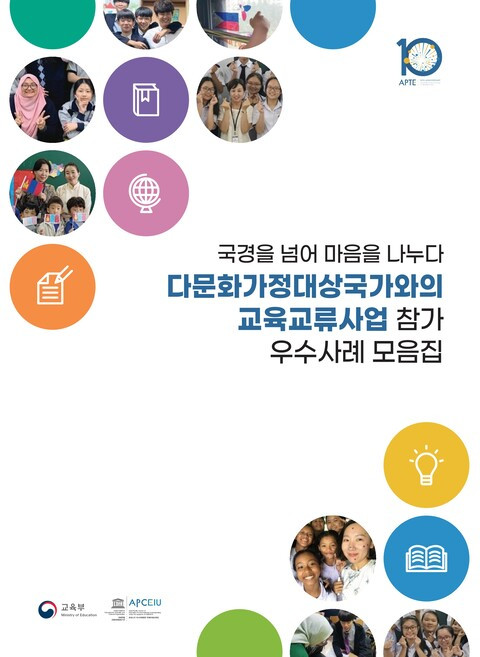 다문화가정대상국가와의 교육교류사업 참가 우수사례 모음집 Année de publication: 2023 Auteur institutionnel: APCEIU A carefully curated collection of best practices is presented as part of the 10th-anniversary celebrations of the Asia Pacific Teacher Exchange for Global Education (APTE). Over 30 teachers share their honest and vivid experiences, as well as outstanding follow-up activities. Each story aims to inspire teachers who are interested in the APTE Programme, and to serve as a valuable resource for future participants.
  Asia-Pacific Teacher Exchange for Global Education 2022: Final Report Année de publication: 2022 Auteur institutionnel: APCEIU | Korea R. Ministry of Education The Asia-Pacific Teacher Exchange for Global Education (APTE), which has been in place since 2012, marks its 10th anniversary this year. APTE had been conducted according to the existing programme execution system and flow chart until 2019. However, the Office of International Teacher Exchange (ITE) focused on online exchange due to the pandemic crisis. This year’s APTE programme followed last year’s online formula and presented a new direction for utilization even post-pandemic. These efforts are expected to enhance global educational competencies for a more sustainable Global Citizenship Education.