
Ressources
Explorez une large gamme de ressources sur le GCED afin d’approfondir votre compréhension et de renforcer vos activités de recherche, de plaidoyer, d’enseignement et d’apprentissage.
78 résultats trouvés
 How to Understand Misinformation, Disinformation and Malinformation Année de publication: 2020 Auteur institutionnel: Shout Out UK | U.S. Embassy London | Association for Citizenship Teaching (ACT) We live in a world where information is very easy to fabricate. Now more than ever, media literacy (the ability to critically analyse information) is critical for us as citizens and for our democracy to function. This video explains the difference between Misinformation, Disinformation and Malinformation and presents you with some examples! This video is part of a resource pack created and designed by Shout Out UK, supported by the US Embassy in London and in collaboration with the Association For Citizenship Teaching.For more info: https://www.shoutoutuk.org/media-literacy/
  Information Neighbourhoods Année de publication: 2020 Auteur institutionnel: Shout Out UK | U.S. Embassy London | Association for Citizenship Teaching (ACT) We live in a world where information has a variety of purposes. So how can you identify what each type of information is trying to do? Now more than ever, media literacy (the ability to critically analyse information) is critical for us as citizens and for our democracy to function. This video explains what Information neighbourhoods exist and how to identify them.
 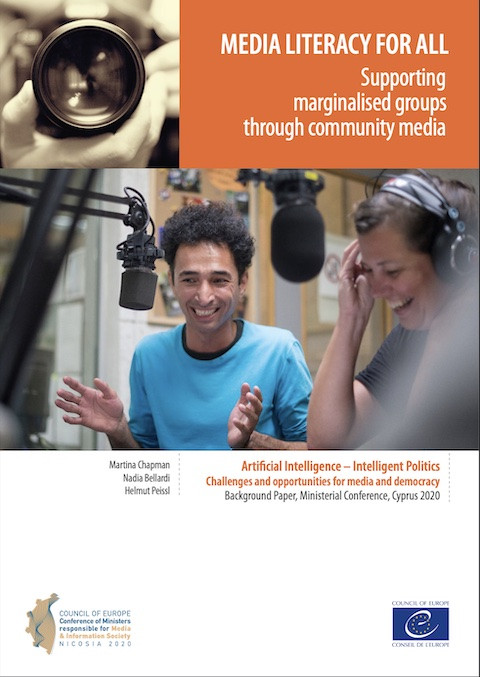 Media Literacy for All: Supporting Marginalised Groups Through Community Media Année de publication: 2020 Auteur: Martina Chapman | Nadia Bellardi | Helmut Peiss Auteur institutionnel: Council of Europe Being media literate means being able to critically understand and evaluate media content and to responsibly and safely use digital media services. Media literacy helps us engage with others in the public sphere, using the creative and participatory potential that new technologies and services can offer. Nowadays, it also includes understanding how data is used and how algorithms and AI can influence media production and choices.The importance of community media in supporting the formation of an ‘informed citizenry’ is well recognised by the Council of Europe. Community media have the ability to empower community groups with the neces- sary access and skills to create their own communica- tion channels and to foster their participation in the public sphere in a structured and professional man- ner. However, in many European countries community media still lack formal, legal recognition, fair access to distribution platforms and sustainable funding.This background paper explores how the community media sector promotes media literacy and how this work can strengthen marginalised communities’ partic- ipation in the media environment and public discourse. Comparing five models of community media from Cyprus, Ireland, Luxembourg, Spain and the United Kingdom, it seeks to inform and inspire practitioners and policy-makers, highlighting a number of findings and policy responses that can help member States fully realise the potential of community media.
  Adult Media Literacy in Australia: Attitudes, Experiences and Needs Année de publication: 2021 Auteur: Tanya Notley | Simon Chambers | Sora Park | Michael Dezuanni Auteur institutionnel: Western Sydney University | Queensland University of Technology | University of Canberra In 2020 we implemented Australia’s first nationally representative survey on media literacy. The survey was designed with input from diverse voices in the media literacy field including researchers, media producers, policymakers, government agencies, educators and public cultural institutions. We launched the survey report at events in Sydney, Melbourne, Canberra and online on April 13 2021.The survey findings will also be used to inform a national media literacy strategy co-design process. As part of this process we will host online and face-to-face events to engage organisations who are supporting media literacy across the country. These events will take place in May-July 2021.
 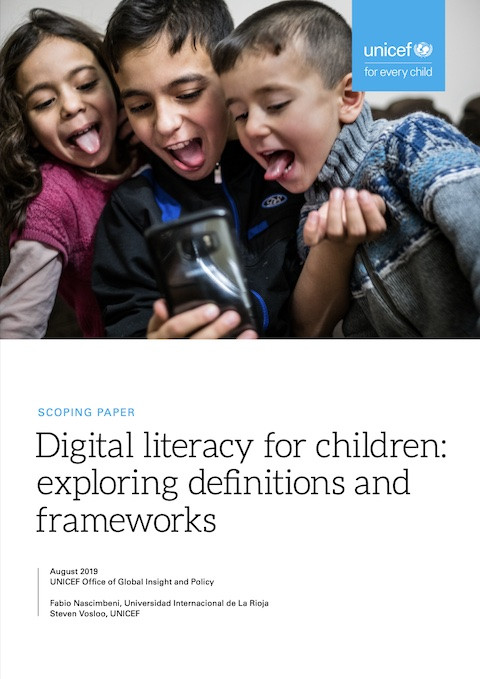 Digital Literacy for Children: Exploring Definitions and Frameworks Année de publication: 2019 Auteur: Fabio Nascimbeni Auteur institutionnel: United Nations Children's Fund (UNICEF) This paper presents the results of a scoping exercise on children’s digital literacy that has been undertaken with the following objectives:To understand the current digital literacy policy and practice landscape;To highlight existing competence frameworks and how they can be adapted to UNICEF’s needs;To analyze the needs and efforts of UNICEF country offices; andTo reflect on policy and programme recommendations, including a definition of digital literacy for UNICEF
  Global Media and Information Literacy Assessment Framework: Country Readiness and Competencies Année de publication: 2013 Auteur institutionnel: UNESCO The MIL Assessment Framework can foster lifelong learning initiatives by building on the relationship between information, media, digital, and ICT literacies, along with societal transformations, education, workforce, policy and decision making processes, economic growth and democracy. The overall goal of the publication is to guide UNESCO’s Member States throughout the assessment of country readiness and competencies regarding the media and information literacy of citizens, in particular teachers in service and in training. The document is particularly aimed at the following stakeholders: policy makers and decision makers; national officers responsible for statistical data collection and analysis; educational policy makers and planners working in formal and informal education settings; teacher training institutions and teachers. It is also of relevance to the professional information and communication community, and has wide applicability for civil society at large.
  UNESCO MIL CLICKS Social Media Innovation Année de publication: 2016 Auteur institutionnel: UNESCO MIL CLICKS is a way for people to acquire media and information literacy (MIL) competencies in their normal day-to-day use of the Internet and social media and to engage peer education in an atmosphere of browsing, playing, connecting, sharing, and socializing.The acronym MIL CLICKS stands for Media and Information Literacy: Critical-thinking, Creativity, Literacy, Intercultural, Citizenship, Knowledge & Sustainability.The objectives of this social media strategy are to use social media to:1) Expose people to become more media and information literate and to2) Raise awareness about the importance of media and information literacy.
  UNESCO MIL CLICKS: Innover avec les médias sociaux Année de publication: 2016 Auteur institutionnel: Organisation des Nations Unies pour l'éducation, la science et la culture (UNESCO) MIL CLICKS permet non seulement aux gens d'acquérir des compétences en matière d'éducation aux médias et à l'information (MIL en anglais) dans leur utilisation quotidienne d'Internet et des médias sociaux mais également d'engager l'éducation par les pairs dans une atmosphère de navigation, de jeu, de connexion, de partage et de socialisation.