
Ressources
Explorez une large gamme de ressources sur le GCED afin d’approfondir votre compréhension et de renforcer vos activités de recherche, de plaidoyer, d’enseignement et d’apprentissage.
65 résultats trouvés
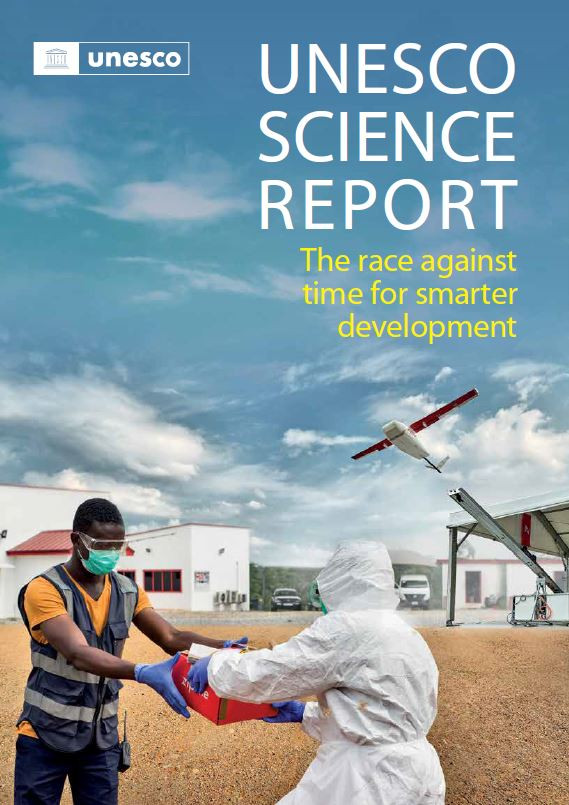 UNESCO Science Report: The Race Against Time for Smarter Development Année de publication: 2021 Auteur: Susan Schneegans | Tiffany Straza | Jake Lewis Auteur institutionnel: UNESCO This seventh edition of the report monitors the development path that countries have been following over the past five years from the perspective of science governance. It documents the rapid societal transformation under way, which offers new opportunities for social and economic experimentation but also risks exacerbating social inequalities, unless safeguards are put in place.The report concludes that countries will need to invest more in research and innovation, if they are to succeed in their dual digital and green transition. More than 30 countries have already raised their research spending since 2014, in line with their commitment to the Sustainable Development Goals. Despite this progress, eight out of ten countries still devote less than 1% of GDP to research, perpetuating their dependence on foreign technologies.
 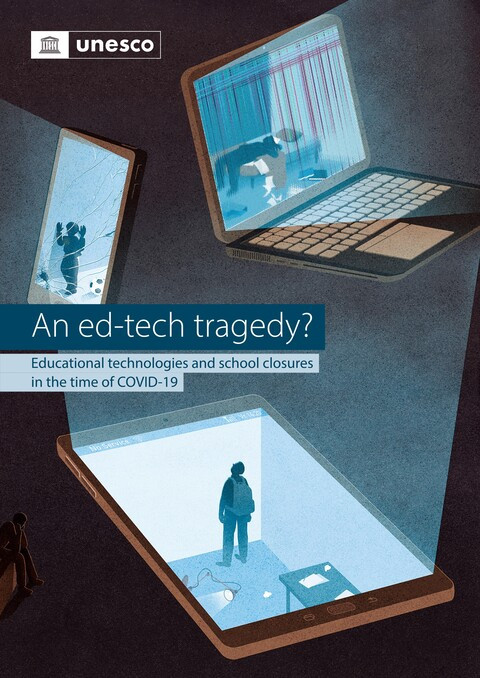 An Ed-Tech Tragedy? Educational Technologies and School Closures in the Time of COVID-19 Année de publication: 2023 Auteur institutionnel: UNESCO Charting a new course for the transformation of education in a digital age An Ed-Tech Tragedy? is a detailed analysis of what happened when education became largely reliant on connected technology during school closures stemming from the COVID-19 pandemic, the largest global disruption to education in history.Many claim that this experience was chiefly one of forced progress and transformations that have, however haltingly, helped propel education into desirable digital futures. Others underline an experience of imperfect salvation – technology saving the day in an emergency and preserving learning continuity for significant numbers of students, even if not all students were helped. But the global evidence reveals a more sombre picture. It exposes the ways unprecedented educational dependence on technology often resulted in unchecked exclusion, staggering inequality, inadvertent harm and the elevation of learning models that place machines and profit before people. This publication examines the promises of educational technologies against the reality of what was delivered during periods of pandemic school closures, which stretched for various durations from early 2020 to the end of 2022. Dedicated sections consider alternate possibilities that had the potential to be more inclusive and equitable.The analysis extracts lessons and recommendations to chart new and more humanistic directions for the development, integration and use of technology in education.
  National Distance Learning Programmes in Response to the COVID-19 Education Disruption: Case Study of the Republic of Korea Année de publication: 2022 Auteur institutionnel: UNESCO This document is one of several case studies on national distance learning programmes in response to the COVID-19 education disruptions. The case of the Republic of Korea was drawn from the 2020 edition of Mobile Learning Week, organized online in October 2020 under the theme of 'Beyond Disruption: Technology Enabled Learning Futures'. Envisaged to be a continuously enriched mechanism for knowledge sharing and dissemination, the case studies aim to surface best practices worldwide in leveraging digital technology to build inclusive and crisis-resilient learning systems, and to inform the planning of digital transformation of education towards SDG 4 and the futures of learning. Each case study documents governance and funding mechanisms, needs-driven planning of distance learning solutions, evaluation of digital learning’s effects on mitigating disruptions and ensuring inclusion, and pedagogical innovations to maintain or improve the quality of learning.
 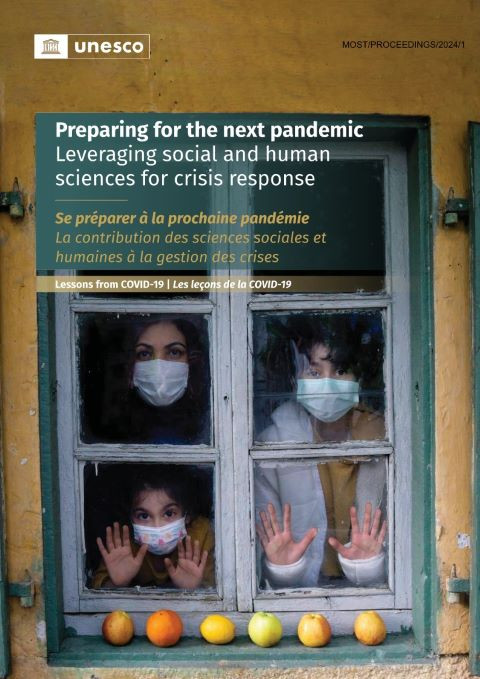 Preparing for the Next Pandemic Leveraging Social and Human Sciences for Crisis: Lessons from COVID-19 Année de publication: 2024 Auteur: Erwan Dianteill | N'Dri Thérèse Assié-Lumumba Auteur institutionnel: UNESCO The Social Sciences Response to COVID-19 Understanding the social impact of the COVID-19 pandemic is crucial for crafting effective and inclusive recovery policies. Prior to the pandemic, growing gaps in well-being were already undermining environmental sustainability, the social fabric, and progress worldwide. Fragile and unequal systems proved to be a pre-existing aggravating condition that fuelled the pandemic on a global scale. COVID-19 widened the gap between developed countries—which already had the financial means to respond to the crisis and had easy access to the vaccine—and the rest of humanity, resulting in devastating effects in the Global South, with more than 130 million people crossing the poverty line. Addressed to policymakers and scholars, this publication presents a comprehensive state of knowledge of the social science perspectives on the COVID-19 pandemic, covering a wide range of topics from its impact on mental health, education, climate change, economy, governance, migration, demography, digitalization, and more. The authors analyse the challenges faced by society during the pandemic and present actionable proposals for policymakers and practitioners. This publication is a reminder of the importance of Social Sciences and Humanities in addressing global challenges and provides a roadmap for future research and policy action to build more resilient societies.
 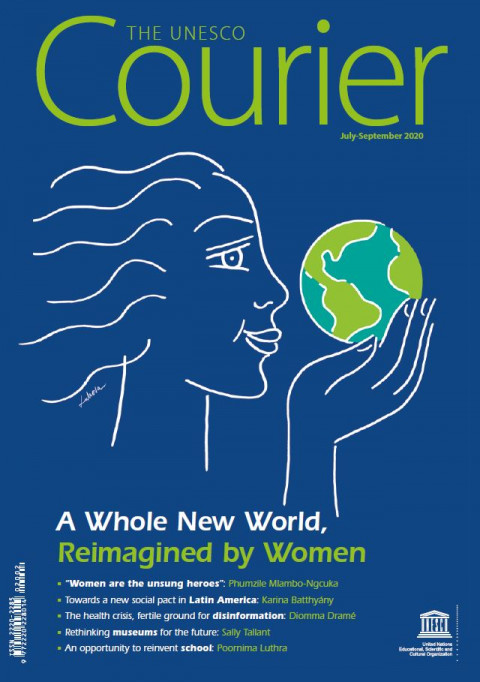 A Whole New World, Reimagined by Women (The UNESCO Courier no. 2, July-September 2020) Année de publication: 2020 Auteur institutionnel: UNESCO In this issue, the UNESCO Courier gives women a voice. Political scientists, journalists, sociologists, researchers, writers, and teachers have drawn the contours of the post-pandemic era – whether it is the future of museums, changes in schools, the rise of disinformation, or the challenges of scientific research.This issue paints a sobering picture of our times – highlights the fault-lines exposed by the health crisis, and shows the magnitude of the challenges ahead. It also underlines the potential for scientific, cultural and educational co-operation that this unprecedented event has revealed. If the reflections, the desire for change, and the movements of mutual aid that have emerged are not short-lived, the world really could become a more united, more sustainable and more egalitarian place.