
Ressources
Explorez une large gamme de ressources sur le GCED afin d’approfondir votre compréhension et de renforcer vos activités de recherche, de plaidoyer, d’enseignement et d’apprentissage.
125 résultats trouvés
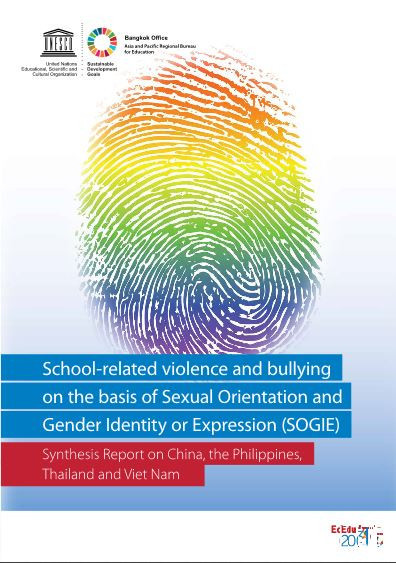 School-related violence and bullying on the basis of Sexual Orientation and Gender Identity or Expression (SOGIE) - Synthesis Report on China, the Philippines, Thailand and VietNam Année de publication: 2018 Auteur institutionnel: UNESCO Bangkok School related violence and bullying is a problem in all countries. UNESCO is committed to ensuring that all children and young people have access to safe, inclusive, health-promoting learning environments as part of its strategy on education for health and well-being. This synthesis report on school related violence and bullying on the basis of Sexual Orientation and Gender Identity or Expression (SOGIE), covering China, the Philippines, Thailand and Viet Nam, was developed to broaden awareness and understanding about this issue, while also identifying best practices and policies. It also aims to mobilize support for advocacy among educators, research institutions, policy makers and activists at the national and regional levels.
  منع التطرف من خلال التعليم: بيئة مدرسية آمنة وداعمة Année de publication: 2020 Auteur: Mohammad Madbouli يتحدث الفيديو عن منع التطرف في المدارس. يستخدم المقدم دليل اليونسكو لواضعي السياسات المنشور في 2018 كإطار لمناقشة منع التطرف. يتحدث المقدم عن بيئة آمنة وداعمة للطلاب في المدارس. Preventing Extremism Through Education: A Safe and Supportive School Environment Année de publication: 2020 Auteur: Mohammad Madbouli This video talks about preventing extremism in schools. The presenter uses the UNESCO guide for policy-makers published in 2018 as framework for discussing preventing extremism. The presenter speaks about safe and supportive environment for students in schools.
 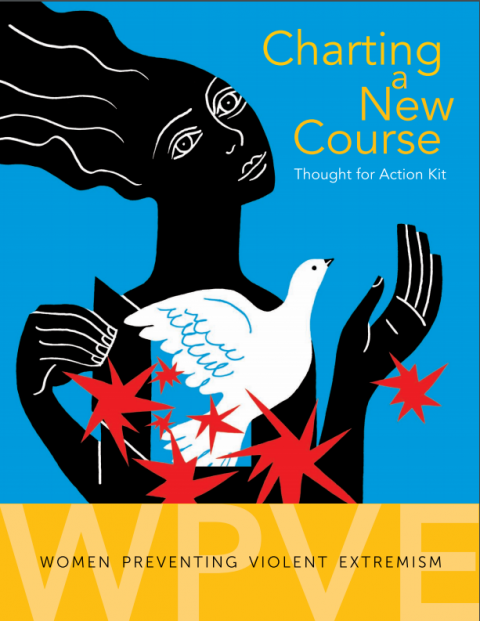 Women Preventing Violent Extremism Thought for Action Kit Année de publication: 2015 Auteur institutionnel: United States Institute of Peace (USIP) United Nations Security Council Resolution (UNSCR) 1325 (2000) was groundbreaking in that it provided strong support for greater attention to the role of women in international peace and security. It acknowledges the inordinate impact of violent conflict on women and recognizes that women’s empowerment and gender equality are critical to international peace and security. The UN Security Council fully recognizes the critical link between the Women, Peace and Security agenda as laid out in UNSCR 1325 and the role women could and should play in preventing violent extremism. This document has three sections. The first section examines the question of gender and why it is important to consider both men and women, and the dynamics of gender roles in society when addressing violent extremism. The second section deals specifically with women and the underlying forces of extremist violence. It invites thinking about women as actors in preventative efforts as well as perpetrators of terrorist acts. Finally, the third section raises issues related to the various ways in which to engage communities, including members of the security sector. Each section opens with a brief introductory background, followed by short essays by some of the leading experts in this field. Each section also includes practical exercises that may prove useful for training and further dialogue. Femmes Prévention Violent Extrémisme Pensée pour la trousse d'action Année de publication: 2015 Auteur institutionnel: United States Institute of Peace (USIP) La Résolution du Conseil de Sécurité des Nations Unies. (CSNU) 1325 (2000) était révolutionnaire en ce qu'elle a fourni un appui solide pour une plus grande attention sur le rôle des femmes dans la paix et la sécurité internationales. Il reconnaît l'impact démesuré des conflits sur les femmes et reconnaît que l'autonomisation des femmes et l'égalité des sexes sont essentiels pour la paix et la sécurité internationales. Le Conseil de sécurité des Nations Unies reconnaît pleinement le lien essentiel entre les femmes, la paix et l'ordre du jour de sécurité comme prévu dans la résolution 1325 et le rôle que les femmes peuvent et doivent jouer dans la prévention de l'extrémisme violent. Ce document comporte trois sections. La première section porte sur la question du genre et pourquoi il est important de considérer à la fois les hommes et les femmes, et la dynamique des rôles de genre dans la société quand aborder l'extrémisme violent. La deuxième section traite spécifiquement avec les femmes et les forces sous-jacentes de la violence extrémiste. Elle invite à penser à des femmes en tant qu'acteurs dans les efforts de prévention ainsi que les auteurs d'actes terroristes. Enfin, la troisième section soulève des questions liées aux diverses façons dont faire participer les communautés, y compris les membres du secteur de la sécurité. Chaque section commence par un bref historique d'introduction, suivie de courts essais par quelques-uns des plus grands experts dans ce domaine. Chaque section comprend également des exercices pratiques qui peuvent se révéler utiles pour la formation et la poursuite du dialogue.
  )7112( القرار 7128 التخذ امجتخم مجلس الأمنل ت 2727 ، المعقفي ة 72 أيلفي سبتمبر 71 Année de publication: 2014 Auteur institutionnel: United Nations Security Council This resolution expanded the counter-terrorism framework by imposing obligations on member states to respond to the threat of foreign terrorist fighters. Through the resolution, the Council condemned violent extremism and decided that Member States shall, consistent with international law, prevent the "recruiting, organizing, transporting or equipping of individuals who travel to a State other than their States of residence or nationality for the purpose of the preperation, planning of, of participation in terrorist acts." Expressing concern over the establishment of international terrorist networks, the Council underscored the "particular and urgent need" to prevent the travel and support for foreign terrorist fighters associated with the Islamic State and the Levant (ISIL), Al-Nusra Front (ANL) and other affiliates or splinter groups of Al-Qaida. In that context, the Council, through the resolution, decided that all States shall ensure that their legal systems provide for the prosecution, as serious criminal offences, of travel for terrorism or related training, as well as the financing or facilitation of such activities. Member States, it also decided, shall prevent entry or transit through their territories of any individual about whom that state had credible information of their terrorist-related intentions, without prejudice to transit necessary for the furtherance of judicial processes. It called on States to require airlines to provide passenger lists for that purpose. Outlining further measures for international cooperation to counter international terrorism and prevent the growth of violent extremism, it expressed readiness to designate additional individuals for sanctions listings, and directed the United Nations counter-terrorism subsidiary bodies to devote special focus to foreign terrorist fighters, assessing the threat they posed and reporting on principal gaps in Member States' abilities to suppress their travel. Резолюция 2178 (2014) принятая Советом Безопасности на его 7272-м заседании 24 сентября 2014 года Année de publication: 2014 Auteur institutionnel: United Nations Security Council This resolution expanded the counter-terrorism framework by imposing obligations on member states to respond to the threat of foreign terrorist fighters. Through the resolution, the Council condemned violent extremism and decided that Member States shall, consistent with international law, prevent the "recruiting, organizing, transporting or equipping of individuals who travel to a State other than their States of residence or nationality for the purpose of the preperation, planning of, of participation in terrorist acts." Expressing concern over the establishment of international terrorist networks, the Council underscored the "particular and urgent need" to prevent the travel and support for foreign terrorist fighters associated with the Islamic State and the Levant (ISIL), Al-Nusra Front (ANL) and other affiliates or splinter groups of Al-Qaida. In that context, the Council, through the resolution, decided that all States shall ensure that their legal systems provide for the prosecution, as serious criminal offences, of travel for terrorism or related training, as well as the financing or facilitation of such activities. Member States, it also decided, shall prevent entry or transit through their territories of any individual about whom that state had credible information of their terrorist-related intentions, without prejudice to transit necessary for the furtherance of judicial processes. It called on States to require airlines to provide passenger lists for that purpose. Outlining further measures for international cooperation to counter international terrorism and prevent the growth of violent extremism, it expressed readiness to designate additional individuals for sanctions listings, and directed the United Nations counter-terrorism subsidiary bodies to devote special focus to foreign terrorist fighters, assessing the threat they posed and reporting on principal gaps in Member States' abilities to suppress their travel. Résolution 2178 (2014) Adoptée par le Conseil de sécurité à sa 7272 séance, le 24 septembre 2014 Année de publication: 2014 Auteur institutionnel: United Nations Security Council This resolution expanded the counter-terrorism framework by imposing obligations on member states to respond to the threat of foreign terrorist fighters. Through the resolution, the Council condemned violent extremism and decided that Member States shall, consistent with international law, prevent the "recruiting, organizing, transporting or equipping of individuals who travel to a State other than their States of residence or nationality for the purpose of the preperation, planning of, of participation in terrorist acts." Expressing concern over the establishment of international terrorist networks, the Council underscored the "particular and urgent need" to prevent the travel and support for foreign terrorist fighters associated with the Islamic State and the Levant (ISIL), Al-Nusra Front (ANL) and other affiliates or splinter groups of Al-Qaida. In that context, the Council, through the resolution, decided that all States shall ensure that their legal systems provide for the prosecution, as serious criminal offences, of travel for terrorism or related training, as well as the financing or facilitation of such activities. Member States, it also decided, shall prevent entry or transit through their territories of any individual about whom that state had credible information of their terrorist-related intentions, without prejudice to transit necessary for the furtherance of judicial processes. It called on States to require airlines to provide passenger lists for that purpose. Outlining further measures for international cooperation to counter international terrorism and prevent the growth of violent extremism, it expressed readiness to designate additional individuals for sanctions listings, and directed the United Nations counter-terrorism subsidiary bodies to devote special focus to foreign terrorist fighters, assessing the threat they posed and reporting on principal gaps in Member States' abilities to suppress their travel. Resolución 2178 (2014) Aprobada por el Consejo de Seguridad en su 7272 sesión, celebrada el 24 de septiembre 2014 Année de publication: 2014 Auteur institutionnel: United Nations Security Council This resolution expanded the counter-terrorism framework by imposing olibations on member states to respond to the threat of foreign terrorist fighters. Through the resolution, the Council condemned violent extremism and decided that Member States shall, consistent with international law, prevent the "recruiting, organizing, transporting or equipping of individuals who travel to a State other than their States of residence or nationality for the purose of the prepetration, planning of, of participation in terrorist acts." Expressing concern over the establishment of international terrorist networks, the Council underscored the "particular and urgent need" to prevent the travel and support for foreign terrorist fighters associated with the Islamic State and the Levant (ISIL), Al-Nusra Front (ANL) and other affiliates or splinter groups of Al-Qaida. In that context, the Council, through the resolution, decided that all States shall ensure that their legal systems provide for the prosecution, as serious criminal offences, of travel for terrorsim or related training, as well as the financing or facilitation of such activities. Member States, it also decided, shall prevent entry or transit through their territories of any individual about whom that state had credible information of their terrorist-related intentions, without prejudice to transit necessary for the furtherance of judicial processes. It called on States to require airlines to provide passenger lists for that purpose. Outlining further measures for international cooperation to counter international terrorism and prevent the growth of violent extremism, it expressed readliness to designate additional individuals for sanctions listings, and directed the United Nations counter-terrorism subsidiary bodies to devote special focus to foreign terrorist fighters, assessing the threat they posed and reporting on principal gaps in Member States' abilities to suppress their travel. 第 2178(2014)号决议 2014 年 9月 24 日安全理事会第 7272 次 Année de publication: 2014 Auteur institutionnel: United Nations Security Council This resolution expanded the counter-terrorism framework by imposing obligations on member states to respond to the threat of foreign terrorist fighters. Through the resolution, the Council condemned violent extremism and decided that Member States shall, consistent with international law, prevent the "recruiting, organizing, transporting or equipping of individuals who travel to a State other than their States of residence or nationality for the purpose of the preperation, planning of, of participation in terrorist acts." Expressing concern over the establishment of international terrorist networks, the Council underscored the "particular and urgent need" to prevent the travel and support for foreign terrorist fighters associated with the Islamic State and the Levant (ISIL), Al-Nusra Front (ANL) and other affiliates or splinter groups of Al-Qaida. In that context, the Council, through the resolution, decided that all States shall ensure that their legal systems provide for the prosecution, as serious criminal offences, of travel for terrorism or related training, as well as the financing or facilitation of such activities. Member States, it also decided, shall prevent entry or transit through their territories of any individual about whom that state had credible information of their terrorist-related intentions, without prejudice to transit necessary for the furtherance of judicial processes. It called on States to require airlines to provide passenger lists for that purpose. Outlining further measures for international cooperation to counter international terrorism and prevent the growth of violent extremism, it expressed readiness to designate additional individuals for sanctions listings, and directed the United Nations counter-terrorism subsidiary bodies to devote special focus to foreign terrorist fighters, assessing the threat they posed and reporting on principal gaps in Member States' abilities to suppress their travel.